
WarszawaŻelazna 59WarszawaMińska 29AKrakówKarmelicka 45Warszawa · Kraków

Careers

ENPL

Full perspective

Cupping therapy (anti-cellulite) for men

Cupping therapy for men — a different goal, the same proven mechanism
In men, classic cellulite is rarer — because the connective-tissue septae run diagonally rather than vertically. This is why men turn to cupping for other reasons: recovery after training, releasing tension and fascia, better microcirculation, and support for contouring the abdomen and love handles. This is cupping therapy for men in the role of a "reset" for overworked tissue.
Czas
one session in a series
Efekt
the effect of the series lasts around 1–3 months with maintenance and activity
Regeneracja
none with the sliding technique (with static point technique, temporary redness is possible)
Seria
series typically 8–10 sessions every 5–7 days, plus maintenance
Wykonuje
experienced cosmetologist
ListenCupping therapy (anti-cellulite) — this whole page read aloud

When it's worth it — indications

  • Cellulite (dimpled skin texture) — especially on the thighs and buttocks; the suction mechanically releases the adhesions responsible for uneven texture.
  • Swelling and "heavy" legs — that end-of-day feeling of fluid build-up and puffiness; cupping speeds up lymph drainage.
  • Abdomen and love handles — as support within a body-contouring programme.
  • Laxity and loss of firmness — improved circulation supports better skin nourishment and firmness.
  • Tension and stiffness — the back, thighs, tight tissue; cupping releases the fascia.
  • Preparation before other body treatments — better-perfused tissue responds more readily to subsequent contouring methods.

The areas we work on

  1. muscle recovery and a sense of "lightness" after training;
  2. releasing tension — back, shoulders, thighs;
  3. abdomen and love handles — support for body contouring;
  4. improved microcirculation in overworked areas.
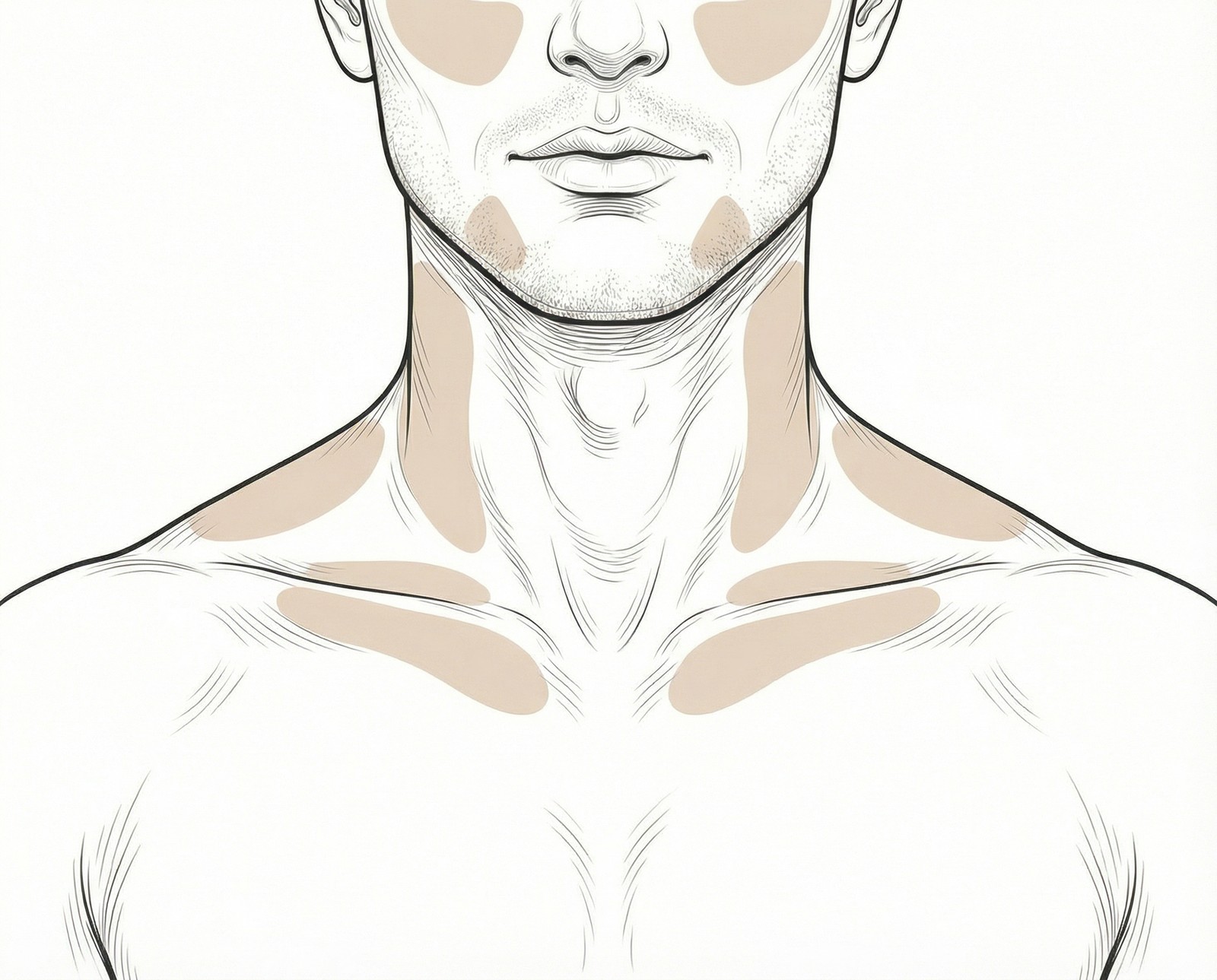
Rysunek stref zabiegowych — twarz i szyja, sylwetka męskaForehead and templesPoliczkiJawlineSzyja
Indicative map of the areas

Cupping therapy for men — a different goal, the same proven mechanism

In men, connective-tissue septae run diagonally — which is why classic cellulite dimpling is far less common than in women. Men turn to cupping therapy for other, equally specific reasons: recovery after training, releasing tight tissue and fascia, improving microcirculation in overworked areas, and supporting body contouring. It's the same suction mechanism — a different application.

Recovery and fascia — why this works

Intense, regular training builds up micro-tension in tissue — muscles and fascia become stiff, and circulation in overworked areas drops. Sliding cupping acts here like a reset: the suction releases fascial adhesions deeper than foam rolling or classic massage can, and boosted microcirculation speeds up tissue nourishment. After a session, legs and back genuinely feel like they're "breathing" — that sense of lightness is felt straight away.

Zones and results — what exactly we can do

In a programme for men, we most often work on:
The drainage effect (lighter limbs, less swelling) is felt from the very first session. With a regular series, overall skin firmness and elasticity in the treated zones also improve.
  • thighs and buttocks — releasing tension, improving circulation, supporting recovery after running or squats;
  • abdomen and love handles — supporting body contouring, draining that "spare tyre" area;
  • back — releasing tight fascia, a sense of relief after the gym or a desk job.

Marks — a quick explanation

With the sliding massage technique, there usually aren't any marks at all. If the cosmetologist works on a specific area of tension using the static point technique, round discolouration may appear — this isn't an injury or bruise, just congestion pushed to the surface by the suction. It fades within a few days. The suction intensity is adjusted throughout — there's no rule that says pain equals results.

Frequently asked questions

Does this make sense if I don't have cellulite?
Yes — because cellulite is just one of several possible indications. In men, cupping works well mainly as a recovery treatment that releases fascia and improves microcirculation. Men use it after intense training, when their legs feel heavy, for back tension, and as support for body contouring.
How many sessions does it take to feel a difference?
The drainage effect and that sense of lightness — from the first session. For recovery and fascia work, we recommend a series: typically 6–10 sessions every 5–7 days. Maintenance: sessions every few weeks, or after heavier training blocks.
Can I combine cupping with my training plan?
Yes, and that's actually the point. Right after a session, skip intense exercise for a few hours — tissue needs a moment to settle. Between sessions, regular movement really supports the effect. Cupping works best as a complement to your training programme, not in competition with it.
What marks are left, and for how long?
With the sliding technique (the dominant approach in this treatment) — practically none. With any static point work: temporary round redness, which fades on its own within 2–5 days. It's congestion, not damage — and in people with good circulation, it often doesn't appear at all.
Can I, as a man, have cupping at J'adore Instytut?
Of course. We offer this treatment for men in our Warsaw salons (Żelazna 59, Mińska 29A) and in Krakow (Karmelicka 45). Consultation before the series is free — that's when we determine the zones, your goal and a session plan tailored to you.

Where we offer it

Cupping therapy (anti-cellulite) for men — we perform it in three J'ADORE INSTYTUT salons: two in Warsaw and one in Krakow.

  • WarszawaŻelazna 59 · Wola · Mirów
  • WarszawaMińska 29A · Praga-Południe · Kamionek
  • KrakówKarmelicka 45 · Stare Miasto · Piasek

Price list

1 zabieg

od 190 zł

  • Żelazna250 zł
  • Mińska190 zł
  • Karmelicka190 zł
Book a visit

Prices come from the salon price lists. The choice of cocktail and the number of sessions is decided by your specialist at the consultation.