

PIERCING / BODY MODIFICATIONS
Navel, nose (nostril or septum), eyebrow, lip, tongue, nipple — a well-performed body piercing is not a "shopping centre gun shot", but a precise piercing with a sterile, single-use needle by an experienced piercer. The difference is huge: a needle pushes the tissue aside, while a gun crushes it, which prolongs healing and increases the risk of complications.
At J'adore we start with a conversation and precise marking of the site — this determines whether the jewellery will sit beautifully and heal well. We use implant-grade titanium jewellery (hypoallergenic, skin-safe — not a cheap nickel alloy), and at the end, you receive a specific aftercare plan. We perform the service in two Warsaw J'adore Instytut salons. Below you will find everything worth knowing before your visit — and what to avoid during healing.
one piercing + a follow-up if needed
How it works
The mechanics of piercing are the same everywhere — only the location changes. The piercer examines the area and marks the point, slightly differently for each person, because anatomy determines it: the thickness of the skin fold, the course of blood vessels and how the jewellery sits during movement. A sterile, single-use needle, unpacked in front of you, then passes through the marked point; a channel with smooth walls is created, into which the jewellery is immediately inserted. The earring is not just an ornament "for later" — throughout the entire healing process, it keeps the channel open and gives it its shape.
Your body then does the rest of the work. The channel is lined from the inside with its own epidermis, which is why it looks ready much earlier than it actually is — and stopping aftercare too soon is the most common reason for recurring irritation. Because the jewellery remains in the wound the whole time, its material has a real, not aesthetic, significance: implant-grade titanium does not release nickel and does not irritate the healing tissue. Healing time depends on the location — areas that are mobile, compressed by clothing or constantly moist, such as the navel or the oral cavity, need much more time than calm areas. We state two things clearly: the piercing is noticeable, although brief, and we only perform piercings on minors with the consent and in the presence of a parent or guardian.
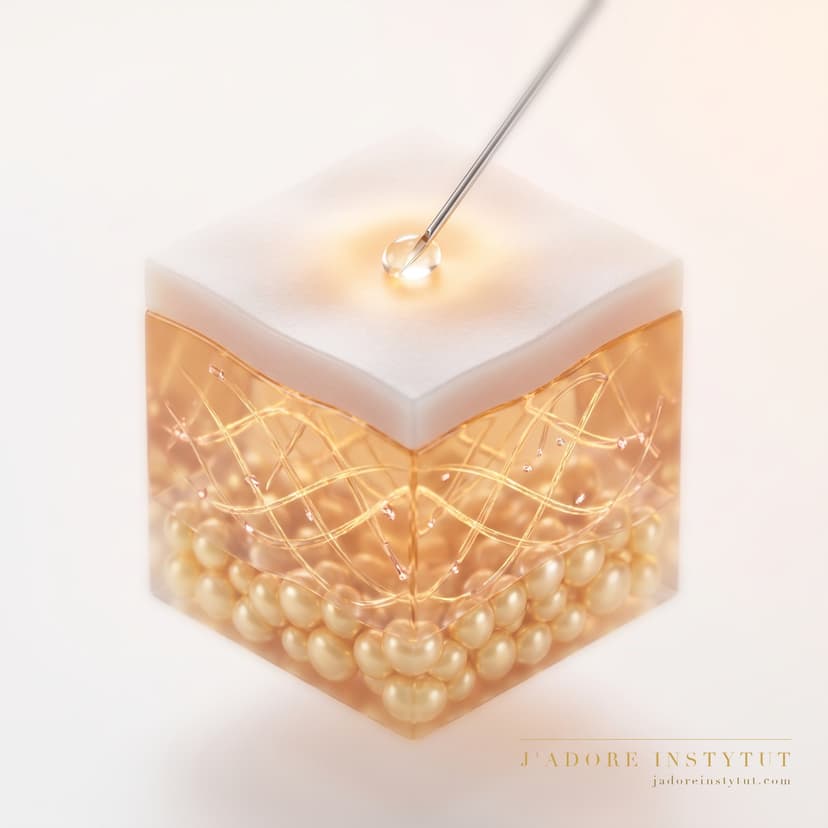
Interesting fact: a navel piercing does not go through the navel itself, but through the fold of skin above it — and its structure determines whether the jewellery will sit nicely or tilt. That is why one of the first things a piercer does is check this fold while standing and sitting: for some people, the most honest conclusion from such an assessment is to suggest a different location.
Needle, not a gun
Professional body piercing is performed with a sterile, single-use needle, which the piercer passes precisely through a previously marked point. The needle pushes the tissue aside and creates a clean channel — this is what differentiates it from a gun, which crushes and traumatises the tissue, making the area heal longer and with more difficulty.
A piercing gun is not suitable for the nose, cartilage or any part of the body other than perhaps the earlobe — and even there, professionals prefer a needle. With us, every piercing is a needle, freshly taken out of the packaging before your eyes, and implant-grade titanium jewellery.
Interesting fact: implant-grade titanium is the same material used for orthopaedic implants and implants. The body "tolerates" it — it does not release nickel, does not cause allergies and allows the channel to heal without constant irritation. A cheap nickel alloy in a fresh piercing is the most common cause of a "piercing that will not heal".
PIERCING / BODY MODIFICATIONS
Women's zone and men's zone
Body piercing for women most often serves as a subtle accent and jewellery detail — from a delicate nostril, through a trendy septum, to a classic navel piercing. What counts is the aesthetics of the placement and the choice of jewellery that harmonises well with the rest of the styling.
What we work with
Body piercing for men is an increasingly frequent choice — from a discreet septum, through the brow, to the nipple. The goal is usually the same: an expressive but effortless detail that fits your character rather than "shouting".
What we work with
Interesting fact: healing time depends more on the location than on "immunity" — well-vascularised, low-movement areas close up the fastest, while those exposed to movement, friction, and moisture (navel, nipple) take the longest. This is why the same person can heal a nose in a few weeks, but a navel only after many months.
Sterility
Piercing violates the skin, so safety is determined by the hygiene of the studio — you have every right to ask about this in any studio:
Opened from a sealed package in front of your eyes, used once, and disposed of. Never "disinfected and reused".
Reusable tools are sterilised in an autoclave (steam under pressure) — this is the standard that also kills spore forms. Ask about it without hesitation.
Jewellery placed in a fresh channel must be made of a material that does not cause allergies or irritation — we use implant-grade titanium, not cheap alloys with nickel.
The piercer works in gloves, on a single-use field, after disinfecting the area.
Red flag: a gun, a "disinfected" needle, jewellery of unknown origin · If someone wants to pierce your cartilage or body with a piercing gun, uses a needle "after disinfecting it", or cannot say what the jewellery is made of — that is your signal to get up and leave. A professional studio will show you a sealed needle without hesitation, talk to you about the autoclave, and name the material of the jewellery. A lack of these answers poses a real risk of infection and healing complications.
Contraindications
Some contraindications are permanent, and some are temporary — in that case, we simply reschedule the piercing until the situation passes.
From the piercing studio
The most frequently overlooked issue is blood-thinning medication and supplements (e.g. high doses of certain preparations). Tell us about them directly — not to discourage you, but to safely plan the piercing or reschedule it by a few days.
This is not a full list — we will go through your health condition, medication and previous healing experiences individually during the consultation before the piercing.
What to expect
The most common mistake is judging healing "by eye". From the outside, the piercing looks healed after a few weeks, but the channel inside is not yet. This is why we do not shorten the aftercare and do not change the jewellery "because it looks nice" — we wait for the full, recommended time.
Portfolio
A record of the work in our salons — the place where we publish treatment frames and, after photo sessions, results.
A record of results — in preparation. We publish photographs of our clients only with their consent.
Aftercare
Most questions do not concern the piercing itself, but what happens after. There is one rule: we want to keep the fresh channel clean and undisturbed, rather than "over-caring" for it. Less touching = faster healing.
Clean the area with saline solution according to the instructions — gently, without scrubbing. Saline cleans and supports healing; it does not dry out the skin like alcohol or hydrogen peroxide.
This is important: do not rotate the jewellery and do not remove it during healing. Contrary to a popular myth, twisting tears the forming channel and prolongs healing.
Water in pools, jacuzzis, and swimming areas contains bacteria and causes irritation. Avoid these until fully healed — rinse the area in the shower at the end.
High temperatures, sweat, and moisture promote swelling and bacterial growth. Saunas, hammams, and long hot baths should wait until after healing.
Navels and nipples like to rub against clothing — choose looser fabrics. Do not touch the piercing with dirty hands and do not let anyone "test" it.
Try not to sleep on a fresh piercing (nose, ear). Avoid the area itself when applying makeup and cosmetics. You can return to work and your normal day immediately.
Increasing pain, thick yellow-green discharge, fever, intense heat, spreading redness, or a lump by the piercing are signs that healing is not going well — return to us or consult a doctor. Do not remove the jewellery yourself — taking the earring out can close the wound and trap the infection.
Body piercing
These three paths provide a completely different effect and risk — the difference is not cosmetic, but health-related:
clean channel, sterile
not the "cheapest option available" — but the only one that minimises risk
crushes the tissue
traumatises the tissue, is harder to disinfect, and is not suitable for the nose/cartilage/body
the highest risk
high risk of infection, crooked channel, scarring — we strongly advise against it
Piercing fits nicely into a wider style — especially when you are thinking about your overall look for a specific occasion or a cohesive jewellery composition.
"My friend pierced me with a stapler and it was fine" — we hear this more often than you think. Sometimes it does heal, but it is a lottery. A professional piercing is a one-off cost, while a DIY "budget" version can end in infection, correction or a scar that is difficult to repair.
Jewellery
The material and shape of the jewellery placed in a fresh piercing have a real impact on healing. It is not about the aesthetics "for now", but about whether the channel will form calmly. The piercer selects the initial jewellery; we apply decorative variants only after healing.
Lightweight, hypoallergenic, does not release nickel — the safest for a fresh piercing. A material known from medical implants.
Dla kogoEvery fresh piercing, sensitive skin, tendency to allergies.
Decorative ends, anodised colours, stones — applied when the channel is already stable.
Dla kogoChange of style, seasonal accents, a "treat yourself" gift after healing.
Jewellery for the nasal septum that can be discreetly hidden — convenient for work.
Dla kogoSeptum for those who want to be able to hide the ornament.
The amount for every piercing already includes the jewellery — the titanium starter version. For two nipples, two pieces are included in the price. If you choose a more decorative model, you pay only the difference, up to PLN 80 per piece — exactly how much depends on the model, and you will hear the amount before the treatment, never after. We only apply titanium to a fresh channel, in every price version.
Fact: Why not "surgical steel" in a fresh piercing? Popular cheap alloys contain nickel, which causes allergies and irritation in many people — in a healing channel, this is a recipe for problems. That is why we use only implant-grade titanium for the start, and we introduce aesthetic variants later.
Price list
Checking free hours…
See also
The result lastspermanent — as long as you wear the jewelleryJ’adore Instytut
Information. Body piercing is a body adornment service — it breaks the continuity of the skin, but it is not a medical procedure or a drug injection. The text above is for information purposes only. In the case of chronic diseases, blood clotting disorders or if you are taking blood-thinning medication, consult your doctor before your visit. The piercer decides on the execution and location of the piercing during an individual consultation; piercing for a minor only with the consent and in the presence of a parent/guardian.


