

PIERCING / BODY MODIFICATIONS
A pierced ear is the simplest way to add character to your face — from a single classic lobe piercing to an intricately arranged composition along the entire cartilage. However, "getting an ear pierced" and "getting an ear pierced well" are two different stories. Sterility, the right tool, and precise placement are what count, as a poorly positioned hole or an infected cartilage can take months to heal.
We pierce both the lobe and the cartilage (helix, tragus, conch, daith), create compositions (ear curation), and pierce lobes for children with parental consent. Below you will find everything worth knowing before your visit, including why a needle is safer for your ear than a gun.
1 visit for the piercing; we build the composition in stages
How it works
A piercing is the creation of a channel, not just making a "hole". The piercer first marks the point and checks it with you in the mirror, as appearance and calm healing depend not on the tool itself, but on the placement and angle. Then, with one fluid motion, they pass a sterile, single-use needle (opened in your presence) through the tissue. The needle is hollow and pushes the tissue aside, creating a channel with smooth walls. The jewellery is inserted directly into this channel, maintaining its patency throughout the healing process and preventing it from closing.
Healing does not mean the wound "grows over". The body lines the channel from the inside with its own epidermis. This epithelialisation takes longer than it looks from the outside. The earring stays in the wound the entire time, so biocompatible material — nickel-free implant-grade titanium — is not a luxury, but a requirement for a calm healing process; cheap alloys can irritate the channel for weeks. Healing time depends on the location: a well-vascularised lobe heals much faster than cartilage, which receives nutrients from surrounding tissues. To be clear: the piercing itself is noticeable, briefly but realistically, and we do not promise otherwise. We only pierce minors with the consent and presence of a parent or guardian.
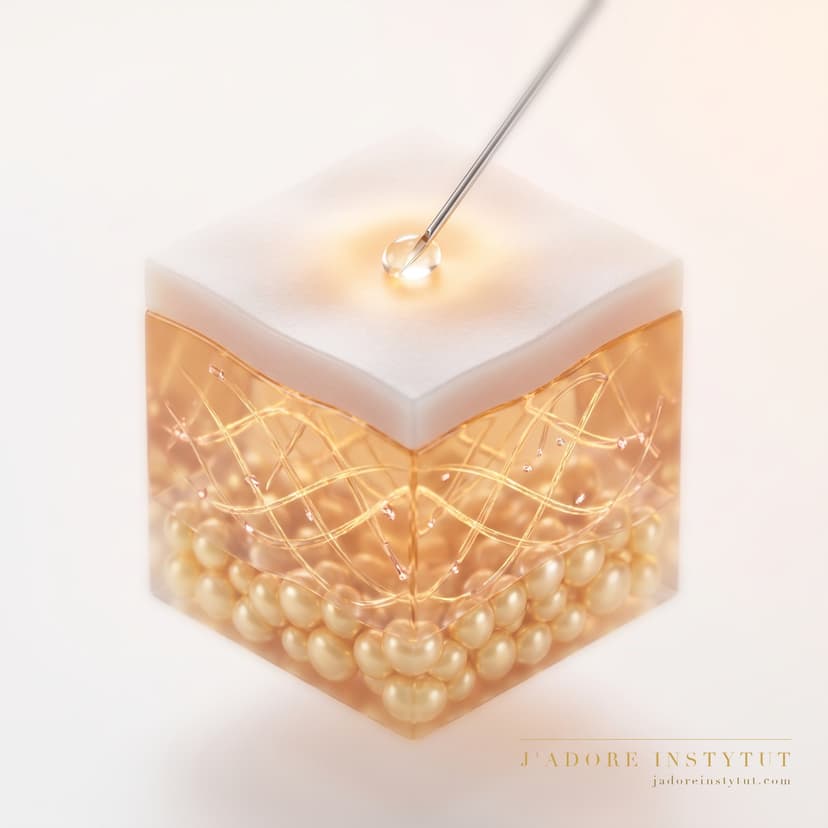
Did you know: pierced ears are one of the oldest known body decorations. Even Ötzi, the Iceman from over five thousand years ago found in an Alpine glacier, had traces of pierced, stretched lobes. The technique and jewellery materials have changed, but the idea of the ear as a place for decoration is older than most civilisations we know.
Lobe or cartilage
The ear offers a huge scope for creativity, but its different parts behave completely differently. The most important distinction is between the soft lobe and the hard cartilage. This determines the technique, the healing process, and how quickly you can wear your favourite earring.
Did you know: cartilage does not have its own blood vessels inside; it is nourished "from the outside" by surrounding tissues. This is why a helix or tragus heals much more slowly and capriciously than a soft, well-vascularised lobe. This is not a matter of a "worse ear", but of biology — and the reason why cartilage must not be rushed.
PIERCING / BODY MODIFICATIONS
This is the most important decision when getting an ear pierced — and often an underestimated one. A shopping centre gun is fast and cheap, but it is not a tool for a professional piercer, especially when it comes to cartilage.
🚩 If someone suggests piercing a helix or other cartilage with a gun — it is a sign to say no. The same applies to the lack of a single-use needle opened in your presence, the lack of gloves, no information about the jewellery material, or unclear origins of the earring. You have the right to ask: what do you use to pierce, is the needle single-use, and what is the jewellery made of? A good studio will answer without hesitation.
Women's zone and men's zone
Ear piercing for women is often a styling element that frames the face — from a single lobe piercing to a full, well-thought-out composition (ear curation) running along the ear cartilage. We select points based on the shape of your ear, your hairstyle and the jewellery you want to wear every day.
What we work with
Ear piercing for men is usually a minimalist, strong accent — a single lobe or helix in discreet titanium. The goal: character without excess, jewellery that sits well under short hair and does not interfere with daily life. Full range of body modifications (septum, eyebrow, nipple) → **body piercing**.
What we work with
Interesting fact: the sterile needle we use for the ear follows the exact same philosophy as for any other body piercing — it is single-use, opened in front of you and disposed of after one use. Only the location and the composition plan differ.
PIERCING / BODY MODIFICATIONS · Ear piercing
Contraindications
Some contraindications are permanent, while others are temporary — in such cases, we simply reschedule the piercing until the situation passes. It is essential that the piercer knows about your health before the treatment.
From the piercer
I always ask about two things: tendency to keloids and blood-thinning medication. The former is mainly relevant for cartilage, the latter for every piercing. This is not a formality — it determines whether it is worth piercing now or if it is better to talk to a doctor first.
This is not a complete list. We will discuss your health, medication and previous healing experiences individually before your visit.
Healing
Most importantly: the lobe and cartilage heal at completely different rates. The lobe is soft and well-vascularised — it returns to form relatively quickly. Cartilage is less nourished, so a helix, tragus or conch needs significantly more time and patience — often many months.
The most common mistake with cartilage: "it has been healing for a few weeks, so I will put in a decorative earring." It is too early. A helix can look healed on the outside while the channel is still building on the inside. Patience with cartilage is the best investment — rushing leads to irritation and recurrence.
The healing rate is individual — it depends on the location, your health and how you care for the piercing. If anything worries you (increasing pain, purulent discharge, hot area), contact the studio.
Portfolio
A record of the work in our salons — the place where we publish treatment frames and, after photo sessions, results.
A record of results — in preparation. We publish photographs of our clients only with their consent.
Aftercare
A fresh piercing is a wound — throughout the healing period, we want to keep it clean, dry and at rest. The main rule: the less touching, the better. Here are the most important habits for the healing time.
Clean the hole with saline solution / piercing care solution, according to the instructions from the studio. It softens the dried discharge and keeps the channel clean. Do not use aggressive spirits or hydrogen peroxide — they dry out and irritate the skin.
An old myth. Twisting the earring tears the healing tissues and prolongs the entire process. Do not touch the jewellery — clean the area, but leave the earring in place.
Pressure on a fresh piercing (especially cartilage) causes pain, swelling and uneven healing. During the healing time, sleep on the other side, preferably on a smooth, clean pillowcase.
Water in a pool, jacuzzi or other reservoirs contains bacteria and chlorine, which can enter an open wound. Postpone swimming until the piercing has healed.
High temperatures and sweat irritate a fresh piercing. Leave saunas and hammams until the area has fully healed.
Hair spray, powders and heavy creams should not reach a fresh piercing. Be careful when brushing your hair or pulling clothes over your head to avoid snagging the jewellery.
Ear piercing
An ear is a long-term plan. It is worth knowing what you want now and what to leave for later. These three approaches meet different needs:
a classic choice with the fastest healing time
on its own, it does not create an "elaborate ear" effect — it is a base, not a full composition
a distinctive accent
heals slowly and can be temperamental — it requires patience and disciplined aftercare
a thoughtful composition
it is not created in a single day — it is a project involving several visits with healing time in between
Combine with
A pierced ear is part of a wider facial style. We most often combine it with treatments that tidy up the eye area and brows — the effect of a "well-groomed whole" works better than each element alone.
Styling of the eye area and brows (lamination, shaping, lashes) is performed by a stylist — piercing remains a separate service provided by a piercer. We combine them for effect, but these are two different visits with two different specialists.
The most common question is: "can I have the whole ear done at once?". You can plan the whole look, but we pierce in stages. Six fresh piercings at once mean six wounds healing simultaneously — it is harder to care for them and easier to cause irritation. It is better to spread it out over time and enjoy an even, clean result.
Jewellery
A fresh piercing is an open wound. The material of the earring that sits in it for weeks of healing makes a real difference. That is why we use implant-grade titanium for initial jewellery, not random "gold" or nickel-containing alloys.
A lightweight, biologically inert titanium alloy without nickel — the gold standard for initial jewellery. The lowest risk of irritation and allergic reactions in a healing channel.
Dla kogoInitial jewellery for every fresh piercing — lobe, cartilage, and body.
A sterile, closed screw system (lobe / stud) — a pair of earrings packed sterilely with disinfectant wipes, applied quickly and with minimal invasiveness.
Dla kogoLobe piercing, including for children — sterile and without a needle.
Two-piece threadless titanium jewellery — a smooth post and interchangeable ornament, comfortable for healing harder tissue.
Dla kogoCartilage (helix, tragus, conch, daith) pierced with a single-use needle.
Proven, hypoallergenic surgical steel with a smooth finish — a material alternative for a healed channel.
Dla kogoReplacement after healing for those without hypersensitivity; never for a fresh piercing.
Decorative ends in a gold finish — a styling element worn once the channel is ready for a change.
Dla kogoDecorative replacement after full healing — never for a fresh piercing.
Sterile solution for cleaning a fresh piercing — it softens dried discharge and keeps the channel clean without drying out the skin.
Dla kogoDaily care for a fresh piercing, usually twice a day according to the studio's instructions.
The price for every piercing already includes the earring — the titanium initial version. For two lobes and for children's ears, two are included. If you choose a more decorative model, you pay only the difference, up to PLN 80 per earring — the exact amount depends on the model, and you will hear the price before the treatment, never after. The choice is a matter of appearance, not safety: we only use titanium for a fresh channel, regardless of the price version.
Fact: For a fresh piercing, we use only implant-grade titanium (or a sterile InvernessMed system for the lobe) — never silver, acrylic, or nickel-containing steel, as they can cause persistent irritation in a healing wound. Titanium itself can look attractive — you can choose a more decorative model from the start, provided it is titanium and the correct size. However, you should wait with items that snag and collect discharge: hoops, huggies, heavy clusters, and anything tighter than the initial jewellery. You can wear these once healed.
Price list
Checking free hours…
See also
The result lastspermanent — the channel remains after healingJ’adore Instytut
Information. Ear piercing is a body decoration service. The procedure breaks the continuity of the skin, which is why we perform it under sterile conditions using a single-use needle and titanium jewellery. This is not a medical procedure or a product injection. In the case of chronic illnesses, coagulation disorders, a tendency for keloids, diabetes, or a weakened immune system, we recommend prior consultation with a doctor. We perform ear piercing for children only on the lobe and exclusively with the consent and presence of a parent/guardian.


