WarszawaŻelazna 59WarszawaMińska 29AKrakówKarmelicka 45Warszawa · Kraków

Careers

ENPL

Full perspective

Scar camouflage for women

A scar you can't stop thinking about

Scar camouflage in women most often addresses surgical scars (such as after a C-section, or breast or thyroid procedures), pregnancy stretch marks, and hyperpigmented acne marks. It's often about feeling at ease with exposed skin — décolletage, abdomen, arms, the beach — and no longer reaching for concealer every day. We choose a warm-toned colour, with an eye on how it will fade.
Czas
a relaxed visit sized to the scar + a short touch-up
Efekt
long-lasting; pigment fades naturally over time and needs refreshing
Regeneracja
a few days of healing: light scabbing and colour fading; the scar area can feel more delicate
Seria
1 session + a mandatory touch-up after around 4–6 weeks (sometimes a series for larger scars)
Wykonuje
qualified PMU specialist experienced in medical micropigmentation
ListenScar camouflage — this whole page read aloud

When it's worth it — indications

  • Surgical scars — pale, "pearly" lines left by surgery that stand out from the skin in colour.
  • Burn scars — discoloured or hyperpigmented patches left by burns, where the main issue is a difference in colour.
  • Acne scars — hyperpigmented or discoloured marks left by acne (where the concern is colour, not deep "craters").
  • Stretch marks — silvery, white or pinkish bands (from pregnancy, from rapid growth), where evening out the colour can quiet them down considerably.
  • Scars and marks from injuries — once they're mature, calm and mainly different in colour.
  • Anyone who wants to stop "managing" a scar day to day — daily concealer, choosing clothes around it, avoiding the pool.

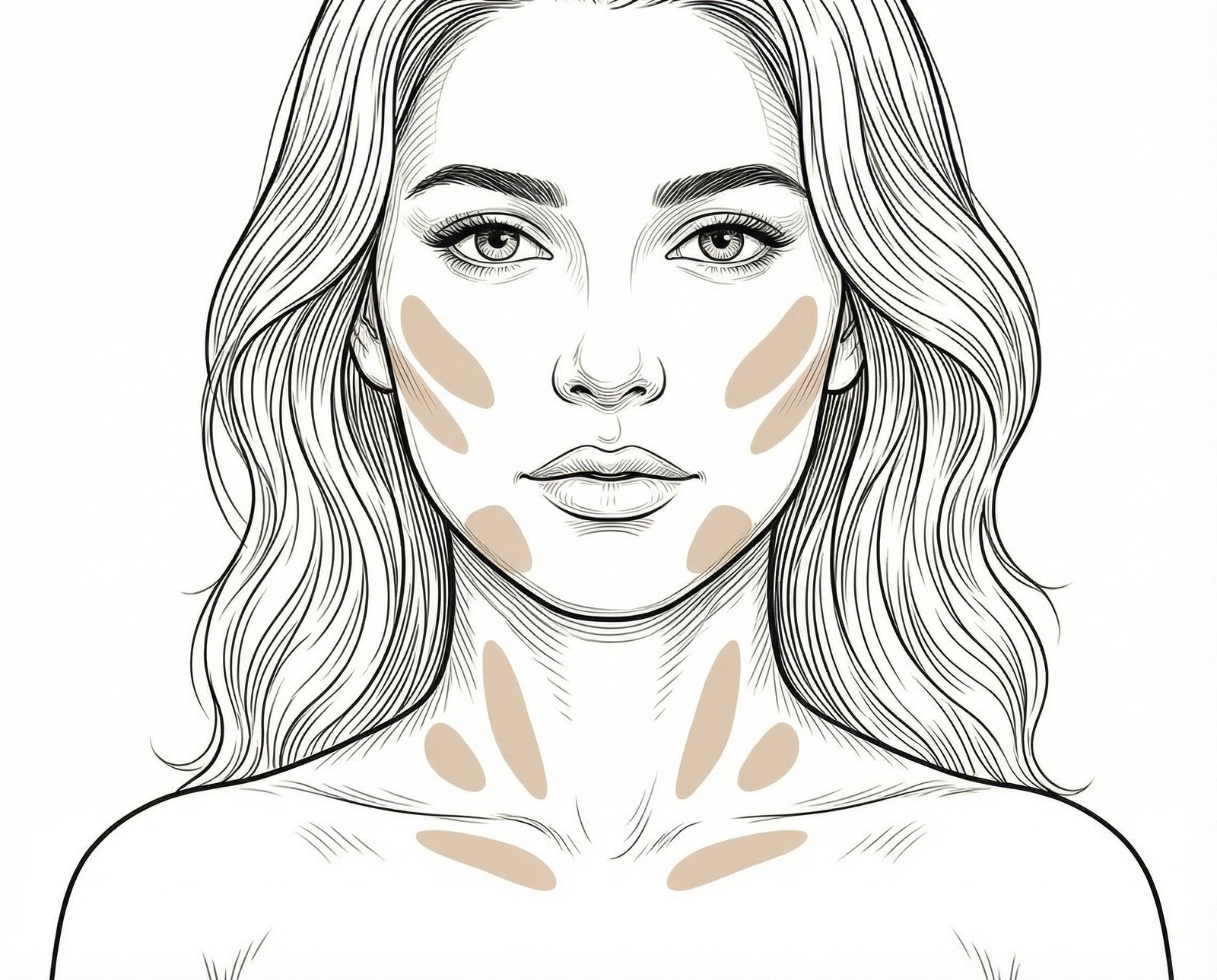
The areas we work on

  1. surgical scars (including C-section scars, breast procedure scars);
  2. stretch marks from pregnancy and weight changes — evening out the silvery tone;
  3. hyperpigmented / discoloured acne marks (where the issue is colour);
  4. scars in areas visible "every day" — décolletage, arms, hands;
  5. wanting to stop covering a scar with makeup every day.
Rysunek stref zabiegowych — twarz, szyja i dekolt, sylwetka kobiecaForeheadPoliczkiSzyjaDécolletage
Indicative map of the areas

A scar you can't stop thinking about

It's often not about pain — the scar stopped hurting long ago. It's about that moment in the changing room, at the pool, in a summer dress, when you instinctively check whether it shows. A pale line from a C-section, a discoloured patch from a burn, silvery stretch-mark bands from pregnancy, a hyperpigmented mark left by acne — all of these differ from healthy skin mainly in colour, and it's that contrast that makes them so visible.
Scar camouflage does exactly what the name suggests: it evens out a scar's colour to match your healthy skin tone, so it stops standing out. It doesn't remove the scar or change its texture — but once the eye stops finding the colour edge, it stops looking for the scar.

The most common reasons women choose camouflage

  • C-section scars — a horizontal line in the bikini area, visible every time you show your stomach. Once the colour is evened out, the scar becomes part of your skin, not a landmark on it.
  • Stretch marks from pregnancy or weight changes — silvery, white or pinkish bands that quiet down noticeably once tone is evened out. With stretch marks, colour is the main issue, which is exactly why camouflage works particularly well here.
  • Acne marks — hyperpigmented or discoloured spots where acne has cleared but skin colour hasn't returned to normal. Camouflage evens out this colour difference, not deep "craters" (those are a job for device-based treatments).
  • Scars from breast or thyroid procedures — scars in areas you show off in summer, see in the mirror, and think about when planning a neckline.
  • Daily concealing — if you reach for concealer every day, or build outfits around a scar, that's exhausting. Camouflage does it once, and the result lasts.

What's different in the approach to women's skin

Women's skin can be thinner and more sensitive around surgical scars or stretch marks. The PMU specialist chooses a warm-toned pigment, considering how it fades, how it responds to hormones, and how it changes across your care routine. We work with tone rather than a flat colour, which gives a natural result: the scar drops off the radar rather than looking "painted over".
Tone selection also takes into account where you plan to show your skin — a scar on the abdomen (many shades and light angles) is approached differently from a scar on the décolletage (constant exposure, frequent contact with clothing).

Healing and everyday life — what it actually looks like

After the treatment, expect a few days of gentle care: avoid water and saunas, apply a healing ointment, don't pick at scabs. The scar area usually heals gently, and the only thing that might surprise you is a noticeable lightening of colour in the first week — that's a normal stage, and the pigment returns after around 3–4 weeks. Full colour is completed at the touch-up after 4–6 weeks.
Once healed: daily SPF 50+ on the scar isn't an optional step — scars are unusually sun-sensitive, and protection clearly extends how long the colour lasts.

Frequently asked questions

Will the result look natural, or will it be obvious that "I've had something done"?
We aim for the colour to blend into its surroundings, not for a "painted-over" look. The first visit is subtler — colour lightens during healing, and full colour is completed at the touch-up. The world around you stops noticing the scar, not the treatment.
I have a C-section scar — can I have camouflage?
Yes, as long as the scar is mature and calm — usually no sooner than around a year after surgery. A C-section scar is one of the most common we work on. Everything starts with a consultation, where we assess readiness and choose your tone.
Will camouflage help with stretch marks from pregnancy?
Often, yes — if the stretch marks are already mature and light in colour (silvery, white). Their main issue is colour contrast, and that's exactly where camouflage makes a real difference. Fresh, reddish stretch marks need to stabilise first.
Will I need to do something daily to keep the result?
Aftercare after the treatment is a few days of ointment and avoiding water. After that, just SPF 50+ on the scar — that's it. Pigment fades naturally over time, and once the colour weakens, we do a refresh. There's no daily concealing involved.
Should I tell my gynaecologist / surgeon that I want to do this?
For a scar from major surgery (such as a C-section or breast procedure), we ask for approval from your treating doctor — because they know your history and any limitations best. It's part of the safe process, not an unnecessary formality.

Where we offer it

Scar camouflage for women — we perform it in three J'ADORE INSTYTUT salons: two in Warsaw and one in Krakow.

  • WarszawaŻelazna 59 · Wola · Mirów
  • WarszawaMińska 29A · Praga-Południe · Kamionek
  • KrakówKarmelicka 45 · Stare Miasto · Piasek

Price list

    Book a visit

    Prices come from the salon price lists. The choice of cocktail and the number of sessions is decided by your specialist at the consultation.