

 A treatment room at J'adore
MICROPIGMENTATION (PMU)
A lightly tanned face with freckles scattered across the nose and cheeks — the look of holidays, ease and freshness. Not all of us were born with them, and the ones we have can be faint and disappear once summer ends. Freckle micropigmentation (also known as sunkissed freckles or faux freckles) is one of the most "Instagram-worthy" trends in permanent makeup: a linergist applies delicate, irregular freckles point by point, in a warm shade matched to your complexion and hair — or enhances the natural freckles you already have.
The effect is deliberately subtle and, importantly, less permanent than classic brow or lip PMU — that's not a drawback but an advantage if you're wary of anything "forever". At J'adore Instytut, the treatment is performed by a qualified linergist. Below you'll find everything worth knowing before your first visit.
main session + mandatory touch-up after around 4–6 weeks
How it works
Freckle micropigmentation is a delicate variant of permanent makeup: a linergist introduces fine points of warm pigment into the skin, mimicking natural freckles. There's no brush involved — the pigment is placed shallowly with a fine needle, so the effect lasts longer than washable makeup, but not as deeply or as permanently as classic brow or lip PMU.
This shallow placement and shorter longevity are intentional design choices. Freckles should look light and natural, and gently fade over time — so you're not left with "dots" that no longer suit you. The most important part of the whole treatment isn't the device — it's the linergist's eye and hand: choosing a warm, never black colour, and irregular, asymmetrical placement, because unpredictability is exactly what makes freckles look real.
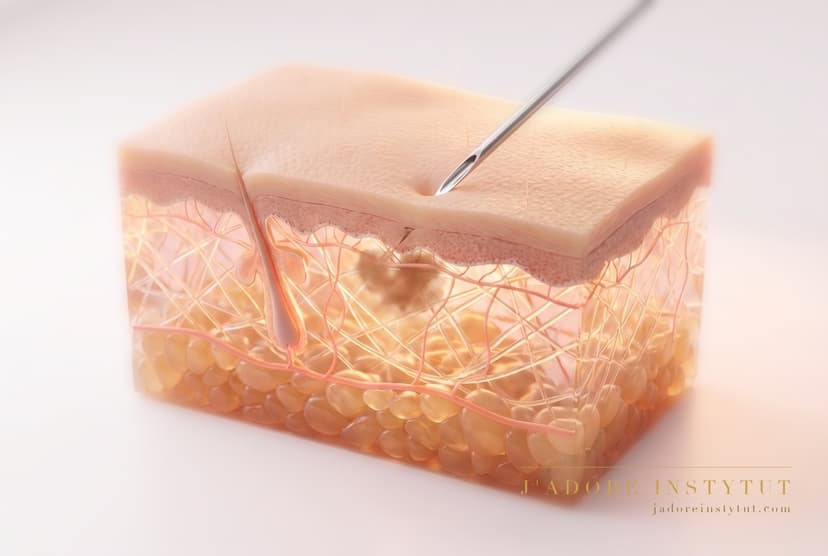
Freckles are a trend — and trends change, just like taste does. Freckle micropigmentation fades faster than other PMU (the pigment sits shallowly), so think of it as "permanent makeup on a trial basis": you'll keep the effect for a good while, and if it stops suiting you, you simply wait for it to fade instead of fighting something "forever". For many women, that's the number-one reason to give it a try.
Ideal for
Whether freckles will suit your complexion, and in what shade, is decided during consultation. Sometimes it's more sensible to simply enhance your natural freckles rather than create new ones. We never work blind.
The women's and men's take
This is definitely a treatment that women choose — and it's women who give it its purpose. The goal is almost always the same: a fresh, "sunkissed", natural look on the nose and cheeks, as light as a summer tan. This is classic freckle micropigmentation for women, matched to your complexion, hair colour and features.
What we work with
Freckle micropigmentation for men is a rarity and a niche — it tends to appear among people deliberately building a very natural, "spontaneous" look. The logic stays the same as for women: warm colour, irregularity, subtlety — with an even greater focus on discretion, so the effect isn't recognisable as a "treatment". Every such case is planned strictly on an individual basis during consultation.
What we work with
Fun fact: freckles are simply clusters of melanin that nature scatters across the skin completely at random — none is perfectly round or evenly spaced from its neighbour. That's why the secret to good freckle micropigmentation is… deliberate disorder. The linergist varies the size, intensity and scatter of the points — because if they were even and symmetrical, the eye would spot it as "done" right away.
The natural effect
With freckles, the line between "beautiful and natural" and "artificial and dotty" is thin — and it doesn't come down to equipment, but to the linergist's aesthetic decisions. Three things determine the result, and they're worth asking about:
If you see photos of freckles in one dark colour, all the same size and arranged symmetrically like a grid, that's a sign the effect will look artificial. Natural freckles are irregular and warm in tone. You're entitled to ask for photos of healed, "matured" work (not just fresh after the treatment) and to ask how colour and placement are chosen. A good linergist will happily show you and explain.
MICROPIGMENTATION (PMU)
Contraindications
Freckle micropigmentation touches the skin (pigment is introduced with a needle), so it follows the same safety rules as other PMU. Some contraindications are permanent, others temporary — in the latter case, we simply postpone the treatment until the situation passes. Everything is decided during consultation.
From the linergist's chair
The thing most often forgotten: cold sores. "I only get them on my lips, and we're doing freckles on my nose — surely that doesn't matter?" It does. An active virus is a risk regardless of where it shows up — better to postpone by a few days. The other thing is fresh tanning: we don't apply freckles over heavily tanned skin, because both the result and healing will be worse.
This isn't a complete list — your medication, health conditions, healing tendency and previous treatments will all be reviewed individually during consultation.

What to expect
Most importantly: the fresh effect isn't the final result. Right after the treatment, freckles are darker, more defined and "stronger" than they'll be once healed. This is completely normal — over the following days, the pigment lightens and settles, and some points may fade less evenly. That's why we assess the final result only after the touch-up, not right after you leave the salon.
The most common call, the day after the treatment: "they're too dark, they look drawn on!" Don't worry — that's a normal stage. Fresh pigment is always more intense, and once healed, freckles lose quite a bit of their intensity and become delicate. That's exactly why the touch-up a few weeks later is part of the treatment, not a correction — it's when we see the real colour and finalise the effect.
And something we're honest about: freckle micropigmentation isn't "forever". The pigment sits shallowly and fades naturally over time — faster than classic brow or lip PMU. This is a deliberate feature of the treatment. If you want to keep the effect, it's worth refreshing after a while; if it stops suiting you, it'll simply fade away.
Portfolio
A record of the work in our salons — the place where we publish treatment frames and, after photo sessions, results.
A record of results — in preparation. We publish photographs of our clients only with their consent.
Freckles and your lifestyle
Most questions concern what happens afterwards: sun, makeup, swimming, peels. There's one rule — for the first few days of healing, we protect the skin from sun, water and irritation, and after that, sun and peels lighten freckles fastest, so it's worth keeping that in mind if you want to keep the effect longer.
Avoid sun entirely during the first few days of healing. After that, remember: sun lightens freckle pigment fastest of all. Daily SPF 50+ protects both the effect and your skin — without it, freckles will fade much sooner.
Don't apply foundation or powder to fresh freckles (nose, cheeks) until the skin has healed and the micro-scabs have gone. The rest of the face — no restrictions.
Soaking the zone, chlorine and high temperatures interfere with healing. Hold off on the pool, sauna and long hot baths for the first few days after the treatment.
Flaking points need to come off on their own — picking removes pigment and spoils the effect. Wash gently, without rubbing, for the first few days.
Peels, acids and retinol exfoliate the skin and speed up pigment fading. Use them away from the freckles if you want the effect to last longer.
You can return to most daily activities practically straight away — just mind the sun, water and avoid picking at the skin during the first few days of healing.
Freckles — micropigmentation
These three routes to a "freckled" face solve different needs — they differ in longevity, effort required, and whether they touch the skin at all:
freckles "for longer", without daily drawing
not permanent for good, and needs a touch-up plus periodic refreshing; it does touch the skin
washable everyday freckle makeup
disappears after washing your face, smudges from sweat or water — needs drawing on daily
longer-lasting permanent makeup for other areas
different zones, different purpose — doesn't replace freckles; longevity and character of the work differ
Combine with
Freckles are a detail that looks best on well cared-for, even skin, alongside consistent, natural permanent makeup. The linergist decides on order and spacing during consultation, but the logic stays the same:
The most common hesitation: "what if I don't like it?" My advice for anyone unsure: try pencil or henna freckles for a few weeks first — see whether you like yourself with freckles, and where you want them. If you do, micropigmentation will free you from drawing them on daily. And since it fades faster than other PMU, the risk of "forever" is genuinely small.
Techniques and pigments
"PMU freckles" isn't one fixed formula — the result depends on the approach to the scatter and the choice of warm pigment. You don't pick a colour "off the shelf" — the linergist chooses it based on your complexion, hair, and whether we're creating freckles from scratch or enhancing your natural ones.
The linergist designs a completely new, irregular freckle pattern on the nose and cheeks.
Dla kogoSkin with no freckles, or just a few — when you want a clear "sunkissed" effect.
Highlighting and filling in existing, faint freckles — while keeping their natural pattern.
Dla kogoYou have freckles, but they're faint or fade outside summer.
A shade of brown/caramel/red matched to your complexion and hair colour — points varied in size and intensity.
Dla kogoEvery version of freckles — colour is the foundation of a natural look.
Fact: What causes differences in price and number of freckles? It comes down mainly to scope (a few delicate freckles isn't the same as a dense scatter across the nose and cheeks), whether we're creating them from scratch or enhancing natural ones, and your complexion and colour matching. Also bear in mind that the price includes the mandatory touch-up — freckles only "mature" fully after it. That's why scope and plan are set during consultation, rather than as a fixed price upfront.
Price list
Checking free hours…
See also
The result lastsshorter than other PMU — results usually last around one to two years, fading naturallyJ’adore Instytut
Information. Permanent makeup (PMU) is an aesthetic treatment that introduces pigment into the epidermis/dermis; the effect is long-lasting (typically holding for several months to a couple of years and requiring periodic refreshing), fades naturally and is not permanent "forever". This is not a medical treatment. A touch-up/re-pigmentation after around 4–6 weeks is standard. This text is provided for information purposes. Indications, technique and colour selection, and contraindications are determined by a qualified linergist during consultation.
Home care
Cosmetics matched to what your skin needs after a treatment — so the clinic effect lasts longer.
 post-treatment regenerationCell Fusion CDermagenis pH Biome SerumView in the shop(opens in a new tab)
 sun protectionDermaQuestSunArmor SPF50 30 mlView in the shop(opens in a new tab)
 post-treatment regenerationMedMelanoSkinbiotic Elixir Probiotic Repair Serum 50 mlView in the shop(opens in a new tab)
 sun protectionSesdermaREPASKIN Silk Touch Color SPF50View in the shop(opens in a new tab)
 post-treatment regenerationVagheggiEmozioni Plus — Anti-Stress Face Mask 75mlView in the shop(opens in a new tab)
 sun protectionCell Fusion CAquatica Sunscreen 100 SPF 50+/PA++++View in the shop(opens in a new tab)
 post-treatment regenerationMesoesteticMesohyal Post-Procedure Gel CreamView in the shop(opens in a new tab)
 sun protectionSesdermaRepaskin Silk Touch Color Facial SPF50View in the shop(opens in a new tab)


