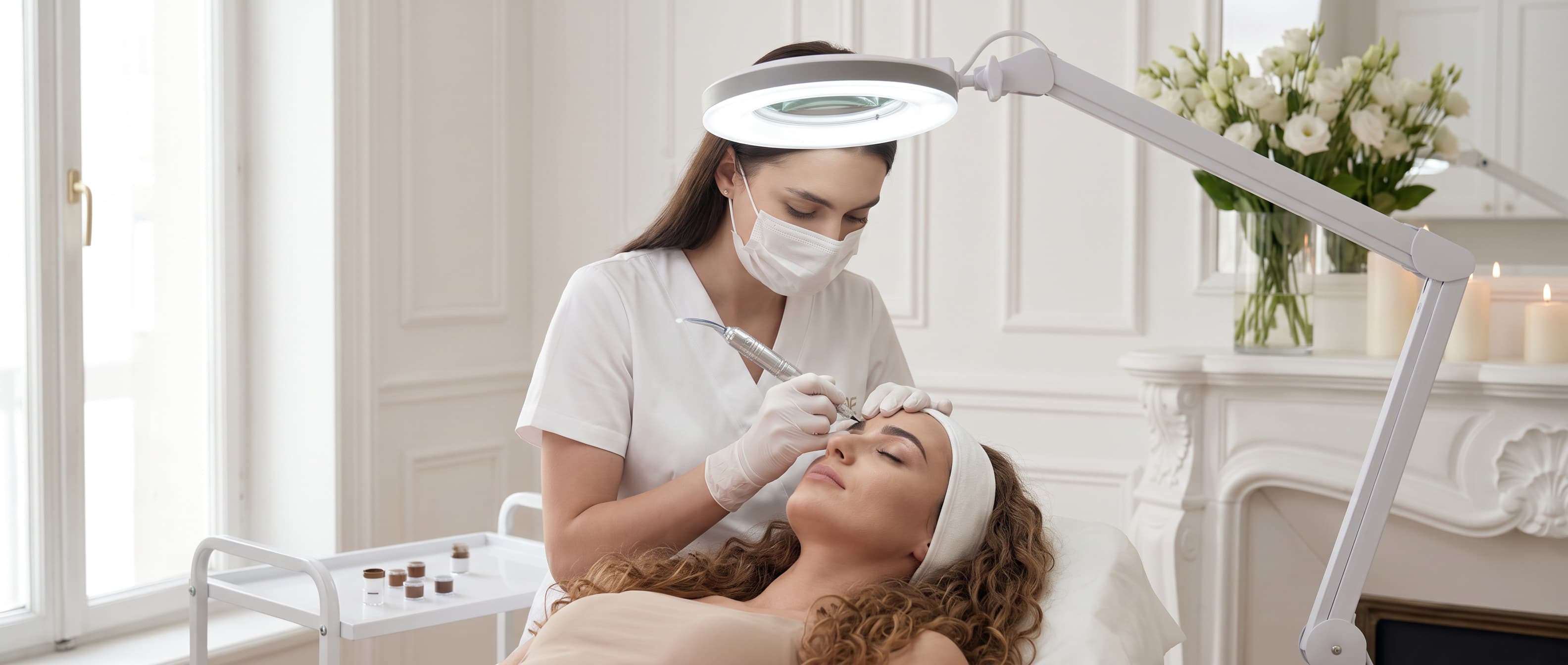
A treatment room at J'adore
MICROPIGMENTATION (PMU)
Pale lips in the morning, a contour that fades a little more each year, a slight asymmetry you correct every day with lip liner — these are the most common reasons women come in for permanent lip makeup. Lip PMU doesn't paint on "new" lips and doesn't replace your evening lipstick — it gently deposits a chosen pigment into the skin to restore colour, even out the contour and optically add freshness to the lips, as if you'd just applied a natural, lightly blended lipstick.
Done well, it's invisible as "done": people notice you look well, not that you have permanent makeup. At J'adore Instytut, the treatment is performed by a qualified linergist. Let's be upfront: lips are the most demanding PMU area — they take the longest to heal, the colour fades noticeably straight after the treatment (this is normal), and a touch-up after a few weeks is mandatory. Below you'll find everything worth knowing before your first visit.
main session + touch-up after ~4–6 weeks (standard), then periodic refreshing
MICROPIGMENTATION (PMU)
Permanent lip makeup is the introduction of a chosen pigment into the surface layer of the lip skin using very fine, sterile needles. It isn't a tattoo in the classic sense — PMU pigments are lighter, deposited more shallowly and designed to fade over time. The colour is chosen to work with your natural lip colour and skin tone.
The aim is not to paint on a bold lipstick permanently. The aim is to restore and even out what's already yours: refreshing colour that fades with age, completing the contour, and optically adding a touch of volume and symmetry. That's why the usual result is "you look well, I can't say why" rather than "you're wearing bold makeup".
An important distinction. Lip PMU doesn't enlarge the lips and doesn't replace filler — it works on colour and contour, not volume. If you're dreaming of genuinely fuller lips, that's a different treatment (hyaluronic acid), and a specialist will discuss it with you during consultation.
How it works
The lip is a different kind of skin to the cheek or eyelid: the stratum corneum of the vermilion border is exceptionally thin, there are no sebaceous glands or hair follicles here, but the area is densely supplied with blood. The linergist deposits pigment very shallowly, using fine needles, layer by layer. The colour doesn't "cover" the lip like lipstick — it shows through the skin and blends with its own tone, which is why the same pigment produces two different shades on two different people. So colour selection doesn't start from a catalogue — it starts from the colour your lips actually are today.
That same blood supply, plus the constant movement of muscles around the mouth, means lips heal more dramatically than any other PMU area. In the first days, delicate scabs form and lift away along with some of the pigment, and fresh epidermis covers the colour with a milky haze for the following weeks — hence the well-known moment of "there's nothing left". The colour only returns once the epidermis clears, which is why we assess the result after full healing, and a touch-up after around 4–6 weeks is built into the plan. Later, the pigment gradually fades — usually faster on the lips than on the brows — so the colour needs periodic refreshing.
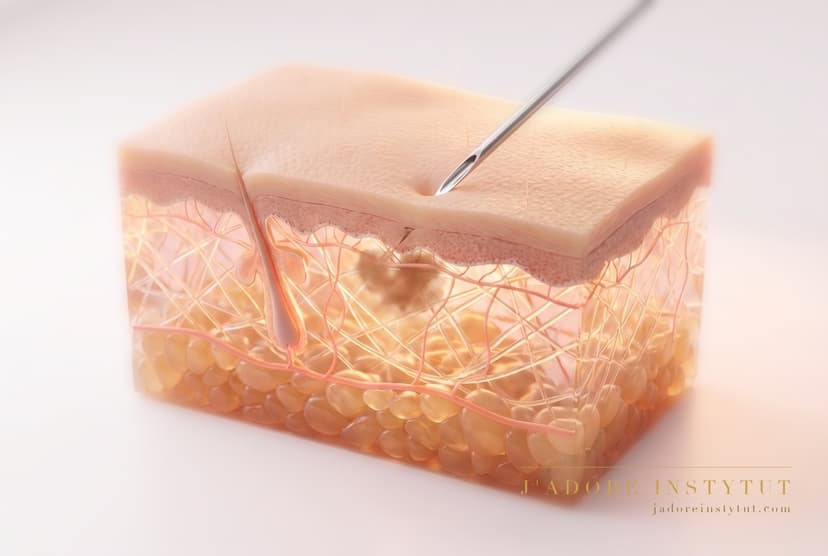
Did you know? Lips have no sebaceous glands, so they don't create their own protective layer — that's why they dry out so easily, and why UV exposure lightens the pigment deposited in them faster than anywhere else on the face. SPF lip balm after the treatment isn't a cosmetic extra — it genuinely affects how long the colour lasts.
Ideal for
Did you know? The most popular technique today is lip blush — the name comes from the idea of a "blush", a natural flush of colour. That's the point: not a "full lipstick" look, but a subtle, healthy shade, as if the lips had simply flushed naturally. It's a completely different world from the bold, dark contour we remember from the 1990s.
Women's needs and men's needs
This is a treatment designed primarily for women. Permanent lip makeup for women usually means gently refreshing colour and completing the contour — a "blended lipstick" effect, not a bold line. We work on naturalness, symmetry, and a colour chosen to match your skin tone, so your lips look fresh even without makeup.
What we work with
Permanent lip makeup for men is a niche, and it has a completely different goal to "colour". For men, lip PMU appears almost exclusively as correction — evening out colour at the site of an old scar or cold sore, closing a gap in the contour. It's not about makeup, but about lips looking even and natural.
What we work with
Did you know? The same pigment "behaves" differently on different lips — cool, bluish lip tones need a warmer, peachy shade to look healthy, while warm skin tones can carry pink well. That's why good lip PMU starts with choosing colour for you, not from a "favourite shade on a palette".
PMU lips · MICROPIGMENTATION (PMU)
Some contraindications are permanent, others temporary — in the latter case, we simply postpone the treatment until the situation passes. Lip PMU breaches the skin, so we take this seriously.
If you've ever had a cold sore on your lips, mention it at your consultation. Standard practice for lip PMU in this case is antiviral cover prescribed by a doctor, taken before and after the treatment (without it, breaking the lip skin can often "wake up" the virus). The linergist doesn't choose the medication or dose — that's a doctor's decision. This one step can save the result of the entire treatment.
This isn't a complete list — we'll review your medications, health conditions, pregnancy/breastfeeding status and previous treatments individually at consultation.
Safety and cold sores
Several factors affect the result and safety of lip PMU that are worth asking about at any salon — plus one issue specific to lips alone.
At J'adore, lip PMU is performed by a qualified linergist — she assesses colour, chooses the technique and colour, and handles the touch-up.
We work exclusively with sterile, single-use needles and modules; pigments come from legal, certified suppliers.
Lip PMU breaches the skin — it's a genuine needle-based treatment, so procedure, sterility and aftercare matter just as much as the technique itself.
A good linergist advises against excess colour more often than she suggests it — and always warns about the touch-up and healing phase.
Red flag: cold sores (Herpes) on the lips · 🚩 Lips are a classic trigger for cold sores — breaking the lip skin with a needle can reactivate the virus, even if you "haven't had one in ages". So: an active cold sore means the treatment must be postponed without exception (even if the sore is elsewhere, such as inside the nose). If you get recurrent outbreaks, the linergist will refer you to a doctor for antiviral prevention — an antiviral medication as prescribed by a doctor, taken before and after the treatment (the name and dosage are decided by a doctor only). This isn't a formality — it genuinely protects both the result and your health.
Lip healing
This is the most important section for lip PMU. Lips take the longest to heal and are the most "dramatic" of all permanent makeup areas — and this is completely normal. Knowing what to expect will save you unnecessary worry.
Calls saying "nothing's visible, the colour's gone!" in the second week are classic — and I always give the same answer: we wait for the touch-up. Lips like to "pretend" the pigment has disappeared, then quietly come back. We assess the result after healing, never before.
The result isn't permanent "forever" — lips naturally fade over time and benefit from occasional refreshing. This is actually an advantage: you can adjust colour and shape over the years to suit changing trends and yourself, rather than being locked into one decision forever.
Portfolio
A record of the work in our salons — the place where we publish treatment frames and, after photo sessions, results.
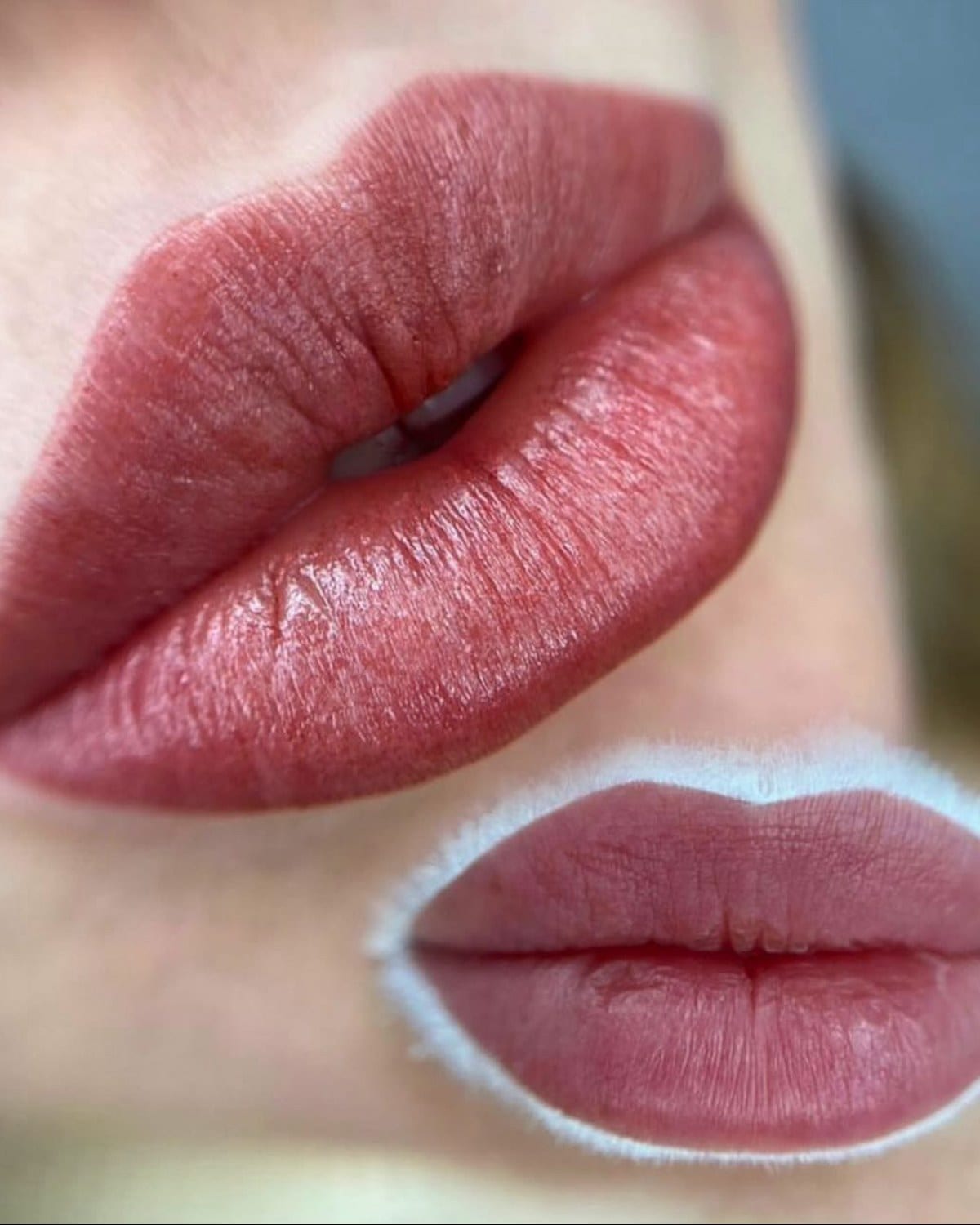
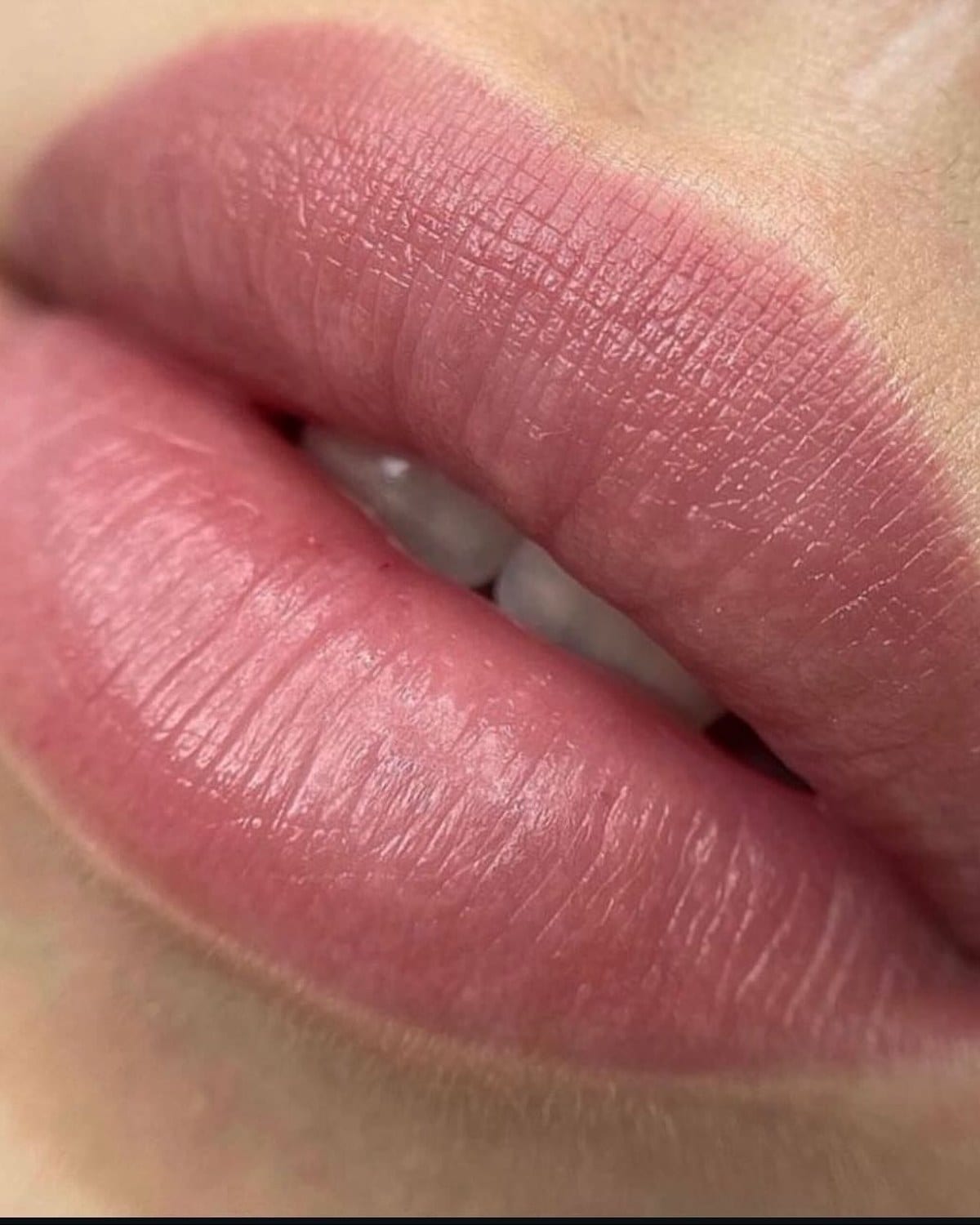
A record of results — in preparation. We publish photographs of our clients only with their consent.
Lip PMU and your lifestyle
Most questions don't concern the treatment itself but what comes after — because how well the colour takes largely depends on aftercare in the first few days. There's one rule: during healing, we protect the lips from moisture, friction, heat and sun.
The most important rule: don't lick, don't touch, don't pick at the scabs. Saliva and fingers mean moisture and bacteria — the most common cause of "gaps" in colour and uneven healing.
For the first few days, skip hot, spicy, sour and very salty food. Eat in a way that doesn't scald or irritate your lips; use a straw if that's more comfortable.
For a few days, avoid soaking your lips — long showers on the face, vigorous washing, water running directly onto the lips all delay healing. Pat gently to dry, don't rub.
Sweat, chlorinated water and heat soften the scabs and rinse out pigment. Hold off on sauna, swimming pools and intense exercise until healed.
During healing, protect your lips from the sun — UV lightens fresh pigment. Afterwards, use an SPF lip balm freely: SPF genuinely extends how long the colour lasts.
During healing, don't apply lipsticks or glosses — stick to the recommended regenerating ointment only. Return to coloured lip makeup once the scabs have gone and the skin has settled.
Apply the recommended regenerating ointment/cream as instructed from day one — a thin layer, with clean hands or a cotton swab. This is your only "cosmetic" for the lips during healing, and it genuinely helps the colour take evenly.
You'll receive the full, personalised aftercare instructions at your visit — the above is a general overview, not a substitute for your linergist's guidance.
MICROPIGMENTATION (PMU) · PMU lips
From the linergist's chair
What gives a client the most peace of mind is approving the design before pigmentation begins. I draw the contour and show it in the mirror — we only start once you say "yes, this is it". Nothing happens "on the fly, by feel".
PMU lips
These three are often confused, but they do different jobs — and often complement each other:
long-lasting colour and contour
doesn't enlarge the lips, doesn't add volume, isn't "forever" — it fades and needs refreshing
colour here and now
wears off with eating and drinking, needs daily application, won't permanently even out the contour
lip volume
doesn't change lip colour and doesn't replace PMU contour — this is work on volume, not colour
Combine with
A specialist decides on order and timing during consultation, but the general logic stays the same: we settle what's permanent first (colour, contour, volume), then add gentle skincare mindfully around the healing period.
The most common thing I hear is "I want PMU to have bigger lips". PMU won't do that — it's colour and contour, not volume. If you're dreaming of a fuller lip, that's the hyaluronic acid conversation, and PMU can be added later so the lips "play" nicely with colour.
Techniques and variants
The term "permanent lip makeup" covers several techniques that differ in intensity and character of the result. This isn't chosen "from a palette" — the technique and colour are selected by the linergist to suit your lip colour, skin tone, shape and desired outcome.
A gentle emphasis on the contour combined with soft shading across the lip — a naturally "blended" lipstick effect.
Dla kogoA natural refresh of colour, freshness without a "made-up" look. The choice of most clients.
Emphasising just the lip border, without filling the centre with colour.
Dla kogoFor when the shape is fine and you simply want a clearer, more even edge.
A fuller, watercolour-style diffusion of colour across the whole lip — without a sharp contour line.
Dla kogoA stronger, "fuller" colour and definition — still softly shaded, never a flat line.
Fact: What this is NOT. None of these techniques enlarge the lips or add volume — this is work on colour and contour. We always assess the final result after healing and the touch-up, not straight after the treatment.
Price list
Checking free hours…
Gift voucher
Buy a voucher for this treatment in the J'ADORE online boutique — an elegant gift, redeemable at the salon of your choice.
Voucher pricePLN 800
Buy the voucher (opens in a new tab)Purchase and payment take place in the J'ADORE online store. The voucher is valid for 12 months from purchase and covers the selected treatment variant.
From the magazine
Editorial pieces on how this treatment works in practice — what happens during the session, how to prepare, where the limits are and what the first days after look like.
See also
The result lastslong-lasting, not "forever" — it naturally fades and needs periodic refreshingJ’adore Instytut
Information. Permanent makeup (PMU) is an aesthetic treatment that deposits pigment into the epidermis/dermis; the effect is long-lasting (typically lasting from several months to a few years and requiring periodic refreshing), naturally fades and is not permanent "forever". This is not a medical treatment. A touch-up/re-pigmentation after around 4–6 weeks is standard. The text above is for informational purposes. Indications, technique and colour selection, and contraindications are determined by a qualified linergist during consultation.
Home care
Cosmetics matched to what your skin needs after a treatment — so the clinic effect lasts longer.
 lipsDiego Dalla PalmaProtective Lip Balm SPF 30 10 mlView in the shop(opens in a new tab)
 lipsDermalogicaRenewal Lip Complex Nourishing Lip Balm 1.75 mlView in the shop(opens in a new tab)
 lipsDermoMedicaLip Sleeping Mask STRAWBERRY 30gView in the shop(opens in a new tab)
 lipsSesdermaFILLDERMA LIPSView in the shop(opens in a new tab)
 lipsSkeyndorCorrective Lip Contour Wrinkle FillerView in the shop(opens in a new tab)
 lipsMedidermaFillderma Global Filler Restoring Lip BalmView in the shop(opens in a new tab)
 lipsIntraceuticalsRejuvenate Lip MaskView in the shop(opens in a new tab)
 lipsDermoMedicaLip Sleeping Mask LEMON 30gView in the shop(opens in a new tab)