 A treatment room at J'adore
MICROPIGMENTATION (PMU)
The most common disappointments with permanent makeup don't come from poor technique — they come from a skipped design stage. A colour that's too dark, a brow drawn "from a catalogue", a liner shape that doesn't suit the eye, lips in a shade that turns cold over the years: this is almost always the result of someone reaching for the needle straight away, instead of first designing the result on your face.
The consultation with our PMU artist exists to prevent this. It's a diagnostic and design visit, with no needle involved: we analyse your features and beauty, choose the right technique and colour, map the shape (for example, drawing brows in pencil for your approval in the mirror), discuss expectations and contraindications, assess your suitability for the treatment and sometimes carry out a pigment test. At J'adore Instytut, the consultation is led by a qualified PMU artist. The rule is simple: a good design is half the success. Below you'll find everything worth knowing before you book your actual PMU treatment.
one consultation visit; we plan the actual PMU separately
MICROPIGMENTATION (PMU)
Permanent makeup stays with you for a long time — which is exactly why it doesn't start with the needle, but with the design. The consultation is the visit where a PMU artist analyses your face, selects shape and colour, assesses your skin type and establishes what can realistically be done well and last. Nothing is needled — it's a calm conversation with analysis and a dry-run drawing.
Simply put: the consultation turns "I'd like nice brows/lips/liner" into a specific plan tailored to you. Without it, PMU is a lottery — with it, you know what the result will look like before anything happens. That's why we treat it as the most important stage, not an "extra" one.
Good to know: in a PMU artist's work, the time spent holding the device is actually the smaller part. Most of the result is decided before the treatment — at the mirror, with a pencil, and in conversation about how you really want to look. The old industry rule holds: a good design is half the success — the other half is technique and healing.
How it works
To design permanent makeup well, it helps to understand what happens to the skin after the treatment. A PMU artist introduces pigment very shallowly — into the epidermis and the upper dermis — not as deep as with a classic tattoo. This depth is what determines everything: colour saturation, how long it lasts and how it will look years later. That's why, during the consultation, we discuss not only shape but also your skin type — dry, oily or vascular skin takes the same pigment in completely different ways.
Skin doesn't leave pigment undisturbed. Some particles shed along with the epidermis during healing, while others remain deeper, where they're gradually surrounded by immune cells and slowly redistributed; on top of that, sun exposure lightens the colour. This is why permanent makeup fades — it doesn't disappear suddenly, but loses saturation month by month, with its warmer tones usually fading faster than the cooler ones. We anticipate exactly this when choosing your colour: we aim for a shade that looks right both immediately and after pigment refreshing several months to a few years later. This same mechanism explains why a touch-up after around 4–6 weeks is standard practice, not a correction of an error.
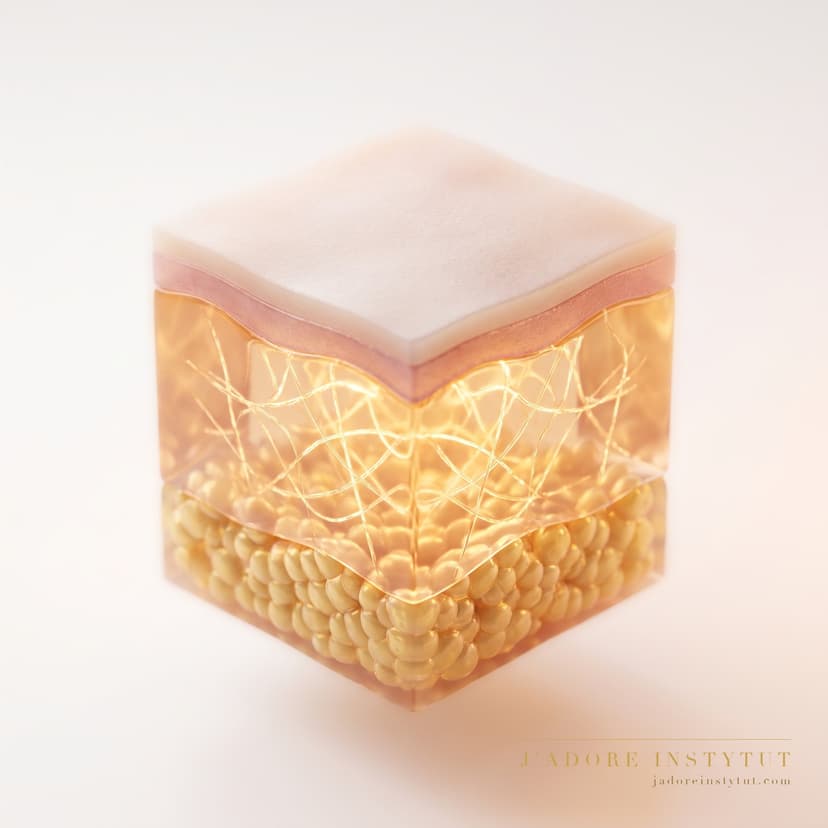
Good to know: it's no accident that old permanent makeup "drifts" towards cool tones. PMU pigments are blends whose individual components fade at different rates — warmer, yellow-red tones tend to fade first, while cooler tones remain longer. A skilled PMU artist accounts for this arithmetic at the colour-selection stage, not only when correcting someone else's work.
MICROPIGMENTATION (PMU) · Consultation with a PMU artist
What the consultation does *not* include: needling or pigment application — it's a diagnostic and design visit. We plan the actual PMU treatment (with healing and a mandatory touch-up after around 4–6 weeks) as a separate visit, once the design has been approved.
Women's and men's PMU
The PMU consultation is above all the domain of women, and this is where we design most fully. A PMU consultation for women usually covers brows, lips and liner: we establish the brow arch and density, the lip contour and shade, the liner thickness and "wing" — always matched to your features, your skin tone and how you wear makeup day to day. This is the moment when a loose "I'd like something with my brows" becomes a concrete design.
What we work with
For men, the PMU consultation usually concerns discreet brow filling — the goal is to help, not to "put on makeup". This is a PMU consultation for men: we assess how to naturally thicken sparse brows, conceal scars or gaps in the line, or restore brows after hair loss, so that the result is invisible as a treatment.
What we work with
Good to know: the same consultation is the starting point for all forms of permanent makeup — brows, lips, liner or freckles. A PMU artist looks at the face as a whole: sometimes what you'd planned as a single treatment looks best only once paired with another (for example, subtle lips balancing bolder brows).
The visit
A calm, structured conversation — no rush, no needle. Here's what a typical visit looks like:
Interview
discussing expectations, makeup style, health and medications; we review "yes, this / no, not this" photos
Analysis
assessing your features, symmetry, skin tone, and — crucially — skin type, which determines the technique
Design
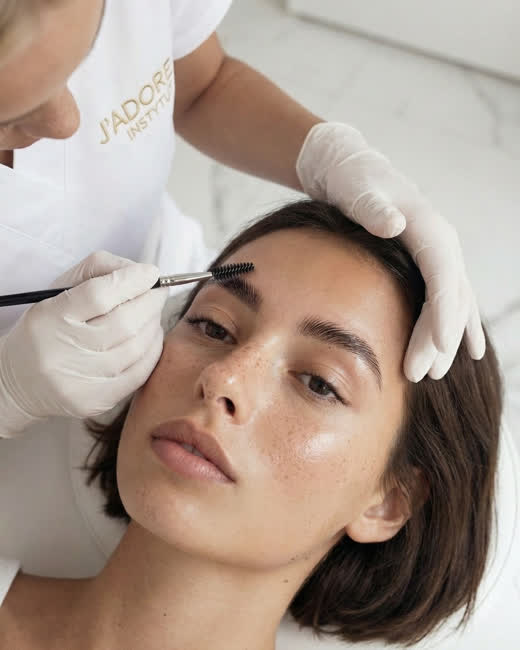
mapping and a dry-run shape drawing (for example, brows in pencil) for approval in the mirror
Colour
selecting pigment to suit your skin tone and hair, with an eye to how it will fade; sometimes a pigment test
Eligibility
a green light or honest advice: postpone, change the technique, or let it go
Plan
agreeing the scope of the actual PMU treatment, plus the date for the treatment and the touch-up after around 4–6 weeks
From the PMU artist's chair
The best consultations are the ones where a client says outright what she's afraid of. "I don't want to look painted on", "I'm worried it'll be uneven", "I saw a friend with bluish brows". Each of these worries can be broken down and addressed at the mirror, showing exactly how we'll avoid it. That's why we draw the design before the treatment — so you see the result before any decision is made.
Portfolio
A record of the work in our salons — the place where we publish treatment frames and, after photo sessions, results.
A record of results — in preparation. We publish photographs of our clients only with their consent.
Aftercare
You don't need to do anything special to prepare for the consultation itself — but a few things will make it far more productive. It's also worth knowing how to prepare your skin for the actual PMU treatment, once the decision is made.
Bring photos you like, and photos you definitely don't like. "No, not this" often tells a PMU artist more than "yes, this" — and it prevents any misunderstanding about the result.
At the consultation, tell us about your medications (especially blood thinners and retinoids), skin conditions, pregnancy/breastfeeding, and any previous PMU. This determines your eligibility and the safety of the future treatment.
This doesn't matter for the consultation itself. But before the actual PMU treatment, avoid coffee and alcohol on the day (and the day before) — they thin the blood, increase bleeding and make it harder for pigment to settle.
Before PMU, stop using strong acids, peels and retinol in the treatment area — we'll agree the timing individually. Skin should be calm and hydrated, not irritated or freshly tanned.
Do you already have some permanent makeup — even old and faded? Tell us at the consultation. Sometimes a new design requires lightening the previous one first, and this can't be "covered up blindly".
Wedding, photoshoot, trip? Tell us at the consultation. The actual PMU treatment needs time to heal and a touch-up after around 4–6 weeks — the result should be ready for the event, not still mid-healing.
Consultation with a PMU artist · MICROPIGMENTATION (PMU)
Most "unsuccessful" permanent makeup jobs that we later correct have one thing in common: a skipped, or badly rushed, design stage. That's why it's worth asking about this step at every salon — and treating it as the most important part, not a formality.
Consultation with a PMU artist
The consultation is a shared starting point — only once it's done do we choose the actual treatment. It most often leads to one (or several) of these paths:
brow shape, density, symmetry
on oily/vascular skin we advise against microblading — we choose the powder method instead
lip colour and contour, or eyeliner
we don't plan liner "blindly" on a drooping eyelid — an assessment at consultation comes first
freckles, or improving old PMU
we can't "cover up" very dark or cold old PMU — sometimes laser removal comes first
What this connects to
The consultation itself doesn't do anything to the skin — its role is to build a plan and point towards the right treatment. Scope, order and timing are decided by the PMU artist, but the logic stays the same: design and eligibility assessment first, then the actual PMU with healing and a mandatory touch-up.
Clients often come in "for brows" and leave with a plan for brows and subtle lips — because it's only when you look at the whole face that you see what will truly "open it up". And the opposite happens too: sometimes someone wants everything done at once, and I suggest starting with one thing, seeing how it heals and how you feel about it, and planning the rest afterwards. The consultation exists to establish the order, not just a single treatment.
Products included
The consultation doesn't stop at "what shape" — it's also a set of decisions that determine whether permanent makeup will age nicely. Here are the four pillars of a good design we focus on:
Assessing whether skin is dry, normal, oily or vascular — this determines the choice of method (for example, hair strokes vs powder).
Dla kogoEvery first PMU treatment; protects against a blurred result on oily skin.
Choosing a shade to suit skin tone and hair with an eye to how it will fade — better to start subtly and build up colour at the touch-up.
Dla kogoAll PMU zones; prevents colour drifting into grey/pink/green.
A shape drawing (for example, brows in pencil) and proportion alignment for approval in the mirror — before anything is done.
Dla kogoEvery PMU treatment; this is the moment you make an informed decision.
Checking contraindications (medication, cold sores, pregnancy, skin conditions, old PMU) and realistic expectations.
Dla kogoEvery person before PMU; determines whether and when to carry out the treatment.
Fact: This isn't a complete list — your features, skin type, treatment history and expectations are unlike anyone else's, which is why we always build the whole design individually, face to face.
Price list
Checking free hours…
From the magazine
Editorial pieces on how this treatment works in practice — what happens during the session, how to prepare, where the limits are and what the first days after look like.
See also
The result laststhe design and agreed plan are the starting point for the actual PMU treatmentJ’adore Instytut
Information. The consultation with a PMU artist is a diagnostic and design visit that precedes permanent makeup (PMU) — it does not involve needling or pigment application. Permanent makeup itself is an aesthetic treatment that introduces pigment into the epidermis/skin; the PMU result is long-lasting (typically lasting several months to a few years, and requiring periodic refreshing), it fades naturally and is not permanent "forever". This is not a medical treatment. The standard for a proper PMU treatment is a touch-up/re-pigmentation after around 4–6 weeks. The above text is for information purposes. Indications, choice of technique and colour, and contraindications are decided by a qualified PMU artist during consultation.
Home care
Cosmetics matched to what your skin needs after a treatment — so the clinic effect lasts longer.
 post-treatment regenerationCell Fusion CDermagenis pH Biome SerumView in the shop(opens in a new tab)
 sun protectionDermaQuestSunArmor SPF50 30 mlView in the shop(opens in a new tab)
 post-treatment regenerationMedMelanoSkinbiotic Elixir Probiotic Repair Serum 50 mlView in the shop(opens in a new tab)
 sun protectionSesdermaREPASKIN Silk Touch Color SPF50View in the shop(opens in a new tab)
 post-treatment regenerationVagheggiEmozioni Plus — Anti-Stress Face Mask 75mlView in the shop(opens in a new tab)
 sun protectionCell Fusion CAquatica Sunscreen 100 SPF 50+/PA++++View in the shop(opens in a new tab)
 post-treatment regenerationMesoesteticMesohyal Post-Procedure Gel CreamView in the shop(opens in a new tab)
 sun protectionSesdermaRepaskin Silk Touch Color Facial SPF50View in the shop(opens in a new tab)