
WarszawaŻelazna 59WarszawaMińska 29AKrakówKarmelicka 45Warszawa · Kraków

Careers

ENPL

Full perspective

African braids for men

African braids for men — practical and purposeful
African braids for men are mainly cornrows — small braids close to the scalp, practical for sport and hot weather, often in simple or geometric patterns. Extensions are used less often, and the effect is usually more minimalist and purposeful: neat, off the face, without daily styling.
Czas
from a shorter visit to a long, relaxed session for dense plaiting
Efekt
a few weeks with proper care
Regeneracja
none — you leave ready to go
Seria
single visit; after a few weeks, take-down and optional refresh
Wykonuje
experienced hair stylist
ListenAfrican braids — this whole page read aloud

When it's worth it — indications

  • For holidays and time by the water — no daily styling needed, they cope well with moisture, the beach and the pool.
  • For sport and activity — cornrows keep hair away from the face during training and in hot weather.
  • When you want a break from daily styling — plait once, and you're set for weeks.
  • When you want length or colour — extensions give an effect your own hair doesn't always allow.
  • For a bold, decorative look — geometric patterns and coloured kanekalon as part of the style.
  • For different hair types — the technique is matched to density and length during consultation.

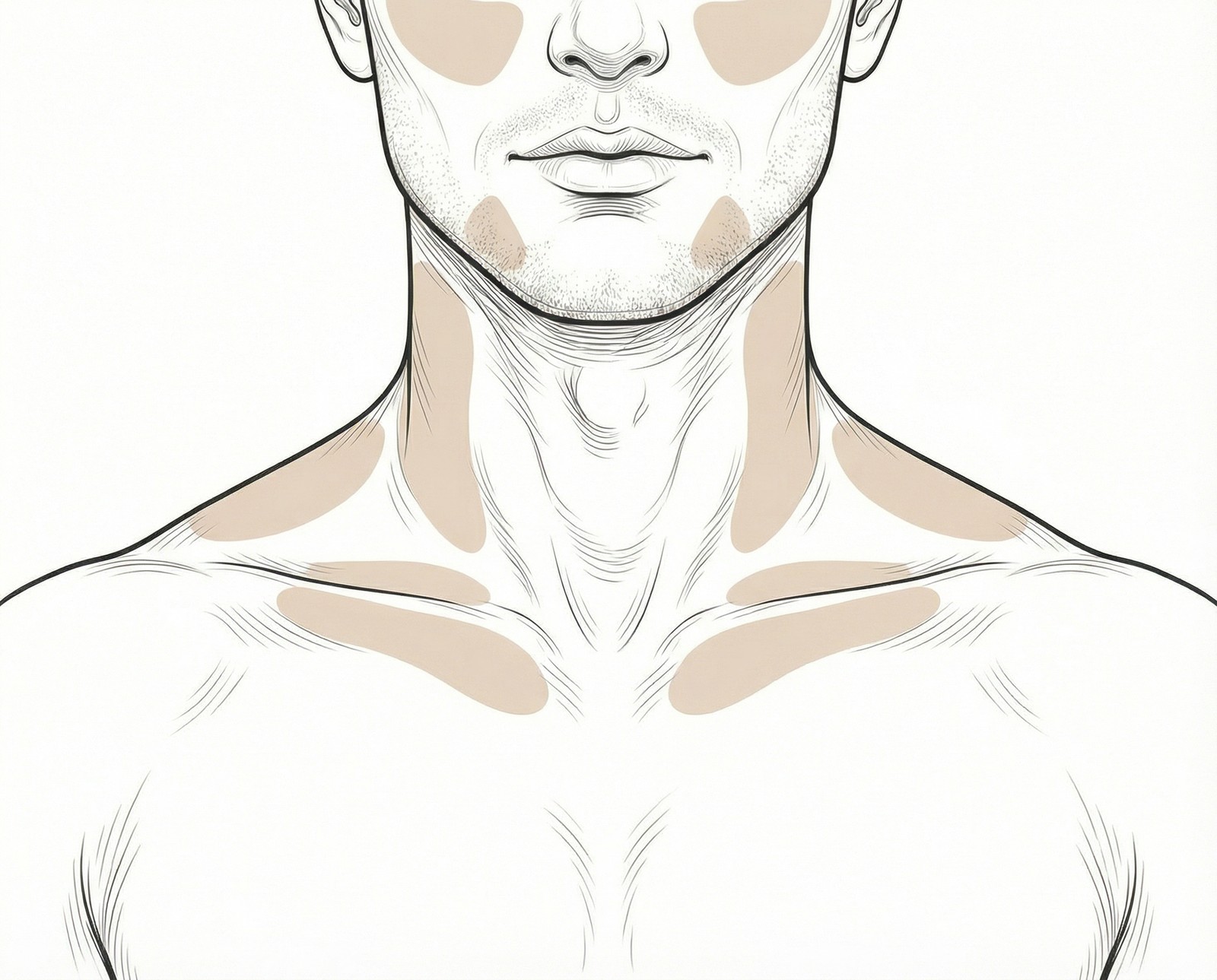
The areas we work on

  1. close-to-scalp cornrows — straight rows or geometric patterns;
  2. shorter, purposeful plaiting for sport and activity;
  3. optional extensions for longer hair;
  4. less decorative, more practical and neat.
Rysunek stref zabiegowych — twarz i szyja, sylwetka męskaForehead and templesPoliczkiJawlineSzyja
Indicative map of the areas

African braids for men — practical and purposeful

Cornrows for men solve a real problem: how to look neat without spending time on daily styling, especially in summer, during sport, and in hot weather. Braids close to the scalp keep hair away from the face, need no gel or touch-ups during the day, and cope well with sweat, pools and salt water — leaving you set for weeks after just one visit.
Men's cornrows are usually simpler, more minimalist patterns than women's styles — parallel rows, sometimes symmetrical geometry, without decorative elements. The effect is clean, precise and purposeful. Extensions are used less often — mainly with longer hair, when the goal is a box-braid look with extra length.

Cornrow patterns — what can be planned

The pattern is the first decision before plaiting. During consultation, the stylist will assess what's achievable on your hair:
  • Straight, parallel rows — a classic, clean option; several to a dozen or so rows across the head. Minimalist, without excess.
  • Geometric patterns — diagonals, grids, braids converging at a single point, asymmetric layouts. A bolder, more decorative effect — for anyone who wants a statement.
  • Nape patterns — short cornrows along the nape as part of a style paired with a beard trim or a fade cut.
  • Full head vs. sections — you can plait the whole head, or just the top, with shorter sides.

When to consider braids — typical situations

African braids solve specific problems men mention most often:
  • Holidays and water activities — cornrows cope with the sea, the pool and heat without falling apart;
  • Sport and training — hair stays away from the face, no elastic band getting in the way;
  • Hot weather — exposed scalp releases heat better than a dense hairstyle;
  • A break from daily styling — if you have longer hair and want to skip styling for a few weeks;
  • A bold, deliberate look — geometric cornrows make a clear style statement.

Frequently asked questions

Are cornrows a good choice for me — or is it too much?
Cornrows are one of the oldest, classic plaiting techniques, worn by men for decades and across every continent. The result — from minimalist parallel rows to precise geometry — is tailored to what you're after. During consultation, we'll show you inspiration and assess what's achievable on your hair.
How long does hair need to be for cornrows?
At least a few centimetres at the root — the exact minimum depends on hair density and texture. Hair that's too short or too sparse won't hold a plait. We'll assess this in person; if it's not possible yet, we'll tell you when to come back.
How do braids cope with training and sweat?
Very well — that's exactly their working environment. Cornrows don't come apart from moisture or sweat, and need no touch-ups after exercise. After training, it's worth drying the scalp and refreshing with a spray if needed.
How long does the visit take, and can I come without preparing?
It's best to come with clean, combed hair. Plaiting time depends on the pattern and braid density — simpler, wider rows take less time, fine and geometric ones take longer. During consultation before plaiting, we'll decide on the pattern and give you an estimated time for the visit.
How do I care for cornrows between visits?
Mainly by hydrating the scalp between braids — a light oil prevents dryness and itching. It's worth using a satin pillowcase at night, which reduces friction and helps the plait hold longer. You can wash the scalp gently with an applicator without undoing the braids.

Where we offer it

African braids for men — we perform it in three J'ADORE INSTYTUT salons: two in Warsaw and one in Krakow.

  • WarszawaŻelazna 59 · Wola · Mirów
  • WarszawaMińska 29A · Praga-Południe · Kamionek
  • KrakówKarmelicka 45 · Stare Miasto · Piasek

Price list

    Book a visit

    Prices come from the salon price lists. The choice of cocktail and the number of sessions is decided by your specialist at the consultation.