

A useful review states the goal and the timing of the assessment
Before booking, read a few extreme and a few moderate reviews, then close the app. Further scrolling usually repeats the same emotions without providing new data. Move the decision to a conversation with the salon. That is where you can check contraindications, the scope of the procedure, the aftercare plan, and the realism of your own goal.
If a salon's profile only publishes reviews selected for promotional materials, also check an independent platform and the recency of the entries. This is not about looking for a scandal, but about broadening the sample. A website naturally shows the best experiences. An external source may reveal recurring problems with appointments, communication, or aftercare that do not appear on an aesthetic board.
Ultimately, the most valuable review does not promise that you will look exactly like its author. It shows the process: the goal was discussed, limitations were named, the reaction was as predicted, and the salon remained available. Such a description does not replace a qualification, but it suggests what to require. The result of Argipeel is assessed on your own skin, under constant conditions, and after the time appropriate for the established goal.
Price reviews age quickly and often do not state the scope, so do not treat them as a price list. One person might have used a package, another a single session, and a third an extended protocol. Check current information on the city website and when booking, without basing your decision on a figure from an archived comment. In this article, numbers do not make sense, as they would change sooner than the principles of a sensible choice.
In the search engine, pay attention to reviews regarding communication before the visit. Did the salon answer a question about retinoids, ask to reschedule after sun exposure, or explain the preparation? Such details show that qualification begins before you enter the salon. At the same time, the lack of a description does not prove that no conversation took place; the author may have considered it obvious. Reviews provide a lead that you later verify directly.
Do not choose one account just because the author is a similar age or describes their complexion with the same word. "Sensitive" can mean redness, contact allergy, a compromised barrier, or simple stinging after a specific product. An assessment of your current state and routine is needed. Profile similarity is useful, but it still does not turn someone else's story into a forecast for your skin.
The best method for reading reviews ends with a list of questions, not a ready-made verdict. Note what repeats in the accounts: the quality of the interview, the clarity of aftercare, the availability of contact, the way of responding to a problem, and the consistency of the result with the promise. Check these points during your consultation. If the answers are specific, the reviews have served their purpose. If the salon avoids the conversation, a high average should not drown out the current signal.
The first filter concerns the similarity of the goal. A review from someone who wanted to temporarily smooth their skin before an event does not answer the question about persistent hyperpigmentation. A review concerning oily skin does not necessarily predict the reaction of a dry, compromised barrier. Look not only for the name of the treatment but also for the initial problem, skin age, skincare used, and the time of assessment. Without this data, the author's enthusiasm remains true but is not very transferable.
The second filter is the moment of publication. A review written at the reception describes the atmosphere and immediate appearance, not the reaction after a few days. A review after a week can say more about comfort, peeling, and the return to your routine. An assessment after a series answers a different question than a first visit. Do not mix these perspectives into one average, as each concerns a different stage of the result.
A short praise of "super result" does not define what changed. A useful review names texture, freshness, the visibility of spots, the reaction after washing, or how makeup sits. The more specific the description, the easier it is to compare it with your own goal. This is still not a diagnosis or a promise, but at least you know what the author considered a result, instead of assuming that both people understand the word in the same way.
The word "gentle" also needs explanation. For one person, it means no pain during application; for another, no peeling; and for a third, the ability to work the next day. Ask what dimension of gentleness is important to you. A peel can be comfortable in the salon and still require simpler aftercare later. A review without separating the feelings during the treatment and the reaction after the treatment does not provide a full picture.
The lack of peeling does not prove a lack of effect, and heavy peeling is not automatic proof of higher efficacy. Reviews often treat a visible process as a quality metric because it is easy to notice. Meanwhile, the protocol is selected according to the skin and the goal. A salon that promises every person an identical reaction ignores differences. Look for reviews describing the consistency of the course with the promise, not a contest for the most spectacular flakes of epidermis.
Photos require a separate audit. Compare shadows near the nose, cheek shine, colour temperature, camera distance, and facial expressions. Wet serum smooths light reflection, and portrait mode can remove texture without a visible filter. An honest shot should have similar conditions and information about the time. If these elements are missing, the photograph shows the aesthetics of the publication, not the scale of the result.
Sponsored reviews do not have to be false, but they have a different context. A person may have received the service, care, and time for the material in exchange for publication. Marking a collaboration allows you to read the content consciously. Pay attention to whether the author talks about limitations and the subsequent reaction, or only repeats the brand's messages. The lack of a critical opinion does not invalidate the account, but it reduces its usefulness as an independent source.
A series of reviews published in a short time, in similar language and without details, may result from a campaign asking clients for an evaluation. This does not prove manipulation, but the star average then becomes less informative. Read the distribution over time and the content. A few specific accounts about the consultation, aftercare, and contact after the treatment say more than dozens of sentences with the same set of adjectives.
A negative review also requires checking the goal. A complaint about peeling might describe a previously announced reaction, but a complaint about a lack of response during increasing swelling concerns care and has greater significance. Separate dissatisfaction with a predictable course from a situation where the salon downplayed symptoms, did not provide aftercare, or changed the scope without agreement. Not all allegations have the same weight.
The company's response to a difficult review says the most about the standard. Is it calm, specific, and does it encourage safe contact, or does it reveal private information and attack the author? A public response should not contain health data or details of the visit without consent. A professional tone does not resolve the dispute, but it shows how the place communicates under pressure and whether it can protect confidentiality.
The lack of negative reviews cannot be interpreted without knowing the number of visits, the age of the profile, and the platform's moderation method. A perfect rating could mean great work, a new profile, or a small sample. Do not look for suspicion at all costs. Simply do not treat the number itself as a substitute for a consultation. Reviews help choose questions, but they do not qualify the skin.
Local reviews may concern different specialists, branches, and periods. Check the date and the specialist's name if the author provided them. A review from a few years ago does not have to describe the current team or protocol. On the other hand, a new wave of praise does not automatically cancel out older problems. Look for information on whether the place explained a change in procedure and whether a similar allegation is repeating now.
Do not judge safety solely on the basis of the phrase "nothing happened to me." A single person may have no contraindications, use simple skincare, and tolerate the procedure well. This does not say whether the salon collected an interview about medications, retinoids, sun exposure, and active lesions. The most important elements of safety happen before application, and reviews rarely describe them. You must check them yourself.
Similarly, the description of pain has limited value without the protocol and individual tolerance. "I felt nothing" does not guarantee an identical course, and "it stung a lot" does not prove an error. It is important whether the person performing the treatment observed the skin, asked about feelings, and reacted to changes. A review that describes this communication is more useful than a number on a pain scale.
Sometimes a review praises additional steps that are not part of every visit. A mask, LED, massage, or another preparation can affect the immediate appearance and comfort. Ask exactly what scope the author is describing. If your booking includes only Argipeel, do not automatically expect the effect of a package. Comparing different protocols under a common name leads to disappointment, even when both services were performed correctly.
A review will not say whether a specific spot requires a medical assessment first. Not every hyperpigmentation is a cosmetic problem for peeling. A lesion of unclear character, active dermatosis, infection, or a compromised barrier can change the decision. If the salon guarantees the removal of every lesion based on a photo in a message, reviews should not outweigh that red flag.
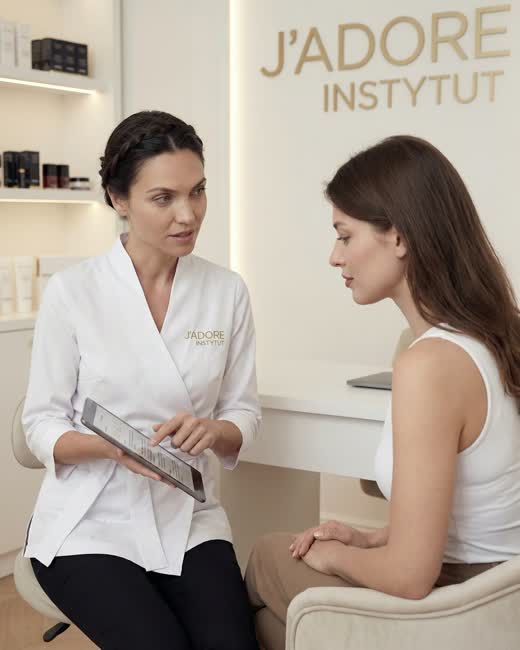
During your own consultation, ask for one sentence of limitation: what Argipeel will not do in your case. A reliable answer might concern deep scars, the type of hyperpigmentation, an active inflammatory state, or the time needed for a result. If you hear only advantages, go back to your questions. An honest specialist does not lose credibility by talking about boundaries; that is precisely when they show that they are selecting a service, not selling a name.
After the treatment, write your own review only when you can separate the service, sensations, reaction, and result. Write what the goal was, when you are assessing the skin, and whether the aftercare corresponded to the course. You do not have to reveal health data. A specific, balanced review will help the next person more than a maximum number of stars without content. In this way, you improve the quality of the source you wanted to use yourself.
Look for reviews that say whether the goal was texture, a fresher look, sebum regulation, or working with hyperpigmentation. The moment also matters: an immediate result and an assessment after a few weeks answer different questions. A sentence without a date may concern only the salon's skin finish.
Reviews do not show the qualification process
From reviews, you will rarely learn whether someone was taking medications, using a retinoid, had an active infection, or had recently been sunbathing. You also do not know whether the treatment was performed according to the same protocol. The name of the preparation does not mean an identical application for every person.
Before and after photos must be stripped of the advantage of light
- Check the direction of the shadow near the nose and under the eyes.
- Compare the shine — an oily product can imitate smoothness.
- Pay attention to different facial expressions and camera distance.
- Look for information on how much time passed between shots.
- Do not treat a smoothing filter as documentation of a result.
A negative review also requires context
Peeling does not always mean an error, and its absence does not prove ineffectiveness. It is important whether the reaction was within the announced course and whether the salon responded to the report. The way the problem was solved says the most: the availability of contact, specific aftercare, and not downplaying symptoms.
What no review will decide for you
Reviews do not qualify the skin, do not diagnose hyperpigmentation, and do not determine whether Argipeel is the best method. A peel will not remove every pigmentary lesion and should not be performed on actively irritated skin just because hundreds of people gave a high rating.
Warsaw test before booking
You will find the offer description on the Argipeel in Warsaw page. Before booking, check whether the consultation covers medications, home acids, retinoids, and sun exposure. Ask about the contact plan after the treatment. These are data that a review ranking will not verify for you.


