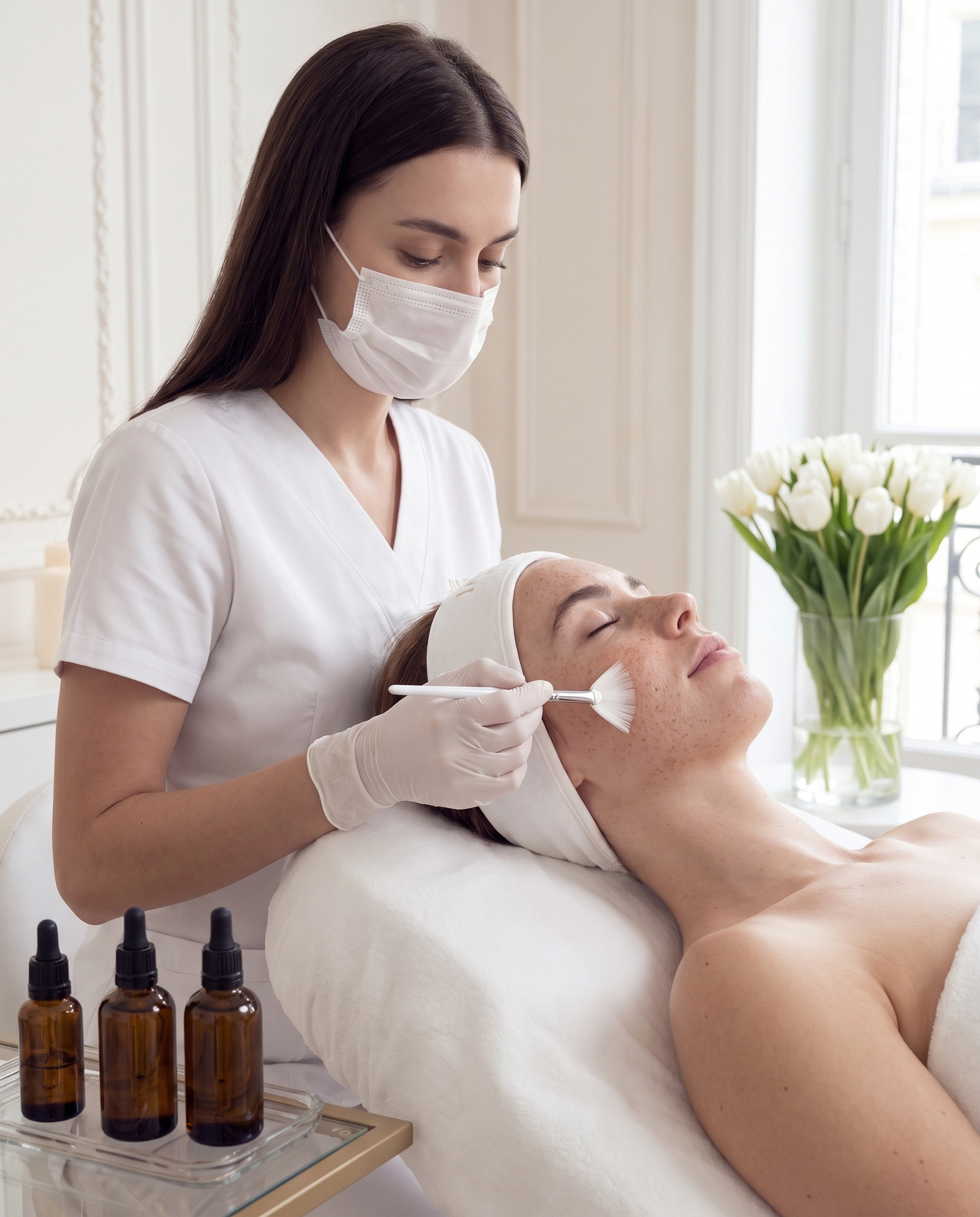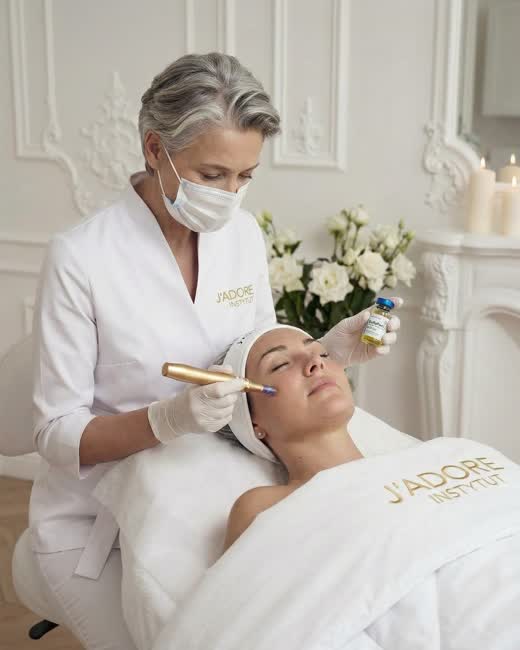
A consultation should determine what the spot is before the name of the peel is mentioned.
Hyperpigmentation after a single pimple, diffuse pigment that worsens in summer, a sun freckle and a darkening lesion with an irregular border are not the same indication. The cosmetologist should ask about when the spots appeared and their relationship to the sun, hormones, inflammation and your skincare. If the picture is unclear or the lesion looks suspicious, the correct step is a dermatological consultation. A peel is not meant for testing whether a suspicious spot will "go away".
Notice whether the person assessing you examines your face without makeup and in even light. Pigment near the hairline may have a different pattern than a mark on the chin, and redness seen through a layer of foundation is easily mistaken for a brown spot. A good place will define the goal modestly: a more even appearance, work on superficial tone, improvement of skin tolerance. A promise that Ferulac will clear every spot bypasses the most important part of the decision.
During your first visit, say in your own words what bothers you. "My face looks grey after winter" provides a different starting point than "this spot has grown in recent weeks". In the first case, you can discuss a cosmetic treatment. In the second, you should not cover up the need for diagnostics with a proposal for a stronger layer. A salon deserves your trust when it can refuse to sell a procedure.
Ask exactly what product will be used and why it was chosen.
Ferulic acid is associated with antioxidant activity. In some protocols, it appears alongside other substances that change the sensations, exfoliation and aftercare. If you use a retinoid or tolerate vitamin C poorly, a general assurance of a "gentle ferulic" is not enough. The composition should be compared with your routine and history of reactions. This is specific information, not a detail intended only for the person performing the treatment.
The origin, expiry date and storage of the product are part of quality.
A red flag is pouring the preparation into an unmarked container before you arrive or refusing to provide the name. The packaging should allow you to reconstruct what was used during the session. This documentation matters if the reaction differs from what was expected or if you change salons during a series. Saying "it was an acid for hyperpigmentation" does not give the next person the data needed for an assessment.
The interview should cover medications, home acids and the last few weeks in the sun.
Questions about retinoids, isotretinoin, medications affecting healing or light sensitivity, antibiotics, allergies and dermatological therapies are not a form to be ticked off quickly. The answer may mean a change in protocol, a consultation with a doctor or postponing the visit. Do not stop taking any medication on your own just to fit into the treatment schedule. The place should respect the priority of medical treatment.
The second part of the interview concerns your bathroom. Serum with retinol, strong acid, home peels, a cleansing brush, spot treatments for pimples and recent irritation after depilation affect your tolerance threshold. A client may say that her skin is accustomed to it because she has been using active ingredients for years. The cosmetologist should see the state of the barrier today, not rely on a declaration of resistance.
In Warsaw, it is easy to go from working by a window to a long walk or a day spent in a car. The salon should ask about exposure, trips and the possibility of using protection after the treatment. A fresh tan, sunburn or upcoming holidays may change the date. A filter is not a pass to perform a peel under any conditions.
The cosmetologist should examine the barrier, not just count the hyperpigmentation.
Before the treatment, dryness at the sides of the nose, cracks, fresh scratches, active cold sores, redness and reaction to touch all count. A person with a greasy T-zone may simultaneously have dehydrated, stinging cheeks. If the salon looks only at the shine and spots, they may overlook a surface that cannot tolerate another stimulus. Sometimes the right modification is a smaller area, a gentler protocol or postponement.
Notice the specialist's reaction when you show a small wound. A good place does not automatically ensure that they will avoid it with a brush and everything will be fine. First, they assess where the damage came from and whether the rest of the face is also weakened. Postponing the date does not mean excessive caution. It means that the plan takes into account living skin, not just the calendar.
During application, observing areas that react differently is what matters.
The area around the nose, lips, temples and previously irritated fragments may signal discomfort earlier than the rest of the face. The cosmetologist should ask about the nature of the sensations and simultaneously look at the skin. The mere statement "it must sting because it works" is not control. A feeling of warmth or tingling may occur, but sharp, localised pain requires a reaction, not an exercise in endurance.
During the next session, the procedure should not run on autopilot. If longer-lasting dryness appeared around the lips previously, this fact must influence the protection of the area, the number of layers or the decision to skip the spot. A constant series name does not mean constant execution. A salon that keeps documentation remembers the reaction from the previous visit and can say what is changing.
Aftercare instructions should be written down and tailored to the formula used.
Before you leave, you should know when to wash your face, what to use in the evening, how long to pause retinoids and other acids, when to return to training and how to protect your skin from the sun. A general "please moisturise" is not enough. At home, questions arise when the salon is already closed and the skin starts to feel tight. Written instructions limit improvisation.
Also check if the recommendations fit your cosmetics. The instruction to use a gentle cream sounds reasonable, but a client might consider a product with retinol or acid to be gentle because she has been using it for a long time. Ask for the functions and ingredients that should be temporarily stopped to be named. The salon does not have to sell the entire set to provide a clear minimum.
The series plan should include moments of assessment, not just dates.
Work on skin tone rarely ends in one meeting, but a series should not be sold as a closed ritual without control. Ask what will be assessed after the first procedure: the duration of redness, barrier comfort, the area of exfoliation, pigment reaction and the performance of home care. Only on this basis can the next session be maintained or corrected.
A client returning after a few weeks may say that she sees radiance, but the spot still looks the same. This is not an automatic reason to increase intensity. You need to re-evaluate the type of pigment, the conditions of the photos, sun exposure and the goal. If the Ferulac mechanism does not correspond to the problem, an honest salon changes the plan or refers you elsewhere instead of repeating the treatment just because the package lasts.
Comparison photos only make sense under the same conditions.
Ask for documentation without makeup, camera filters and coloured lamps. A difference in white balance can make the skin look lighter even if the pigment has not changed. A post-treatment shot taken in soft light should not be compared with an initial photo under a harsh lamp. Good documentation helps to assess the work, not to advertise it.
Not every improvement is visible in the first frame. At the same time, a photo should not replace a conversation about tolerance. The skin may look more even but sting when in contact with water for several days. Such a result is not a success to be repeated without correction. The salon should compare the image with your sensations, skincare and the healing process instead of choosing only the most favourable moment.
Care after leaving shows the standard better than the treatment room.
Before the treatment, determine where to send a photo and during what hours you can get an answer. The salon should distinguish between typical tightness and symptoms requiring a quick reaction and tell you when medical help is needed. Blisters, increasing pain, significant swelling, oozing or allergic symptoms should not wait for the scheduled check-up.
A red flag appears when, after reporting a problem, you only hear that the skin must cleanse itself. Such an answer does not take into account the time, extent or nature of the reaction. A responsible place will ask about the cosmetics used, the time the symptom started and its change. They will not solve every situation on their own, but they should be able to indicate the limits of their own competence.
The day before the appointment checks if the salon can change a decision.
On the evening before the visit, a cold sore, a fresh pimple scratched during makeup removal or stinging after a new cosmetic may appear. Call and describe the situation instead of hiding it under concealer. The reception's reaction says a lot about the standard. The answer "please come in, we will see" may be reasonable if the decision is made by the cosmetologist after looking at the skin. An automatic assurance that the appointment will definitely take place is not.
Honesty on the part of the place is equally important. If, after an assessment, it turns out that the treatment can only be performed on part of the area or in a milder variant, you should receive an explanation before starting. Changing the plan while already in the chair cannot be presented as an unexpected addition. Informed consent concerns what is actually to happen that day.
Combining Ferulac with another procedure requires a calendar, not a package slogan.
A salon may propose Ferulac as part of broader work on skin tone, but they should name the order and reason for each step. A peel, laser, microneedling or depigmentation are not blocks that can be arranged at any interval. Each tool burdens the skin in a different way. The question is therefore not only "what can be combined", but when the surface will be ready for the next stimulus.
Do not agree to the argument that a combination always strengthens the result. Sometimes the best plan is one treatment and calm skincare. Sometimes Ferulac plays an auxiliary role, and the main problem requires a different method. The salon should justify the whole thing with the mechanism, the state of the skin and the goal, not the attractiveness of the package name. The lack of a next step can also be the correct decision.
The first visit and the continuation of the series require different questions.
During the first contact, the skin's history is most important: reactions to acids, tendency to cold sores, therapies, daily protection, type of spots and realistic expectations. The cosmetologist does not yet know your tolerance threshold. A more cautious start allows you to gather information that a questionnaire cannot provide. The lack of strong exfoliation after the first session does not mean that the place did too little.
A returning person should be asked about the course of the entire period between visits, not just whether she liked the result. She could have passed the first week without any problems and then started a new medication or gone out into the sun. A salon that sees a regular client and skips the interview risks working on outdated data. Knowing the face does not replace a current assessment.
After a few treatments, expectations can shift unnoticed. The initial goal was a more even appearance, and later the client starts counting on the disappearance of melasma or a change in scar structure. The person in charge should stop this expansion and rename the limits of Ferulac. Continuing a series without a shared understanding of the goal creates disappointment, even when the procedure is performed correctly.
Six red flags when choosing a place for Ferulac
- booking a treatment without questions about medications, skincare, cold sores and recent sun exposure;
- a promise to remove every type of hyperpigmentation or a guaranteed effect after one session;
- the lack of the full name of the preparation and refusal to show the marked packaging;
- treating strong stinging as proof that the peel is working better;
- selling an entire series without a planned assessment of the reaction after the first treatment;
- the lack of written recommendations and a clear channel of contact in case of worrying symptoms.
A single imprecise answer does not necessarily disqualify a place, provided the person checks the documentation and returns with facts. The real problem is a pattern: pressure for a quick procedure, a lack of questions, and replacing facts with empty assurances. Ferulac does not require a hospital-like atmosphere. However, a professional chemical peel requires order, a recognisable product, and a person who knows when to pause the plan.
In Warsaw, you can also choose between Żelazna and Mińska.
J'adore Instytut runs two salons in Warsaw: at ul. Żelazna 59 and at ul. Mińska 29A/46. The Żelazna salon is open from Monday to Saturday between 8:00 and 21:00, and on Sundays from 11:00 to 19:00. The Mińska salon is open from Monday to Saturday between 9:00 and 21:00. You can check the current range of services and the price list at Ferulac in Warsaw. When booking, please confirm your preferred location and the practitioner.
The proximity of the salon is a practical matter, but it does not replace qualifications. If you are walking home in direct sunlight, driving a long distance in a heated car, or have a workout the next day, please mention this during your consultation. Your appointment time should account for what will happen to your skin after you leave the salon. A good treatment performed before unavoidable sun exposure may simply be poorly planned.
The final decision rests on five answers.
Can the person qualifying you name the type of problem and tell you what Ferulac will not change? Will you learn the name and origin of the product? Does the interview cover medications, home active ingredients, and sun exposure? Does the series plan have check-points? Will you receive specific Aftercare and contact details after the treatment? If you receive a factual answer to every question, you have the basis for an informed decision.
Do not choose a salon based on the strongest promise or the longest menu of acids. With Ferulac, quality is revealed in the ability to recognise boundaries. The place should know when the treatment is suitable, when to change the variant, when to wait, and when to refer a concern to a dermatologist. This is the standard that a photo of a glowing face alone will not show.