Are acne scars really a “problem” — and what is actually on your skin?
Before we move on, one distinction can save you a great deal of frustration: not every mark left by acne is technically a scar. Skin can retain different reminders, and each requires a different approach.
Hyperpigmentation (PIH)
Flat, dark marks — these are NOT scars
- Pink, red or brown marks after an inflammatory lesion
- The skin underneath is FLAT — the texture is unchanged
- They may fade over time on their own (months to years)
- They respond well to peels and brightening treatments
Atrophic scars (indentations)
Altered texture — genuine scars
- Indentations in the skin: ice pick, rolling and boxcar scars
- More visible when the skin is dull or dry
- They will not “disappear on their own” — they require stimulation for remodelling
- Dermapen works precisely here — it stimulates collagen production at the site of tissue loss
Hypertrophic scars / keloids
Raised and firm — rare after facial acne
- Connective tissue has grown ABOVE the level of the skin
- More common on the chest and arms
- They require a separate consultation and a different approach
- Dermapen is NOT a standard treatment for keloids
Why is this distinction so important? Because hyperpigmentation responds differently from an atrophic scar — and the plan for addressing each is entirely different. Dermapen is primarily a tool for atrophic scars, meaning indentations. If you only have dark marks with no change in texture, your specialist may suggest something else first. It is worth knowing this before your consultation, so you can have a specific discussion.
When is dermapen suitable for teenagers — and why does age matter?
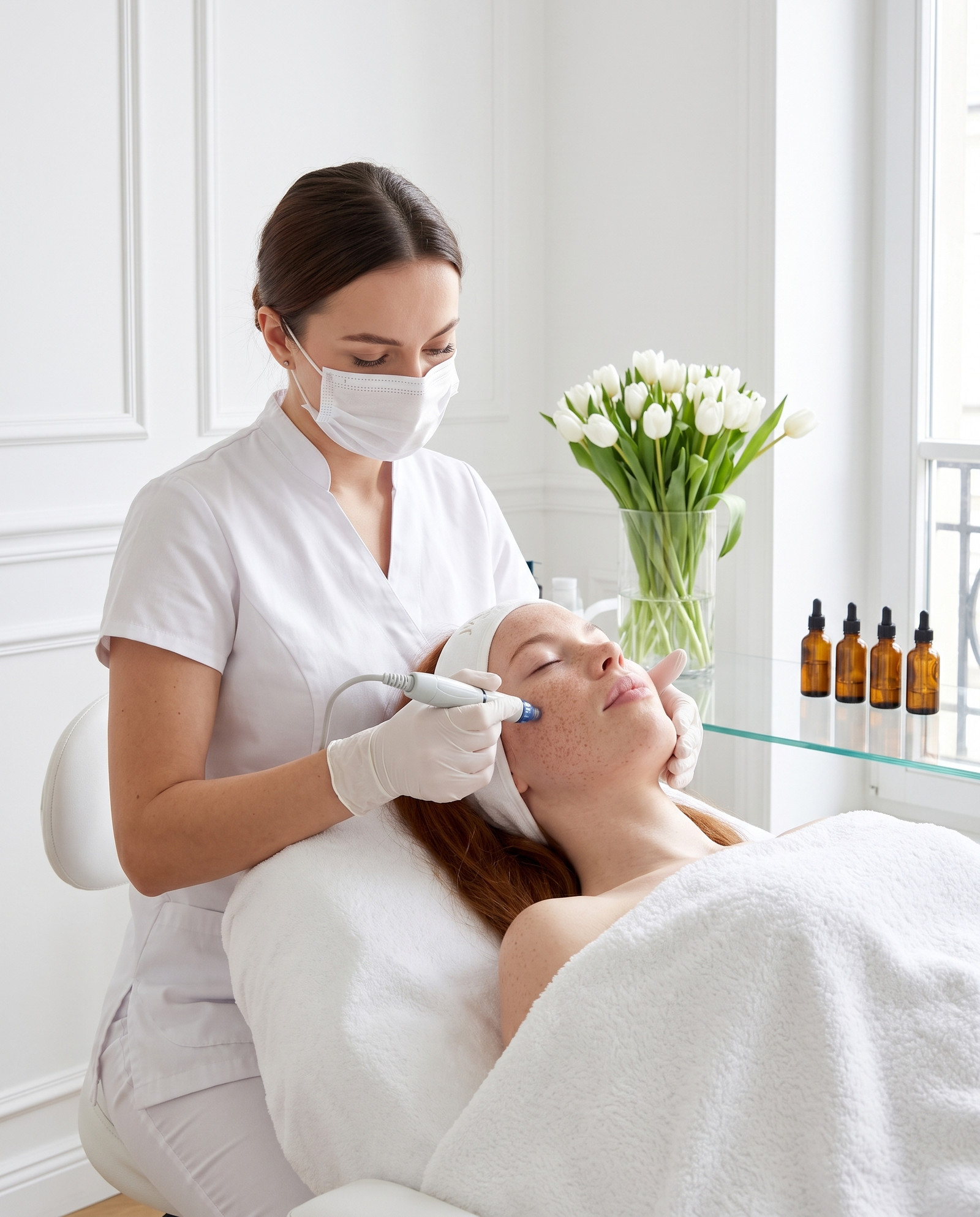
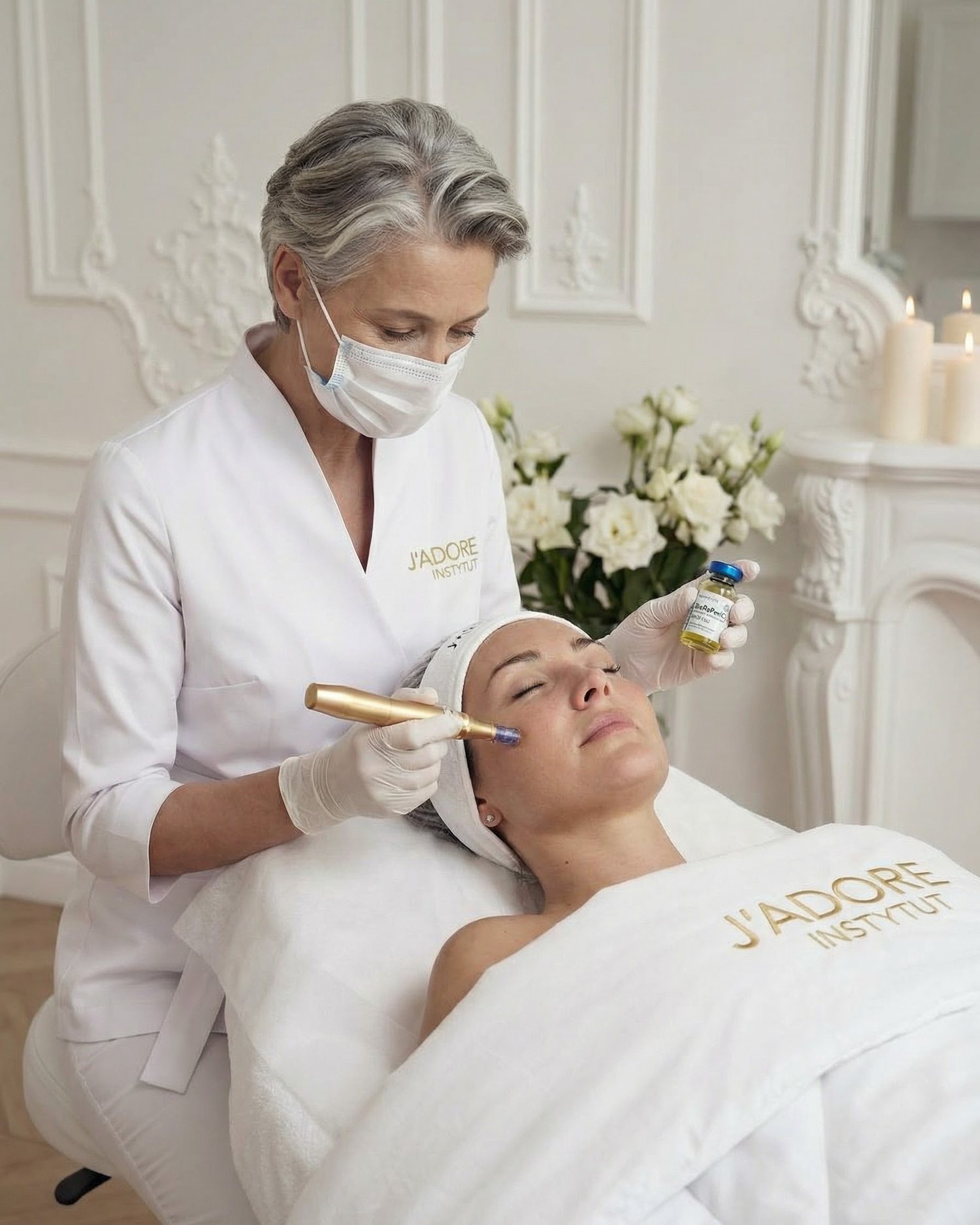
Dermapen works through controlled micro-injuries in the skin — numerous tiny punctures stimulate the natural healing process and collagen production. This leads to gradual skin remodelling at the scar site. It sounds simple, but “for teenagers” comes with an important qualification.
The skin of a person aged 14–15 is still developing intensively. Hormonal balance can be unstable, and acne may return. Performing dermapen on active, inflamed skin is contraindicated — it could spread inflammation and worsen the problem instead of addressing it. At J'adore, microneedling treatments for teenagers are performed from the age of 16, when acne has genuinely resolved or is well controlled, rather than only temporarily calmed.
Action plan — step by step
Here is the framework we use in the salon to guide teenagers (and their parents) from the first appointment to visible, genuine results. Every step has its place — it is not worth skipping any of them.
- 01
Step 1 — Consultation with a specialist (and skin assessment)
Before anything happens, an honest conversation about your skin is needed. The specialist assesses whether acne has genuinely resolved, what type of scars you have and whether your skin is ready. For anyone under 18 — the consultation takes place with a parent or guardian. This is the stage where you receive a genuine answer to the question, “is dermapen right for me now?”
- 02
Step 2 — Skin preparation (a few weeks beforehand)
Good skincare before a series is not marketing — it is an investment in your results. Hydrated skin with a strengthened barrier and no active inflammation responds better to treatment. Your specialist will often recommend SPF as essential, not optional, and may sometimes suggest gentle preparatory peels. If the teenager uses retinoids or strong acids prescribed by a dermatologist, a break is necessary — the specialist will determine the details.
- 03
Step 3 — A series of treatments (not one, but several)
Dermapen for atrophic scars usually involves a series — the result of one treatment is noticeably weaker than the result of a full course. Usually, several sessions are recommended at intervals of several weeks. The exact number depends on the condition of your skin and the depth of the scars. Your specialist creates the plan after assessment. Importantly, your skin works between treatments — remodelling collagen — so these breaks are not wasted time.
- 04
Step 4 — Aftercare (this makes a difference)
After dermapen, your skin will be red and sensitive for several days. It may exfoliate slightly. This is a normal sign of healing, not a reason to panic. A high-SPF cream is essential (every day throughout the entire treatment period), along with moisturising gels with simple formulas, avoiding make-up for the first few days and avoiding activities that cause heavy sweating. These are not “optional recommendations” — following them directly affects your results.
- 05
Step 5 — Results assessment and deciding on the next steps
Collagen matures over weeks — the result of a full series is assessed several months after the final treatment, not a week later. It is worth taking photographs in the same lighting conditions, as daily observation in the mirror can be misleading. After assessment, your specialist may suggest continuing treatment, changing the protocol or adding complementary treatments — such as a peel or biostimulator.
What you should never do
There is plenty of advice online about “at-home dermapen”, “DIY rolling” and ready-made kits bought online. With acne scars — especially in teenagers — this route can worsen the problem rather than solve it.
In short: salon, specialist, protocol. With teenage acne scars, this is not excessive caution — it is basic protection against worsening a problem that is already emotionally difficult.
When to see a specialist — and where to start
If you are wondering whether “it is time already”, this list should clear up any doubts. The situations below are a sign that it is worth booking a consultation without further delay.
- Acne has been inactive or well controlled for at least 2–3 months, and visible atrophic scars remain (indentations in the skin).
- The teenager is 16 years old or older, and the scars clearly affect their wellbeing, confidence or peer relationships.
- Hyperpigmentation and uneven texture do not improve despite several months of regular, good skincare.
- Acne treatment supervised by a dermatologist is nearing its end or has finished — this is a good time to ask about the next step.
- A parent or guardian wants to understand what the treatment can realistically achieve, what the contraindications are and what the protocol involves — a consultation is an informational appointment, not a commitment.
An important practical point: if the teenager has been or is under the care of a dermatologist, it is worth bringing information about any medicines used. At the very least, know when treatment ended. The specialist in the salon will make sure the skin is ready — this is not bureaucracy, simply treatment safety.
Consultation at J'adore begins with a skin assessment and an honest conversation. If dermapen is not suitable at this stage, we will tell you directly. We will also explain what to choose instead, or when to return. No pressure and no unsupported promises. Just a plan that makes sense for this particular skin.