What actually sets the two methods apart
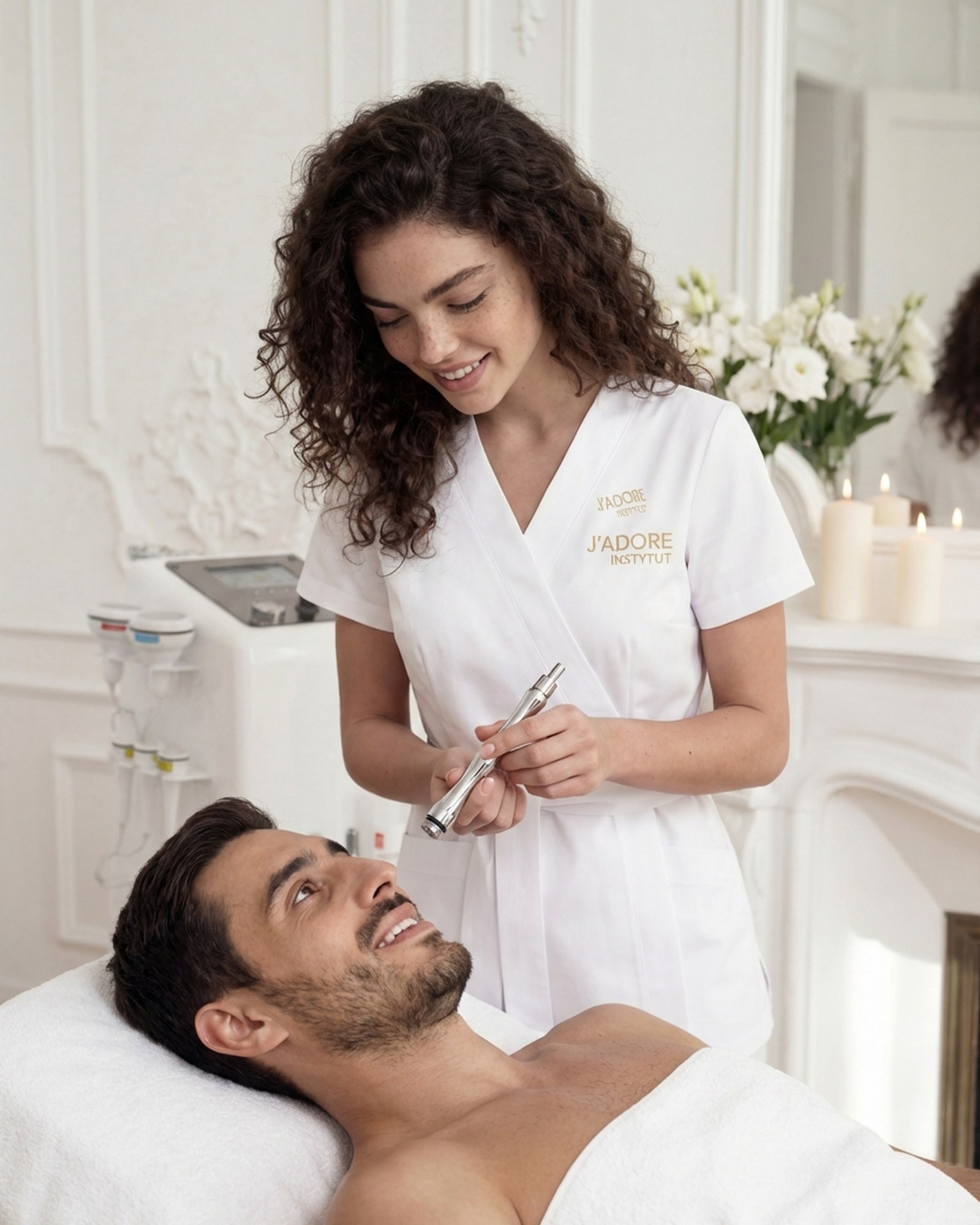
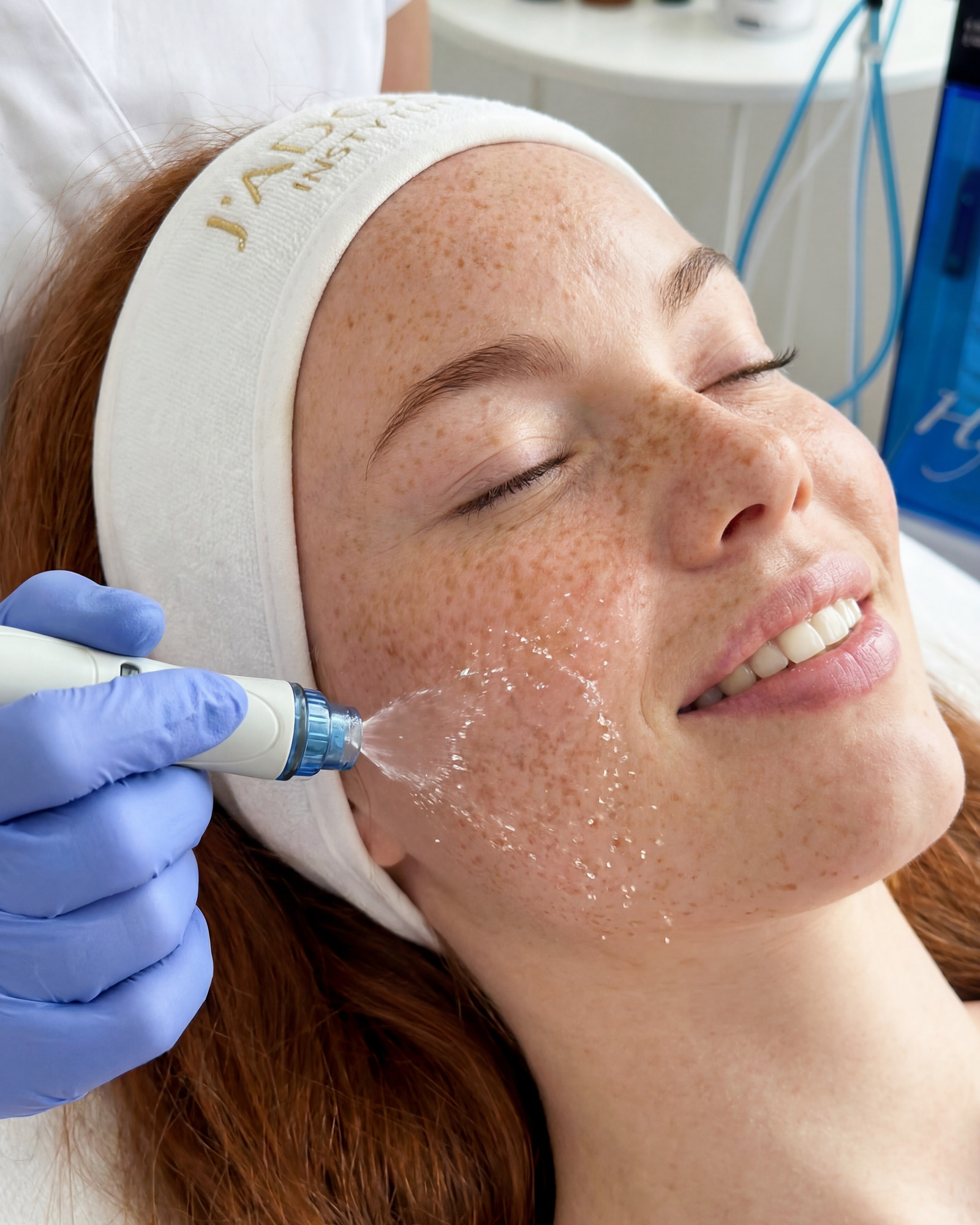
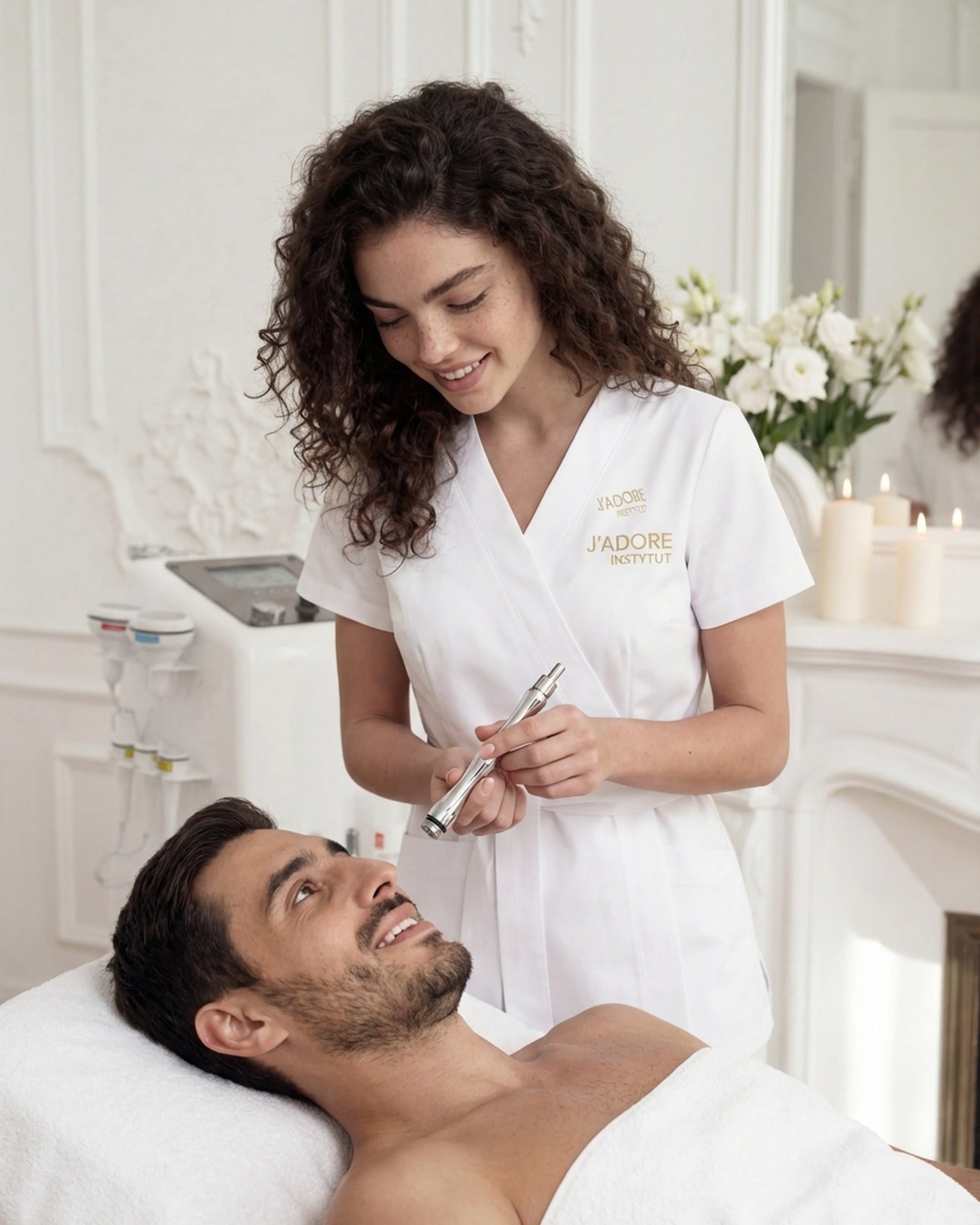
Microdermabrasion is mechanical exfoliation — but the same principle can be delivered in two ways. Diamond uses a handpiece coated with fine diamond particles. It rotates or glides across the skin, exfoliating it with precision and control. Crystal (sometimes called crystal-based) sprays a stream of fine corundum crystals that strike the skin and bounce off, while the device simultaneously suctions them back up. The exfoliating effect is similar, but the way the two methods work is quite different.
Diamond microdermabrasion
precise, controlled depth
- ideal for acne, scars and hyperpigmentation
- the handpiece works with precision, targeting small areas — it can reach close to the eyes and lips
- no loose particles — safe for sensitive skin
- adjustable intensity, from a gentle refresh to deeper cleansing
Crystal microdermabrasion
intensive, even abrasion
- effective for thick skin, excess keratinisation and grey, dull skin
- covers larger areas in one pass — works well on the décolletage and back
- more intensive exfoliation on thicker body skin
- smoother skin texture in less time
How to check in the mirror which one suits your skin
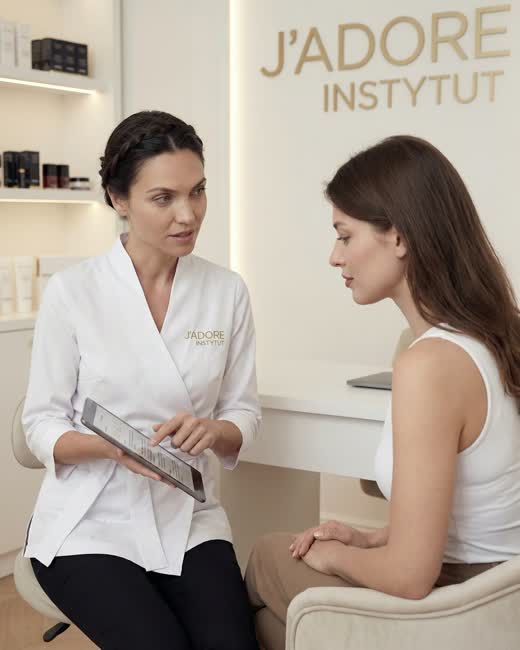
You don't need to wait for a consultation to get an initial answer. A simple at-home test in front of the mirror, in good light, gives you a solid starting point for the conversation with your cosmetologist:
- Gently run a finger over your cheek. If the skin feels smooth but looks dull and lacks radiance, this is usually down to a build-up of dead skin cells. Both methods will help, but diamond is the gentler starting point.
- Look at your skin under strong side lighting. Visible rough texture, thickening around the nose, a denser epidermis — this points to crystal, especially if the skin is thicker and less reactive.
- Check for active inflammatory lesions (red pustules, abscesses). If you have them, neither type of microdermabrasion is suitable until the skin has calmed down. A different kind of cleansing works better in the meantime.
- Touch the skin around your eyes. If this area needs attention (fine lines, hyperpigmentation), diamond is the only option that can safely work there. Crystal is ruled out.
- Think about your body. On the décolletage, arms and back, crystal handles thicker skin better; diamond suits more delicate areas.
The at-home test is only a first step. The final decision belongs to your cosmetologist, who will assess epidermal thickness, sebaceous gland activity and any inflammation. But arriving with the question already in mind saves time and gets you to the right method faster.
When to choose one over the other — a decision guide
If you're not sure where to start, this simplified list of key questions will help point you in the right direction. It's not a diagnosis — it's a starting point for the conversation with your specialist:
- I have sensitive, vascular or actively acne-prone skin → diamond (or cavitation cleansing first, as preparation)
- I want treatment around the eyes and lips → diamond only
- I have thick skin on the body — décolletage, back → crystal, or a combination
- My priority is acne scars and hyperpigmentation → diamond, often as a series combined with a peel
- Grey, dull skin after winter → both help; diamond is the better starting point, crystal suits thicker skin
- I want a "wow" effect before an important event → diamond — lower risk of next-day redness
When it's worth combining microdermabrasion with another treatment
Microdermabrasion works well as a standalone treatment, but its real strength shows when combined with other methods. Once the epidermis has been exfoliated, active ingredients penetrate deeper and work more effectively. Your cosmetologist always decides on the order and combination:
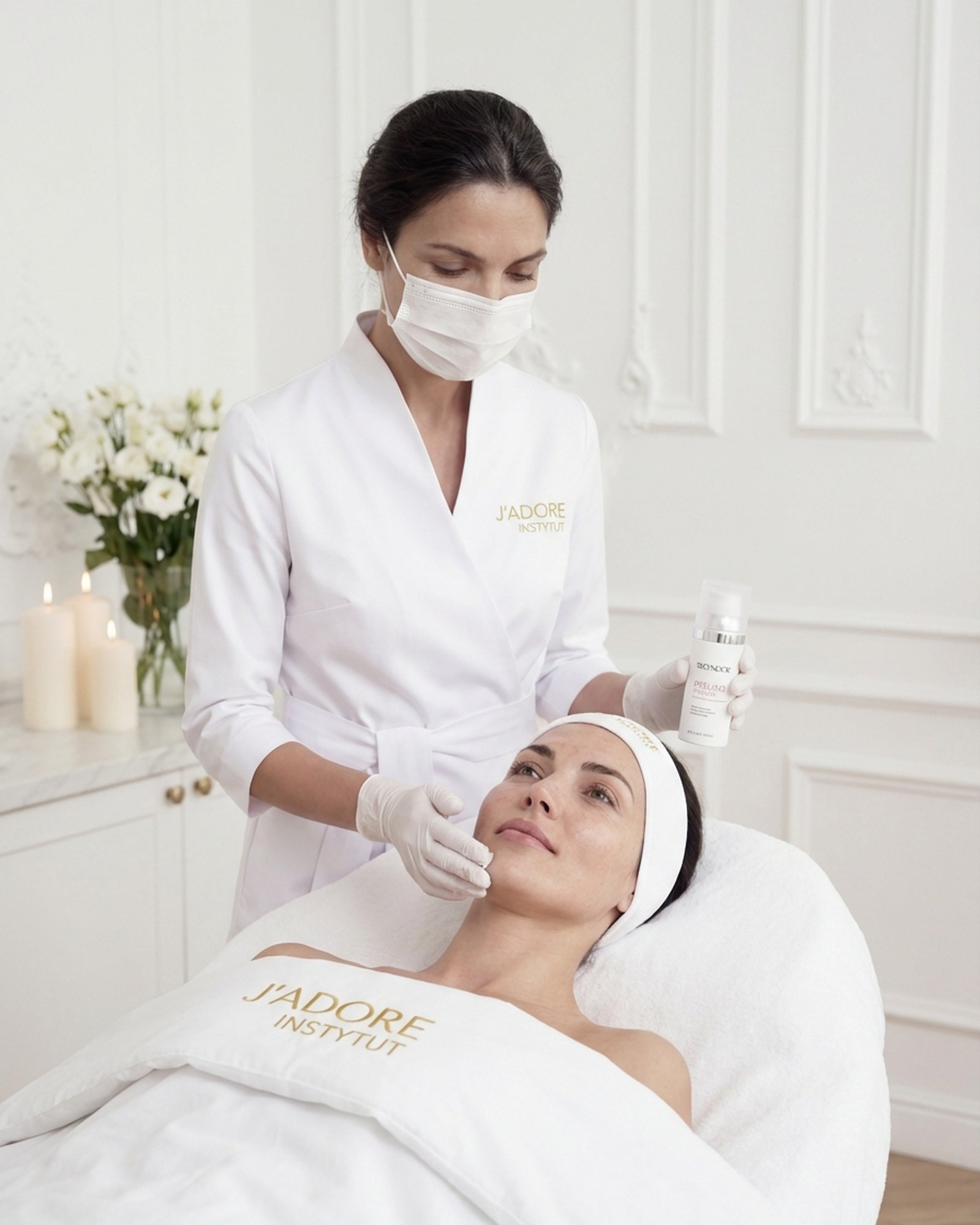
Microdermabrasion + peel
mechanical exfoliation plus chemical exfoliation. A synergistic effect for hyperpigmentation and uneven texture, chosen carefully — not always in the same session.
Microdermabrasion + mesotherapy
exfoliation first, then active ingredients delivered into prepared skin. The hydrating and repairing effect is noticeably stronger than either method alone.
Microdermabrasion + cavitation cleansing
mechanical exfoliation plus ultrasonic lifting of impurities. Particularly effective for pores and blackheads.
Microdermabrasion + LED
after mechanical exfoliation, LED phototherapy boosts regeneration. A low-reactivity combination, safe even for delicate skin.
Series of sessions
the results of a single session are visible, but lasting results — for scars, hyperpigmentation — build up over a series of 4–6 sessions at regular intervals.