How sweat actually forms
Sweat glands are small structures, densely distributed in the skin of the armpits, hands, feet and forehead. They respond to nerve signals — specifically to acetylcholine, a neurotransmitter that reaches the gland and triggers sweat production. In most people, this mechanism works in proportion to the situation. Heat, physical exertion, stress — sweat appears, performs its thermoregulatory function, and disappears.
In people with hyperhidrosis — excessive sweating — this mechanism is recalibrated. The glands respond with disproportionate intensity to stimuli that cause almost no sweat production in others. The result: sweaty palms during a calm conversation, drenched armpits in an air-conditioned office, soaked feet without any physical effort. This isn't a matter of hygiene or temperature. It's a matter of excessive activity in the nervous system that controls the glands.
Understanding this mechanism makes it easier to assess how the available solutions differ.
Aluminium chloride antiperspirants — mechanically blocking the pore
Pharmacy-grade antiperspirants with a high aluminium chloride concentration work mechanically. Aluminium ions form protein plugs at the sweat gland openings — they literally block the duct through which sweat would otherwise escape. The effect is local and reversible. While the plug is in place, sweating is reduced. Once it breaks down through natural skin renewal, sweating returns.
For many people with moderate sweating, this method works well. Applied regularly, in the evening, on dry skin, it can significantly reduce underarm moisture for several days. The problem is that with true hyperhidrosis — especially on the hands or feet — the effect is often insufficient. Some people also experience skin irritation from higher-concentration products, particularly on sensitive skin or skin that has recently been depilated.
Antiperspirants don't interfere with the nervous system. They don't change how many signals the body sends to the glands — they only make it physically harder for sweat to escape. That's an important difference compared to Botox.
Botox — a nerve block that lasts for months
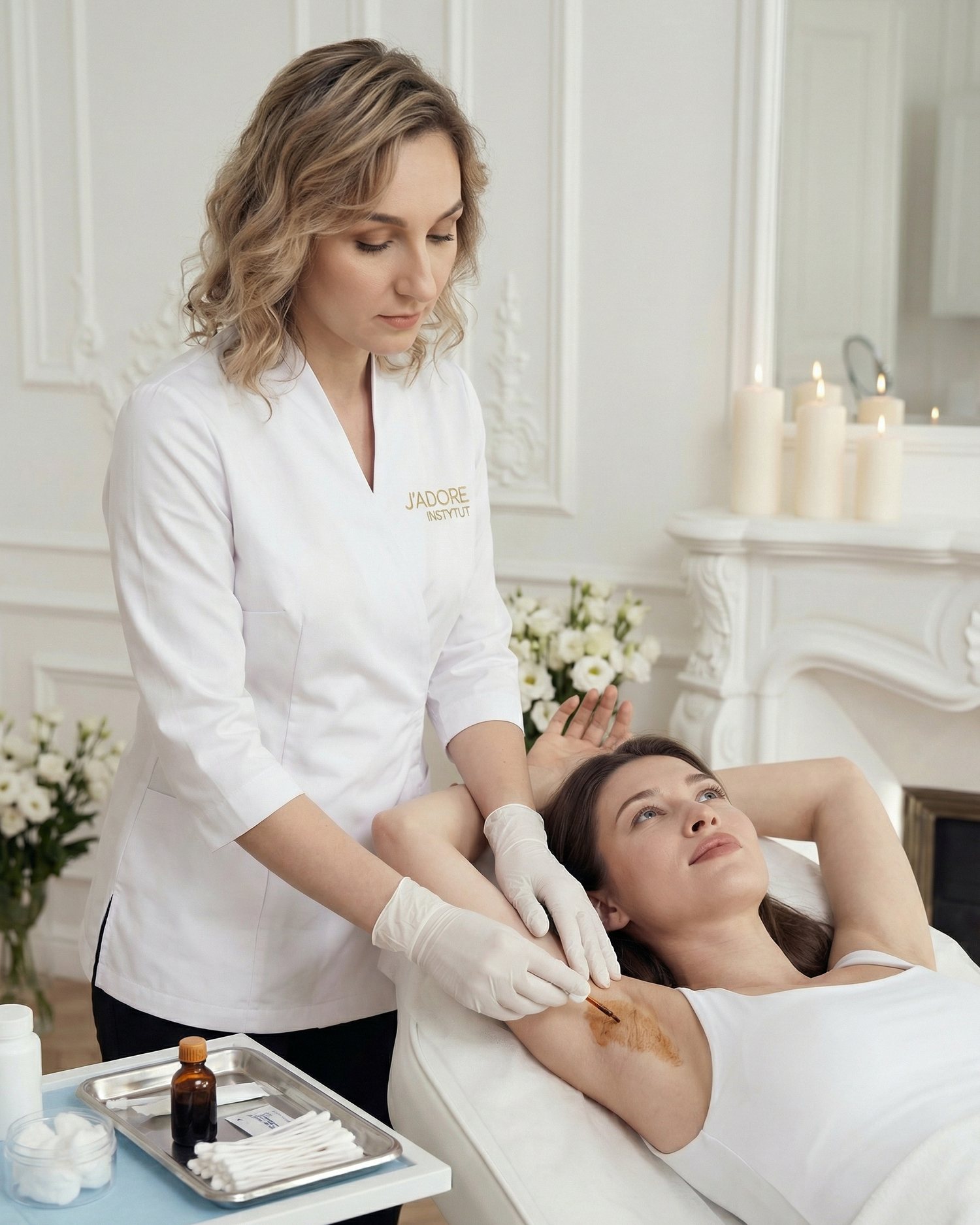
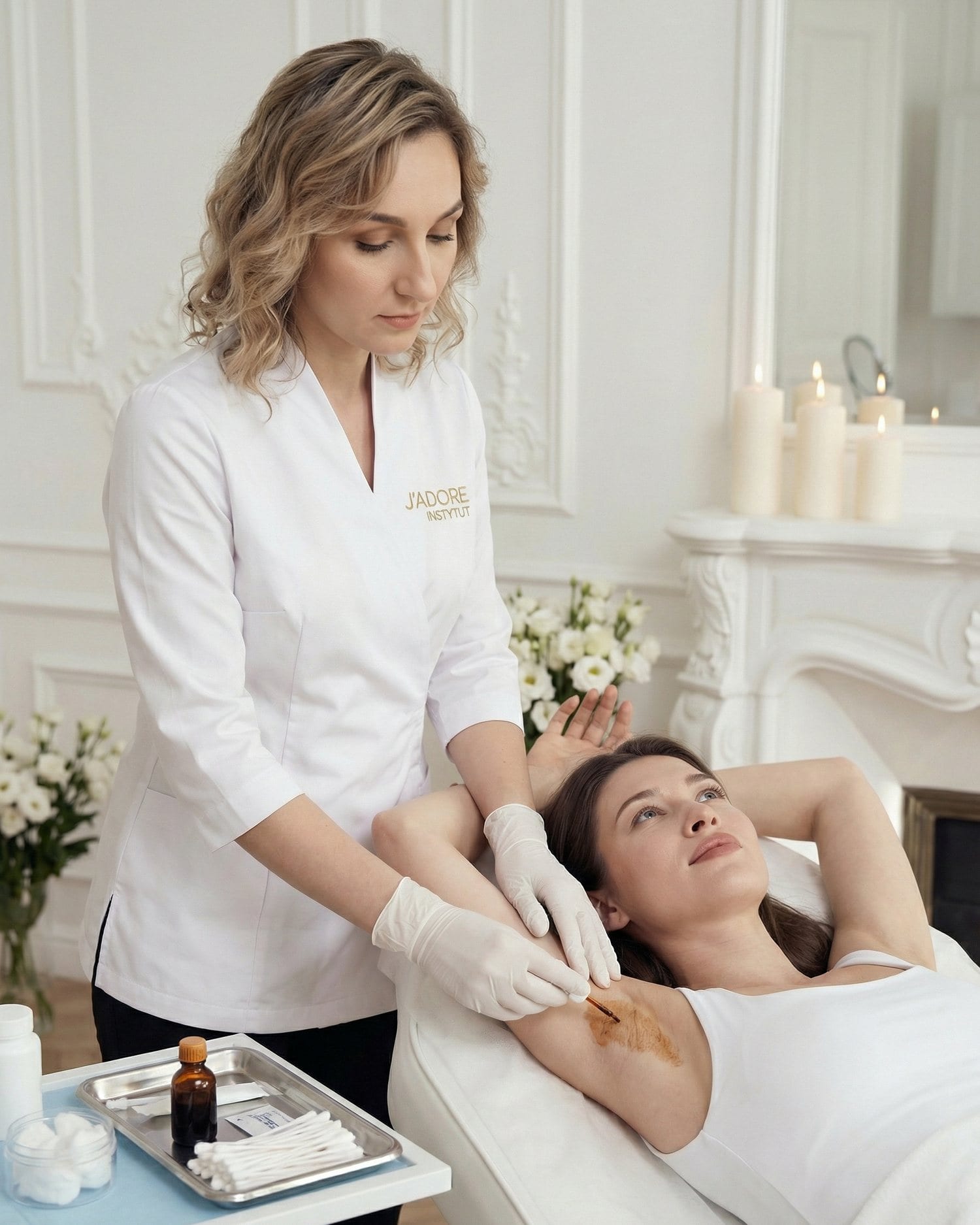
Botulinum toxin type A — widely known as Botox — acts at the neuromuscular junction, or in the context of sweating, at the nerve-gland junction. Delivered via micro-injections into the dermis of the armpits, hands or feet, it blocks the release of acetylcholine from nerve endings. Without this chemical signal, the sweat gland simply doesn't receive the instruction to produce sweat.
The effect usually develops gradually over a few days after the treatment, and for many people it lasts several months. It doesn't require daily application, doesn't depend on an evening routine, and doesn't irritate the skin. The treatment itself involves a series of small injections across the treated area. It requires precision and anatomical knowledge, which is why a doctor performs it.
The mechanism here is fundamentally different from an antiperspirant. Instead of blocking the duct, it cuts the nerve signal. The gland isn't physically blocked — it simply stops receiving the instruction to work. This means a deeper and usually longer-lasting effect, but also a broader impact on skin function in the treated area.
Comparison: duration of effect, area, candidates
Comparing both approaches, it's clear they differ not only in mechanism but also in who they suit.
Aluminium chloride antiperspirants work for a few hours to a few days. They require regular application, ideally in the evening, on dry skin. They're available without a prescription, relatively inexpensive, and give you control over how often you use them. Some people experience itching, burning or redness. They work well for moderate sweating that doesn't disrupt daily life but is uncomfortable in specific situations. They suit people who don't qualify for a medical treatment, or who are simply looking for a first solution.
Botox for hyperhidrosis gives an effect that lasts several months for many people. A doctor performs the treatment once, with no daily routine involved. Good candidates are people diagnosed with hyperhidrosis who have tried antiperspirants without satisfactory results, and whose excessive sweating affects their professional or social life. Botox is most commonly used on the armpits, but in the hands of an experienced doctor, it can also treat hyperhidrosis of the hands and feet — areas where antiperspirants are particularly difficult to use, since the product wears off through friction.
It's worth adding that Botox for this indication is medicine, not cosmetics. The treatment is preceded by a medical consultation, an assessment of the severity of the sweating, and patient qualification. Not everyone who sweats more than average needs injections — but people whose sweating is genuinely problematic have access to a method with documented effectiveness.
When an antiperspirant is enough
If sweating is moderate and mainly tied to specific situations — stress before a presentation, a hot summer, intense training — an aluminium chloride antiperspirant can be enough. Many people manage well with it, without needing a medical treatment. The condition for effectiveness, though, is correct use: on dry skin, in the evening, with enough time to work before it comes into contact with clothing.
An antiperspirant makes sense as a first step, before the next one. If, after several weeks of regular use of a high-concentration product, the effect still isn't satisfactory, it's worth considering a consultation with a specialist.
When Botox really makes sense
Hyperhidrosis isn't heat sensitivity or poor hygiene. It's a condition in which the sweat glands are persistently overactive and don't respond proportionally to stimuli. People with this problem often say they sweat for no reason — in an air-conditioned room, during a calm conversation, in cold weather. Antiperspirants bring them brief relief, if any.
In these cases, Botox addresses the root of the problem — it blocks the nerve signal instead of blocking the duct. The effect is often clear and lasts several months, which for many people means a season without wet shirts, without avoiding handshakes, without planning outfits around the sweating problem.
Good candidates for Botox for hyperhidrosis are especially people whose sweating affects their professional relationships — business meetings, presentations, negotiations — or their social life. For sweating on the hands, Botox can be the only method that gives real control, since no antiperspirant withstands hours of pressure and friction.
It's also worth knowing that hyperhidrosis is an increasingly common indication for treatment in Poland. Aesthetic medicine doctors have experience with it and treat it as a routine procedure, not an exceptional one.
When to ask a specialist
If an antiperspirant has stopped being enough, if sweating has started affecting everyday decisions — what to wear, where to go, who to meet — or if the problem involves the hands or feet, where antiperspirants are hard to use, it's worth booking a medical consultation.
During the visit, the doctor will assess the severity of the sweating, rule out any underlying systemic causes, and discuss the available treatment options. Botox for this indication isn't an impulsive decision. It's a decision based on information, one you can only make after talking to someone who genuinely understands the subject.
J'ADORE INSTYTUT offers medical consultations where you can discuss your hyperhidrosis and find out whether an injectable treatment is the right option for you. Sometimes switching pharmacy products turns out to be enough. Sometimes it's time for the next step — and it helps to know that in advance, before the problem gets in the way of your next important meeting.