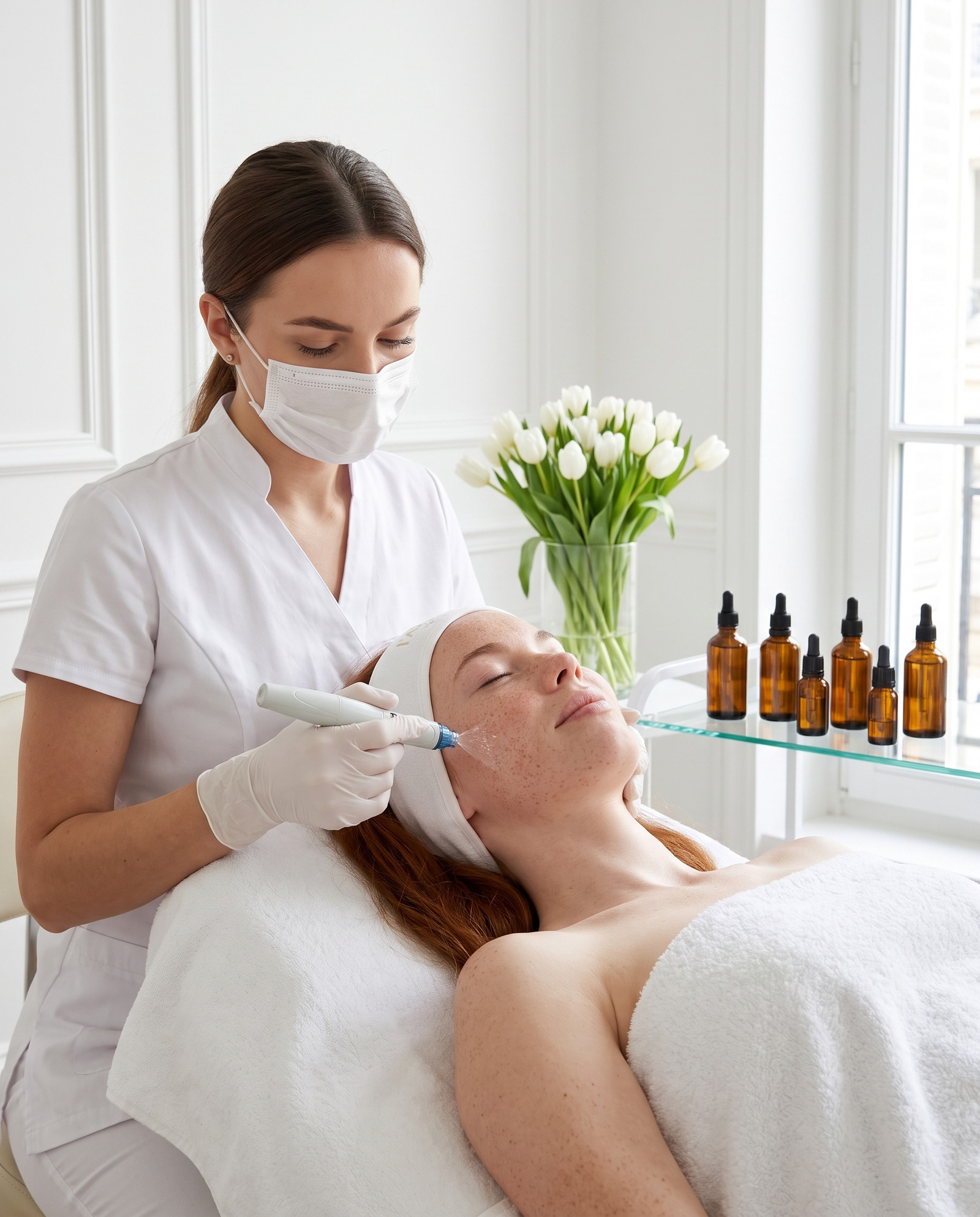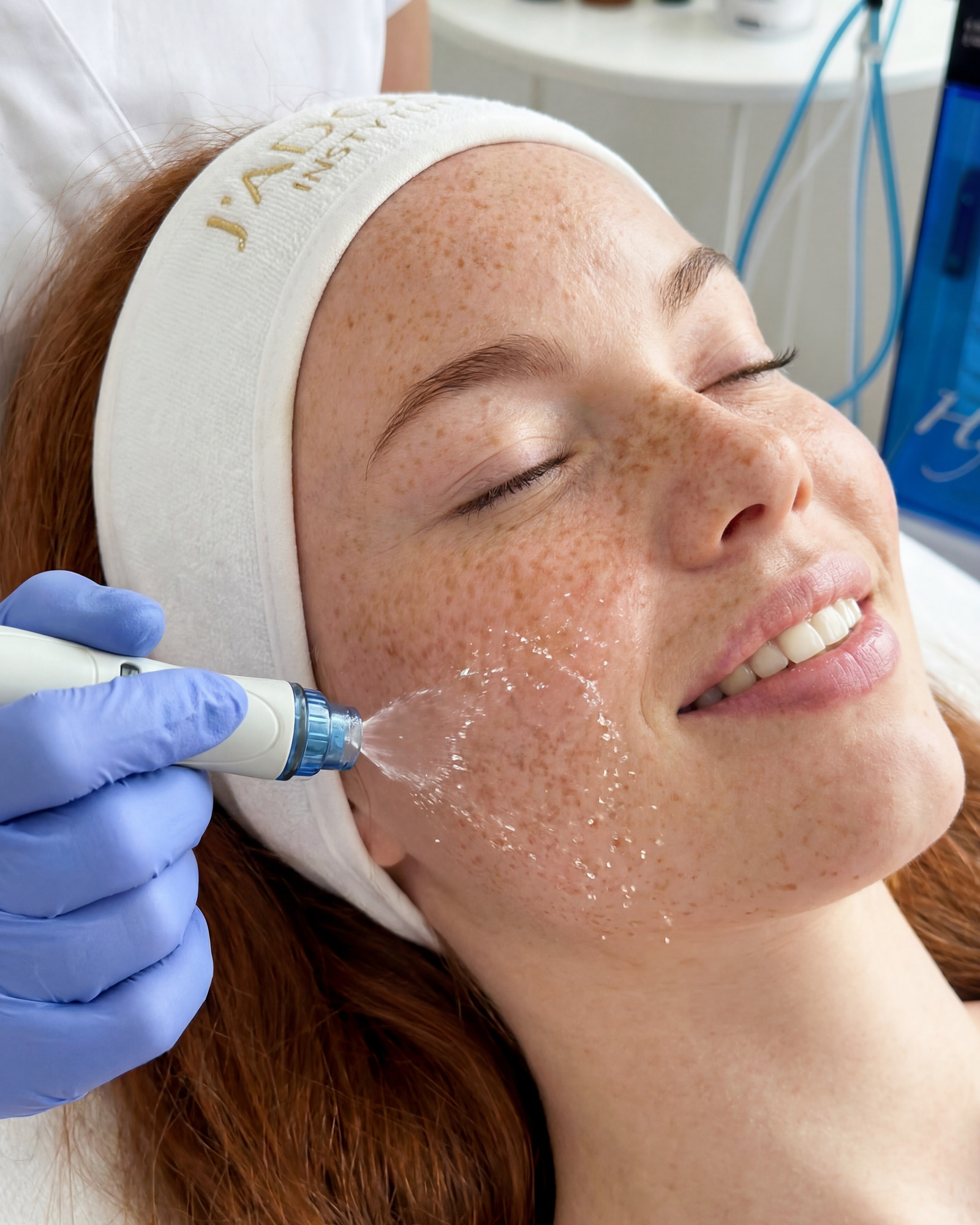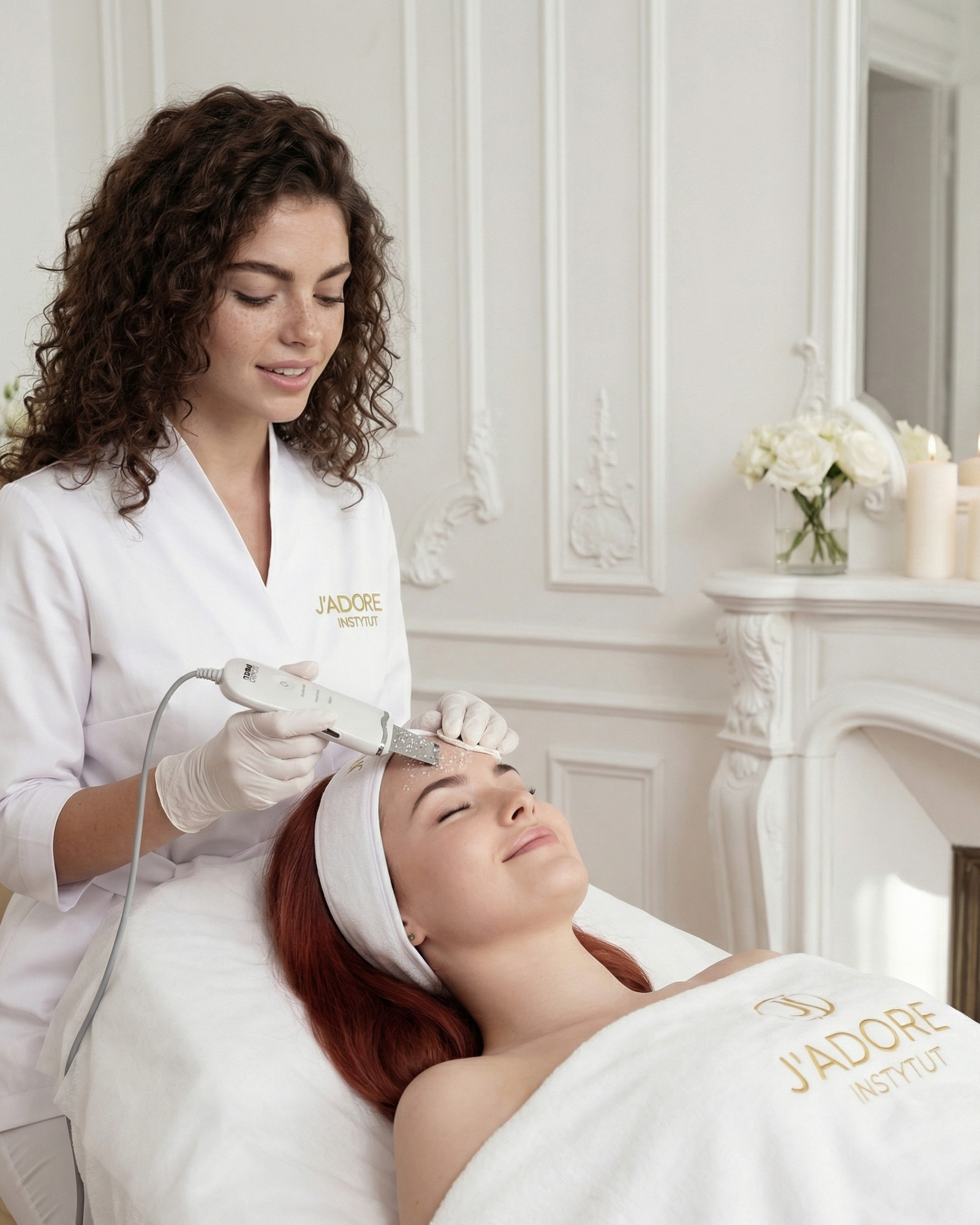

Three technologies, three mechanisms
Before we compare them, one foundation: all three methods solve the same problem — the epidermal barrier. Skin naturally blocks most molecules, because that's its biological job. Electroporation, sonophoresis and iontophoresis are three different answers to the question: how to temporarily bypass this barrier or make it easier to cross, without damaging the skin.
Electroporation
opens brief channels in cells
- short electrical pulses create micropores in cell membranes
- works on large molecules (hyaluronic acid, peptides, collagen, exosomes)
- absorption happens fast — the window stays open for a moment after the treatment
- effective for hydration, lifting, anti-ageing
Sonophoresis
transports with sound waves
- ultrasound warms tissue and loosens the spaces between cells
- excellent for lipid and emulsion-based formulas (oils, active creams)
- works more gently — good for sensitive and vascular skin
- supports drainage and microcirculation as a side effect
Iontophoresis
pushes charged ions with direct current
- direct current "pushes" ions through the skin according to their electrical charge
- works only on ingredients that are electrically charged (vitamin C, certain acids, zinc)
- precise application — the ion can be directed exactly where you need it
- a classic method — well known and clinically well studied
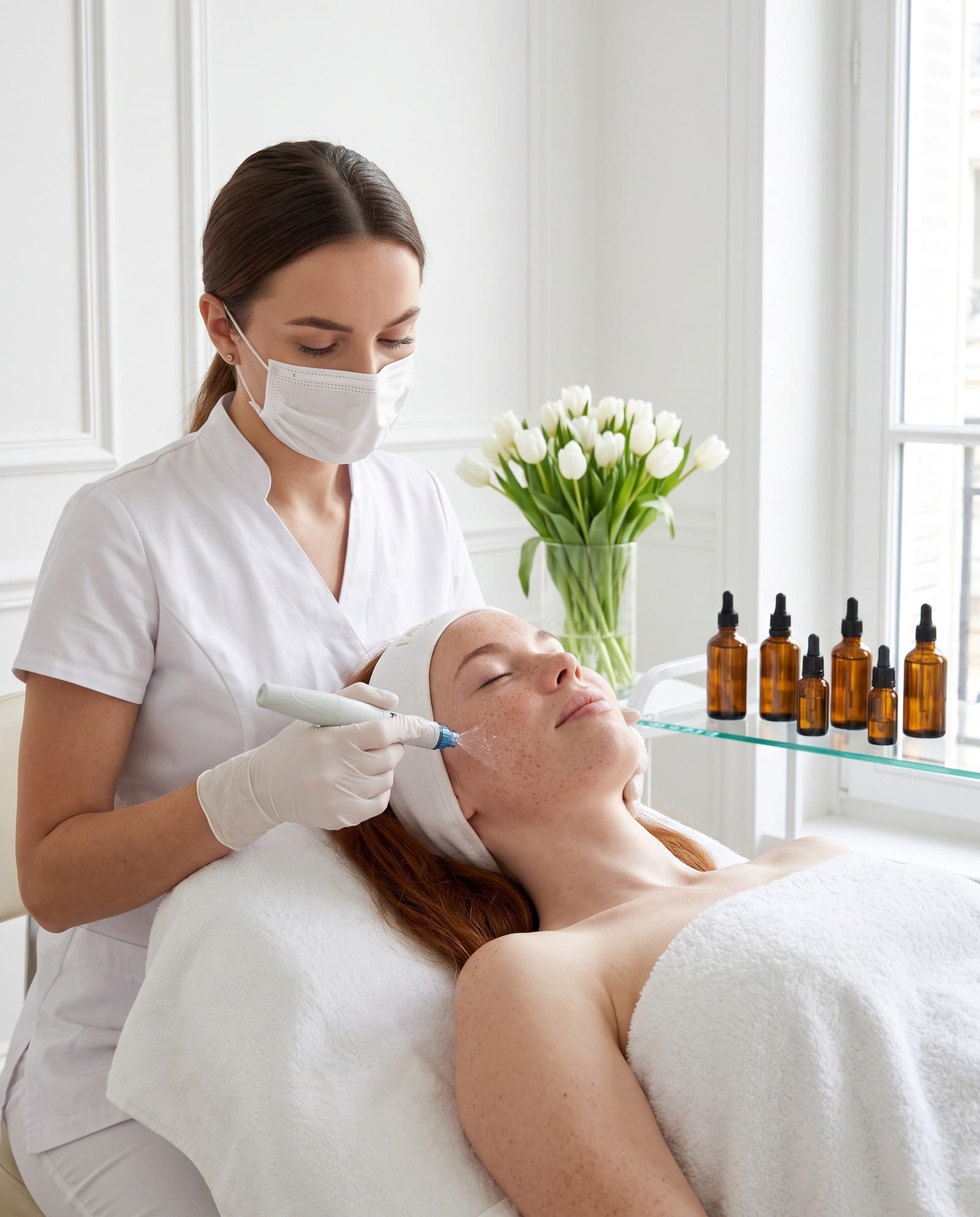
How to identify what suits your concern — a mirror test
Three simple questions help narrow down the choice before you even sit down in the treatment chair:
- Your skin is dehydrated, lax, without firmness — it needs hydration and increased density → direction: electroporation with hyaluronic acid or peptides. Large hydrating molecules are its speciality.
- You have sensitive, vascular skin, prone to redness — you need gentle transport without electrical current → direction: sonophoresis. It works without pulses and doesn't irritate blood vessels.
- The concern is hyperpigmentation, blemishes, enlarged pores, dull-looking skin — you need specific ionic ingredients (vitamin C, zinc, azelaic acid) → direction: iontophoresis. Direct current carries charged molecules with precision.
- You have combination skin with several concerns at once — no single method alone will be enough → consider combining methods within a plan of several sessions.
This test is a starting point, not a diagnosis. A good specialist will assess your skin and tell you which method (and which formula) has a real chance of working for you — because the carrier alone, without the right active ingredient, is only half the story.
When the methods make sense together
In salon practice, the most interesting results rarely come from a single method used on its own. Electroporation, sonophoresis and iontophoresis don't exclude each other — they complement one another at different stages of skincare or in different areas of the face. The logic of combining them:
Electroporation + needle-free mesotherapy
electroporation opens the epidermal barrier, and the mesotherapy cocktail (amino acids, peptides, vitamins) penetrates more effectively. This is one of the reasons these two terms so often appear together.
Sonophoresis + cavitation peeling
cavitation cleanses, sonophoresis delivers ingredients into the cleansed skin. A natural pairing for skin with clogged pores and excess sebum.
Iontophoresis + vitamin C
iontophoresis is the most effective carrier for negatively charged vitamin C. Together they work well for grey, fatigued skin prone to hyperpigmentation.
Electroporation + sonophoresis in the same session
different depths of action and different formulas; a specialist can combine both in one session for a comprehensive effect.
The plan for combining methods depends on your skin condition, priorities and visit schedule. Each of these methods is also available as part of a more extensive protocol — for example, within a programme where consecutive sessions build on each other's effect. It's not about the number of devices, but the logic: what, in what order, and with which active ingredient.
What to expect — and what to ask in the salon
None of the three methods causes pain or requires downtime — that's a feature they share. Your skin may look slightly flushed right after the treatment, especially after electroporation, but this usually fades within an hour. Make-up the next day is usually fine.
Before you sit down in the chair, it's worth having three questions ready:
- Which transport method do you use? — so you know what drives the treatment's action.
- Which active ingredient will be delivered? — the method is just the carrier; what it carries matters just as much.
- How many sessions are needed to feel a difference? — the results of one session can be noticeable, but a lasting result usually needs a series.