Are clogged pores at this age a problem — or the norm?
Let's start with something that might surprise you: clogged pores in the teenage years are completely typical. This isn't a sign of poor hygiene, a bad diet or bad luck — it's biology doing its job. During puberty, the sebaceous glands enter a phase of intense activity. They produce far more sebum than before, pores become more visible in response, and dead skin cells combine with excess oil to form the plugs you see in the mirror.
Does that mean there's nothing worth doing? Not at all. Skin at this stage needs sensible care — but above all, it needs calm and method, not aggression. The difference between "difficult, but manageable" and "a problem that keeps getting worse" largely comes down to how you respond to it.
When is it worth taking pores more seriously? When blackheads are accompanied by inflammation (red bumps, pustules), when the skin is painful to the touch, when the situation hasn't improved for months despite consistent care — or when it starts to noticeably affect how you feel. This isn't meant to alarm you — these are simply signs that it's worth getting a professional assessment rather than going it alone.
Why pores clog — and why teenage skin has it harder
To choose the right method, you need to understand the mechanism. Pores clog for several reasons at once — and during puberty, almost all of them are active simultaneously. This matters, because different approaches target different mechanisms — which is exactly why frustration builds when someone does "everything right" and still sees no improvement.
Excess sebum
Puberty hormones
- Sebaceous glands work harder than in childhood
- Skin becomes oilier faster — especially the T-zone
- Sebum fills the pores and combines with skin cells
Irregular exfoliation
Epidermal biology
- Dead skin cells don't shed evenly
- They form "plugs" together with sebum inside the pores
- Visible as blackheads (open) or bumps (closed)
Skincare mistakes
What we can control
- Heavy creams and foundations that clog pores
- Harsh cleansers that damage the skin barrier
- Lack of regular, gentle exfoliation
The practical takeaway from this table: there's no single "miracle" ingredient or treatment that solves the problem unless it addresses the right mechanism. Before you start using anything, it's worth understanding which of these factors mainly applies to you. Better still — ask someone who assesses skin professionally.
How to care for your skin — step by step
This is the heart of the guide. Below are five steps, arranged from the fundamentals to more advanced action. Each step only makes sense once the previous one is in place. Most people jump straight to step four without the fundamentals — then wonder why the results don't come.
- 01
Step 1 — Simple, effective home care
Before anything else: a daily routine with a gentle cleansing gel (no alcohol, no soap), light hydration (a non-comedogenic cream or gel) and SPF in the morning. Fewer products, used more consistently, beats seven steps done irregularly. An oily, irritated skin barrier produces even more sebum — a vicious cycle that gets broken right here.
- 02
Step 2 — Give up squeezing
This is the hardest step, and one of the most important. Squeezing mechanically damages the pore walls, pushes bacteria deeper into the skin, and leaves behind inflammation that can take months to heal — and, on skin going through puberty, can leave pigmentation. The temptation is huge, but the result is the opposite of what you want. Instead, try a warm compress, a gentle enzyme peel — or professional cleansing.
- 03
Step 3 — Regular, sensible exfoliation
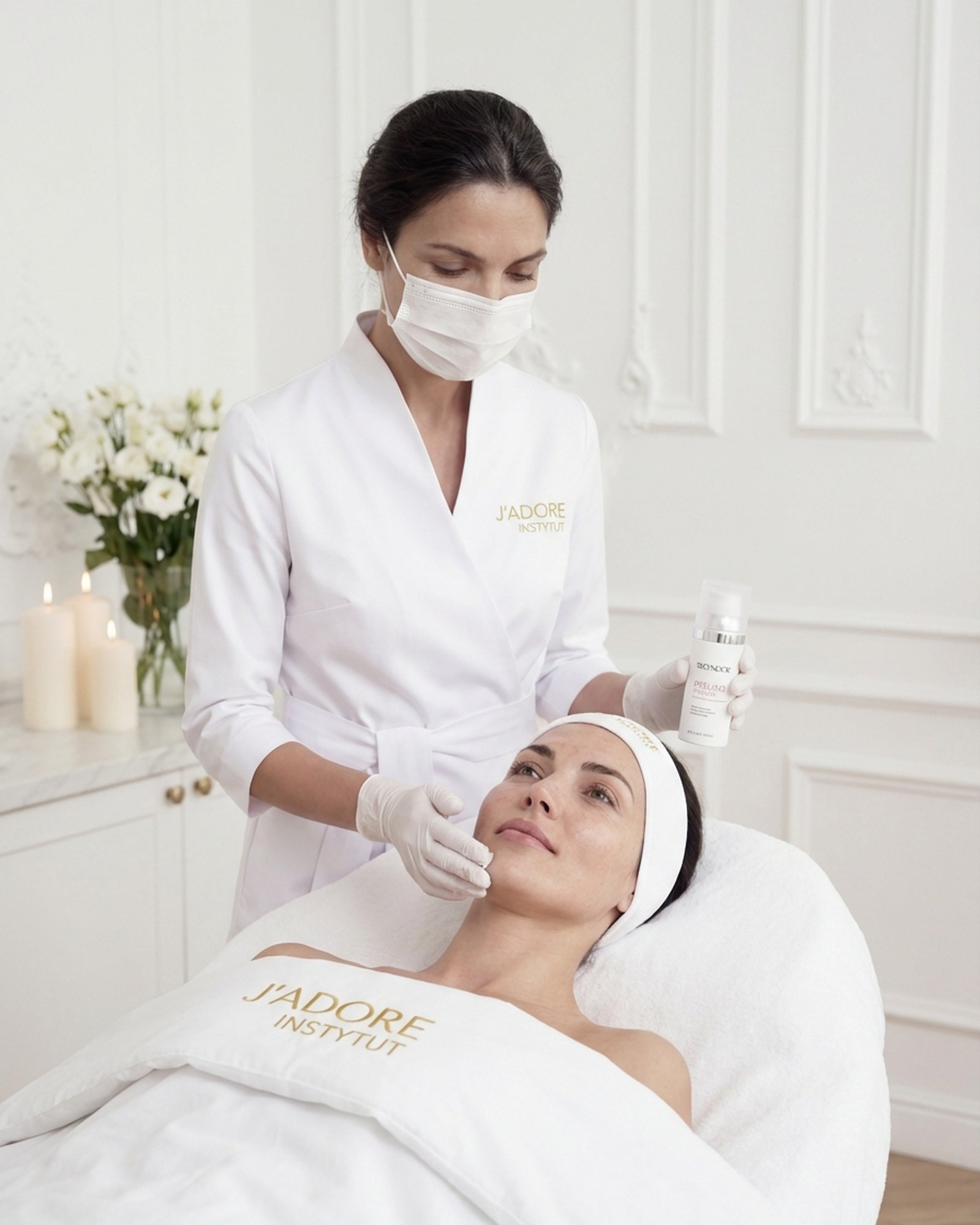
Once or twice a week, a gentle enzyme or acid peel (for example with salicylic acid) helps remove excess dead skin cells without irritating the skin. This works differently from the mechanical grains in scrubs — acids work precisely, they don't abrade. If your skin reacts with irritation, you're using it too often or the product is too strong. Listen to your skin.
- 04
Step 4 — Professional cleansing (HydraFacial)
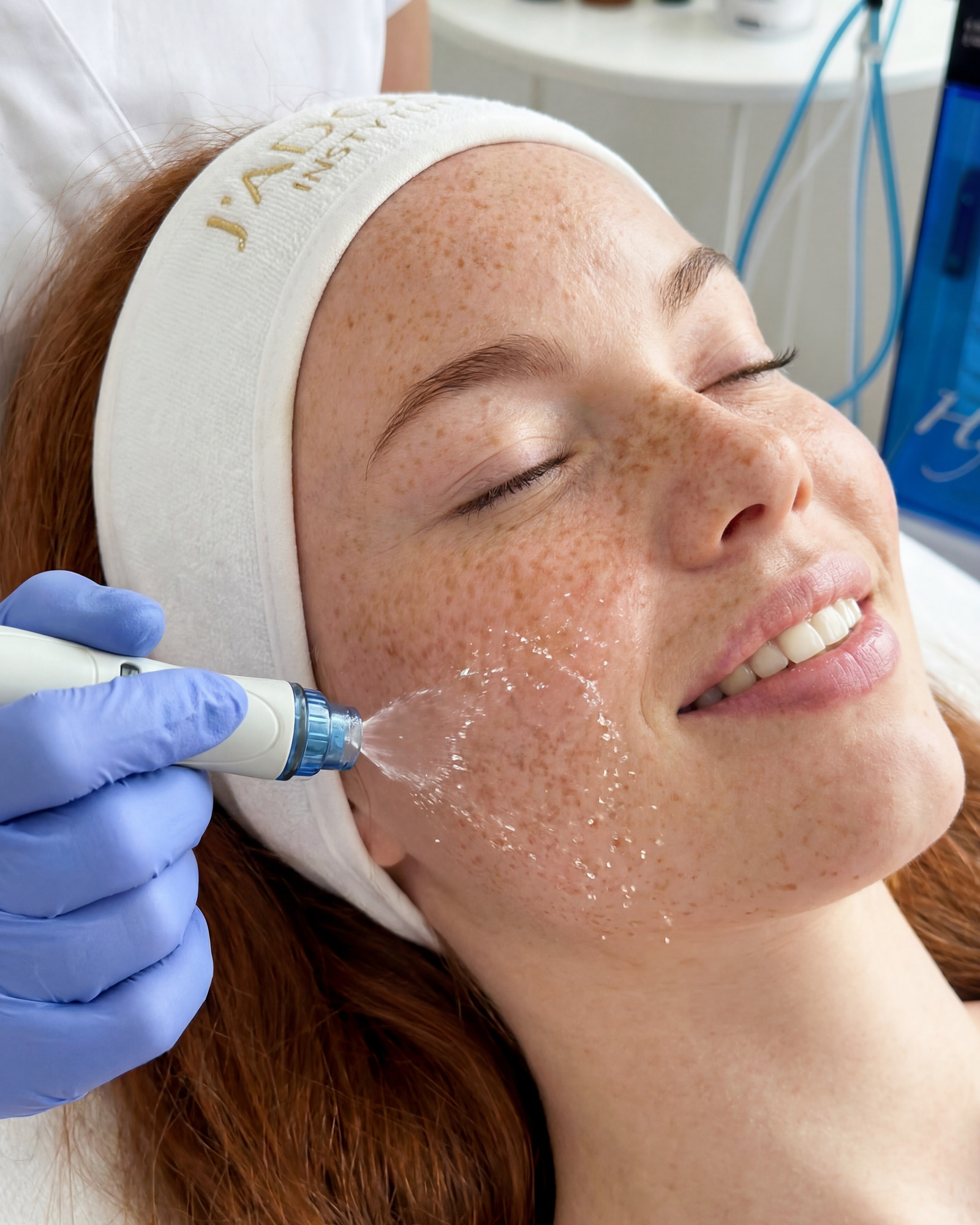
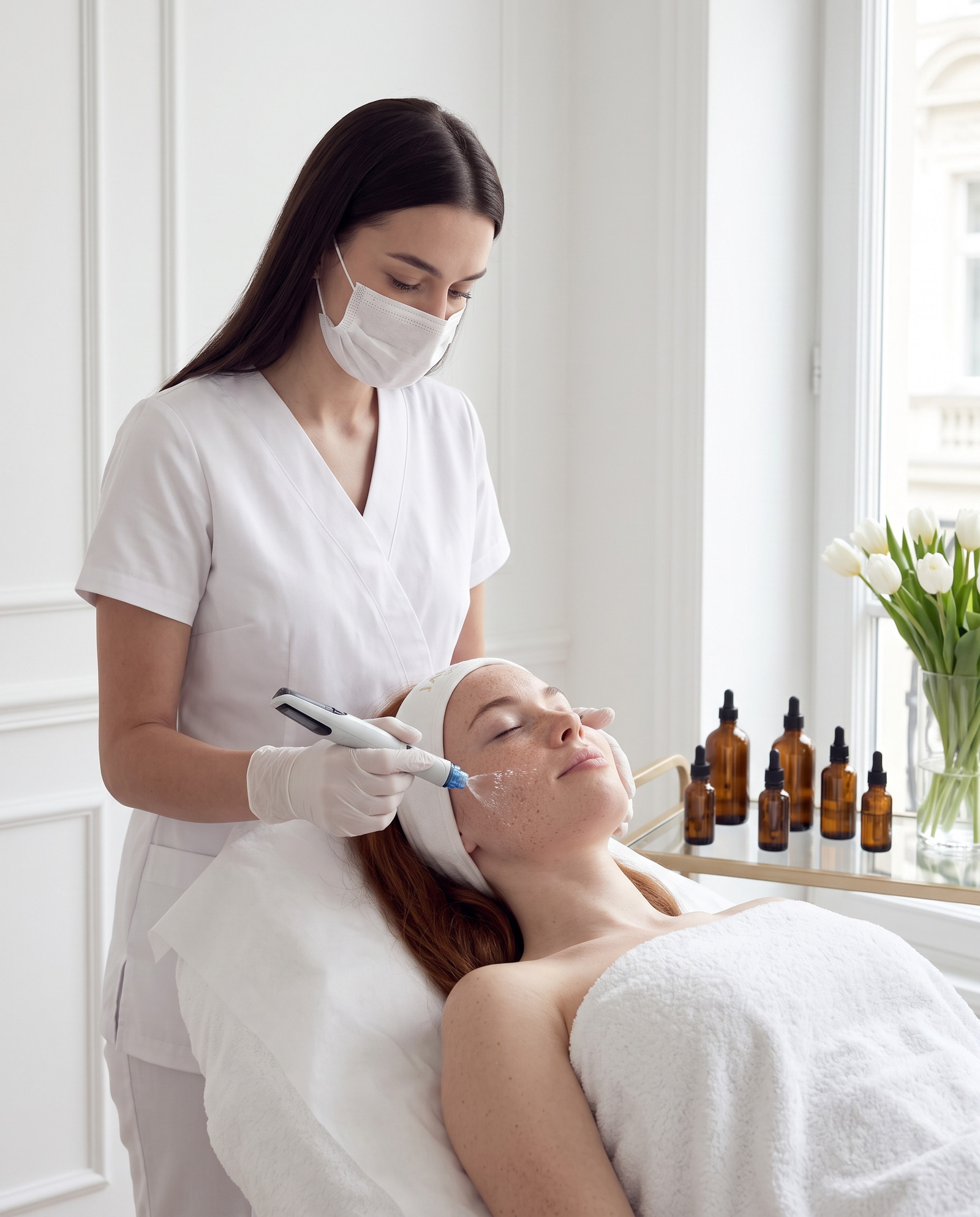
Once your home care routine is well established and pores are still causing problems, it's time for a professional treatment. HydraFacial is a three-step process: first gentle exfoliation, then a hydro-peel that flushes out pore content (no squeezing, no damage), and finally a serum infusion to nourish the skin. The whole treatment is pain-free and needs no recovery time. For teenage skin, it's one of the gentlest — and, at the same time, most effective — ways to achieve a deep clean.
- 05
Step 5 — Consistency and ongoing assessment
Skin needs time. The results of professional cleansing are usually visible right after the treatment, but maintaining them requires consistency — both in home care and in-salon treatments. For actively oily skin, a series of sessions every few weeks gives better results than a single visit once a year. We build the plan individually, based on a consultation.
Bear in mind: step four doesn't replace step one. Professional cleansing strengthens a good routine, but it won't make up for everyday skincare mistakes. It's a bit like teeth — a dentist visit every six months only makes sense if you're brushing every day.
What definitely not to do
A list of mistakes most teenagers make — and plenty of adults too. Each one feels logical in the moment, and each one makes things worse.
In short: pores are cleared methodically and gently, not by force. Skin going through puberty is already in a permanent state of heightened hormonal activity — it doesn't need extra mechanical or chemical stress on top of that.
When it's worth booking a consultation
Not every case of clogged pores needs a salon visit — the goal isn't to book every teenager in for an appointment. But there are situations where a professional assessment genuinely makes a difference, saving months of trial and error.
- Blackheads and clogged pores are accompanied by inflammation — red bumps, pustules, painful lesions under the skin. This is a sign that an assessment, and possibly a treatment plan, is needed — not just skincare.
- Despite months of careful home care, the situation isn't improving or is getting worse.
- Skin that's been squeezed or inflamed shows dark marks — post-inflammatory hyperpigmentation (PIH) — which needs a separate approach.
- You don't know your skin type or how to choose products for it — this is the first question in a consultation, and it's genuinely worth asking a specialist rather than an algorithm.
- Your skin reacts with irritation to most cosmetics — a sign that the skin barrier is damaged and needs restoring before anything else can work.
A salon visit starts with a conversation and a skin assessment — what you cleanse with, what you apply, what your skin looks like up close. Only then is the treatment chosen. HydraFacial is one of the most commonly recommended options for young skin precisely because it's gentle enough to be safe on sensitive, puberty-stage skin — while still deeply cleansing what home products can't reach. You leave with clear skin and a plan for what's next.