Botulinum toxin in questions and answers — no myths, no ambiguity.
7 min read
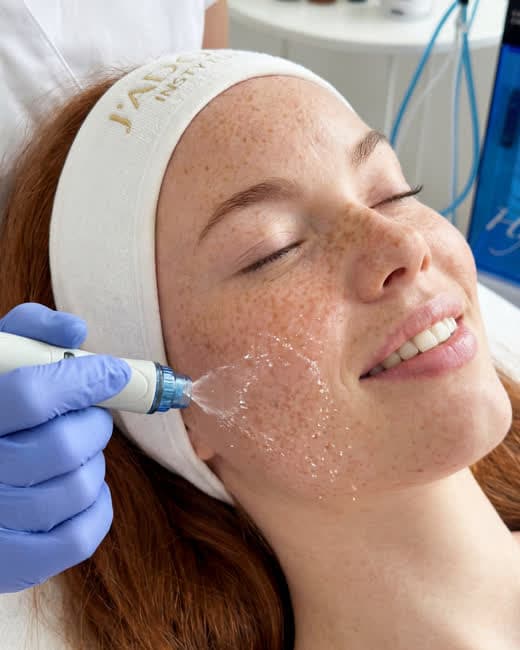
Illustrative photo. It shows an example of how the treatment is performed.
7 min read18 June 2026
Botox (botulinum toxin type A) is one of the most researched drugs in medical history — in use for over 40 years. In aesthetic medicine, it blocks neuromuscular transmission, causing temporary muscle relaxation. Below, we answer the most frequent questions we hear from patients at J'ADORE INSTYTUT.
01
How does Botox work?
Botulinum toxin blocks the release of acetylcholine at the neuromuscular junction — the muscle stops contracting for several months, and the skin above it can smooth out.
02
Aesthetic indications — where is Botox used?
Botulinum toxin can be used in many areas of the face and body. In aesthetic medicine, it is most commonly used for:
Forehead lines
Glabellar lines — the "one" or "three" between the brows
Crow's feet at the corners of the eyes
Brow lift — subtle arch elevation
Bunny lines — wrinkles on the nose
Gummy smile
Lip flip
Corners of the mouth (marionette lines)
Venus rings — horizontal neck wrinkles
Bruxism — masseter muscle tension
Excessive sweating — underarms, hands, feet
03
When are results visible and how long do they last?
Botox results do not appear immediately — they require time for the toxin to act on the neuromuscular junction.
24–48 h — first signs of action
7–14 days — full results visible
3–4 months — optimal effect level
4–6 months — gradual return of muscle activity
After approx. 6 months — another session is necessary for many people
04
Preparations — Botox, Azzalure, Bocouture
In Poland, three main botulinum toxin type A preparations are available. All are prescription drugs registered for use in aesthetic medicine:
Botox (onabotulinumtoxinA) — Allergan/AbbVie, market standard
Azzalure (abobotulinumtoxinA) — Galderma, slightly different unit conversion
Bocouture (incobotulinumtoxinA) — Merz, purified toxin without complexing proteins
05
Who performs Botox at J'ADORE?
06
Botox for bruxism
Bruxism is the involuntary clenching or grinding of teeth, often unconscious — especially during sleep. Injecting botulinum toxin into the masseter muscle can bring relaxation and reduce headaches, neck pain and tooth wear.
Illustrative photo. It shows an example of how the treatment is performed.
07
Botox for excessive sweating (hyperhidrosis)
Botulinum toxin blocks sweat glands — not by destroying them, but by cutting off nerve stimulation. The treatment can significantly limit excessive sweating of the underarms, hands, feet or forehead.
Underarms — the effect often lasts for many months
Hands and feet — a treatment requiring higher doses, the effect is slightly shorter