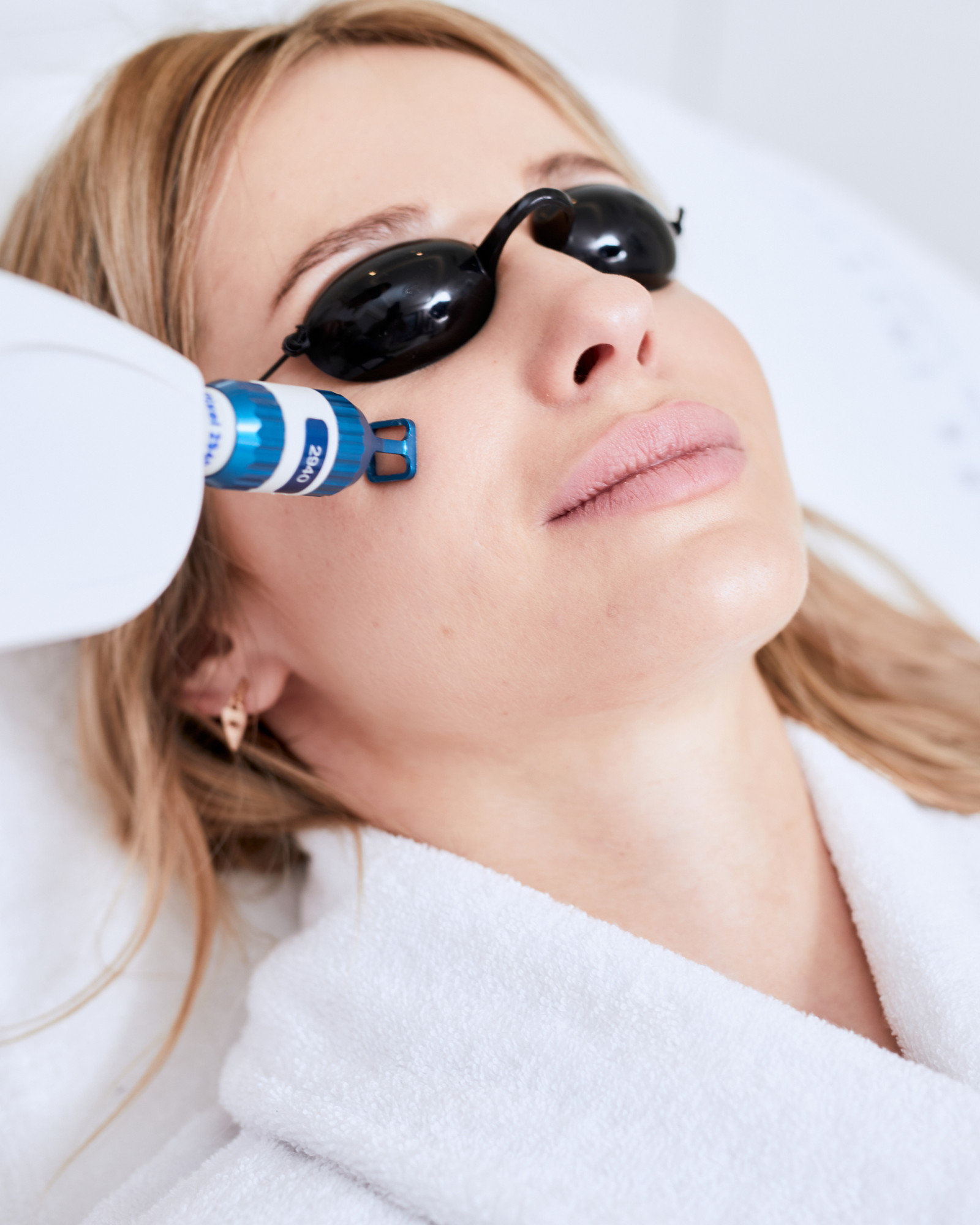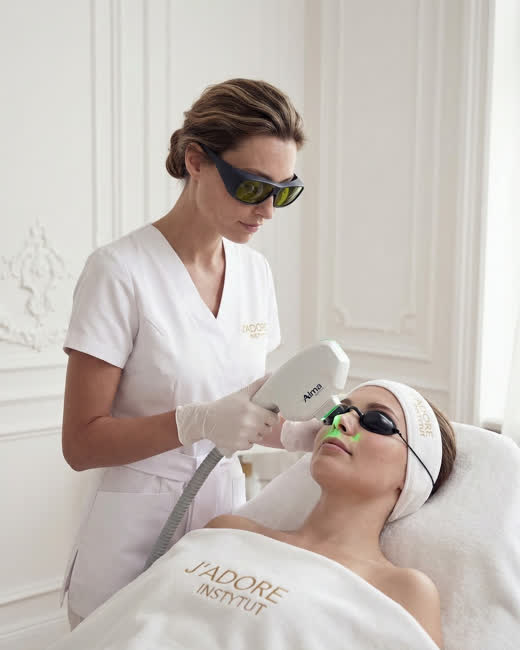
Before leaving the clinic, establish exactly what was performed
The name "ablative fractional laser" is not enough to manage the wound. You need information about the device, the area, the expected intensity of the reaction, the dressing and medications. Also, check whether the recommendations apply to the entire face or only to a spot-treated scar.
The first hours: secure the surface and do not judge the effect
Immediately after ablation, the skin may be very red, stinging, swollen and moist. The appearance of spot weeping depends on the intensity of the procedure. This is the reaction phase to controlled damage, not the moment to take a photo of the final result.
- Do not touch the area with unwashed hands.
- Do not apply ice directly to the skin.
- Do not wash off the protective preparation earlier than recommended.
- Do not apply make-up, perfumed cosmetics or home-made masks.
- Sleep in the position recommended by the clinic if swelling is expected.
- Contact us immediately in case of unusual pain or a violent reaction.
Cooling may reduce discomfort, but the cooling method must protect the wound from moisture from a random compress and from contamination. Use only the method described in the recommendations.
Day one: cleansing should remove discharge without tearing off the protective layer
The moment of the first wash depends on the dressing and the depth of the treatment. ASDS describes cleansing after resurfacing from the first day and reapplying ointment, but the frequency and product should come from your individual instructions. Do not mechanically copy a protocol from the internet.
- Hands
Wash and dry before contact
Fingernails, towels and dispensers must not transfer contamination to the wound.
- Skin
Cleanse without rubbing
Use the liquid and movement recommended by the clinic, without a brush or scrubbing pad.
- Drying
Do not wipe
Follow the instructions so as not to detach microscopic scabs.
- Protection
Apply a thin, clean layer
The ointment or dressing should prevent drying according to the protocol.
Day two: swelling may be more pronounced, but pain should not spiral out of control
Post-treatment swelling may increase in the first few days, especially around the eyes. Stinging and itching are also described after ablative resurfacing. The overall picture is important: does the reaction correspond to what was announced, or is there new unilateral pain, purulent discharge or rapidly spreading redness?
Reaction to observe
consistent with instructions
- even redness
- expected swelling
- stinging that subsides after the recommended procedure
- spot micro-scabs
- tenderness without increasing
Reaction for urgent reporting
changes direction
- suddenly stronger pain
- pus or an unpleasant odour
- blisters outside the description
- fever
- rapidly spreading swelling
Do not wait for the scheduled follow-up when a symptom is alarming. Take a photo in neutral light, record the time of appearance and contact the clinic.
Day three: itching does not permit scratching or adding active ingredients.
As the surface closes, you may experience tightness and itching. Scratching transfers microbes, removes the forming layer and increases the risk of scarring. Do not attempt to soothe it with acid, alcohol, essential oil or a cosmetic that "always worked" before.
Days four and five: the epidermis must fall off on its own, not under your finger or a towel.
ASDS describes the exfoliation of the old layer around the fifth to seventh day, but the extent depends on the depth and the laser used. Micro-crusts may darken and become more visible before they fall off. Do not rub them off while washing, do not use a peel and do not accelerate the process with steam.
- Do not pick at loose fragments of skin.
- Do not use a brush, sponge, terry towel or peel.
- Do not go to a sauna, swimming pool, jacuzzi or do intense training.
- Do not apply make-up until your practitioner allows it.
- Do not judge your skin tone through dark micro-crusts.
- Continue cleansing and protection according to the instructions.
Steam and sweat are not neutral wound moisturisers. They increase maceration, irritation and contact with microbes in an environment you cannot control.
Days six and seven: the new skin may be closed, but it is still reactive.
Mayo Clinic states that after ablative resurfacing, new skin usually covers the area within seven to ten days, but full recovery takes much longer. Looking "already healed" does not mean the barrier has regained its full resistance or that you can return to your previous routine.
A clean pillowcase is not enough if your hands, phone and dispensers remain dirty.
After a treatment, it is easy to focus on one symbolic element of hygiene and forget about items touched dozens of times a day. A phone pressed to your cheek, glasses, goggle frames, hair falling onto your face and the edge of a towel can all contact the healing surface. You do not need to sterilise your home, but you must limit unnecessary contact.
Do not transfer the recommended liquid to a random container and do not share packaging with another person. If an applicator touches the wound, follow the instructions for the product and the clinic. Hygiene is not about scrubbing more often; it is about fewer contacts and correct technique.
Training, heat and alcohol can make it difficult to assess swelling and redness.
Intense exercise, saunas, hot baths and high-temperature environments increase sweating and vasodilation. On freshly lasered skin, this means additional burning, moisture and a more difficult interpretation of the reaction. The date for returning to activity should be based on the extent of the treatment and the instructions, not on whether you can cover your face with a cap.
- Do not train until the clinic allows it and the surface is properly protected.
- Do not use a sauna, steam room, jacuzzi or swimming pool during the healing period.
- Avoid very hot showers and steam directed at the area.
- Do not use alcohol as a way to manage sleep or discomfort after the treatment.
- If you are taking painkillers or antiviral medication, check the guidelines with your doctor or pharmacist.
Make-up returns only after the skin has closed and you have the practitioner's consent.
Foundation is not a dressing. On an open or oozing surface, it can irritate, contaminate and hinder observation. Sponges and brushes, even those that look clean, also accumulate product residues. Mayo Clinic recommends avoiding cosmetics that may irritate the face during recovery after ablation.
Skin ready to ask about make-up
surface closed
- no oozing
- no active cracks
- micro-crusts have fallen off
- calmer redness
- practitioner's consent
Skin not yet ready
needs wound protection
- damp surface
- fresh scabs
- blisters
- increasing pain
- unexplained discharge
Once you have consent, use a simple product and clean tools. In the evening, wash it off using a method that does not require rubbing. If you feel any burning, do not apply another layer. Remove the product according to the instructions and contact the clinic if the reaction persists.
Erythema after the surface has closed may last longer than your holiday.
The first week does not guarantee that your skin colour will return to its original state. Erythema may remain after the epidermis has healed. Its duration depends on the laser, settings, skin phototype and your body's reaction. Plan important events with a larger margin than the minimum time required for micro-crusts to fall off.
Do not attempt to soothe erythema with random steroids, acids or heavy-coverage preparations without the consent of your practitioner. Document the colour in the same lighting. Sudden deterioration, pain or swelling is a different situation than gradually fading pinkness and requires faster contact.
The sun can change the colour of fresh skin long after the first week.
After resurfacing, sun protection does not end when the micro-crusts fall off. Fresh skin is prone to hyperpigmentation. Avoid exposure, plan for shade and physical cover, and introduce a filter at the time and in the formula recommended for a closed surface.
- Do not apply a filter to an open wound without the consent of your practitioner.
- Once healed, use broad-spectrum protection as recommended.
- Do not rely solely on make-up with a filter for protection.
- Avoid walking in full sun, even in cool weather.
- Do not use a solarium or tanning lamps.
- Report any new darkening, especially if it is uneven and increasing.
Protection is also important in the following weeks. The exact time depends on the intensity, your skin phototype and the recommendations of your practitioner.
Cold sores and infections may look different on freshly lasered skin.
A laser treatment in the lip area can reactivate cold sores in people with a history of them. Therefore, a doctor sometimes recommends antiviral prophylaxis. Do not change the dose or duration of the medication yourself. Concentrated blisters, increasing pain, honey-coloured crusts, pus, fever or deterioration after initial improvement require urgent assessment.
Ablative laser treatment in Krakow requires a week planned before the procedure.
The Krakow J'ADORE INSTYTUT is located at ul. Karmelicka 45/2B, 31-128 Krakow and is open from Monday to Saturday between 8:00 and 20:00. You can find the current range on our website: Ablative fractional laser in Krakow.
Before leaving, set a follow-up date, establish contact outside working hours and agree on the procedure for Sunday. Purchase only the recommended materials, prepare a clean pillowcase and ensure conditions for avoiding the sun. If your care during the first few days conflicts with travel, parties, swimming pools or working in a dirty environment, change the date before the procedure.
After a week, the open surface stage ends, but not the entire regeneration process.
The first seven days are for clean, moist and undisturbed healing according to the instructions. Do not pick, do not exfoliate, do not add active ingredients and do not test advice meant for a different laser. Observe the trend of pain, swelling and discharge.
Once the surface has closed, you still need a gradual return to your cosmetics and rigorous sun protection. The best result of the first week is not a perfectly smooth face. It is a wound that is healing according to plan and can be assessed without signs of your haste.