Why autumn, not summer?
This isn't an urban myth or a beauty-salon invention. Chemical peels, by definition, remove layers of the epidermis — and the epidermis is your first line of defence against UV radiation. When we thin it, skin becomes dramatically more prone to sunburn and, worse, post-sun hyperpigmentation.
Research published in the Journal of Clinical and Aesthetic Dermatology is clear: medium-depth peels performed during months with a low UV index deliver better results with fewer complications. From September, the UV index in Warsaw drops below 4, and in October it falls below 2.
Peel anatomy — how deep do we go?
Before we look at specific formulas, it's worth understanding one key point: peels are classified by depth of action. Depth determines results, recovery time and indications.
Mandelic peel — a gentle start
Mandelic acid is an AHA with a large molecule — it penetrates skin more slowly, which means a lower risk of irritation. This matters especially for sensitive and reactive skin.
- Sensitive and reactive skin
- Active acne (has antibacterial action)
- First experience with a salon peel
- Ethnic skin types (lower risk of post-treatment hyperpigmentation)
Sensation during the treatment: light tingling. Exfoliation: minimal or not visible. After a series of sessions, skin can look smoother, brighter and clearer.
TCA — the gold standard of medium peels
Trichloroacetic acid (TCA) is one of the most thoroughly researched chemical peels, used for decades. It coagulates proteins in the epidermis and upper dermis — the body responds with intensive regeneration, and new skin can look smoother and more even in tone.
- Post-sun and post-acne hyperpigmentation
- Shallow acne scars
- Fine lines and loss of elasticity
- Actinic keratosis
BioRePeel — a peel with no visible peeling
BioRePeel Cl3 is an Italian two-phase formula that sets itself apart from classic peels: the lipophilic phase handles penetration, the hydrophilic phase handles exfoliation and hydration simultaneously.
- People who can't afford downtime
- Tired, grey skin lacking radiance
- Preparing for peel season
- A "Friday evening" treatment — results are visible by Monday
BioRePeel can be combined with other treatments — mesotherapy, laser. A series of sessions allows for gradual, comfortable skin renewal.
PRX-T33 — deep revitalisation, zero downtime
PRX-T33 is a formula combining TCA with hydrogen peroxide and kojic acid. The mechanism is precise: hydrogen peroxide neutralises the destructive effect of TCA on the epidermis, while letting it penetrate into the dermis and stimulate fibroblasts. The result is deep revitalisation — with no visible peeling.
- Loss of firmness and elasticity
- Stretch marks (the only peel with proven efficacy for this indication)
- Acne scars
- Photoageing
- Skin preparation before other treatments
You can return to your daily activities right after the treatment — zero downtime is what sets this method apart.
Cosmelan — a protocol for hyperpigmentation
If hyperpigmentation — melasma, sun spots, post-inflammatory hyperpigmentation (PIH) — is your number one concern, Cosmelan is one of the most effective solutions available. Important: this isn't a single treatment, but a multi-stage protocol.
Cosmelan works on several levels of melanogenesis at once — it blocks tyrosinase and melanosome transfer, and stimulates cell renewal. This isn't a one-off brightening effect — for many people, it delivers lasting results with regular use of the home protocol.
Yellow Peel — retinol rejuvenation
Yellow Peel is a retinoid-based peel. Its yellow colour gives it a distinctive look, but that's not just an aesthetic quirk — retinol penetrates into the dermis and influences gene expression, stimulating collagen production, speeding up cell turnover and normalising melanogenesis.
The mask is applied in the salon, and you wash it off at home after a few hours. Exfoliation usually starts on day two or three and can last several days.
- Photoageing — wrinkles, spots, loss of elasticity
- Acne and acne scars
- Dull, thickened skin
- People who tolerate retinoids in their home skincare routine
Problem → solution — a quick reference guide
Aftercare — 7 rules to follow after a peel
- SPF 50+ every day — even on a cloudy day, even at home by the window. No exceptions.
- Don't pick at peeling skin — you risk scarring and hyperpigmentation.
- Moisturise intensively — ceramides, hyaluronic acid, panthenol.
- Zero active ingredients for several days — no retinol, acids, or high-strength vitamin C.
- Avoid intense physical exercise for a couple of days — sweat irritates the skin.
- Sauna and swimming pool — wait at least a week.
- Follow your specialist's instructions — the aftercare protocol is an integral part of the treatment.
Peel season at J'ADORE INSTYTUT
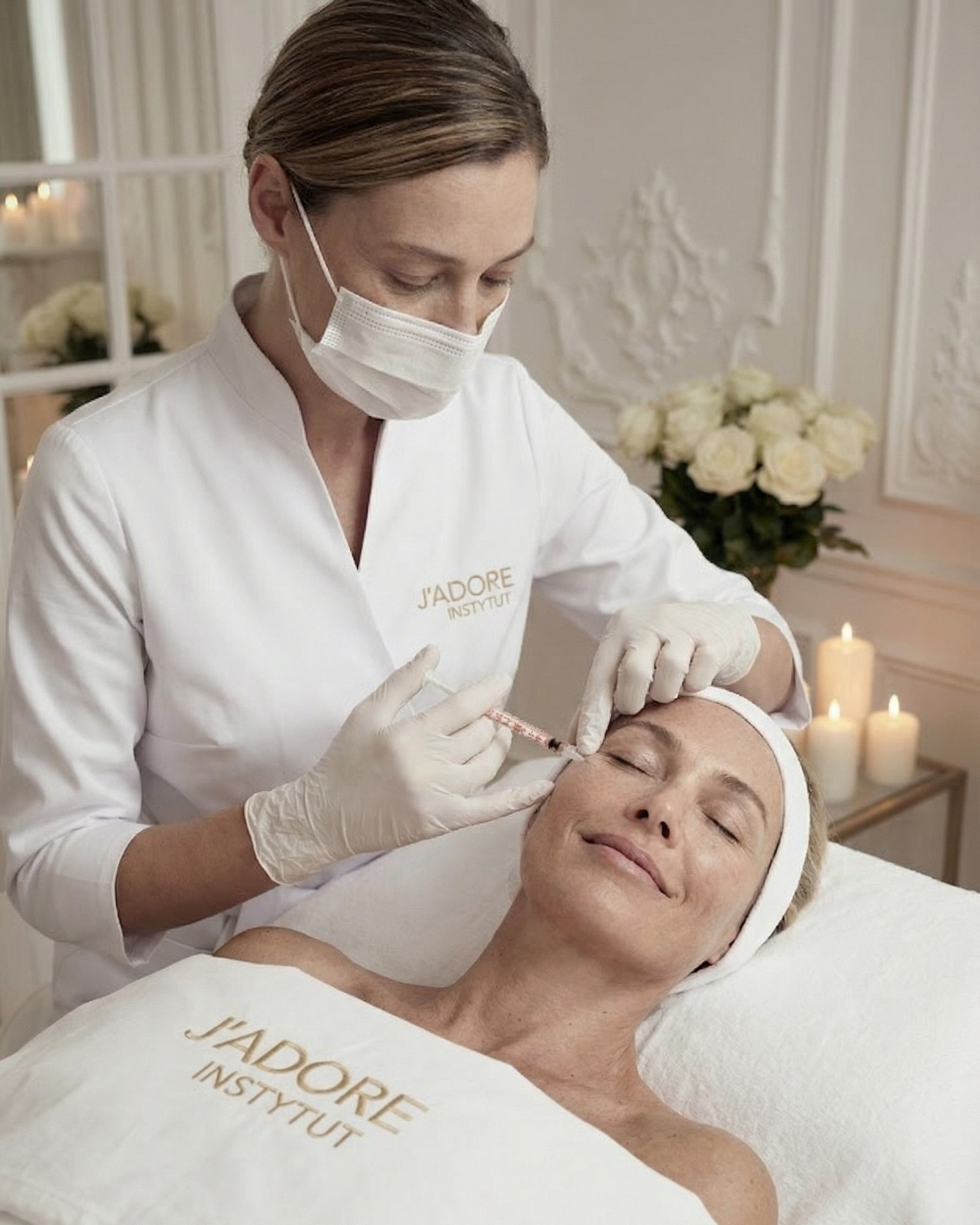
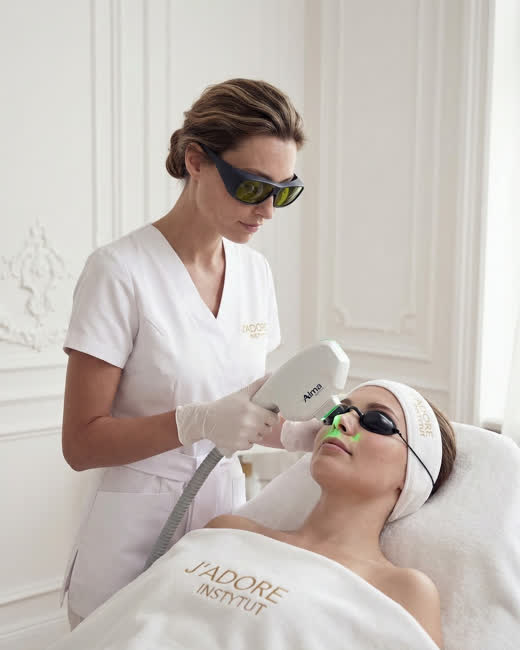
September at our salons in Warsaw and Krakow marks the start of peel season in full swing. J'ADORE offers top-tier medical peels — BioRePeel, PRX-T33, Cosmelan, Ferulac and Mandelac — selected individually after a thorough skin analysis.
Not sure which peel is right for you? Book a consultation. Our specialists will assess your skin condition, determine your skin phototype, review your skincare history and propose a treatment protocol tailored to you. A peel isn't a lottery — it's a precise intervention that requires precise selection.