What changes in the body after 40?
The changes that happen after 40 have specific biological causes. They are not a matter of neglect or an unhealthy lifestyle.
- Slower metabolism — lower muscle mass means lower calorie needs, which can make weight gain easier.
- Muscle mass loss — from around age 30, without regular strength training, muscles gradually shrink. Skin loses its natural support from underneath.
- Changes in fat distribution — lower oestrogen levels can cause fat to shift from the hips and thighs towards the abdomen.
- Loss of skin collagen — skin on the thighs, abdomen and arms becomes looser and more prone to sagging.
- Slower lymphatic system — slower drainage can deepen cellulite and cause a feeling of heavy legs.
Three pillars of a strategy for the body after 40
Working effectively with the body after 40 requires a multi-pronged approach. Salon treatments alone will give an incomplete result without the right foundation.
Pillar 1: Strength training — the base without which there's no result
Building muscle mass is the foundation — muscle "fills" the skin from underneath. Without this, no body treatment will give a full, lasting result.
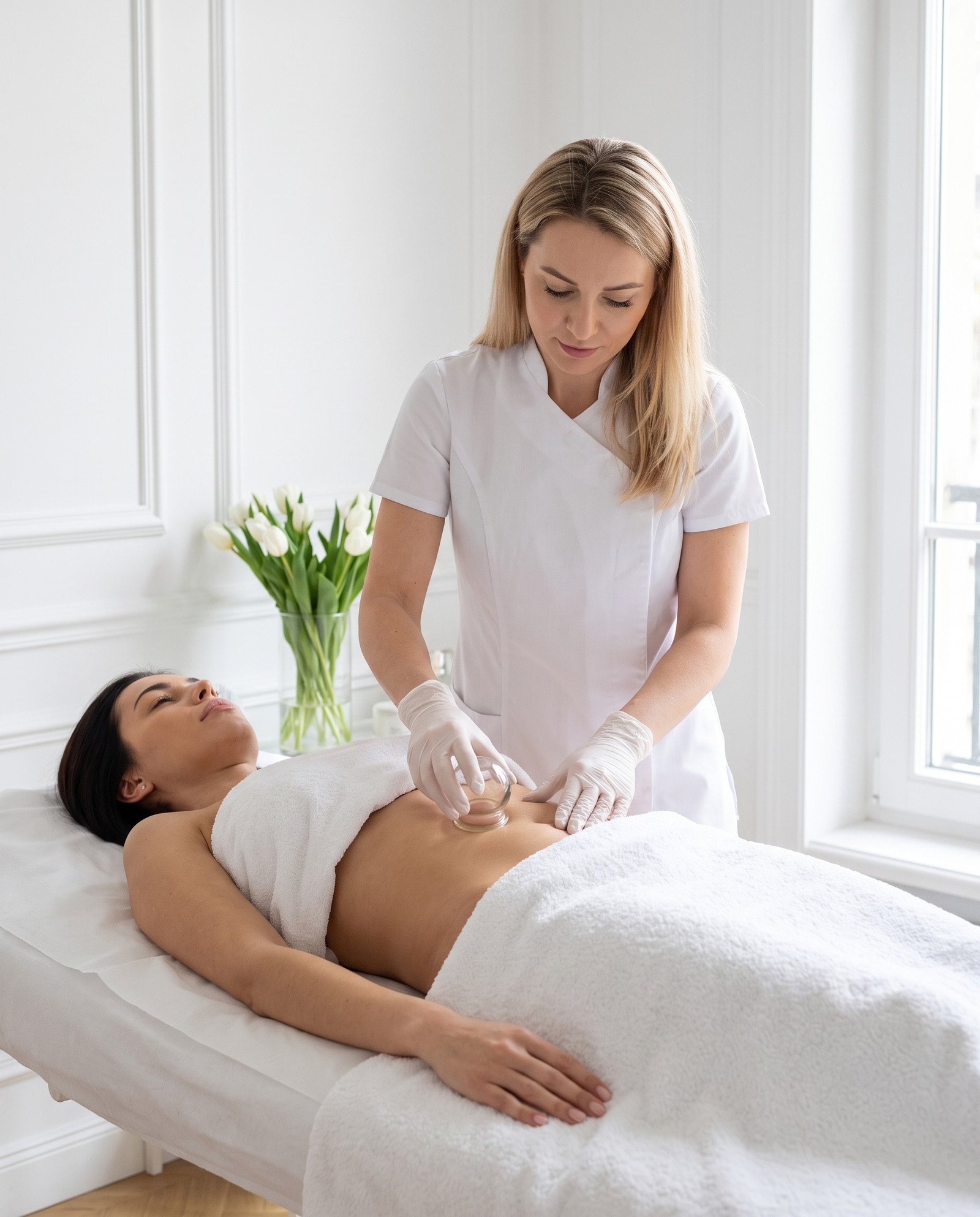
Pillar 2: Salon treatments — a targeted addition
Body treatments work best as support for physical activity and proper nutrition, not as a replacement for them. Each one addresses a different aspect of the changes after 40.
Pillar 3: Nutrition as support
Diet after 40 should above all protect muscle mass and support the skin from within.
- Adequate protein intake — essential for maintaining and building muscle mass.
- A moderate calorie deficit — cutting too much can lead to muscle loss instead of fat loss.
- Vegetables and fibre — support gut function and can reduce water retention and bloating.
- Collagen powder — supplementation can support skin elasticity from within.
A 3-month programme — what might it look like?
A sample plan takes into account different needs of the body: cellulite, laxity, localised fat and swelling. The exact schedule is always set individually during consultation.
When to start?
The best time for a consultation is as soon as you start noticing the first changes — there's no need to wait until they become more pronounced. Many of the methods described here work preventively, before laxity or cellulite become noticeable.