Why does skin darken?
Several overlapping mechanisms drive skin darkening in the underarm and bikini areas. The key point is that most of them lead to the same outcome: skin inflammation, to which melanocytes respond by overproducing pigment.
- Shaving — daily irritation from the razor triggers post-inflammatory hyperpigmentation; every micro-trauma signals melanin production
- Wax hair removal — pulling hairs out damages the skin and drives melanocytes into heightened activity
- Friction — tight underwear, tights, skin rubbing on skin cause constant micro-irritation
- Aluminium-salt deodorants — can irritate sensitive underarm skin and worsen darkening in some people
- Ingrown hairs — the inflammation that follows leaves characteristic post-inflammatory marks
- Hormones — pregnancy, hormonal contraception and insulin resistance (acanthosis nigricans) can all be a cause
- Genetics — darker skin tones (phototype III–VI) are naturally more prone to hyperpigmentation
How to assess what you're dealing with
If the darkening appeared or worsened after hair removal, shaving or ingrown hairs, you're dealing with post-inflammatory hyperpigmentation. This is the most common cause — and also the one that responds well to cosmetology treatments.
Methods available at J'ADORE INSTYTUT
Effective results require a two-pronged approach: eliminating the source of the problem and reducing existing hyperpigmentation. Below are the methods we use in our salons.
Laser hair removal — eliminating the source of the problem
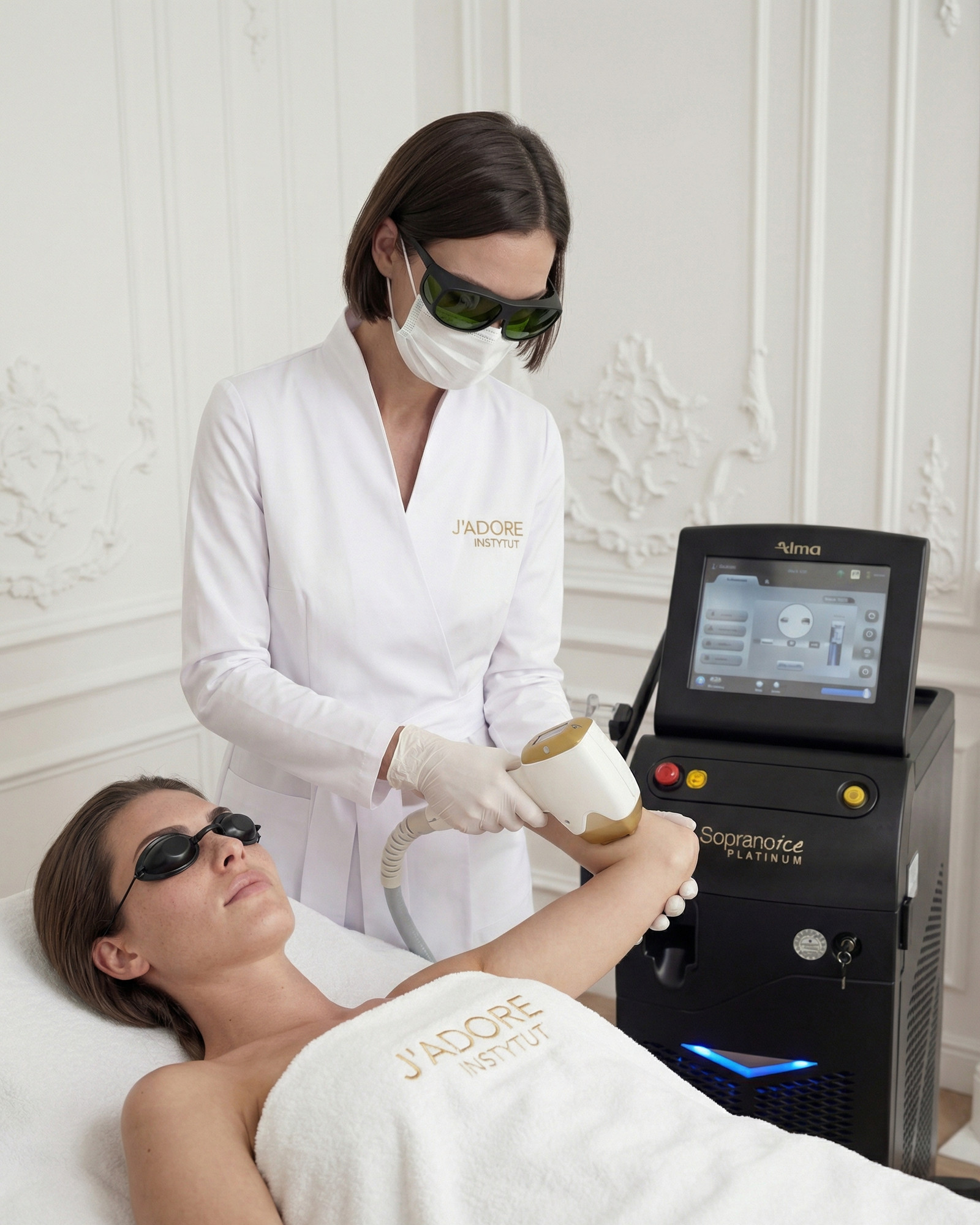
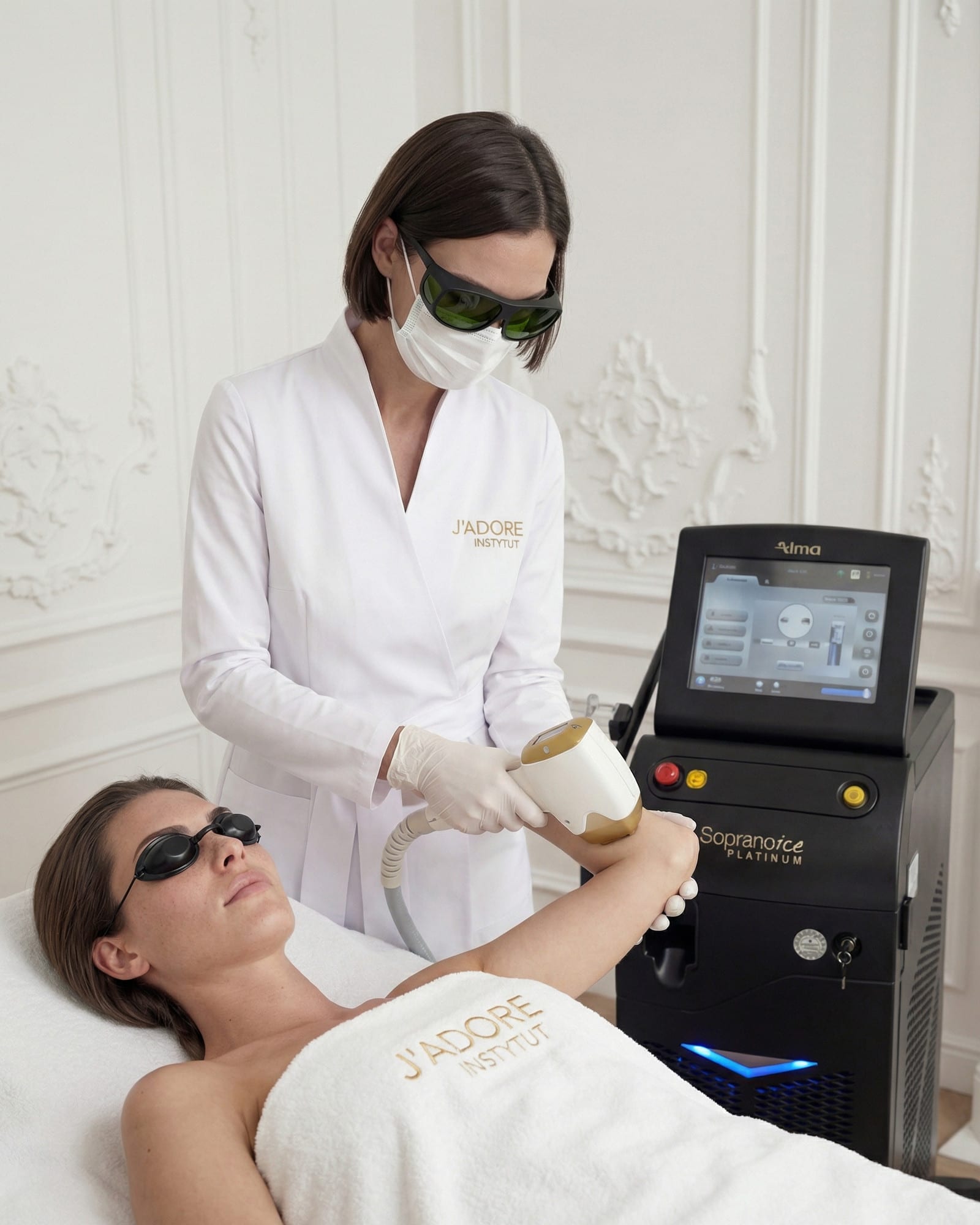
No regrowth means no shaving. No shaving means no irritation. No irritation gives your skin a chance to regenerate naturally and gradually lighten. We carry out the series of sessions a few weeks apart.
Depigmenting peels
After laser hair removal, or alongside it, we introduce a series of peels to reduce existing hyperpigmentation. Their role is to speed up epidermal turnover and inhibit melanocyte activity.
- Ferulac Classic (Sesderma) — combines ferulic acid with retinol and vitamin C; reduces melanin and evens skin tone; delivered as a series of several sessions
- Cosmelan — a depigmentation programme for deeper, resistant hyperpigmentation; combines an in-salon treatment with home care
DYE-VL — laser treatment for existing hyperpigmentation
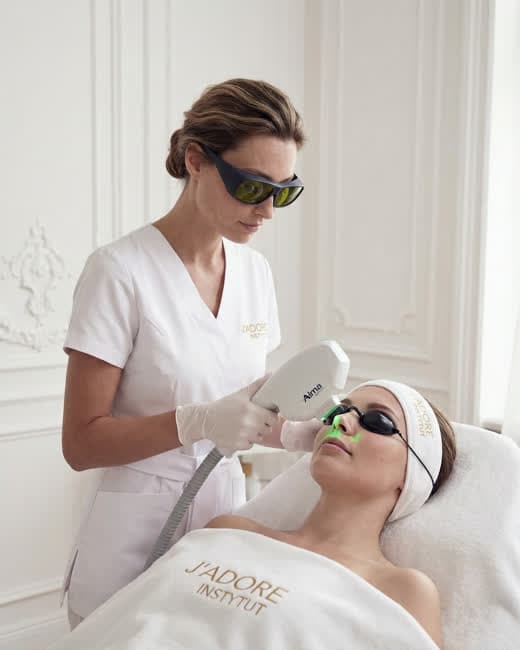
For stubborn, dark patches, the DYE-VL laser can target melanosomes selectively — breaking down accumulated pigment without damaging the surrounding skin.
We carry out the series of sessions several weeks apart. Results often appear gradually, over several sessions.
Home care — support between sessions
In-salon treatments work best when supported by the right home care. Active ingredients that bring visible results for many people:
- Niacinamide — reduces the transport of melanin to the epidermis while strengthening the skin barrier
- Azelaic acid — inhibits melanocyte activity and is well tolerated by sensitive skin
- Arbutin — a natural tyrosinase inhibitor, a gentler alternative to hydroquinone
- Kojic acid — depigmentation without excessive irritation
What does the treatment plan look like?
Lightening hyperpigmentation calls for a staged approach. There's no single treatment that solves the problem entirely — effective therapy combines eliminating the source, reducing existing hyperpigmentation and maintaining results.
- Stage 1 — a series of laser hair removal sessions: eliminating regrowth and the cycle of micro-trauma
- Stage 2 — depigmenting peels, alongside or after hair removal, supported by home care
- Stage 3 — DYE-VL for resistant hyperpigmentation, if the peels haven't given sufficient results
- Maintenance — a follow-up laser session once a year and regular home care