How henna holds onto brows in the first place
To understand why henna fades faster on oily skin, it helps to know where it actually sits. Brow henna colours two things at once: the hair and the skin beneath it. These two materials behave completely differently.
Hair absorbs pigment deep into its structure — the dye penetrates between the cuticle scales and stays there for a long time. Colour on the hair can last several weeks, and for many people even longer, because washing and everyday sebum can't easily strip it out. That's why brow henna is often called "long-lasting" — mainly referring to the hair.
The skin beneath the brows is a different story entirely. Pigment sits here on the surface, in the epidermis — and the epidermis exfoliates. This is a natural, continuous process: old cells are gradually replaced by new ones, and pigment goes with them. On dry and normal skin, this fading colour can last one to three weeks. On oily skin, often half that time.
What sebum does to the pigment
Sebum is a natural oil produced by the skin's sebaceous glands. It plays an important role: it moisturises and protects the skin barrier, prevents excessive water loss, and keeps skin elastic. The problem arises when sebum comes into contact with henna pigment — because it then acts as a natural solvent and remover.
Henna is a water-based dye, and it reacts to oils predictably: the more sebum present, the harder it is for pigment to bind to the skin, and the easier it is for it to lift off. On oily skin, the sebaceous glands work harder — often producing fresh sebum throughout the day, which gradually "washes away" the pigment from the surface of the epidermis. The effect is similar to gently wiping the colour with a damp cloth every few hours.
- 01
Immediately after the treatment
Pigment settles onto the epidermis and hair. Skin is clean, colour is intense and even.
- 02
First 24–48 hours
Pigment binds to the epidermis. On oily skin, sebum starts gradually "washing" pigment away from underneath.
- 03
Day 3–5
On oily skin, colour starts fading more noticeably than on the hair. Pigment on epidermal cells sheds along with natural exfoliation, accelerated by sebum.
- 04
Week 1–2
On normal skin, colour is still visible. On oily skin, pigment beneath the brows may already be very faint or gone — while the hair holds colour unchanged.
It's worth noting that sebum works not only after the treatment, but already before it. Oily skin, unprepared for the treatment, has a layer of oil on its surface that physically hinders pigment contact with the epidermis. Henna applied to oily, unprepped skin bonds weakly from the very first moment — and then fades faster, because it never had the chance to properly "soak in".
What else speeds up fading — besides sebum
Sebum is the main culprit, but not the only one. Several factors affect how long henna lasts — and for many people, they act together, compounding the effect. It's worth knowing them, because some can be controlled.
- Mechanical exfoliation. Rubbing the face hard with a towel, aggressive brush cleansing, peels — each of these physically removes the layer of epidermis carrying the pigment. On oily skin, people often wash more "intensely" for the sake of cleanliness, which unintentionally shortens how long henna lasts.
- Active skincare ingredients. Acids (AHA, BHA), retinoids and enzymatic exfoliants speed up skin cell turnover — exactly what carries pigment away. Used regularly around the brows, they can significantly shorten the henna effect.
- Sun exposure. UV radiation breaks down pigment on the skin's surface faster than deeper down. Open spaces, the beach, no hat — all of this works against colour longevity.
- Steam and heat. Saunas, hot showers with your face in the water stream, intense exercise with sweating — heat opens pores and speeds up sebum production, which further washes pigment away.
- Oily or greasy cosmetics around the brows. A cream with a heavy oil base, balm, or foundation with high oil content — applied directly to or just beneath the brows — act similarly to excess sebum.
What genuinely extends how long henna lasts on oily skin
The good news: several specific steps can meaningfully extend how long henna stays intense — both in preparation before the treatment and in aftercare. This isn't magic — it's skin chemistry applied in practice.
Before the treatment
skin preparation
- Thorough cleansing — removing sebum, makeup and creams from around the brows
- De-greasing with an oil-free toner or micellar water right before the treatment
- Skipping creams and oils around the brows on the day of the treatment
- Telling your specialist your skin type — this allows her to adjust the application technique
After the treatment
aftercare that extends the result
- Avoiding washing your brows for at least several hours after the treatment
- Gentle (not abrasive) cleansing of the skin around the brows
- Skipping peels and acids on the brow skin for as long as the effect lasts
- Sun protection — a hat or SPF around the brows
- Avoiding saunas and hot showers straight after the treatment
It's also worth knowing that the first henna application on any given person often lasts less than subsequent ones. Skin tends to "take" pigment better over time — regular treatments every few weeks can gradually extend how long the effect lasts, as the epidermis becomes more saturated with pigment. This is something many people with oily skin notice after just two or three visits.
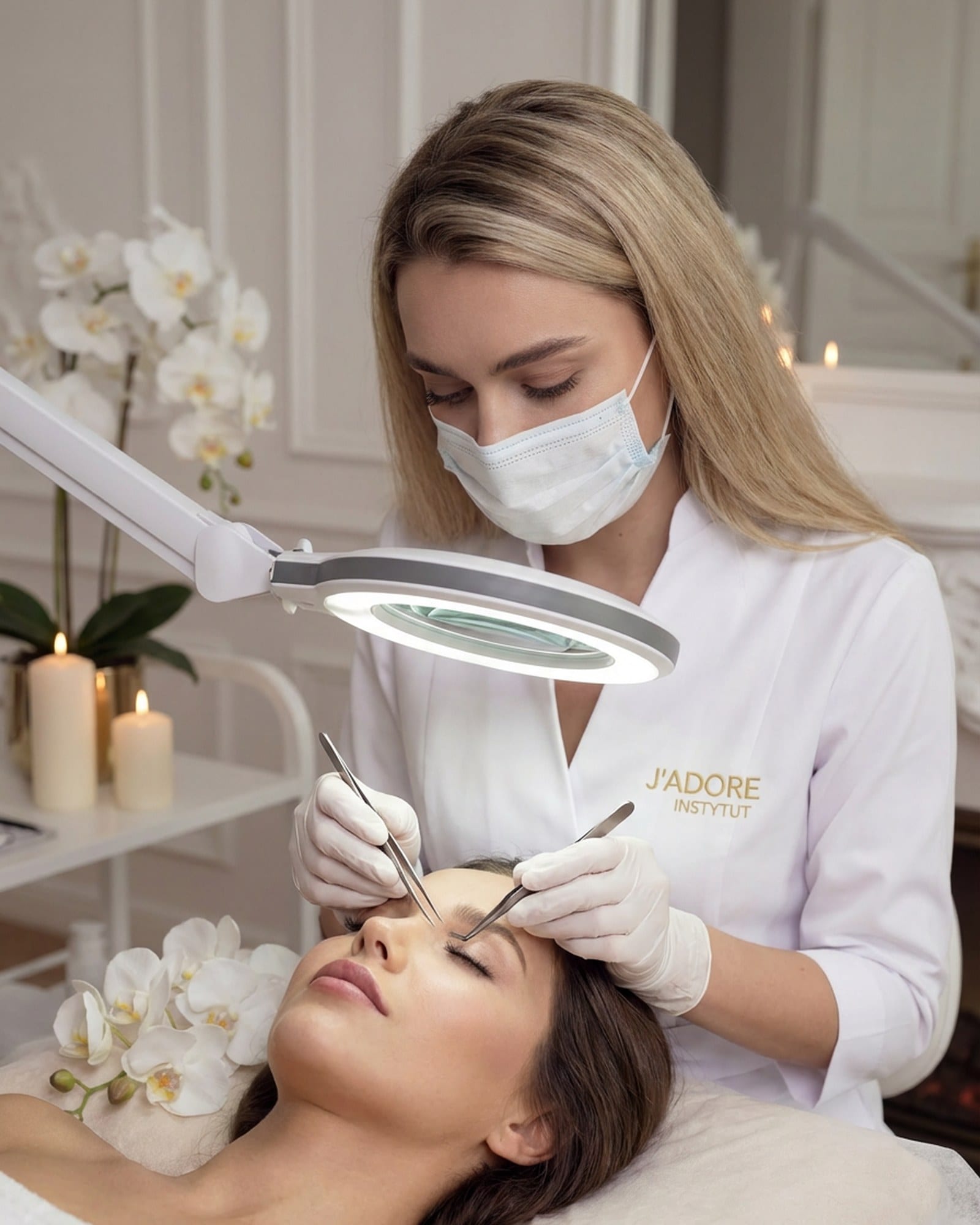
Henna vs brow lamination — which suits oily skin better
The question comes up often: since henna fades so fast on oily skin, might brow lamination be the better choice? It's a fair question — lamination works on an entirely different principle, and sebum isn't nearly as much of an issue for it.
Brow henna
colouring hair and skin
- Colours the hair and the epidermis beneath the brows at the same time
- Effect on skin — vulnerable to sebum, exfoliation, acids
- Effect on hair — long-lasting, less sensitive to skin type
- Colour can be chosen to preference
- Regular sessions — every few weeks
Brow lamination
setting and shaping the hair
- Works only on the hair — doesn't colour the skin
- Result independent of sebum production
- Effect lasts several weeks (hair)
- Can be combined with henna for a double effect
- For unruly, "escaping" hairs
In practice, for many people with oily skin, the best result comes from combining both treatments: lamination sets and straightens the hair, henna colours it intensely. The effect on the hair is long-lasting and independent of sebum. The shadow on the skin fades faster — but some people accept this as a natural cycle and return for henna every few weeks, while the lamination "holds" for longer.
When it's worth talking to a specialist
Most people with oily skin can enjoy a beautiful henna result — it just takes a bit more awareness, and perhaps a slightly different rhythm of visits. There are, though, situations where it's worth talking to a specialist before your first treatment, or returning to her afterwards if the result disappoints.
- You use retinoids or strong acids daily — it's worth discussing how to combine them with henna without shortening the effect
- Your henna fades unusually fast — this could be down to technique, product, or skin preparation
- You have combination skin — the brow area may be oily even if the rest of your face is normal or dry
- You're considering lamination for the first time and want to know whether it makes sense alongside henna in your case
- You take medication or hormonal preparations — these can affect sebaceous gland activity, and with it, how long henna lasts
Henna on oily skin isn't a sentence — it's a challenge with a concrete solution. The better you understand what's happening beneath the skin's surface, the easier it is to make decisions: when to book your next visit, what to avoid in your skincare, and what to expect after the treatment. Informed expectations are half the battle.