A lesion without a diagnosis is not a candidate for destruction.
Electrocoagulation uses high-frequency current to locally generate heat and coagulate tissue. The method can be used to remove selected, benign superficial lesions. However, it does not automatically provide material for a full histopathological examination. When the image is unclear, destroying the lesion may close the door to the answers a doctor needs.
An assessment of "it looks like a fibroma" is not sufficient if the lesion is growing, bleeding without injury, has irregular borders, multiple colours, ulceration, or differs significantly from others. The American Academy of Dermatology emphasises that a suspicious lesion should be examined by a dermatologist, and the diagnosis of certain conditions requires a biopsy and microscopic assessment. In such a scenario, a beauty treatment gives way to diagnostics.
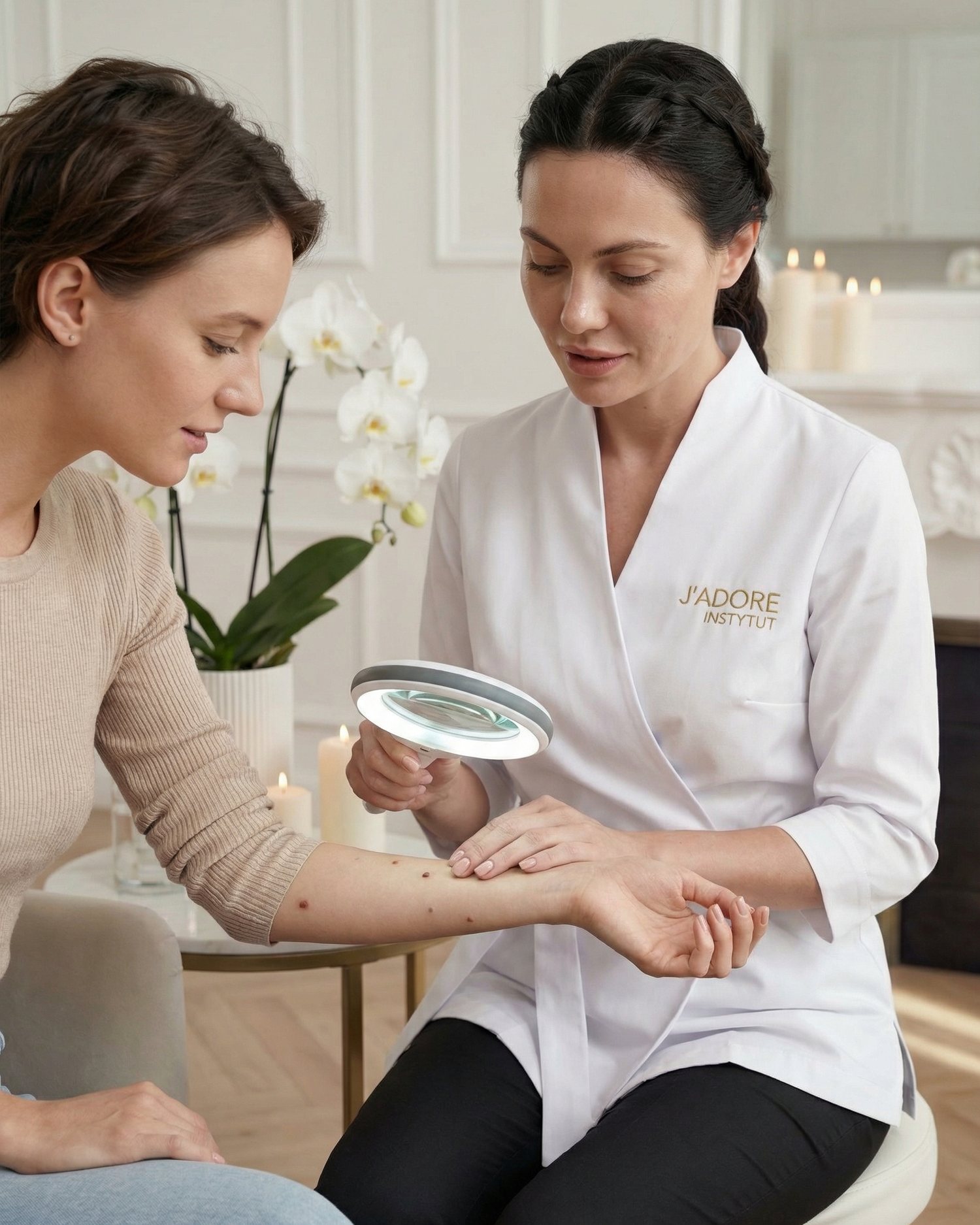
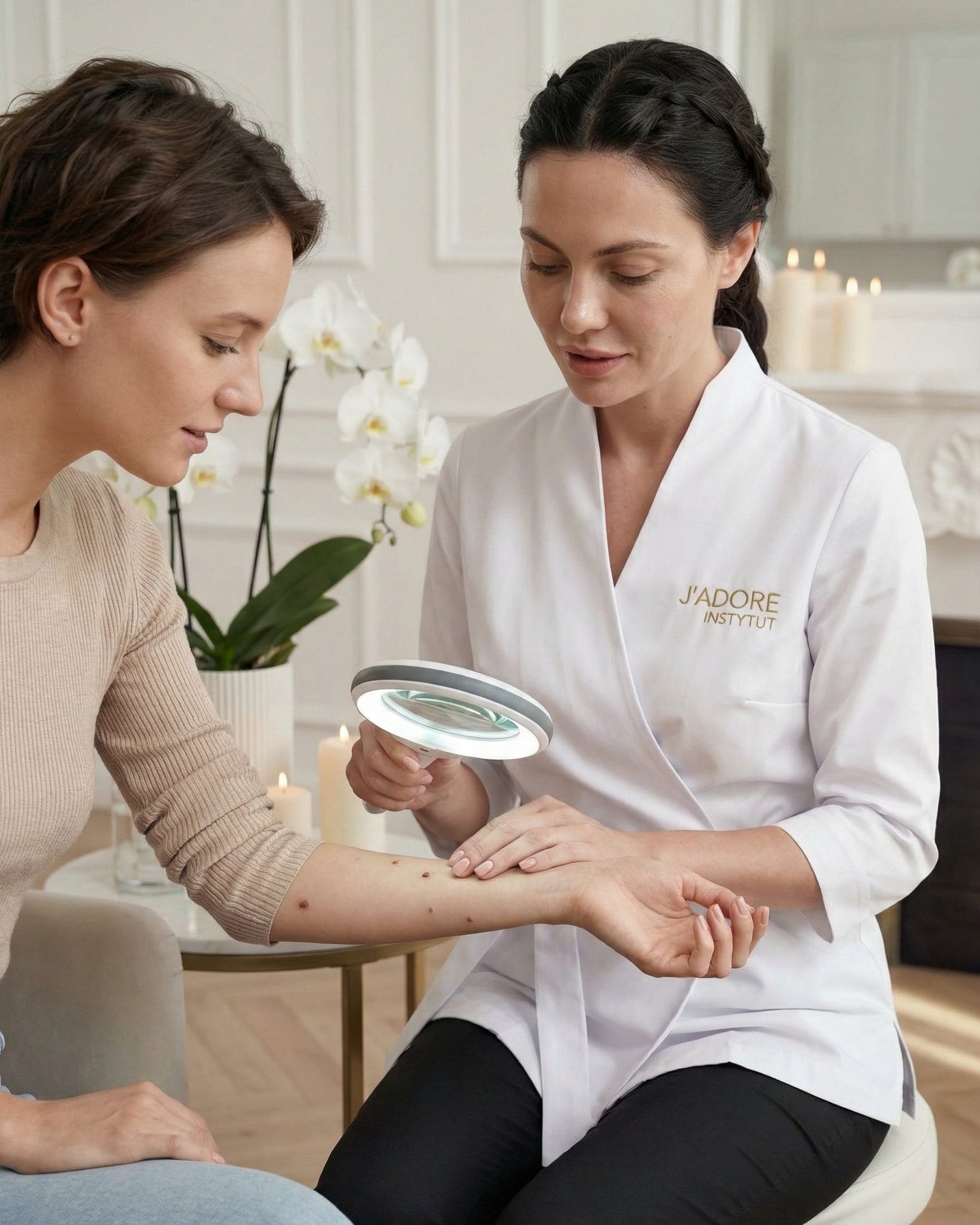
A pigmented lesion needs dermoscopy, not a quick appointment.
A mole, dark papule, or unevenly coloured patch should not be qualified by the naked eye alone. Dermoscopy allows the doctor to see structures invisible without magnification. If the image raises suspicion, the appropriate method may be excision with a margin and examination, rather than thermal destruction of the surface.
Report any lesion that evolves: grows, changes shape, colour, or height. New itching, a recurring scab, and bleeding without being caught are also important. This does not automatically mean cancer. It means that the order of actions matters. Diagnosis first, then a conversation about aesthetics.
The interview covers the heart, medications, and healing process.
In the case of a pacemaker or implantable cardioverter-defibrillator, information about the type of device and a consultation in accordance with the clinic's procedure is required. DermNet describes the risk of interference during electrosurgery and indicates that in complex cases, the involvement of a cardiologist may be necessary. The statement "new pacemakers are safe" is not enough to qualify a specific person and a specific operating mode.
Pregnancy, active oncological treatment, and general illness change the priority.
In J'ADORE materials, pregnancy and breastfeeding are on the list of contraindications for elective electrocoagulation. A minor aesthetic change can wait. Similarly, during active cancer treatment, recent surgery, or a period of significant weakness — the decision should be agreed upon with a doctor instead of adding an elective wound to the body.
Skin in an inflammatory state does not provide a safe working field.
Active cold sores, a purulent pimple, oozing, bacterial infection, severe eczema, or fresh irritation around the lesion increase the risk of spreading the infection and unpredictable healing. The appointment should be postponed until the condition has calmed down and, if necessary, treated. Make-up and concealer do not change the state of the skin; they only hinder its assessment.
If on the day of your visit there is a shaving wound, scratch, or sunburn at the treatment site, show it before starting. The specialist may avoid the area or postpone the procedure. Attempting to "fit the treatment" between damaged fragments is not always reasonable, as the dressing and care will cover the entire zone.
A tendency for keloids is not a minor detail.
If a raised scar extending beyond the boundaries of a wound has formed after ear piercing, a cut, or surgery, tell us about it directly. A tendency for keloids changes the risk assessment even for a very small area. The size of the electrode does not guarantee an invisible trace, because the biology of healing also determines the response.
The location matters. The chest, shoulders, and areas with high skin tension may heal differently than a small point on soft skin. A rash after plasters or disinfectants should also be reported — the problem may turn out to be not the impulse itself, but the dressing or product used after the treatment.
Diabetes and sensory disorders require special caution.
Uncontrolled diabetes can impair healing and increase susceptibility to infection. Neuropathy reduces the ability to correctly assess pain and temperature. A person who has poor sensation in an area cannot immediately communicate that a stimulus is unusual. This does not mean an automatic refusal of every procedure, but the necessity of individual medical qualification.
Do not hide high glycaemia for fear of losing your appointment. A small wound after an elective treatment remains a wound, and its safety depends on the healing conditions. The aesthetic benefit does not outweigh the risk of chronic damage.
The day of the treatment begins with a re-examination of the lesion.
- 01
Identification
What the lesion is, how long it has existed, whether it is changing, and who has assessed it previously.
- 02
Health qualification
Implants, medications, allergies, blood clotting, diabetes, healing, pregnancy, and current infections.
- 03
Selection of method
Whether thermal destruction is appropriate, or if a biopsy, excision, or another technique is needed.
- 04
Wound plan
What the mark looks like, how to care for it, when to report a worrying symptom, and who is conducting the follow-up.
If any step is skipped, the consent form signed does not fix the process. You should understand whether the lesion will be destroyed or removed with the possibility of examination, how long the scab will be visible, and what the risk of discolouration or scarring is.
The sensation depends on the location, number of lesions, and anaesthesia.
A small cherry angioma on the torso may cause a short prick or burning sensation. A larger lesion, an area with dense innervation, and multiple points are a different experience. Anaesthetic cream reduces discomfort but does not remove all sensations. The smell of coagulated tissue and the sound of the device can be a surprise to someone expecting a treatment similar to facial care.
Pain is not an indicator of effectiveness. Excessive action does not provide "more certain" removal, but only increases thermal damage. If you feel increasing, spreading pain during the procedure, or if the application is taking place outside the agreed point, report it immediately.
The scab is a biological dressing, not an aesthetic flaw.
After electrocoagulation, a small scab usually forms at the site of the lesion. Do not scratch it off, accelerate it with a peel, or cover it with heavy make-up without the consent of the person in charge. Tearing it off exposes an immature surface, prolongs healing, and increases the risk of a mark. Precise care depends on the size, location, and technique used.
Wash your hands before touching the wound and use only recommended products. Spirit, tea tree oil, acid, and home-made "cure-all" ointments can irritate. The American Academy of Dermatology, in its recommendations for biopsy wounds, emphasises gentle cleansing, maintaining a moist environment with an appropriate preparation, and covering with a dressing — the instructions after electrocoagulation may be different, but the common rule is: do not improvise.
The sun can turn a small point into a long-lasting discolouration.
Freshly healing skin is susceptible to post-inflammatory hyperpigmentation. On exposed neck, face, décolletage, or hands, sun protection in accordance with the specialist's recommendation and mechanical covering, when possible, is necessary. For this reason, an appointment before a beach holiday may be a bad idea, even though the treatment itself is short.
Using a filter alone does not give permission to tan the wound. You may wipe off the cream, apply too little, or miss a spot near the edge of your clothing. If you know that you will not maintain protection during your trip, postponing the procedure is safer than treating a spot later.
On the third day, it is easy to mistake healing for a need for correction.
In the first few days, assess the direction of changes, not the aesthetics of a single hour. A dry surface, local tenderness, and colour limited to the treatment field may be part of the expected course described after the treatment. A different image is created by erythema extending beyond the boundaries, increasing pain, oozing, pus, an unpleasant odour, or fever. Do not try to resolve this with a photo filter sent to a friend. Take a photograph in daylight, note your body temperature and the products used, and contact the person in charge. In the case of violent or general symptoms, medical help may be needed.
A home error does not automatically ruin the healing, but it changes the plan. The specialist may recommend different cleansing, protection against friction, or an on-site check-up. The worst solution is adding further agents: spirit after acid, heavy concealer on oozing, and a plaster stuck to the scab itself. Safety also means admitting that the instructions were broken before a small problem has time to develop.
Redness can be normal, but the trend matters
Localised redness, tenderness and a scab are expected immediately after the treatment. The area should gradually settle day by day. You should be concerned if the opposite happens: pain increases, redness spreads, the skin feels warmer, or you notice pus, an unpleasant odour, fever or red streaks. In such cases, contact the clinic or a doctor instead of waiting for your scheduled follow-up.
- Seek urgent advice if you experience heavy bleeding that does not stop with the recommended pressure.
- Consult a doctor regarding increasing swelling, especially around the eye or airways.
- Do not ignore signs of an allergic reaction to a product or plaster.
- Once healed, show us any lesion that regrows, bleeds again or looks different than before the treatment.
Different areas require different healing plans
A spot on the forehead can usually be protected from the sun, but it is harder to shield from touch during washing and makeup application. A lesion under a bra strap or waistband is less visible but subject to constant friction. On the foot, a small wound bears the body's weight. Asking about the location is not just for pricing; it helps predict whether you will be able to follow the aftercare instructions.
Before a hand treatment, consider your work involving water, gloves and contact with clients. For the neck, consider collars, necklaces and hair catching on the scab. In the armpit area, deodorant, sweat, shaving and friction are significant factors. Sometimes, the right time for a treatment is after a holiday or a change in your schedule, when the wound can remain undisturbed for a few days.
The follow-up does not end when the scab falls off
After healing, examine the area in good light. A pink spot may still be maturing, and its colour may change over the following weeks. Do not accelerate this process with acids, retinoids or at-home microneedling. If the specialist has recommended a follow-up, attend it even if the spot looks fine — especially after a larger lesion or more difficult healing.
A recurrence does not always mean the treatment was performed poorly. Some lesions may have a deeper foundation, and new cherry angiomas or warts may appear nearby over time. However, a return in the same spot requires a new assessment, not an automatic repeat of the impulse. A changed appearance after previous destruction can make diagnosis more difficult.
Keep a record of the date, method and diagnosis. If another doctor examines the skin later, knowledge of the previous treatment helps them understand the scar or discolouration. You do not need to keep a public photo album; private medical records and the description provided by the clinic are sufficient.
Take a neutral photo before the procedure if the clinic does not maintain its own records. The shot should show the location and scale, without filters or makeup. It is not for self-diagnosis. Instead, it helps you remember whether a later dark spot is a scab residue, discolouration or a lesion in a different place. Keep the photograph private; images of your skin are also health data.
If you are concerned about the aesthetic result, do not immediately book a correction at a random clinic. An immature scar changes colour and texture. Further thermal action performed too early can increase the injury. Contact the person who performed the procedure first, determine the stage of healing, and only then consider a correction or a dermatological consultation.
Surgical smoke and station hygiene are also part of safety
Thermal tissue destruction can create surgical smoke. The clinic should have procedures to limit it, ventilation or suction appropriate to the scale of work, protective measures and well-maintained equipment. The smell is not proof that the treatment is "working harder". It is a product of the process that staff should not ignore.
With multiple lesions, the scope of one session must be chosen so that wound care is realistic. Dozens of scabs on the torso mean a larger area of irritation, more friction from clothing and greater difficulty with sun protection. Dividing the work into stages is sometimes safer than removing everything just because the patient has travelled from afar.
After the treatment, you should receive written or memorable instructions and a way to contact the clinic in case of a problem. The simple phrase "do not touch" is insufficient. You need to know how to clean the area, whether to use a dressing, what to avoid, when a reaction is expected and where to report an alarm symptom outside of opening hours.
Also ask who performs the procedure and what their qualifications are for assessing specific types of lesions. The ability to operate a device is not the same as the ability to recognise an image requiring a biopsy. The clinic should have a clear boundary: which lesions they remove after consultation, which require prior dermoscopy, and where they refer the patient when the presentation is not typical.
If you hear a promise of "no scarring" during a consultation without the specialist examining previous marks on your skin, treat it with caution. The result depends on the depth of the lesion, energy, location, skin phototype, sun exposure and the biology of healing. Honest consent includes the possibility of discolouration, hypopigmentation, recurrence and scarring, even when the probability is low.
Precede your Krakow appointment with a question about diagnostics
Before booking skin lesion removal in Krakow, ask who qualifies the lesion, when dermoscopy is required and what happens if there are doubts. The clinic should be able to say "we are not removing this today". The absence of a treatment can be the best proof of the quality of the qualification.
The decision to postpone protects more than just the appearance of the skin
Electrocoagulation is quick, but its consequences last throughout the entire healing period. Poor qualification can mean a missed diagnosis; a bad moment — infection or discolouration; poor aftercare — a visible mark. None of these problems becomes less important because the original lesion was small.
Remember a simple sequence: recognise, assess health, choose the method, plan the wound. Only then remove. Electrocoagulation is a tool for a specific task, not a universal eraser for the skin. A safe specialist also understands the moment when they should put down the electrode.