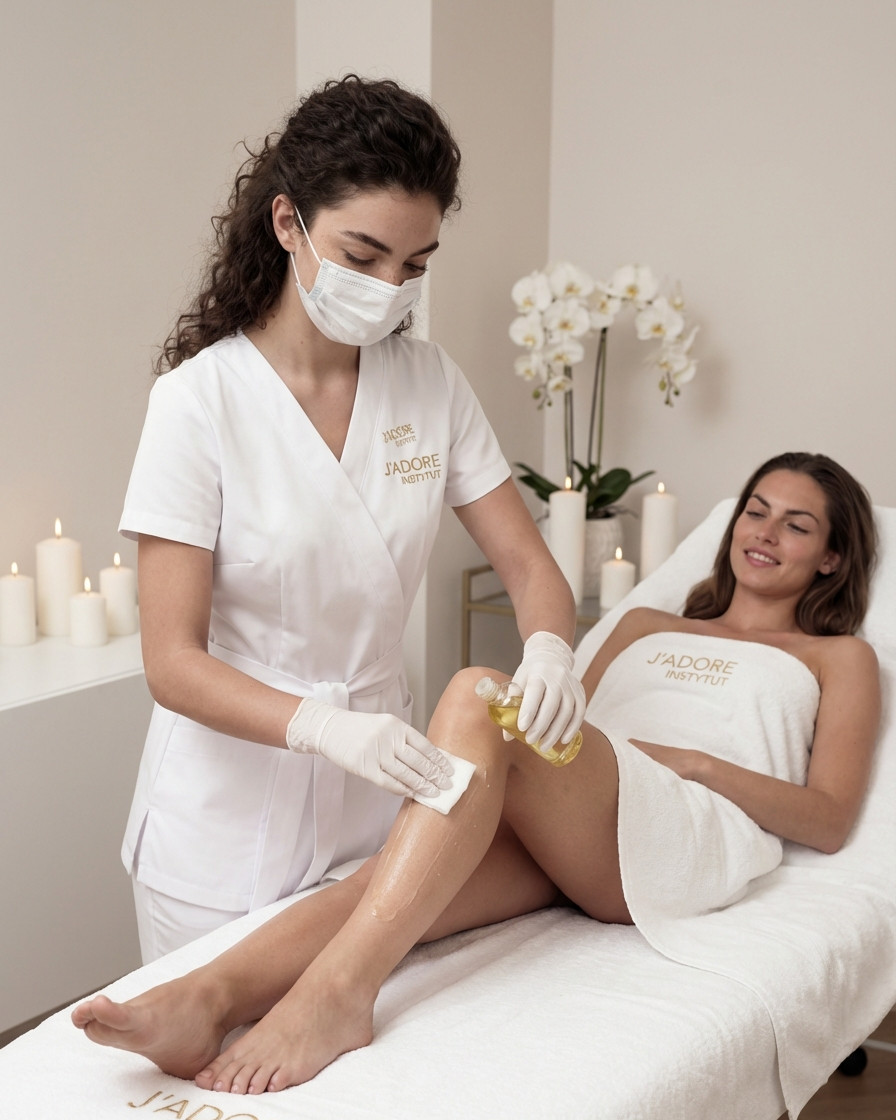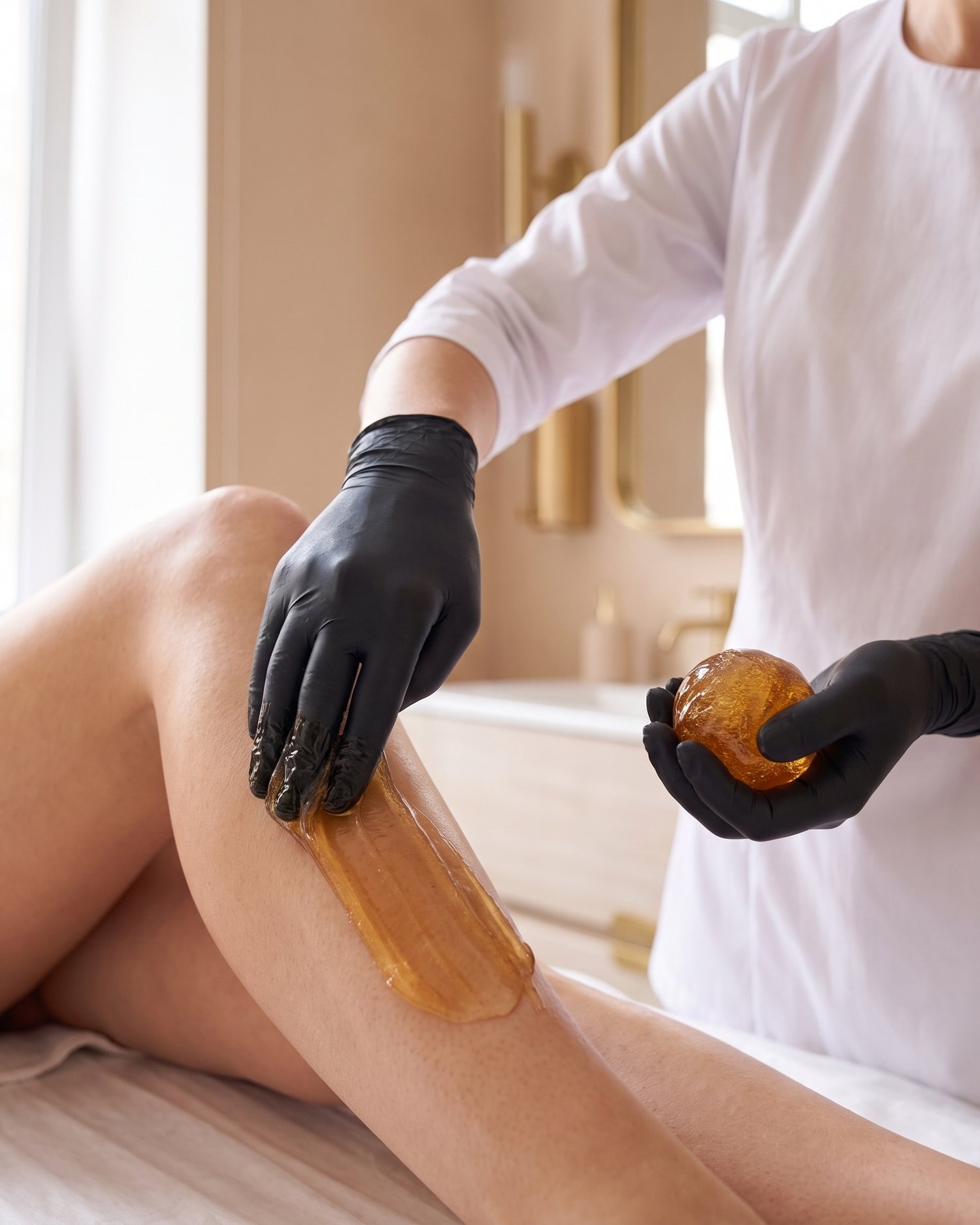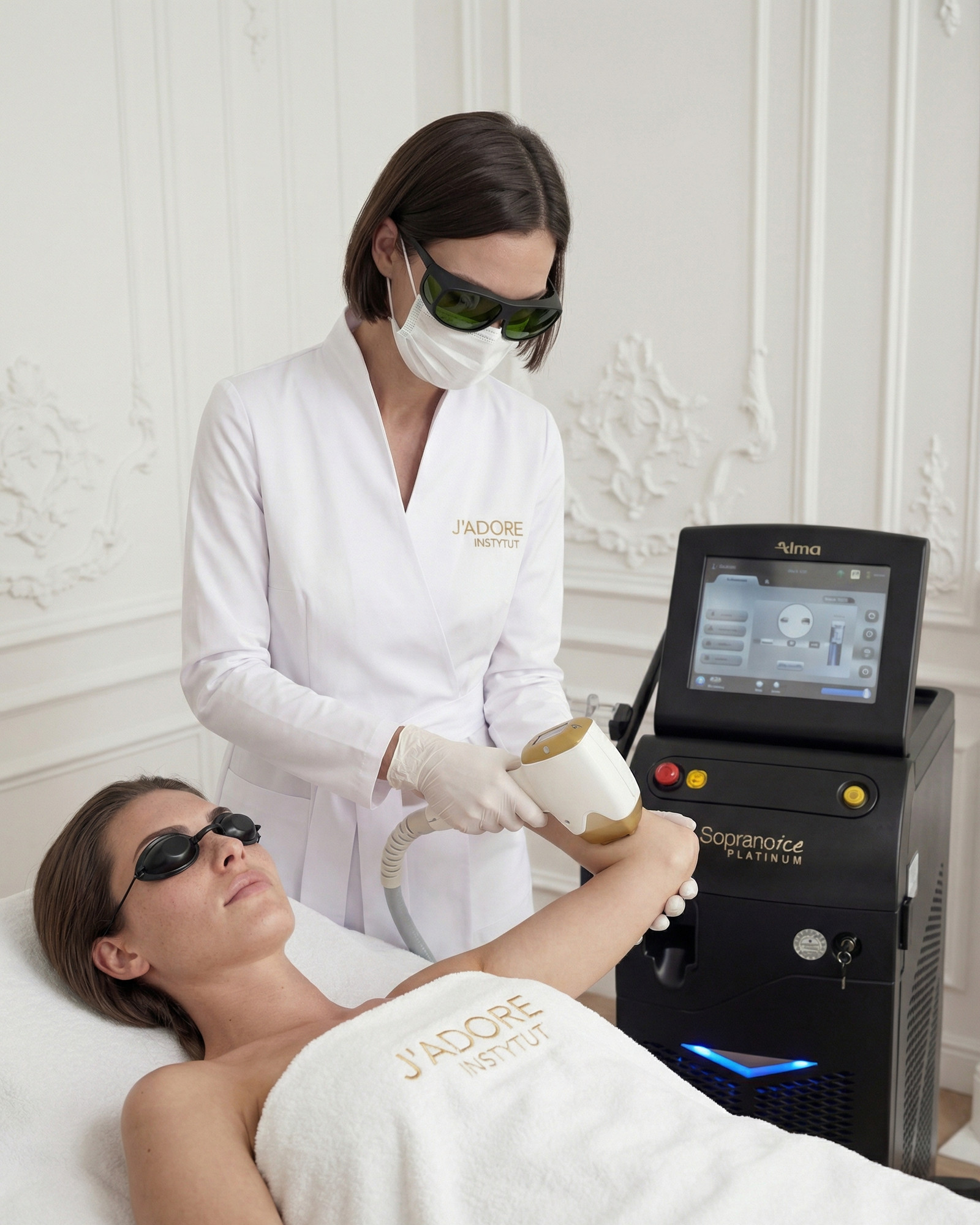
Red zone: we do not perform waxing on this skin
An absolute "no" applies primarily to the treatment area, not always the entire body. A wound on your calf excludes working on that specific fragment; it does not automatically prevent underarm waxing if the skin there is healthy. However, there are situations where the treatment must be postponed more broadly because the body's reaction or the treatment being used increases the risk in many areas. The boundary should be determined by the condition of your skin and the advice of the person managing your treatment, not the salon calendar.
Wax does not disinfect a lesion and does not "remove the problem along with the hair". It can transfer microorganisms to adjacent skin, open up further micro-injuries or make it difficult to assess the dermatological picture. If someone suggests skipping only the most visible point without examining the entire area, ask for a re-evaluation. Inflammation rarely ends perfectly at the edge of a single spot.
Retinoids and strong exfoliation can turn ordinary wax into an injury
The most frequently overlooked contraindication is retinoids: both oral treatment and topical preparations used on the face or body. They accelerate epidermal renewal and can increase its fragility. The skin may be smooth, without redness and seemingly perfect for waxing, yet it tolerates the pulling force less well. This is exactly why the question about medications and active skincare must be asked before the first layer of wax.
Similar caution applies after strong acids, intensive peels, laser treatments and other procedures that disrupt the barrier. There is no single safe interval for every preparation, concentration and zone. A face treated pharmacologically requires a different decision than legs where no active substances were used. Do not stop taking medication on your own just to make it to your waxing appointment. The treatment date must adapt to your treatment, never the other way around.
- 01
Provide the name of the product or medication
"Acne cream" is not enough. The name and method of use allow us to assess whether the preparation contains a retinoid or a strongly exfoliating ingredient.
- 02
Tell us where the product is applied
A preparation used on your cheeks may exclude facial waxing, but it does not necessarily affect your legs. Oral treatment requires broader caution.
- 03
Do not guess the length of the break
The interval depends on the substance, the condition of your skin and the recommendations of your practitioner. If there is any doubt, we postpone the treatment or choose a non-wax method.
A fresh tan is damage, not a skin colour
Skin after intense sun exposure may only look darker, even though its barrier is already overloaded. If it is warm, tight, tender, red or starting to peel, waxing should be postponed until it has fully calmed down. Waxing on a fresh tan increases the risk of epidermal tearing, prolonged burning and uneven discolouration.
This also applies to tanning before a trip. Waxing performed just before the beach exposes freshly treated skin to radiation, salt, chlorine, sweat and friction from your swimwear. Performing it immediately after returning means working on skin that is still regenerating after exposure. It is safest to plan your visit with a buffer and observe the state of the surface, rather than following the flight date alone.
Varicose veins, diabetes and impaired healing require more than just reception consent
Visible vessels and varicose veins are not one category. Small, flat spider veins require a delicate assessment, while advanced, protruding or painful varicose veins may exclude waxing in that zone. Hot product, pressure and a quick pull on the skin should not act directly over a changed vessel. If the area is swollen, painful or has suddenly changed appearance, a medical assessment is needed first.
With diabetes, sensation, circulation, skin condition and healing rate are key. The name of the disease alone does not describe the risk. A person with complications, neuropathy, ulceration or difficult healing should not be qualified for waxing based on a brief "I feel fine". Other diseases and medications affecting vessels, immunity or tissue regeneration require similar caution.
Pregnancy does not provide automatic consent or an automatic ban
Pregnancy is not synonymous with a total ban on waxing, but it changes the conditions. The skin can be more vascularised, reactive and sensitive to pain. Swelling, new vessels and a greater tendency for discolouration appear, and in later months, it also becomes difficult to position yourself safely. A person who tolerated bikini waxing well before pregnancy may react more strongly now.
You must mention pregnancy before starting, even at an early stage. In cases of high-risk pregnancy, specific doctor's recommendations, infection, feeling unwell or changes in the area, we postpone the treatment. There is no point in performing your first deep wax just before giving birth only because someone presented it as a hygienic duty. It is not. The scope should result from comfort and safety, not pressure.
After childbirth, the number of weeks is not the only deciding factor. The perineal area, abdomen and C-section scar must be fully healed, without pain, discharge or inflammation. Waxing other zones can return earlier if the skin is healthy and there are no contraindications related to treatment. When in doubt, the schedule loses to healing.
Yellow zone: we perform the visit after changing the plan or we postpone it
Not every obstacle means a multi-week ban. Sometimes it is enough to skip a fragment, choose a smaller zone or return after a few days. The condition is the ability to determine a safe boundary. If redness is spreading, the cause of the rash is unknown or the lesion is painful, we do not work "around" it at our own risk.
Possible change of scope
healthy skin outside a clearly limited area
- a single, stable mole avoided with an appropriate margin
- a small abrasion far from the rest of the planned zone
- waxing a different part of the body than where the active preparation is used
- resigning from one zone while keeping the remaining healthy skin
Postponement needed
the reaction covers the working area or has no clear cause
- diffuse irritation after a new cosmetic
- a freshly performed peel or treatment that disrupts the barrier
- pain, burning or skin hypersensitivity before being touched
- infection, fever or feeling unwell that hinders a safe visit
A patch test does not invalidate a contraindication. It makes sense when the tolerance of a cosmetic on healthy skin is uncertain, but it is not for testing whether freshly exfoliated epidermis "might withstand it after all". If the risk mechanism is known, the reasonable test is to wait for regeneration.
Reaction after the treatment: what to observe and what not to wait with
Short-term redness, a feeling of warmth and small bumps around the follicles may appear immediately after waxing. They should gradually fade, not increase. In the first period, avoid hot baths, saunas, swimming pools, intensive training, perfumed products and friction from tight clothing. Do not scratch your skin and do not start intensive exfoliation immediately.
The salon should be informed of the problem so we can provide details about the product used and the course of your visit. However, we should not diagnose infections remotely or recommend medication based on a photo. In the event of alarm symptoms, medical assistance takes precedence over discussing whether the reaction falls within the typical range.
Qualification should be a conversation, not a signature assuming someone else's risk.
A contraindications form helps organise information, but it does not exempt the specialist from observing and asking questions. You might not associate a prescription cream with the term "retinoid", consider sunburn as just a tan, or realise that a recent acid treatment has weakened your skin barrier. Good qualification explains the link between information and risk. This ensures the answer is not a random "no", but a decision understood by both parties.
- How has your skin reacted previously? Severe burning, prolonged swelling, blisters or epidermal tearing require discussion before another attempt.
- What has been applied to the area? This includes medications, dermatological preparations, home-use acids, retinoids, self-tanner and irritant cosmetics.
- Has your skin recently undergone another treatment? Laser, peels, microneedling and intensive exfoliation may require a waiting period and full regeneration.
- Do you have any illness or treatment affecting healing? In case of doubt, the opinion of your attending physician is required, rather than a bold interpretation by the salon.
- Has your condition changed since booking? New rashes, infections, antibiotics, burns or injuries should be reported again on the day of your visit.
Your signature does not transfer all responsibility for the decision. If a visible change raises doubts, the specialist has an obligation to stop the work, even if you insist and declare that you take the risk upon yourself. Consent is only valid after reliable information is provided, but it does not make a treatment safe if it should not have been performed in the first place. Likewise, the absence of a question does not mean the absence of a contraindication.
Warsaw: a good consultation starts before you enter the salon.
We perform wax hair removal in Warsaw at two J'ADORE INSTYTUT locations: at ul. Żelazna 59 in Wola, open Monday to Saturday 8:00–21:00 and Sunday 11:00–19:00, and at ul. Mińska 29A/46 in Praga-Południe, open Monday to Saturday 9:00–21:00. Information about the service and booking is available on our website wax hair removal in Warsaw.
When booking, specify the area and disclose pregnancy, dermatological medications, retinoids, recent skin treatments, tans and any previous unusual reactions to wax. Do not send photos of intimate changes through random channels; our reception can explain a safe way to consult or suggest contacting a doctor immediately. On-site, the specialist will re-evaluate your skin. A booking is not a guarantee of the treatment if your condition has changed since the day of booking.