Where the difference really lies — mechanism, not just ingredients
The most common mistake when comparing the two methods is focusing only on ingredients — sugar versus wax. But the key difference is mechanical: sugaring works against the direction of hair growth. Waxing works with it. That sounds technical, but it has very practical consequences for the follicle, for pain, and for the risk of ingrown hairs.
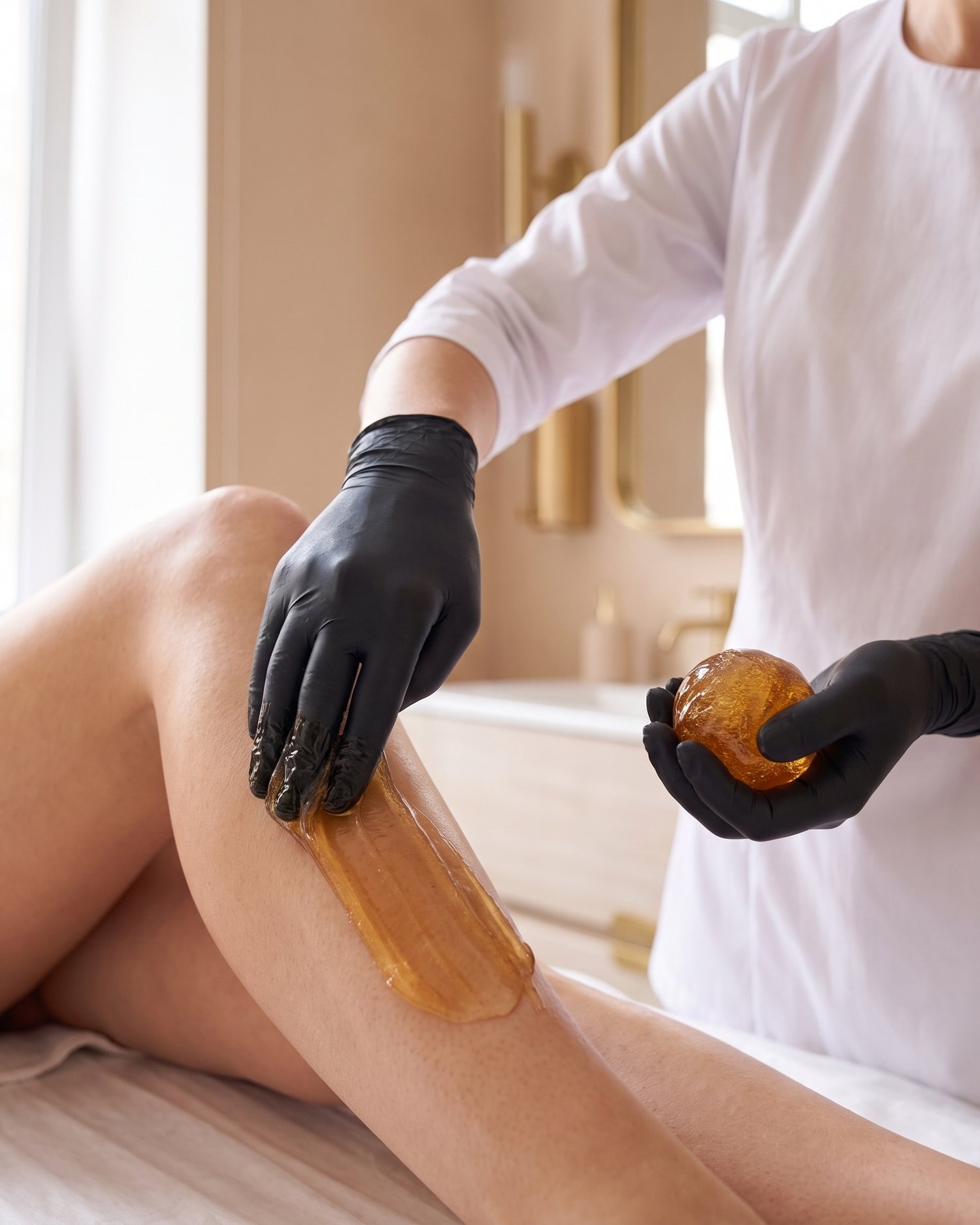
Sugaring (sugar paste)
applied against hair growth, removed with the growth direction
- paste applied against the growth direction — removed with the growth direction
- natural composition: sugar, water, citric acid
- room temperature or slightly warm — doesn't heat the skin
- paste works into the follicle and grips the hair closer to the root
- easily rinsed off with water — no residue on the skin
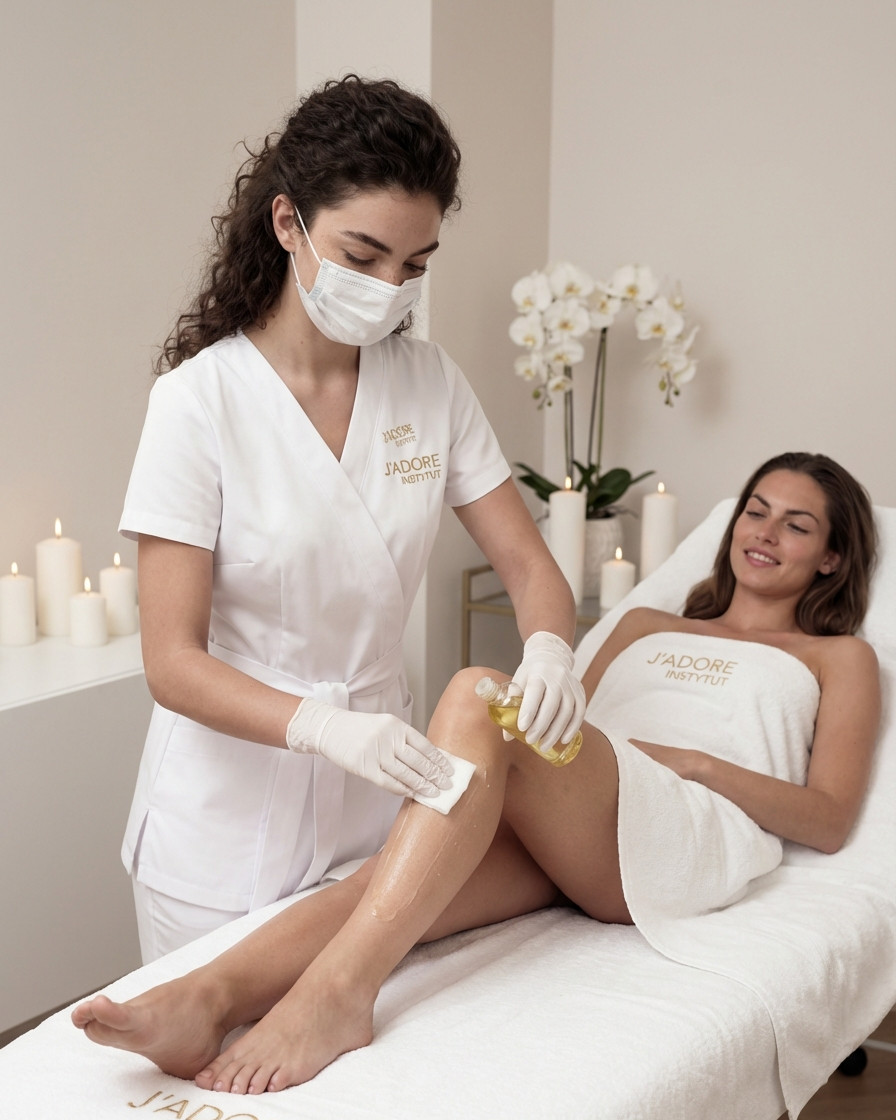
Wax (warm or cold)
applied with hair growth, removed against it
- wax applied with the growth direction — removed against it
- composition: resins, oils, often fragrance and preservatives
- warm wax heats the skin and opens the pores
- grips the hair at skin level and at the follicle
- often needs oil or a wipe afterwards to remove residue
Sensitive, reactive skin prone to irritation — what should you choose?
This is the question we hear most often — and it's where the difference between the two methods is clearest. Reactive or atopic skin, or skin prone to redness or recently exfoliated, needs an approach that minimises thermal and chemical stress.
- Heat from wax can worsen redness, dilate blood vessels and irritate skin that's already inflamed or recently had an intensive peel.
- Sugar paste, applied at a temperature close to body heat, is often gentler on reactive skin — it doesn't "heat up" the problem further.
- Sugaring's composition — sugar, water, citric acid — is simpler, with fewer potential allergens than resin-based wax blends.
- Skin after retinoids, acids or sun exposure — neither method is recommended straight after exposure to these factors. Wait at least a few days.
Treatment area — results vary by zone
Your hair removal method should suit not only your skin type, but also the treatment area. Different zones have different skin thickness, follicle density and pain sensitivity.
- 01
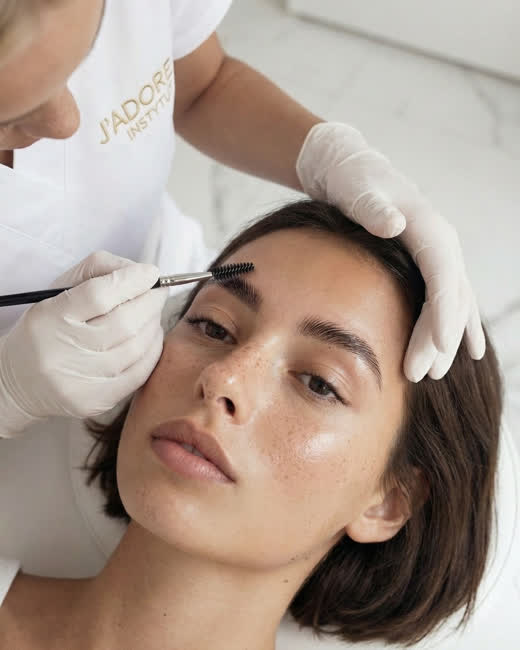
Face (upper lip, brows, cheeks)
Thin skin, richly supplied with blood vessels. Sugaring is often preferred here, since it involves no heat and gentler contact with the epidermis. Hard wax (without a strip) can be a good choice for experienced specialists.
- 02
Underarms
A sensitive area with dense hair growth in multiple directions. Both methods work here — precision and technique matter most. Sugaring grips shorter hairs, which can be an advantage for more frequent sessions.
- 03
Legs (calves and thighs)
The largest treatment area, and relatively low sensitivity. Here the difference between methods is less noticeable. Wax tends to be faster over large surfaces. Sugaring can leave a longer-lasting smooth result.
- 04
Bikini and intimate area
The most sensitive area — with the highest risk of irritation, ingrown hairs and allergic reactions. Sugaring is often recommended for anyone dealing with ingrown hair issues. Wax works well with regular sessions, well performed by an experienced specialist.
Pain, results and how long they last — what practice tells us
The question about pain always comes up — and the answer is always the same: it depends. On the area, the thickness of the hair, individual sensitivity, where you are in your hormonal cycle, and the specialist's technique. Rather than promising that "sugaring hurts less", it's worth being precise.
As for results: with both methods, many people find that regrowth becomes softer and sparser after several regular sessions. This comes from weakening the follicle through repeated root removal, not from the specific paste or wax formula. How quickly this happens — and whether it happens at all — depends on individual predisposition.
When to choose sugaring, and when to choose wax — a simple checklist
If reading about the mechanisms isn't quite enough, here's a quick decision guide:
Sugaring — worth considering when:
- your skin reacts to heat with redness
- you struggle with ingrown hairs, particularly in the bikini area or underarms
- you prefer a simple composition, without resins
- hair is relatively short — sugaring grips it earlier than wax can
- you don't tolerate the fragrance of waxing products well (sugar paste is neutral)
Wax — worth considering when:
- you regularly remove hair from large areas, such as legs, and want a faster session
- you have dense, coarse hair — warm wax tends to work better on tougher hair
- you've already confirmed your skin tolerates this type of product well
- you work with a specialist who performs this technique with real precision