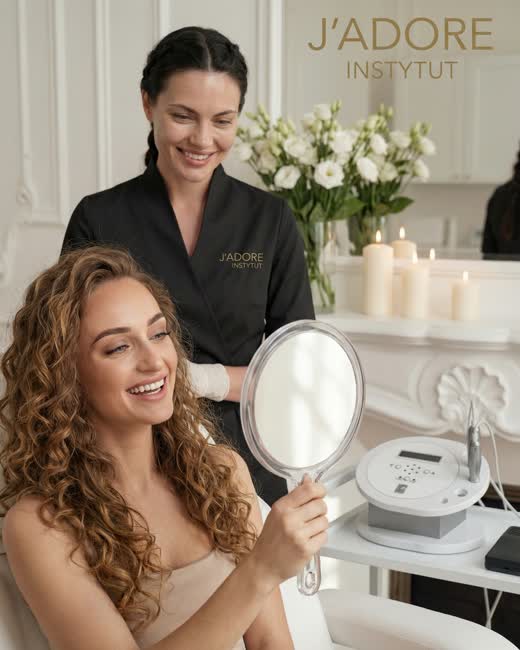
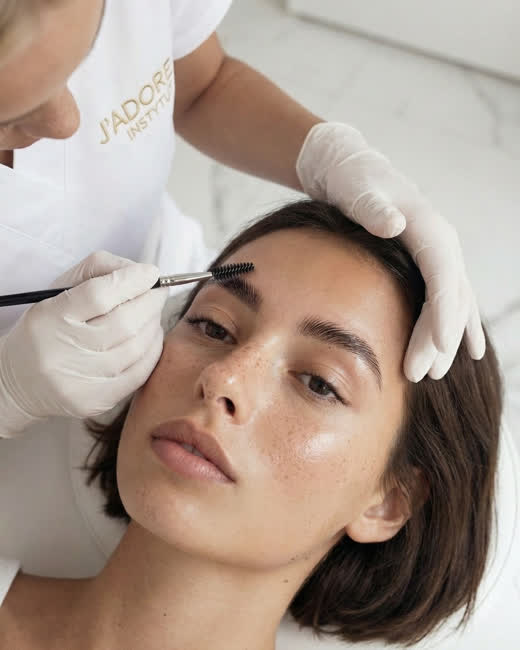
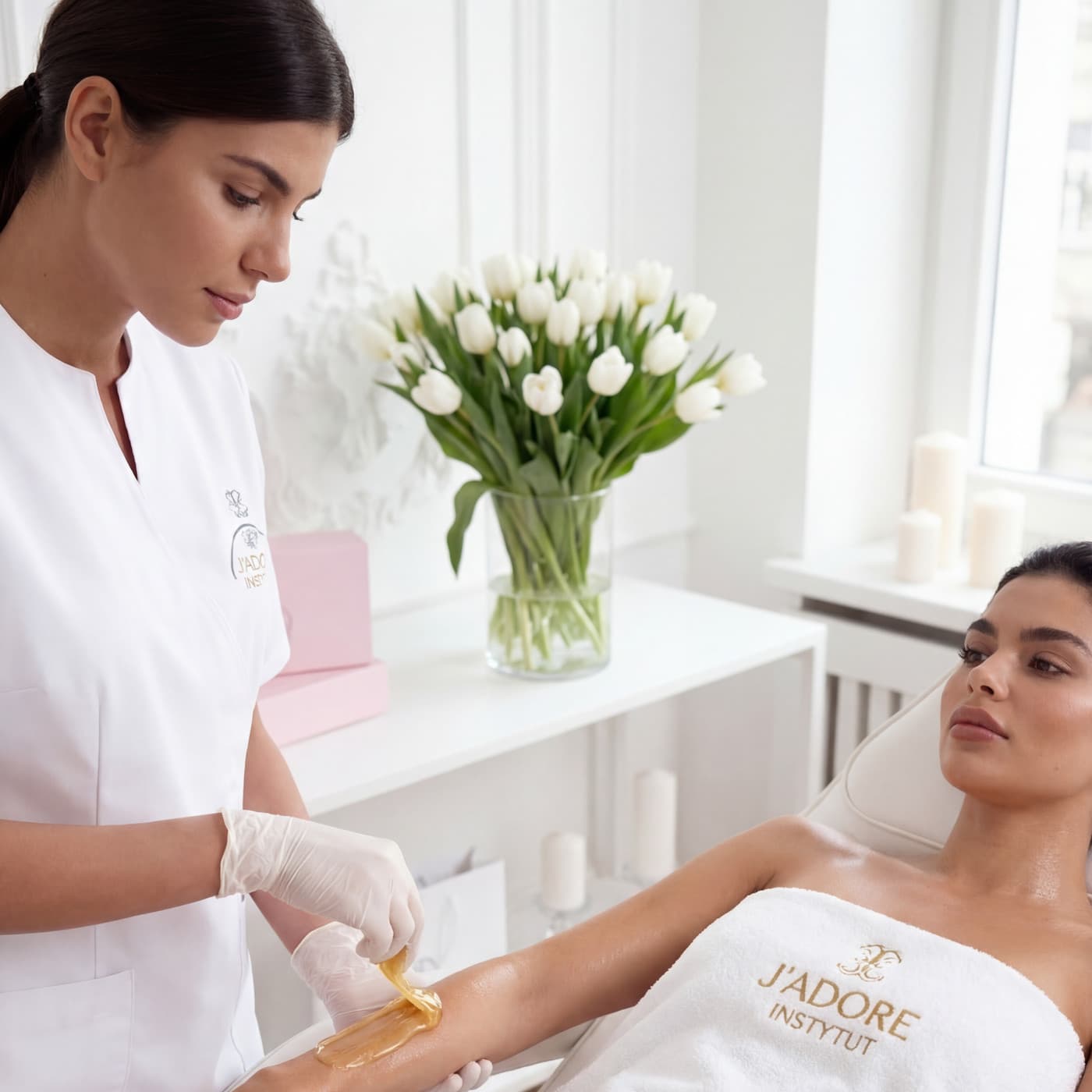
A treatment room at J'adore
HAIR REMOVAL
Shaving every two to three days, irritated skin, ingrown hairs — if you're tired of this cycle, sugaring is one of the gentlest methods of hair removal with the root. Sugar paste is a fully natural preparation made from sugar, water and lemon — without chemical resins, colourants and preservatives.
The key difference from classic wax lies in the technique: the paste is applied against the direction of hair growth, and removed with the direction of hair growth — which means the hair is less likely to break under the skin, there is less pain and less ingrowing. The paste works at body temperature, lukewarm, not hot like wax — this means a lower risk of burns and a safer choice for sensitive, capillary-prone skin and those allergic to traditional waxes. At J'adore Instytut the treatment is performed by an experienced beautician in the Warsaw salon at ul. Żelazna 59. Below you'll find everything worth knowing before your first visit.
A temporary effect — with regular sessions, hair grows finer and sparser
HAIR REMOVAL
Sugaring is hair removal using a natural sugar paste — a thick mixture of sugar, water and lemon juice. The cosmetologist spreads a thin layer over the skin against the direction of hair growth, then, moments later, removes it with the direction of growth, pulling the hair out along with the follicle. This is the exact opposite of classic waxing — and this difference is what makes the method so gentle.
Because the paste is warm, not hot, there's no risk of burns, and the skin isn't heated further. The paste adheres mainly to the hair and dead surface skin cells, not to living skin — which means less redness and irritation. This makes sugaring safe even on vascular and sensitive skin, where traditional waxing can be too aggressive.
Did you know? Removing the paste with the direction of growth isn't just a cosmetic detail — it's exactly why the hair is less likely to snap below the skin. And a hair that breaks below the surface is the most common cause of ingrowth. Less breakage means fewer ingrown hairs and fewer red "dots" after hair removal.
How it works
The gentleness of sugaring comes down to the physics of the paste, not simply the fact that it's made from sugar. The mixture is thick and pliable; the cosmetologist warms it in her hands to roughly body temperature and works it in against the direction of growth, so it reaches the hair right at the follicle opening too. The paste bonds mainly with the hair and keratinised surface skin, is water-soluble, and doesn't set into a hard layer — so it doesn't fuse with living skin the way wax does. It's removed with the direction of growth, in a quick motion close to the skin's surface.
And that's the heart of the difference. Wax is removed against the direction of growth, pulling the hair "backwards" — at that bend, the shaft snaps more easily and stays below the surface, and a broken hair is the most common starting point for ingrowth. Sugaring pulls the hair in the same line it grows, so it's less likely to break and more often comes out whole, follicle included. Regrowth then starts fresh from the follicle, rather than from a bluntly cut end as with shaving — it can feel softer to the touch, and with regular sessions, some follicles produce finer, weaker hair over time. This is, however, a temporary effect: the follicle stays active, and the hair grows back.
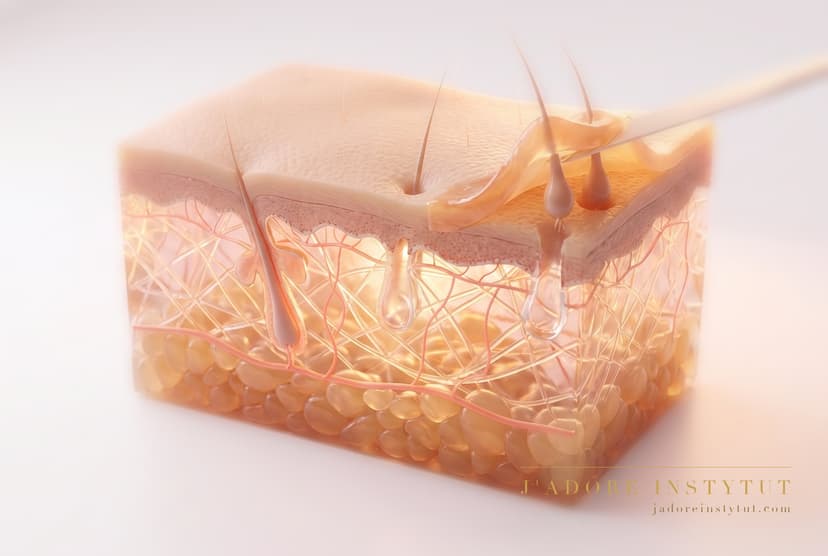
Did you know? Sugaring is one of the oldest known hair removal methods — thick pastes of sugar or honey with lemon juice were described in the ancient Middle East, in Persian and Egyptian traditions, long before waxing existed. The formula we use today is essentially the same: sugar, water and lemon.
Ideal for
Areas for women and men
Sugar paste hair removal (sugaring) for women usually means comprehensive smoothness care — from small facial areas to larger surfaces and intimate zones. This is where the paste's natural, gentle formula matters most, since skin in many of these areas is thin and sensitive.
What we work with
Sugar paste hair removal (sugaring) for men mainly covers larger areas of the body, where hair is dense and coarse. It's a good alternative to shaving the back or chest — without the fast-returning "rough" stubble and without hot wax over a large surface.
What we work with
Safety
Sugaring is one of the safest hair removal methods, but like any root-based treatment, there are situations where it needs to be postponed or skipped. Your cosmetologist will decide during consultation.
in the area — we postpone until the skin has healed.
(acne treatment) — skin is excessively sensitive; requires a break and consultation.
in the treatment area.
within the area being treated.
(impaired healing) — caution and individual assessment.
we carry out a patch test if there's any doubt.
possible, but with caution and generally avoiding sensitive areas (such as the abdomen); always inform your specialist.
A red flag: hair removal on fresh sunburn, or without asking questions · Sugaring on freshly sunburnt skin is a quick route to tearing the surface skin and painful irritation — wait until your skin has calmed down. Also take care if you're taking oral retinoids (skin becomes excessively sensitive and fragile), and with advanced varicose veins, active eczema or wounds in the area. A good salon will always ask about medication, pregnancy, skin conditions, and — on a first visit or with a new tendency towards allergies — carry out a patch test. A salon that proceeds without asking any questions is a warning sign.
This isn't a complete list — we'll discuss your medication, skin conditions and any previous reactions individually during your pre-treatment consultation.
What does the treatment involve?
Sugaring is simple and predictable, and the whole difference lies in the cosmetologist's technique. Here's what a single visit looks like:
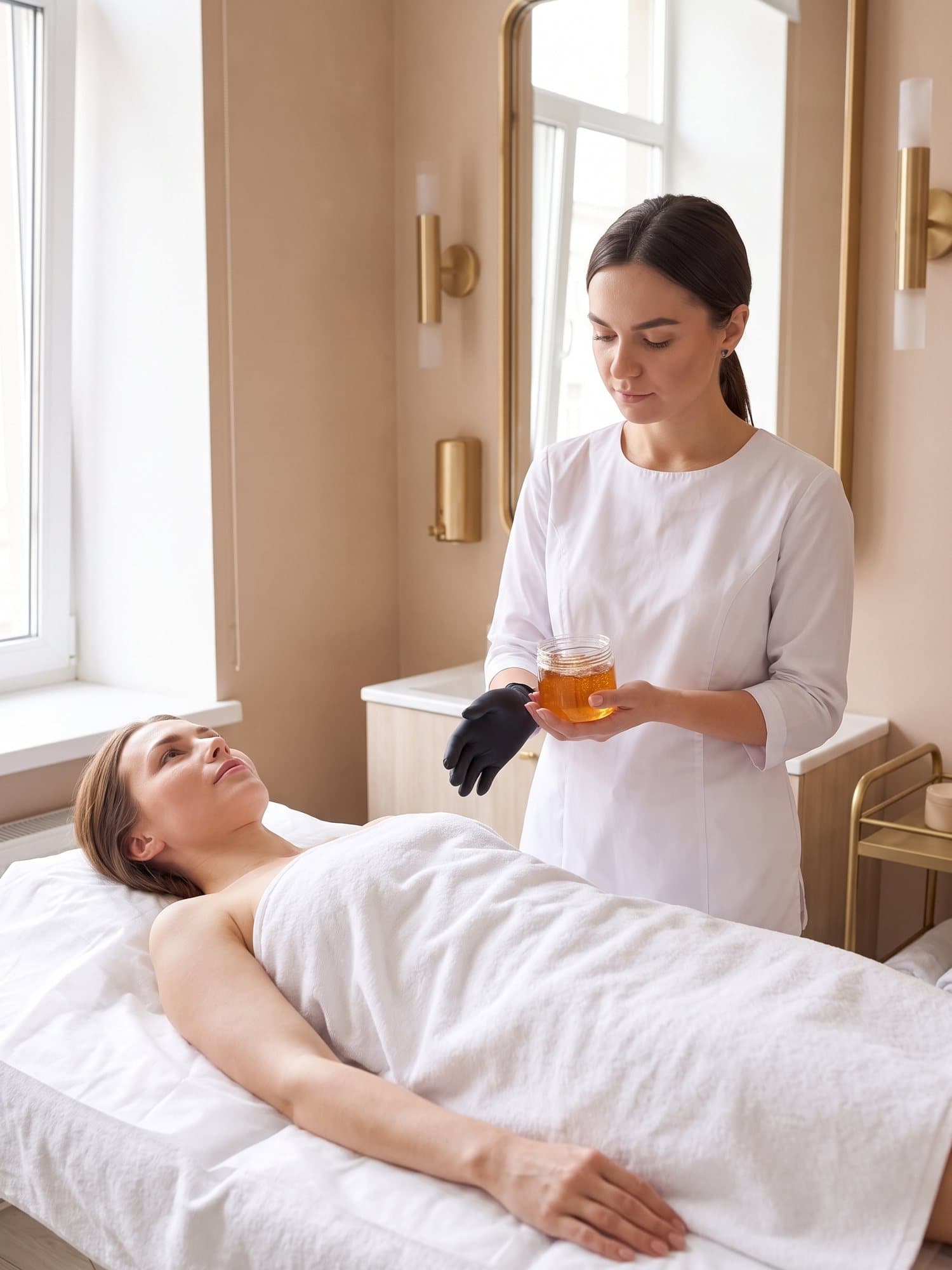
Preparation
cleansing the skin and drying it with powder, so the paste grips the hair rather than living skin
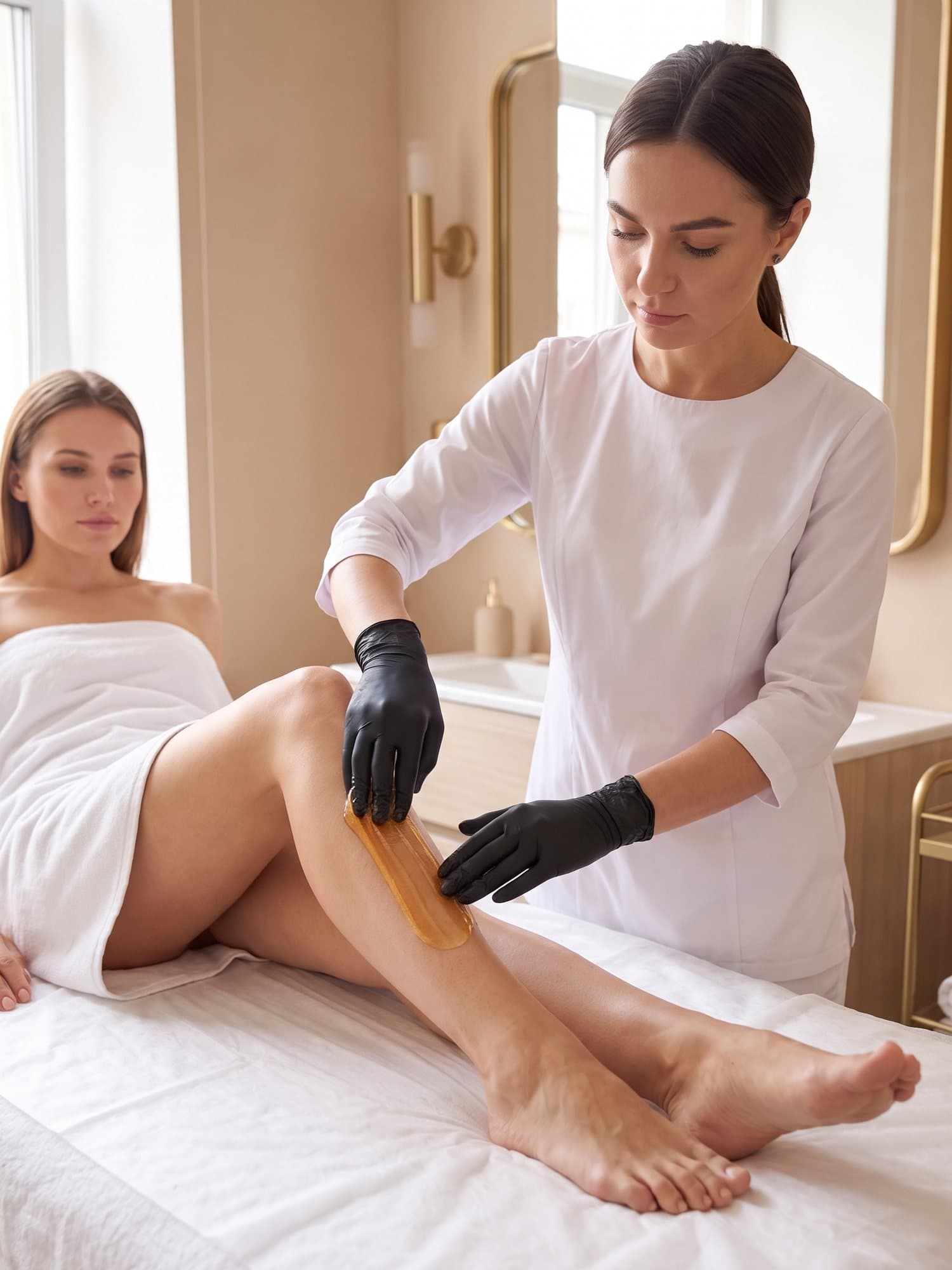
Applying the paste
spreading the warm sugar mixture (at body temperature, not hot) AGAINST the direction of hair growth
Removal
a quick, confident motion WITH the direction of growth — the hair comes out with the follicle
Working area by area
repeating across the whole section; one portion of paste can cover a larger area
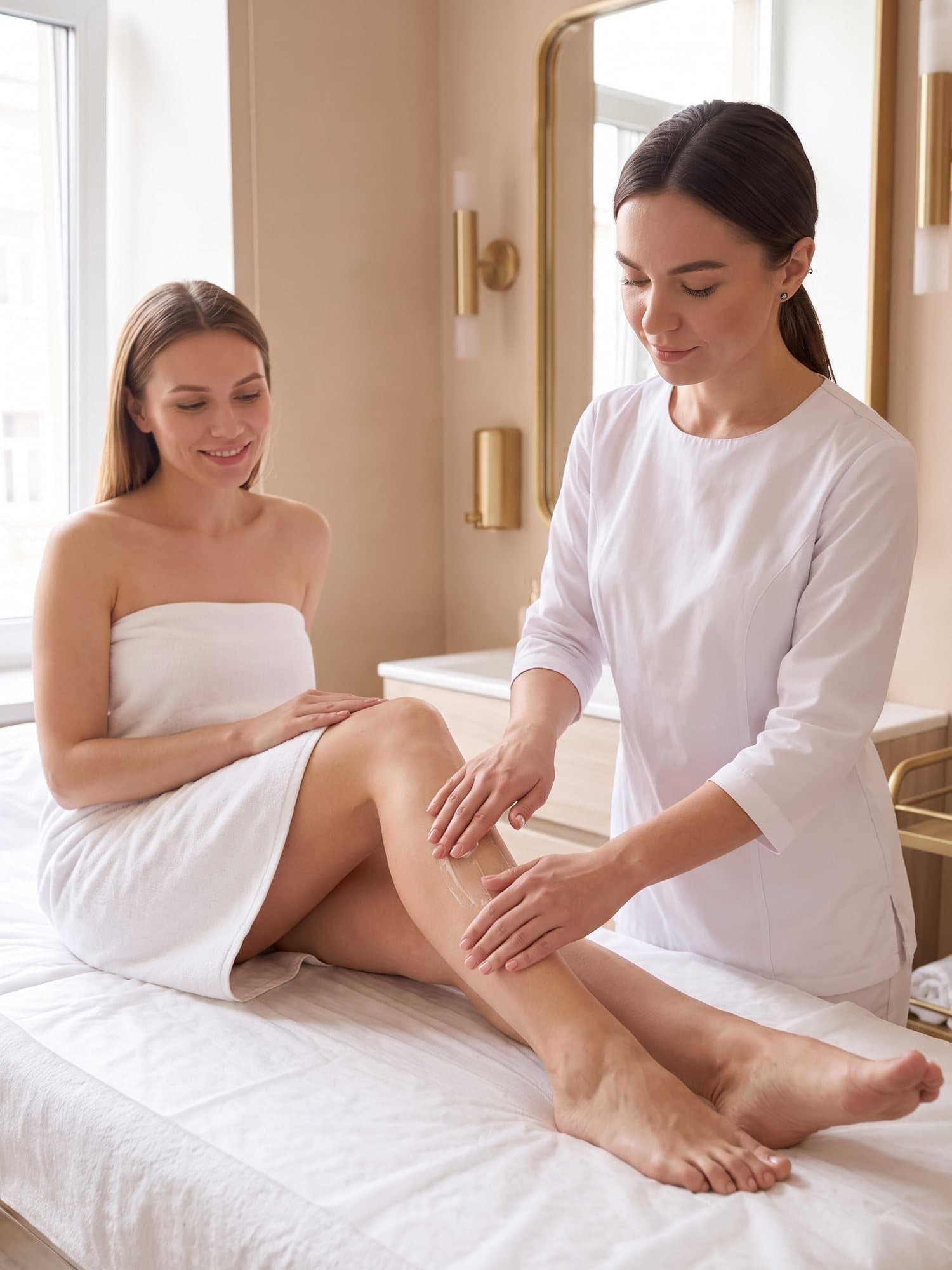
Finishing
removing any residue (the paste is water-soluble) and applying a soothing product — smooth skin immediately
From the cosmetologist's chair
The most common mistake before a first appointment is shaving "to be cleaner". The opposite effect: the paste will not grip hair that is too short. The ideal length is approx. 4–6 mm — so come about a week after your last shave, not the day after.
Portfolio
A record of the work in our salons — the place where we publish treatment frames and, after photo sessions, results.
A record of results — in preparation. We publish photographs of our clients only with their consent.
Sugaring and your lifestyle
For the first day or two, freshly treated skin is more sensitive, and hair follicles are briefly "open". Here are a few simple rules for the first 24–48 hours — after that, you return to your normal routine.
Freshly treated skin pigments and irritates more easily in the sun. Hold off on tanning and sunbeds for 1–2 days, and use SPF 50+ afterwards on the upper lip area.
High temperatures dilate blood vessels and intensify redness in freshly opened follicles. Save the sauna, hammam and hot baths for a day or two later.
Chlorinated water can sting and irritate freshly treated skin. Hold off on swimming for 1–2 days.
After underarm sugaring, don't apply deodorant (especially alcohol-based) on the same day — it can sting and cause irritation. Return to it the next day.
Intense sweating on freshly opened pores encourages irritation and pimples. A strenuous workout is best left until the day after — gentle movement is fine.
Don't reach for a razor between sessions. Shaving "resets" the growth cycle and undermines the benefit of regular hair removal — with sugaring, we're working to make hair progressively finer.
Sugar paste hair removal (sugaring)
These three methods offer different comfort levels and different results. Sugaring and waxing remove hair with the follicle (results last weeks), shaving cuts it at the skin's surface (results last days). Here's a fair comparison:
natural, the gentlest root-based method
not permanent removal — hair grows back, though finer over time
removes hair with the follicle, quick for large areas
hot wax heats the skin and can be too aggressive for vascular or very sensitive skin
the fastest and cheapest option right now
results last 1–3 days, quick rough regrowth, frequent ingrowth and irritation after shaving
Sugaring fits well into a home and in-salon smoothness routine. The key pairings are those that reduce ingrowth and extend results:
Put simply: if you want permanent hair reduction (after a series), that's a job for laser or electrolysis. If you want smoothness for weeks using the gentlest method, especially with sensitive skin — that's sugaring. One doesn't rule out the other.
Paste, technique and aftercare
Sugaring is a manual method — there's no equipment or power settings involved. Results depend on paste consistency, hand technique and aftercare. Here's what's actually at play:
A thick mixture of sugar, water and lemon — with no resins, dyes or preservatives. Warm, water-soluble, hypoallergenic.
Dla kogoSensitive and vascular skin, allergy sufferers; intimate areas and the face.
Applied AGAINST the direction of growth, removed WITH the direction of growth — less hair breakage below the skin, less ingrowth than classic waxing.
Dla kogoAny area; especially skin prone to ingrown hairs.
A cosmetic product that clears follicle openings and smooths the surface skin, reducing red dots and ingrowth.
Dla kogoDaily care for underarms, bikini and legs between sessions.
Gentle exfoliation of surface skin without abrasive particles — it exposes the hair and helps prevent it getting trapped below the skin.
Dla kogoSensitive skin, where mechanical exfoliation can be too harsh; 1–2 times a week.
Hydration free from alcohol and fragrance to calm freshly treated skin; sun protection after upper lip hair removal.
Dla kogoThe first days after treatment, and protecting the face from pigmentation.
Fact: Sugaring doesn't have "stronger" and "weaker" versions the way devices do — the difference in quality comes down to the practitioner's skill and the quality of the paste. That's why at J'adore, the treatment is performed only by trained specialists, working under full hygiene standards (single-use spatulas, paste from sealed packaging).
Price list
Checking free hours…
From the magazine
Editorial pieces on how this treatment works in practice — what happens during the session, how to prepare, where the limits are and what the first days after look like.
See also
The result lastsSmoothness lasts ~2–4 weeksJ’adore Instytut
Please note. Sugaring (sugar paste hair removal) is a cosmetology and grooming treatment (hair removal); it is not a medical treatment and does not replace a dermatological consultation in cases of skin conditions or hormonal disorders. This text is for informational purposes only and does not constitute medical advice. Indications, method selection and contraindications are determined by an experienced cosmetologist during an individual consultation. J'adore Instytut — Warsaw, 59 Żelazna Street.
Home care
Cosmetics matched to what your skin needs after a treatment — so the clinic effect lasts longer.
 soothing body skinDiego Dalla PalmaSENSITIVE Lipid-Balancing Body Cream 350 mlView in the shop(opens in a new tab)
 body sun protectionSkeyndorBody protective b-phase SPF 50 – Age Photo DefenseView in the shop(opens in a new tab)
 soothing body skinestGenLive Balancing BalmView in the shop(opens in a new tab)
 body sun protectionCell Fusion CAquatica Sun Spray SPF50+ PA++++View in the shop(opens in a new tab)
 soothing body skinPeel MissionAsiatic Face and Body Mist 150 mlView in the shop(opens in a new tab)
 soothing body skinDiego Dalla PalmaSENSITIVE Delicate Cleansing Oil for Body 350 mlView in the shop(opens in a new tab)
 soothing body skinestGenLipid ReconstructionView in the shop(opens in a new tab)
 body sun protectionSelvert ThermalSUN CARE SPORT MIST SPF50 SPRAY 200MLView in the shop(opens in a new tab)