Diseases and reactions related to cold are a primary contraindication
The interview includes, among others, cryoglobulinaemia, cold agglutinin disease, paroxysmal cold haemoglobinuria, cold urticaria, Raynaud's disease and other conditions where cold exposure disrupts circulation or triggers a reaction. The names may not be known to the patient, so the qualification should also ask about symptoms after cold exposure: wheals, colour changes in fingers, pain, fainting or previous unusual reactions.
Do not perform a home ice cube test to self-approve for the treatment. A negative result does not exclude all diseases, and a positive reaction may require diagnostics. If you suspect cold hypersensitivity, consult a doctor first.
Hernia, diastasis recti and weakened abdominal wall require assessment before suction
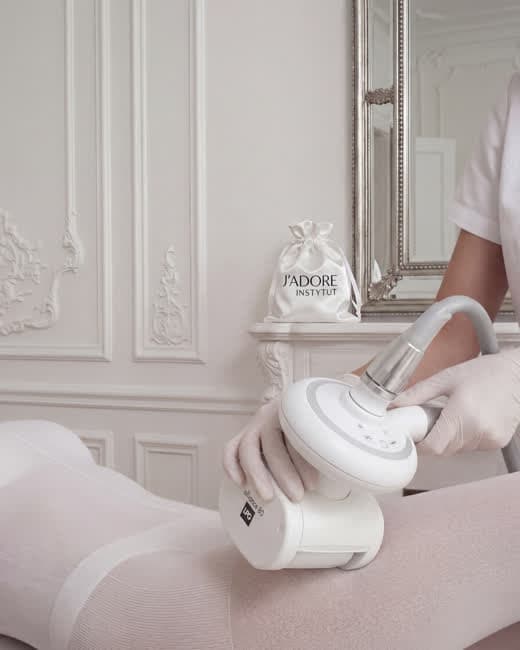
The vacuum applicator suctions a fold of tissue. An area with an existing hernia or suspected hernia must not be treated like a normal fat zone. The FDA also advises caution with structurally weak areas, including surgical scars and diastasis recti. A bulge that worsens when coughing or tensing requires a medical assessment first.
Inform us about caesarean sections, abdominal surgeries, hernias, implants and pain in the zone. A healed scar alone does not provide an automatic answer. Its position, depth, sensation and the condition of the tissues underneath are what matter.
Cryolipolysis will not correct diastasis recti or a hernia. Reducing the subcutaneous fold may even highlight a structural problem that the treatment does not address.
Active infection, wounds, skin lesions and impaired sensation postpone the date
Skin under the applicator must be assessed without clothing or masking cosmetics. Active infection, open wounds, oozing, fresh burns, severe inflammation or neoplastic lesions in the zone require withdrawal and proper diagnostics. Skipping a fragment under a gel pad does not create safe contact.
Impaired sensation makes it difficult to report excessive cold, pain and burning. Neuropathy, nerve injury, numbness after surgery or a previous treatment must be discussed. The operator should not rely solely on your comfort, but a lack of reliable sensation changes the risk profile.
- Do not perform the treatment on freshly tanned or irritated skin.
- Report any infection and antibiotic treatment before arriving.
- Show us your scars and areas of numbness.
- Do not cover a rash with fake tan or body makeup.
Pregnancy, breastfeeding, chronic diseases and medications require a decision in accordance with the device instructions
Pregnancy is a period when a planned contouring procedure is postponed. For breastfeeding, chronic diseases, coagulation disorders, vascular problems, uncontrolled diabetes, medications affecting healing and other burdens, an individual assessment is needed. Do not stop taking medications on your own to pass the qualification.
The list may differ between devices and zones. The salon should know the instructions for the specific model and be able to indicate whether a given situation is a contraindication, a warning or a reason for a doctor's opinion. An answer from memory without checking the documentation is not enough.
An aesthetic treatment is optional. When safety is unclear, no treatment takes precedence over an experiment on a limited area.
The applicator must fit the pinchable fold and cannot work on visceral fat
Cryolipolysis works on subcutaneous tissue that can be properly placed in the applicator. A hard, protruding abdomen with dominant visceral fat is not the target of the procedure. Likewise, a person seeking significant weight loss will not achieve it by cooling individual zones.
A specialist should assess the thickness and mobility of the fold, the position of structures and the fit of the applicator. An applicator that is too small or poorly positioned can result in an irregular contour, and planning "by eye" without marking the zone hinders symmetry.
There is an indication for assessment
local zone
- pinchable subcutaneous fat
- stable body weight
- healthy skin
- realistic contouring goal
Method does not fit
other problem
- visceral fat
- weight loss goal
- hernia or wall weakness
- laxity alone without deposit
Typical post-treatment reactions have a limit that the salon should define
Redness, swelling, bruising, tenderness, temporary numbness and discomfort may occur after cooling and vacuum. You should know how long to observe them and when they should subside. The advice "don't worry about anything for a week" does not take into account the trend of the symptoms.
Severe or increasing pain, blisters, a change looking like a burn, persistent significant sensory disturbances, hot redness, fever or worrying lumps require contact with the salon and medical assessment depending on the severity. Do not apply random ointments or massage the area aggressively without instructions.
Take photos in neutral light and record the time of occurrence. The salon should have a card with the device, applicator, zone, time and the person performing it. These are data needed to analyse a complication.
Paradoxical adipose hyperplasia may only reveal itself after months
A rare but serious risk of cryolipolysis is paradoxical adipose hyperplasia: instead of decreasing, the treated area gradually enlarges and becomes hard, often reproducing the shape of the applicator. The FDA describes cases developing after several months and notes that the change does not resolve on its own and may require surgical treatment.
This risk must be discussed before consent. The absence of an immediate problem does not close the observation. If the zone grows, hardens or takes on a distinct geometric shape after the initial period, contact the salon and a doctor. Another cooling session is not a way to fix such a change.
Device safety includes the membrane, skin contact and control during the process
Ask about the manufacturer and model. The term "cryolipolysis" describes the mechanism, it does not confirm the parameters of a specific system. In BRAIN, the model of the device used in J’ADORE remains marked for verification, which is why the text does not attribute a brand or final settings to the salon. In the salon, these data should be transparent before the procedure.
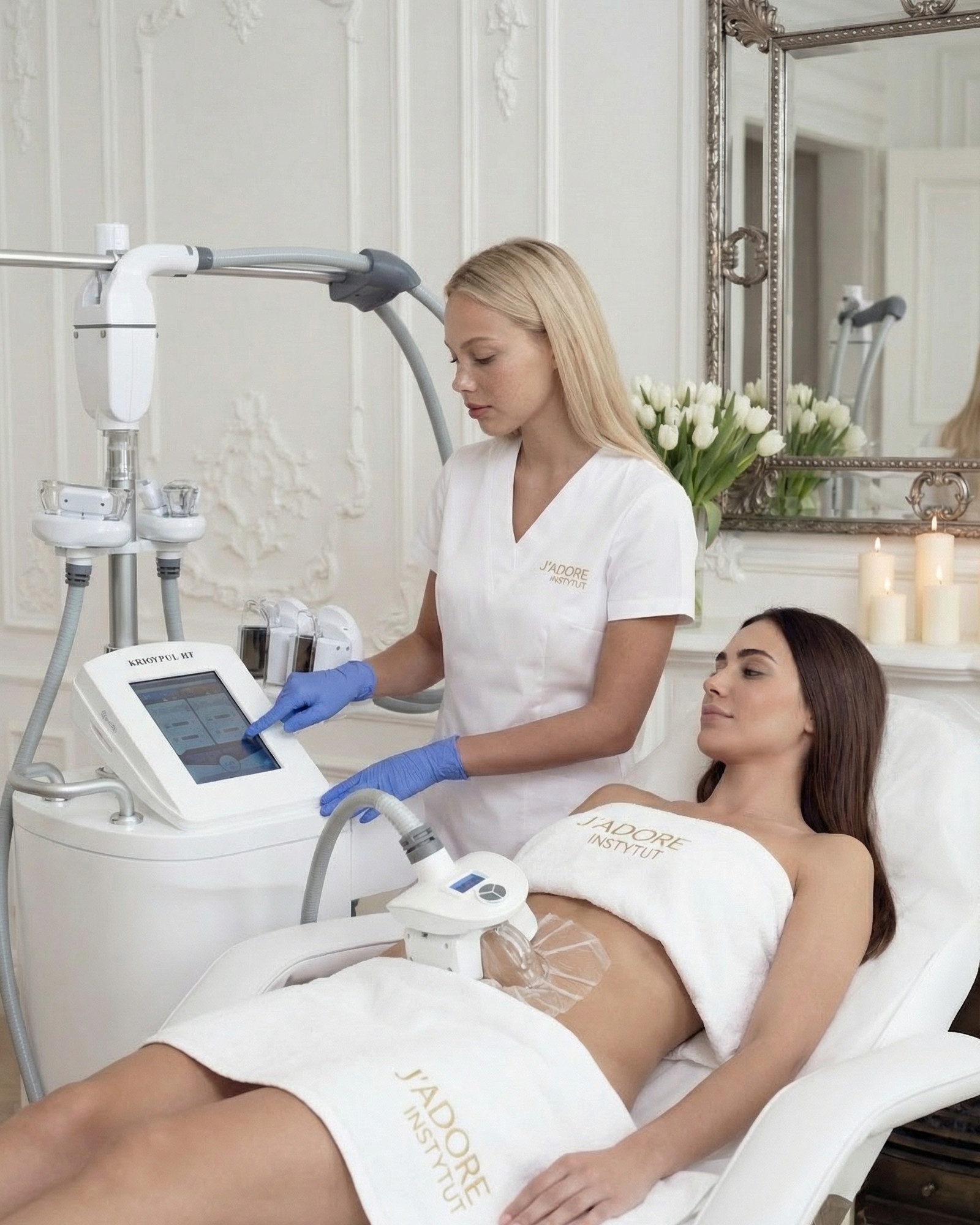
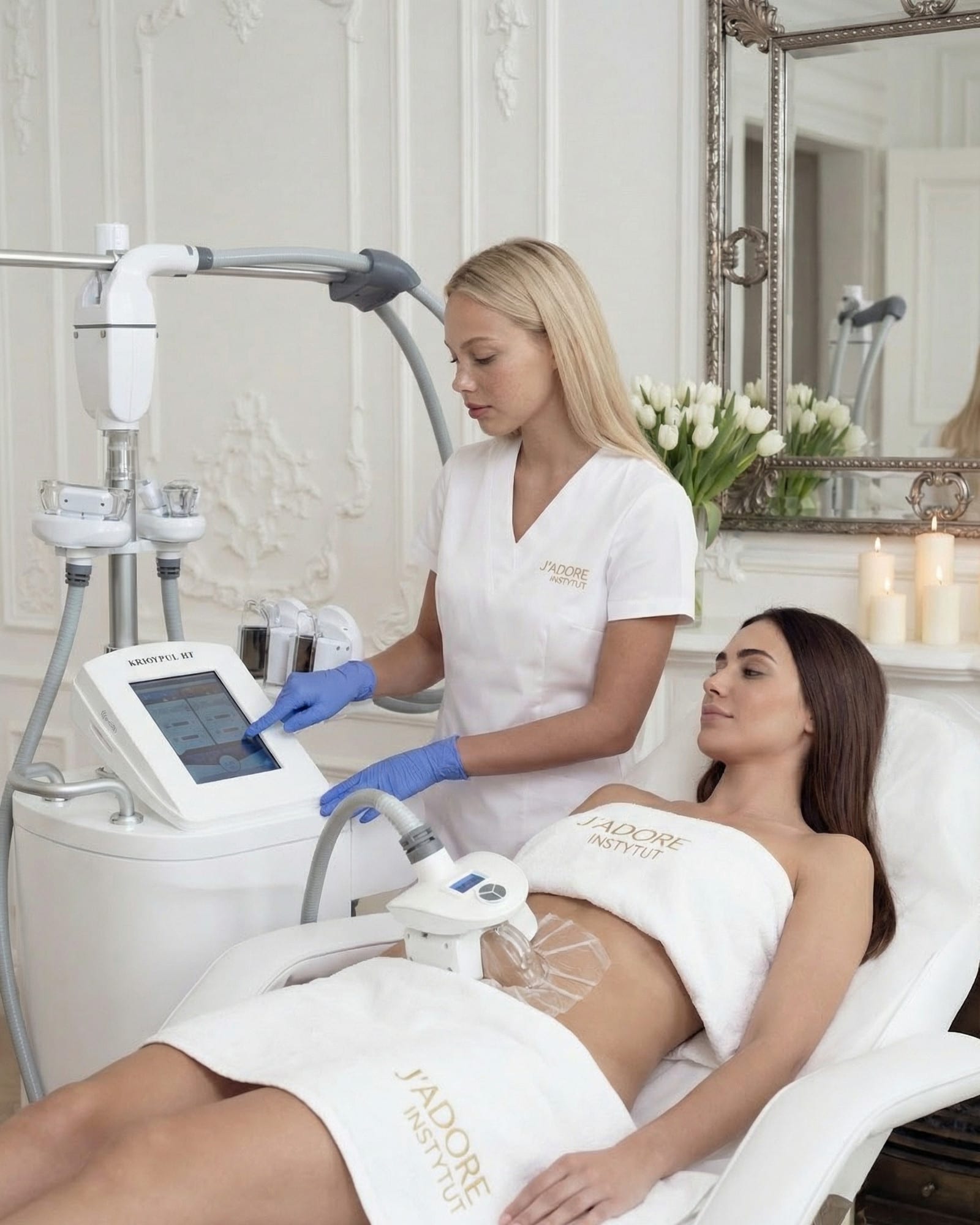
The element protecting the skin and ensuring even contact must be appropriate for the device, undamaged and used according to the instructions. A folded, shifted or dried-out membrane can change the cooling distribution. The operator should inspect it before application and monitor the applicator instead of covering the zone with a blanket for the entire session.
The first few minutes may bring intense cold, pulling and pressure, which later subside with numbness. Increasing pinpoint burning or pain under one edge requires checking the contact. Loss of sensation does not mean the operator can stop observing the skin.
A device alarm should not be cleared without determining the cause. Ask what vacuum or temperature messages mean and when the session must be ended. Re-application after an error makes sense only after assessing the skin and in accordance with the instructions, not to preserve the full time of the package.
After removing the applicator, the specialist assesses the colour, temperature, sensation and appearance of the tissue. Massage, if provided for by the protocol, should not ignore sharp pain, blisters or suspected damage. The intensity of kneading is not proof that the treatment will work more strongly.
A subsequent session requires a full assessment of the first one, not just a measurement of the circumference
Tissue after cryolipolysis changes for weeks. Repeating cooling of the same zone before assessment does not give the body time to complete the reaction and makes it difficult to attribute symptoms to a specific session. The interval results from the device instructions and the progress, not from a desire to use up the package quickly.
During your follow-up, report any numbness, hypersensitivity, pain, hardness, lumps, colour changes or asymmetry. Standard circumference measurements will not detect skin damage or early, atypical tissue enlargement. Visual inspection and physical examination of the zone are just as important as photography.
If the first session did not produce the expected change, we must revisit the qualification. Perhaps the fold was too small, the applicator was poorly fitted, or skin laxity is the primary issue. Adding more cooling will not turn visceral fat into subcutaneous fat, nor will it correct an incorrect qualification.
Weight changes between sessions complicate the assessment. Weight loss or gain can alter your circumference independently of the treatment. Documentation must include dates, photography conditions and significant lifestyle changes, without promising that every difference was created by the device.
Any subsequent procedure in the same area — RF, wave therapy, injections, intensive massage or surgery — requires coordination. Provide your full calendar to all practitioners involved. A single area of tissue does not become several independent projects just because treatments are performed at different clinics.
In Warsaw, qualification begins with cold-related conditions.
J’ADORE INSTYTUT operates in Warsaw at ul. Żelazna 59 and ul. Mińska 29A/46. The scope of the procedure is described on the cryolipolysis page in Warsaw. Before booking, prepare information regarding your reactions to cold, surgeries, hernias, sensory disorders, illnesses and medications.
Ask for the device name, qualification protocol, applicator type and a description of risks, including cold burns, prolonged numbness and paradoxical adipose hyperplasia. Ask who will be your point of contact in the event of a late complication. These answers should be provided before payment.
The safest decision may be: this zone is not suitable for cryolipolysis, or this goal requires a different approach. A treatment is not a reward for completing a form. It is a procedure for a properly qualified person, the right tissue and the correct applicator.