The salon's first question should be about safety, not the package
A pacemaker and other implanted electronic devices are an absolute contraindication to current-based treatments. You must also disclose heart conditions, rhythm disorders, recent cardiovascular incidents, epilepsy, neurological problems, active cancer, thrombosis, phlebitis, metal in the area and sensory disorders.
Pregnancy excludes EMS. After childbirth, the healing of a caesarean section scar, diastasis recti and the stage of rehabilitation are important. A good salon does not start working on the abdomen without this conversation and, if necessary, refers you to a uro-gynaecological physiotherapist.
The second question is: which muscle should work and why that specific one
The goal of "losing weight from the abdomen" is incorrectly set. Electrostimulation triggers muscle contraction, not selective fat tissue burning. Better goals include improving the sensation of tension in a specific area, supporting muscle activation or supplementing an exercise plan.
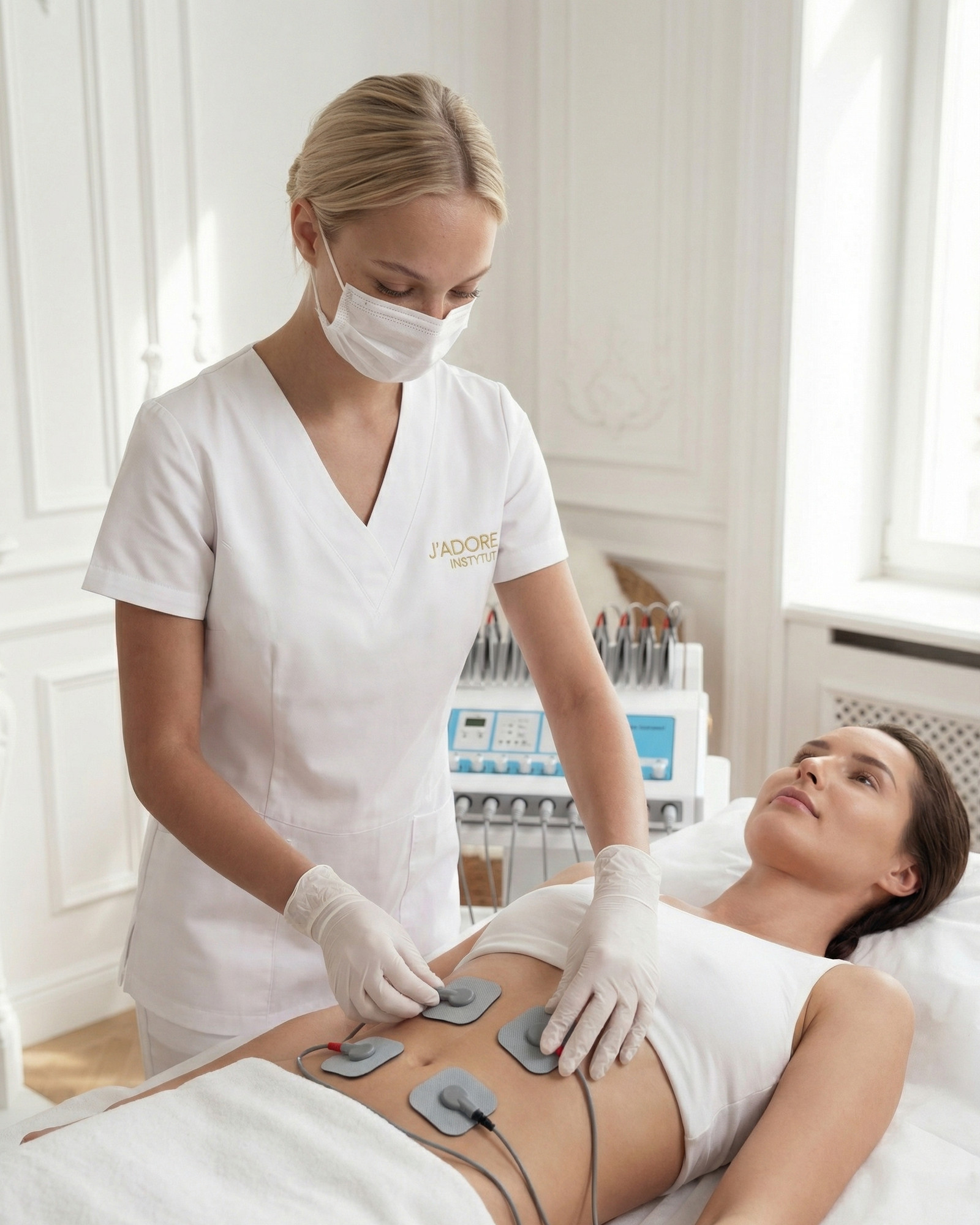
The cosmetologist should examine the area, ask about your training, injuries and your ability to consciously tense the muscle. Electrodes are placed over the correct points, not symmetrically for a nice photo. If there is a difference between sides, the plan may require caution or prior assessment by a specialist.
Electrodes must have good contact, and the skin must be assessed before application
The skin should be clean, without wounds, active inflammation or a fresh scar in the treatment area. The cosmetologist prepares the contact according to the device, places the electrodes and checks the leads. A worn-out, dried-out or unevenly adhering element may cause unpleasant, localised stinging.
Ask how materials are cleaned or replaced and what happens if an electrode detaches. You should not adjust the lead yourself during the treatment. The practitioner should remain available and react to any change in sensation.
- Electrodes are not placed on an open wound.
- A fresh scar is avoided until it is fully healed.
- Contact should be even, without sharp, localised pain.
- Leads and working elements must be in good condition.
Power increases gradually, because tolerance is not a test of character
The correct sensation is tingling and a rhythmic, distinct contraction. Intensity is increased gradually to an effective and tolerated level. A higher number on the panel does not automatically mean a better result; the programme, electrode placement, body part and quality of contraction are what matter.
Sharp pain, burning under one electrode, numbness outside the expected area, dizziness or palpitations require immediate cessation and assessment. The salon should not encourage you to "wait it out" for a "stronger workout".
Controlled progression
muscle is working
- power increased in stages
- questions about sensation
- visible, even contraction
- possibility of lowering
Power show
number replaces assessment
- maximum from the start
- pain considered an advantage
- lack of contact control
- identical settings for everyone
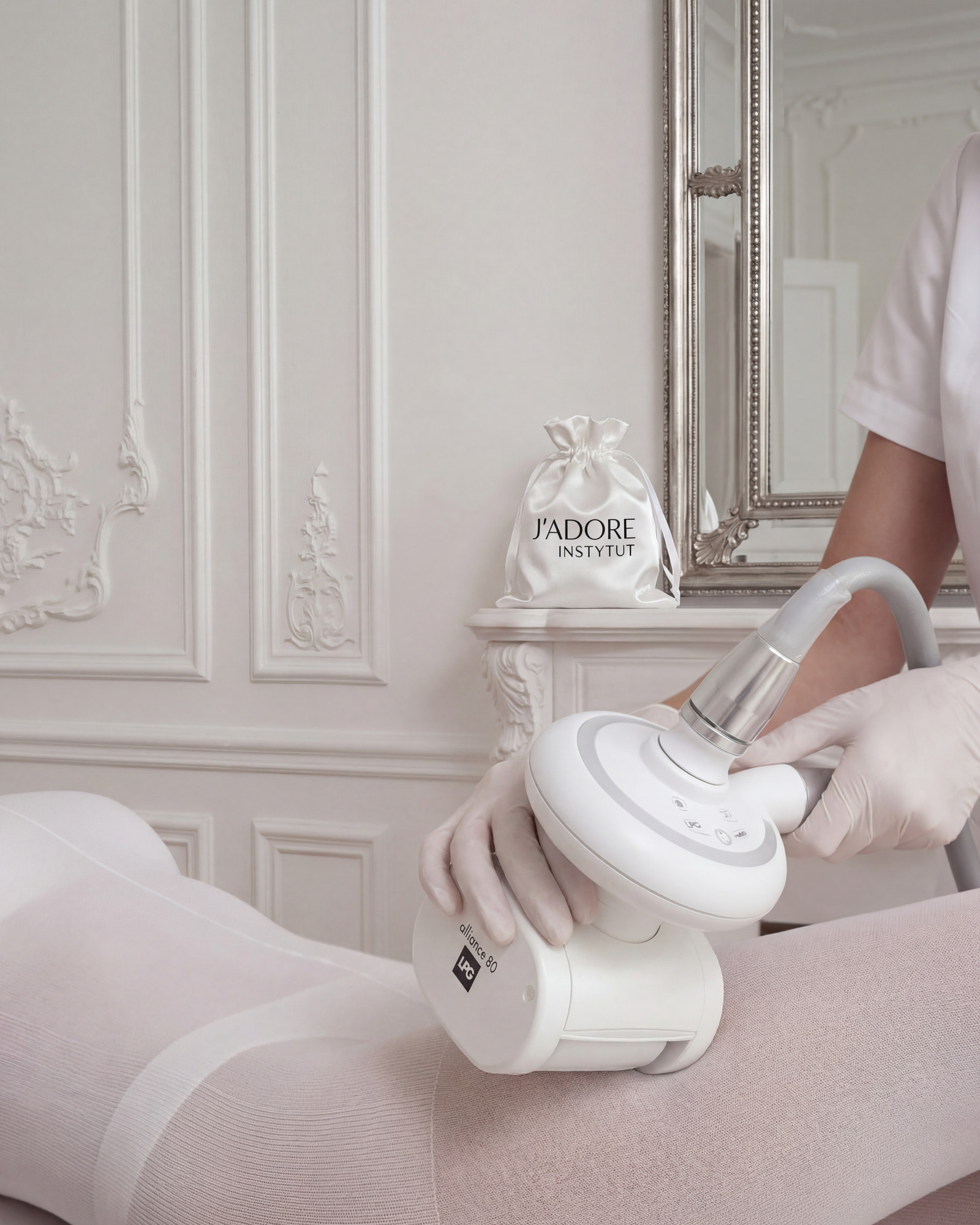
The salon should be able to distinguish EMS from HIFEM and endermology
EMS delivers electrical impulses through electrodes. HIFEM uses an electromagnetic field and is a different technology. Endermology works mechanically on the skin and tissue and does not trigger muscle contraction in the same way. Confusing the names hinders an informed choice.
If the goal is primarily cellulite and retention, electrostimulation alone may not be the first tool. If the problem is muscle activation, mechanical massage will not replace EMS. The salon should explain the differences without pretending that every device does everything.
A series requires a plan, but the first session is to check your reaction
The treatment card in the repository usually describes several to a dozen or so sessions performed regularly, followed by maintenance. The specific number depends on the goal, area, activity and response. Do not buy the largest package before checking your contraction tolerance and the quality of the salon's work.
A checkpoint should occur halfway through the series: is the muscle easier to activate, has the sensation of tension changed, how is the skin reacting, and are your training and regeneration consistent? Measuring circumference is not enough, as EMS is not a method that promises local weight loss.
- 01
Trial session
Qualification, electrode placement and learning your tolerance.
- 02
First repetitions
Gradual progression, not automatic maximum.
- 03
Mid-point assessment
Tension, muscle control, activity and no adverse reactions.
- 04
Maintenance or stop
Further visits only with a clear goal and your own exercise.
Photos of the abdomen will not show whether the result was achieved by current, diet or posture
The silhouette changes with breathing, tension, time of day, hydration and pelvic alignment. An "after" photo with a sucked-in stomach and different lighting does not prove effectiveness. With EMS, a repeatable assessment of tension, muscle control and training function is more useful.
If a salon claims to reduce body circumference, ask what other elements were part of the plan: diet, exercise, endermology, or drainage. A multi-component result cannot be attributed to a single pair of electrodes. An honest description provides context.
Light muscle activity is possible after the treatment; severe pain requires contact
After an intense session, your muscle may feel as it does after a workout. Mild fatigue is possible, but sharp pain, persistent numbness, weakness, skin burns or cardiac symptoms are not the intended goal. Report these to the salon and do not repeat the session before clarification.
Hydration, sleep and sensible regeneration support your plan. Training can coexist with EMS, but you do not need to accumulate maximum load on the same part in one day. Your cosmetologist should ask about your weekly exercise plan instead of adding a treatment in a random free slot.
- Do not ignore a pinpoint burn under the electrode.
- Do not train through sharp pain.
- Disclose any new medication or health issue before your next session.
- Do not increase the power just because it was tolerated previously.
A combined package only makes sense if each method has a separate role
EMS is sometimes combined with endermology, drainage or Arosha bandages. The current works on the muscle, while other methods may address the skin, tissue or fluid retention. The salon should map out the sequence and tell you which problem none of them solves.
A larger package is not automatically better. If there is a contraindication to current, other elements may be considered, but you must not mask the fact that EMS is excluded. If there is no indication for drainage, it should not be added just for a longer ritual.
For an abdomen after pregnancy, the salon should know the boundary between cosmetology and rehabilitation
Diastasis recti, back pain, pelvic floor weakness and a fresh C-section scar are not a single aesthetic problem. An assessment by a physiotherapist may be needed before EMS. Current induces contraction, but it does not replace learning how to breathe, controlling intra-abdominal pressure or performing function-specific exercises.
Ask what the salon will do if a suspicion of diastasis arises during the interview. The answer "the current will join everything" is a red flag. The correct path may mean postponement, a referral to physiotherapy, and returning only after defining a safe zone and goal.
The scar must be healed, and its surrounding area assessed. Lack of daily pain is not enough if the tissue is fresh, red, hard or hypersensitive. The salon should not apply electrodes to an area just because a conventional number of weeks has passed.
With implants and metal, the answer cannot automatically be "yes"
A metal screw, plate, insert, implant or other element near the zone requires precise information about its location and type. An implanted electronic device, such as a pacemaker, excludes current treatments. With passive metal, the decision depends on the working field, device instructions and specialist assessment.
It is not enough to say that "the metal has been there for a long time". Bring documentation if you have it and point out the course of the scar. Your cosmetologist should be able to abandon a zone instead of moving the electrode by a few centimetres without clear justification.
The first session should leave documentation of settings and reactions
A good salon records the zone, program, electrode placement, tolerated intensity, sensations and skin reaction. Thanks to this, the next visit does not start with guessing. Documentation is not for automatically repeating the maximum, but provides a reference point for safe progression.
If the next staff member does not know what was done previously, describe your reaction and ask for a re-assessment. Do not agree to a quick "same as last time" setting without checking your skin and health. New medications, injury, infection or changes in training may occur during a series.
- Zone and electrode placement.
- Program and final intensity.
- Pinpoint stinging or redness.
- Muscle sensation the next day.
- Health changes before the next session.
The package terms should protect your health break, not punish you for it
A series spread over weeks may be interrupted by infection, injury, a new medication, pregnancy or a specialist consultation. Check the package validity, the possibility of freezing it and the rules for unused visits before payment. An economic deadline must not win over a contraindication.
Ask if the package is assigned to one zone and if it can be changed after re-qualification. Moving electrodes to another part is not a simple swap, as it requires a new goal and interview. Flexibility should be controlled, not accidental.
The lowest price per session is not an advantage if the plan forces unnecessary treatments. Set an evaluation point halfway through. The salon should allow you to finish when the result does not justify further impulses.
Krakow: at Karmelicka, first describe your body without marketing shortcuts
Before the consultation, write down one functional goal and one aesthetic goal instead of a general "firm the body". Example: it is easier to consciously tense the lower abdomen and improve its perceptible tension. Such a record allows you to assess whether EMS addresses the problem or if you first need physiotherapy, training or another method for the tissue.
After the session, note the quality of the contraction, the location of muscle fatigue and the state of the skin under each electrode. Take these observations to your next visit. The salon should use them for placement and progression, rather than clearing the memory of settings by automatically selecting the same program.
J'ADORE INSTYTUT in Krakow is located at Karmelicka 45/2B. You will find the scope and contact details on the EMS electrostimulation page in Krakow. Prepare information about a pacemaker or other implants, illnesses, medications, pregnancy, scars, injuries, diastasis recti and your training plan.
A good choice of place comes down to five observations: the interview takes place before the electrodes, the goal concerns the muscle, power increases gradually, sensations are controlled, and limitations are stated without pressure. If the salon passes these tests, the number of programs on the screen stops being the most important thing. The current is meant to work precisely, not to impress.