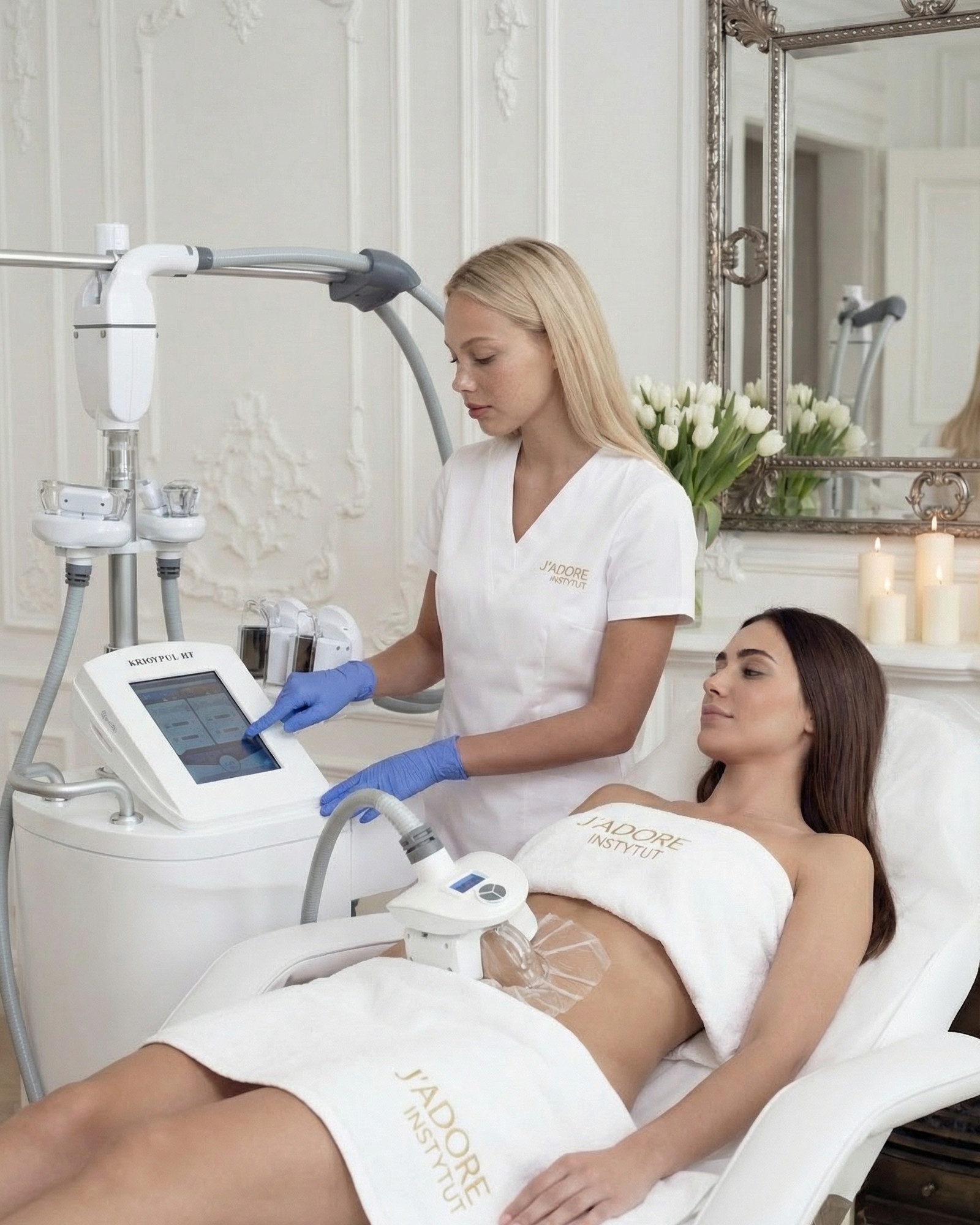
What "contraindication" actually means
An absolute contraindication means a situation where the treatment is not performed because the cooling mechanism itself may be unsuitable for you. A relative contraindication is not an automatic approval or a ban. It means a need for individual assessment, sometimes medical documentation, and often the opinion of your attending physician. A temporary contraindication simply says: today is not a good time, but you can return to the topic once the cause has resolved.
The boundaries between categories depend on the severity of the condition, the treatment area, and the medications taken. The list in this article does not replace an interview — it suggests what to mention before your visit.
An absolute "no": reactions to cold, poor circulation, and hernia
Cryolipolysis is not just a cold compress. Controlled cooling is the essence of the treatment, so diagnosed conditions where cold triggers an abnormal bodily reaction are a key group of contraindications. These include, among others, cryoglobulinaemia, Raynaud’s disease, paroxysmal cold haemoglobinuria, cold urticaria, cold agglutinin disease, and recurrent chilblains (pernio).
If you have any of these diagnoses, cryolipolysis is not a treatment to "try out with caution". If you do not have a diagnosis, but your fingers turn pale or blue, or you experience blisters, severe pain, fainting, or an unusual general reaction in the cold, do not book an application without clarifying these symptoms with a doctor. The clinic should not diagnose the cause based on a brief description.
The treatment is also not performed in an area with poor circulation, within or in the immediate vicinity of a hernia, or in a structurally weakened area — for example, in the region of a surgical scar or abdominal muscle separation. If you only suspect a hernia or tissue weakness, a medical assessment is needed first; a confirmed hernia in the planned zone is not a situation to be "bypassed" by changing the applicator position.
- You have a confirmed condition related to cold hypersensitivity — you should refrain from the treatment rather than modifying its parameters yourself.
- You experience unexplained, severe reactions to cold — medical diagnostics first, only then a potential conversation about treatments.
- You do not remember the exact name of the diagnosis — check your documentation or contact your doctor; similar-sounding terms can mean different things.
- Someone assures you without an interview that "gentler cooling will solve the problem" — this is a signal to stop the qualification and seek a reliable opinion.
Pregnancy, breastfeeding, and when it is worth waiting
Cryolipolysis is not performed during pregnancy. The treatment concerns aesthetic body contouring, not an urgent health need, so there is no reason to take unnecessary risks during a period when your body is changing intensely. This also applies to very early pregnancy — if there is a possibility that you are pregnant, mention it before qualification and reschedule until it is clarified.
The breastfeeding period is also indicated in treatment materials as a time when cryolipolysis is not planned. The most sensible decision is to return to the topic after finishing breastfeeding and once your body’s situation has stabilised. It is not about promising a specific date, but about assessing your current state, goal, and zone only when the aesthetic treatment does not compete with a more important physiological process.
Relative contraindications: individual assessment first
Some situations do not fit into a simple "yes" or "no". In the case of severe heart, kidney, or liver disease, active oncological treatment, clotting disorders, anticoagulants, or a tendency to thrombosis, the position of your attending physician, who knows the course of your condition and treatment, may be necessary.
The same applies to severe peripheral neuropathy or weakened sensation in the planned zone. If you cannot correctly feel temperature, pain, or pressure, it is harder to report a worrying reaction in time. This is not a detail that can be ignored just because the skin looks healthy.
Mention before your visit
information needed for qualification
- chronic diseases and their stage of treatment
- medications affecting clotting or circulation
- sensory disorders, neuropathy, frequent numbness
- past problems in the selected area
- electronic implant or other device in the area
- hernia or suspected hernia in the zone
Do not do it yourself
decisions that require a doctor or qualification
- do not stop taking medication before the treatment
- do not consider a stable condition irrelevant
- do not place the applicator next to a hernia "as a test"
- do not hide weakened sensation
- do not treat approval for another treatment as approval for cryolipolysis
- do not replace a doctor’s opinion with advice from the internet
The treatment is not performed in a zone with a hernia or poor circulation. With an electronic implant, its specific location is what matters, so it is worth bringing a medical description instead of recalling details from memory.
When to simply reschedule your visit
Rescheduling is not a failure or a loss of results. Cryolipolysis is not an urgent procedure, so if your body is fighting an infection or the skin in the zone is irritated, it is better to wait. The most common temporary reasons include fever, general infection, active inflammation, an open wound, severe eczema, or another active skin change in the place of the planned application.
- You have a fever or symptoms of an infection. Return to the plan after recovery; do not try to "fit in" the treatment before an important event.
- The skin is damaged, inflamed, or painful. Determine the cause first and wait until the skin barrier is calm.
- A fresh, intense tan or sun irritation has appeared in the zone. Reschedule the visit until the skin has fully calmed down.
- Your medication or health status has changed since the consultation. Report the change before arriving; qualification requires up-to-date information.
- During your period, you feel more tenderness or significant discomfort. The period itself is not a technical contraindication, but the date can be moved for your comfort.
- You are not sure what is happening under the skin in the selected area. Medical consultation first, especially if a hernia is suspected.
High BMI is not a cold-induced disease — but it changes the point of the treatment
A caveat regarding significant overweight and obesity also appears in materials about cryolipolysis. It is worth understanding it well: this is not the same category as cryoglobulinaemia or Raynaud’s disease. The problem lies primarily in the mismatch between the method and the goal. Cryolipolysis contours a local fold that can be grasped; it is not a treatment for obesity or a way to reduce overall body weight.
If you expect weight loss or a change in your entire silhouette, even a correctly performed procedure may not give the result you are looking for. An honest consultation should separate a health contraindication from a lack of aesthetic indication. In both situations, you may hear "no", but the reason and the further path are different.
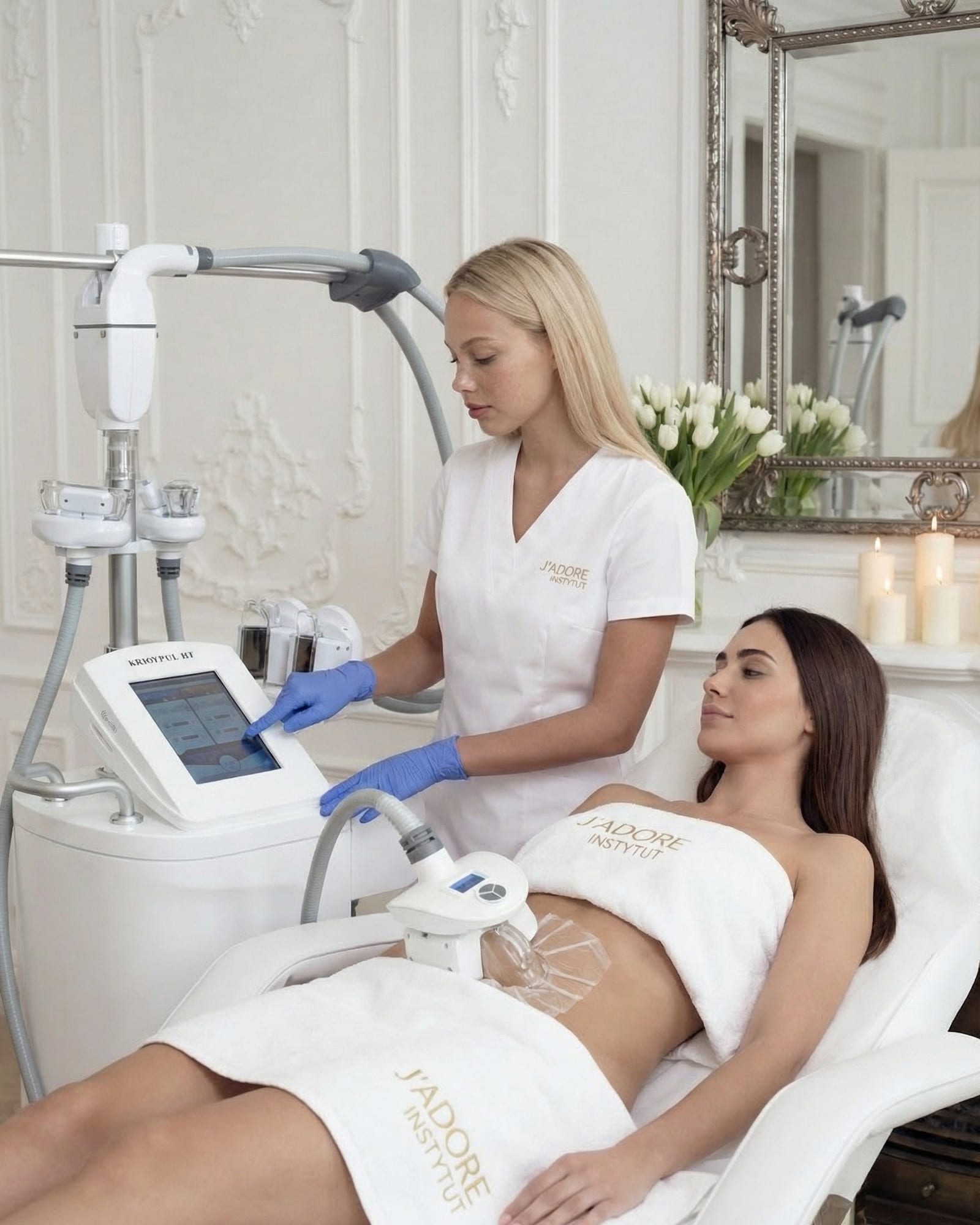
What to say during qualification — even if it seems like a minor detail
The safest medical interview is not one where you answer only "yes" or "no", but one where you describe the context. Instead of "I am not allergic to cold", say that you sometimes get a rash after going out into the frost. Instead of "my circulation is fine", mention if your fingers go pale or numb. Instead of "I don't take anything important", provide the full names of medications and dosages to the doctor or the person conducting the qualification according to the procedure.
You do not need to judge yourself which information will change the decision. That is the purpose of the qualification. It is much safer to mention something that turns out to be irrelevant than to omit a symptom or medication because it does not seem related to a body contouring treatment.
After the treatment: what is expected and what requires contact
After cryolipolysis, temporary redness, tenderness, swelling, bruising, tingling or numbness may occur at the application site. The mere appearance of such a reaction does not mean there is a complication. The progression is what matters: whether it gradually subsides or, conversely, increases, becomes difficult to tolerate, or is accompanied by new, unusual symptoms.
Contact the salon if something clearly deviates from the discussed course, if severe pain increases, if blisters or other signs of cold burns appear, if the skin changes colour significantly, or if sensory disturbances do not subside within the time indicated in the aftercare. In the case of general symptoms or a sudden deterioration in your condition, do not wait for a response from the salon — seek medical help.
Cryolipolysis in Warsaw — where to undergo qualification
In Warsaw, we perform cryolipolysis at two J'ADORE INSTYTUT salons: Żelazna 59, 00-848 Warsaw — from Monday to Saturday between 8:00 and 21:00, and on Sunday between 11:00 and 19:00 — and Mińska 29A/46, 03-808 Warsaw, from Monday to Saturday between 9:00 and 21:00.
Current information about the treatment, availability and price list can be found on the cryolipolysis in Warsaw page. If you have a chronic illness, take medications, notice unusual reactions to cold, or are unsure about the condition of the chosen area, report this when booking your consultation. This will allow us to determine if a doctor's opinion is needed before your visit.
When to let go, when to reschedule, when to return to the topic
- LET GO
A diagnosed disease related to a reaction to cold
Do not try to bypass the contraindication by using lower parameters or by having the treatment at another salon.
- RESCHEDULE
Infection, fever, damaged or inflamed skin
Return after recovery and when the area has calmed down, with an updated medical history.
- CONSULT
Chronic illness, medication, neuropathy, suspected hernia or implant
Ask for an individual assessment. A suspected hernia requires a doctor's evaluation; if a hernia is confirmed in or immediately adjacent to the planned area, the treatment is not performed.
- RETHINK YOUR GOAL
You expect whole-body weight loss
Cryolipolysis is a local contouring of a fat fold. A lack of a proper indication is a good reason to choose a different path.
The most responsible qualification does not look for a way to perform a treatment at any cost. It seeks the answer as to whether controlled cooling is appropriate for this person, on this day and in this specific area. If the answer is "no", cancelling is not a wasted visit. It is exactly what the interview exists for.