What cellulite actually is — and why almost every woman has it
Cellulite isn't fat tissue itself, and it isn't simply a result of being overweight. It's a structural change in the skin and connective tissue — something that happens deeper than the fat layer, though fat does play a part. Picture a buttoned mattress: fat is the padding, and collagen fibres are the "threads" holding the buttons in place. When those threads are tight and inflexible, and the fat between them pushes upward, you get those characteristic dips and bumps on the skin's surface.
Cellulite is rare in men — and that's not a coincidence. Their connective tissue fibres are arranged differently: in a criss-cross pattern, a mesh that holds fat in place more effectively. In women, the fibres run perpendicular to the skin's surface, like vertical columns — which makes it easier for fat to push upward. Add oestrogen, which encourages fat storage on the hips and thighs, and you have a ready-made recipe for cellulite — with no "fault" on your part.
Cellulite severity is usually described on a four-grade scale — from invisible to the naked eye (only visible under pressure), through visible when standing, to deeply sculpted and visible in any position. The deeper the structural change, the more time and the more varied stimuli are needed to improve it noticeably. And that's the crux of the whole conversation.
Why cellulite resists one-off methods
Cellulite is a multi-layered problem — literally. Changes happen simultaneously at several levels: in lymphatic and venous circulation (which slows down, causing stagnation and swelling), in collagen fibre structure (which hardens and pulls the skin downward), in fat cells (which enlarge and press on the skin from within), and in the skin itself (which loses elasticity and firmness with age, making the changes increasingly visible).
- Microcirculation. Slowed blood and lymph flow means tissues are less well nourished and accumulate metabolic waste. This is one of the fundamental mechanisms behind cellulite formation and progression — and one of the first things worth addressing.
- Collagen fibres. Over time, connective tissue bands harden and contract, forming increasingly deep "anchors" that pull the skin downward. That's why cellulite in a woman in her forties is usually more pronounced than in a woman in her twenties — not because there's more fat, but because the structures have bonded more tightly.
- Fat cells. Adipocytes in cellulite-affected areas can enlarge disproportionately — and literally push the tissue upward. Reducing fat tissue (through diet, activity and treatments) helps, but only as one piece of a larger puzzle.
- Skin quality. Thin, inelastic skin makes cellulite more visible. That's why the same underlying changes look less obvious in younger women with thicker, firmer skin than in older women — the skin simply masks what's happening beneath it better.
There's an extra challenge: cellulite tends to come back. Even after a successful series of treatments, if the stimuli disappear (activity, maintenance sessions, hydration) and the contributing factors return (sedentary lifestyle, hormones, age), the changes tend to recur. That doesn't mean the treatments don't work — it means effective cellulite management is a long-term project, not a one-off "reset".
What actually works — and how to understand it
Let's start with the good news: effective methods do exist. Studies confirm that some technologies — used regularly and within the right protocol — can noticeably reduce the appearance of cellulite, improve skin texture and tissue firmness. "Can reduce" isn't marketing caution — it's an honest description of reality, where results depend on the severity of the changes, consistency, and individual response.
It's worth understanding what a given treatment actually targets — because not every method addresses all four layers of the problem. Treatments that work on microcirculation help reduce swelling and improve tissue nourishment, but they won't break down hardened collagen fibres on their own. Treatments that break down fat tissue improve body shape, but won't smooth texture unless they also work on skin firmness. For many people, the best results come from combining methods — each one working on a different layer.
Promises worth avoiding
low-credibility signals
- Results after one session
- A guarantee of lasting results with no maintenance
- One method claiming to do "everything"
- Before/after photos with no information about the protocol
An honest approach to the topic
what to look out for
- A series of sessions — usually several to a dozen or so
- A combination of methods addressing different layers
- Home support: hydration, activity, massage
- Results appear gradually, not after the first visit
The role of lifestyle — no lecturing, just honesty
There's one thing no treatment can override: the environment your tissues live in. Cellulite thrives on dehydration (blood thickens, circulation slows), a sedentary lifestyle (stagnation in venous and lymphatic circulation), hormonal fluctuations, and a diet high in simple sugars (insulin encourages fat storage in specific areas). This isn't a lecture on healthy living — it's mechanics. Treatments work faster and last longer when tissues are well nourished and supple. And conversely, even the most powerful equipment loses effectiveness when the basics are badly out of balance.
- 01
Hydration
Water supports the transport of metabolic waste and helps the lymphatic system function. It's the cheapest, fastest thing you can do for cellulite-affected tissue.
- 02
Movement — especially the kind that pumps blood
Walking, swimming, cycling — aerobic activity stimulates venous and lymphatic circulation. It doesn't need to be competitive sport, but consistency matters more here than intensity.
- 03
Massage and drainage
Regular dry brushing or manual rolling improves microcirculation and skin elasticity. It reinforces salon results — not a substitute, but a solid addition.
- 04
A series of sessions plus maintenance
Treatments work on tissue structure — but they need to be repeated. A series is the starting point. Occasional maintenance sessions stop results from reversing.
How to talk about cellulite with your therapist — what's worth knowing before your visit
A good consultation before a cellulite series should answer a few specific questions: what stage the changes are at, which layers of the problem dominate (mainly swelling and circulatory stagnation, or deeper structural changes), which methods will be combined and why, how many sessions are realistically needed, and what you can expect after the first few weeks. If your therapist answers these questions specifically and honestly, that's a good sign. If they promise a transformation after one visit, that's a reason for caution.
It's also worth knowing that cellulite around the abdomen, hips and thighs is a different problem from cellulite on the arms or calves — and it responds to treatment differently. Location matters, because different areas have different tissue thickness, blood supply, and hormonal influences on fat storage. A good protocol is tailored to the individual and the specific area — it isn't a single template applied everywhere.
Treatments we combine when working with cellulite
When working with cellulite, we rarely rely on a single method — because the problem is multi-layered, and each device addresses a different aspect of it. Below are treatments that often form part of the protocol, with a short note on which layer each one mainly targets.
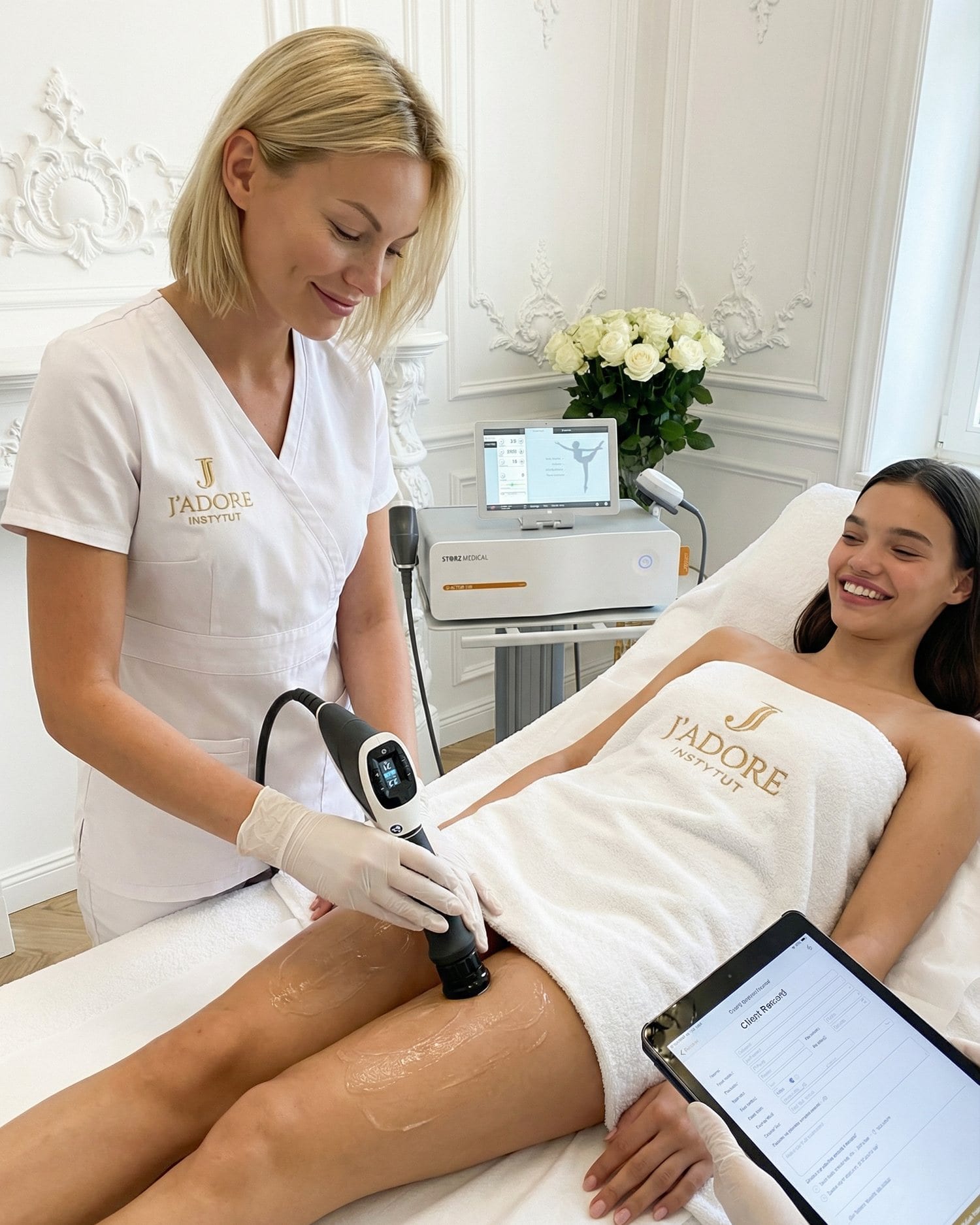
Acoustic wave therapy
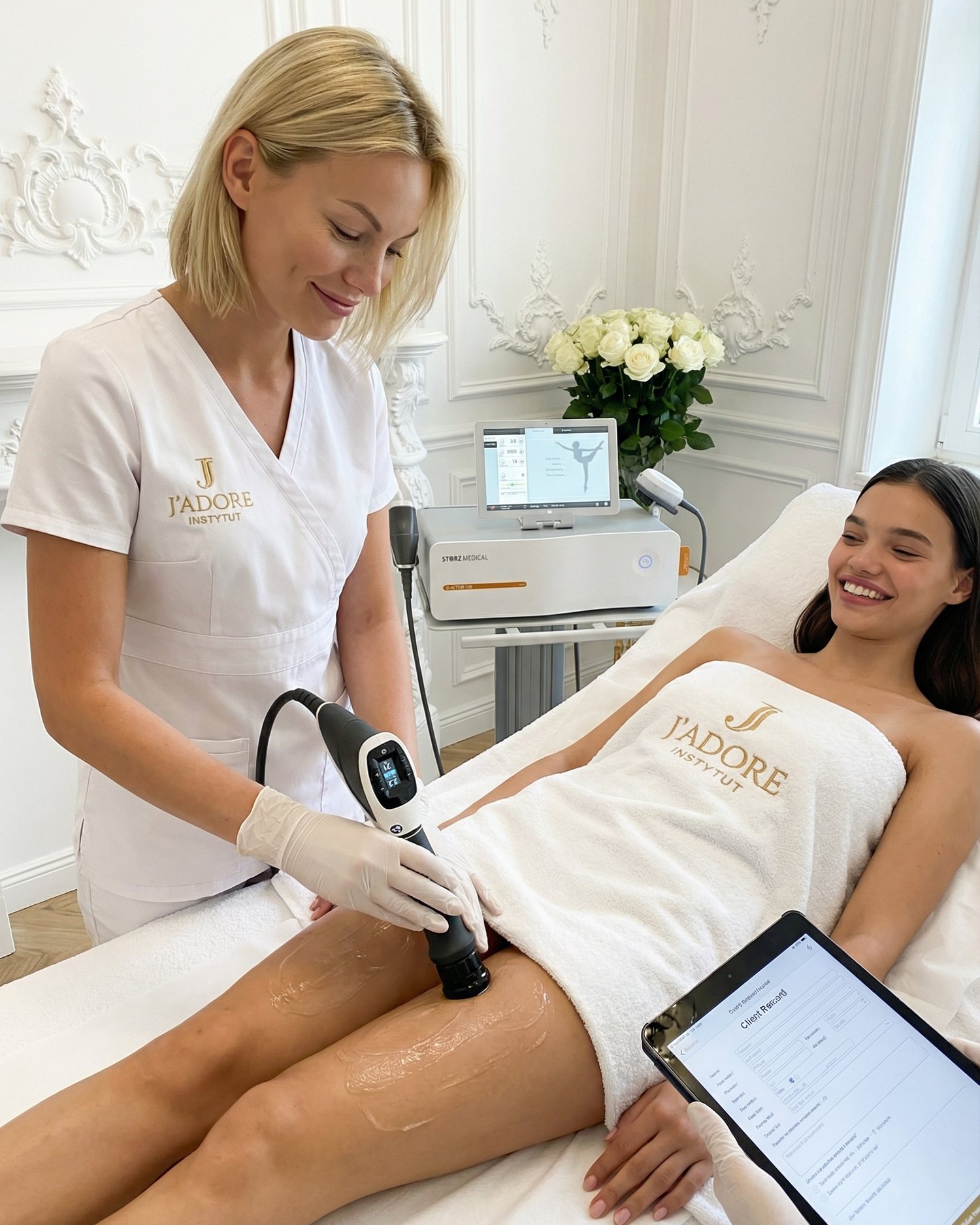
Works on hardened connective tissue bands — mechanically breaking up fibrosis and stimulating collagen remodelling. Often the first step in a protocol, because it opens up the tissue for further treatment.
Diode laser / infrared for the body
Stimulates fat cell metabolism and improves skin elasticity. The tissue effect runs deeper than massage alone, and the skin gains firmness from within.
Endermology / mechanical massage
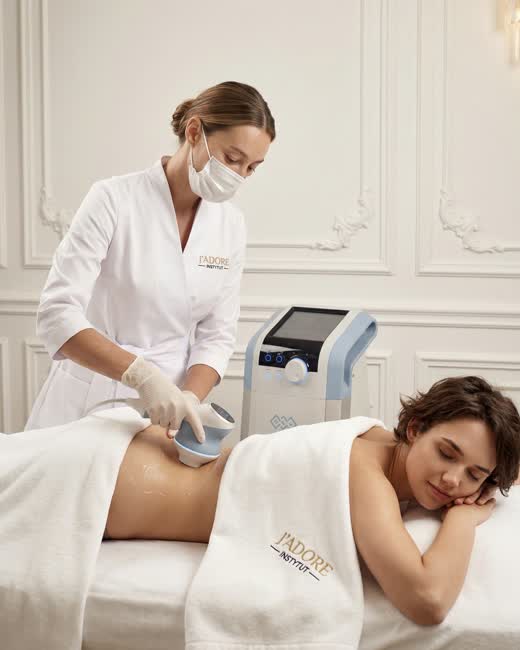
Works on lymphatic and venous circulation — reduces stagnation, improves tissue nourishment and speeds up the removal of metabolic waste. Results after a series enhance the effects of other methods.
Injectable lipolysis / body mesotherapy
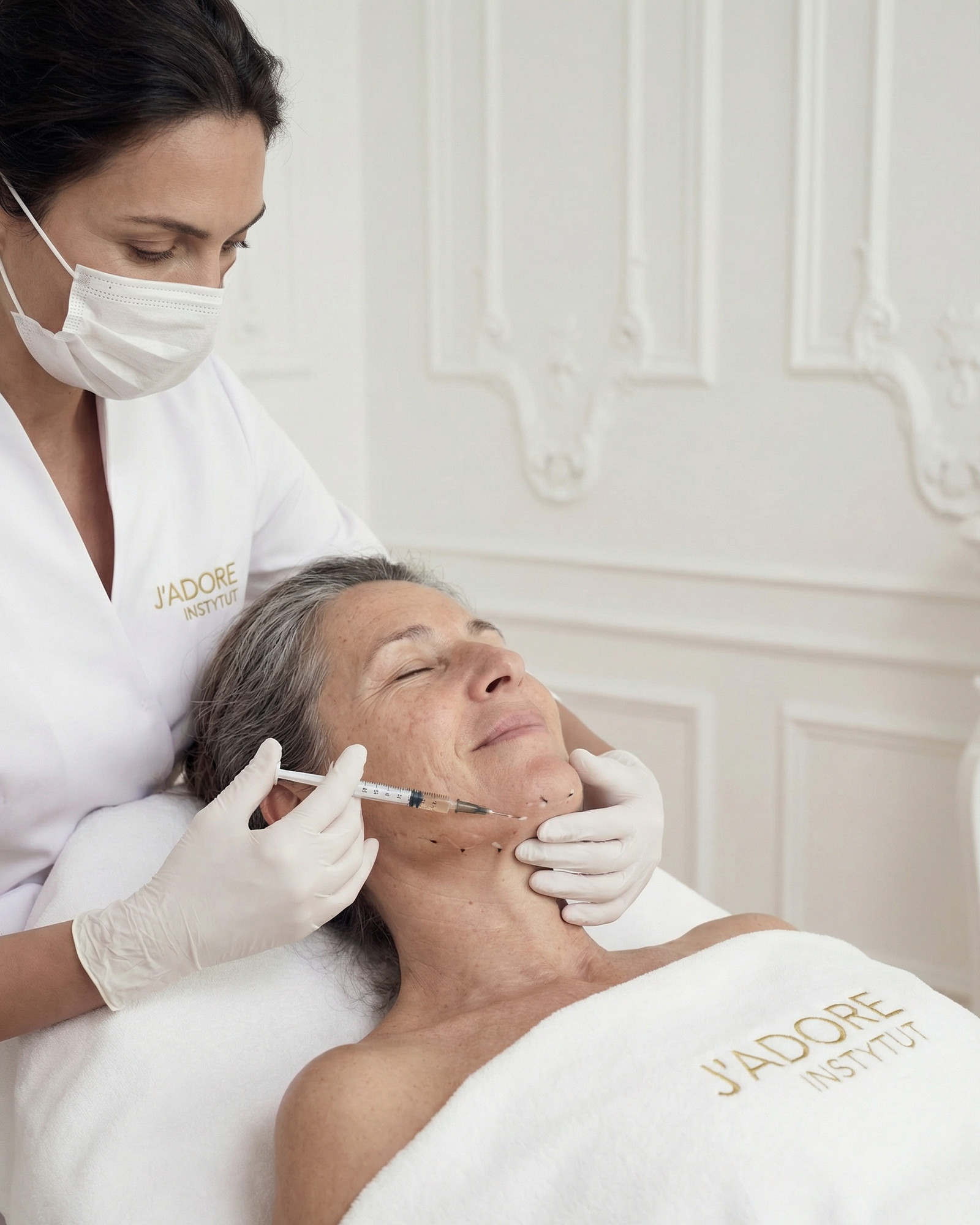
Direct work with fat tissue and skin — improves surface quality and supports the reduction of localised fat deposits. A complement to physical methods when work "from within" is needed.
Radiofrequency for the body
Improves skin firmness and connective tissue condition by stimulating collagen production. Best paired with fat-reducing treatments — it keeps the skin from losing elasticity after reduction.