What is mandelic acid and where does it come from?
Mandelic acid (mandelic acid) belongs to the group of alpha-hydroxy acids (AHAs) — substances that have formed the basis of chemical peels in cosmetology for decades. Its name comes from the Latin amygdala, meaning almond. It is derived from bitter almonds, although cosmetology uses synthetic forms with controlled purity.
Chemically, mandelic acid has one key feature: it has the longest molecular chain among popular AHAs. The glycolic acid molecule — the best known and most widely used — is so small that it penetrates deep into the skin immediately. The mandelic acid molecule is almost twice as large. This means it enters the tissues more slowly and evenly. This one detail changes everything about how it works.
Mandelic acid has another property that not all its AHA “cousins” share: it works in two directions at once — combining keratolytic properties (exfoliation) with antibacterial properties. This makes it particularly useful for combination, oily and acne-prone skin. Exfoliation alone is not enough in these cases. Regulation of the bacterial environment is also needed.
How it works — layer by layer
To understand what mandelic acid does, it helps to look beneath the skin’s surface. The epidermis — the thin outer layer we see — consists of cells at different stages of maturity. New, living cells form at the bottom. They travel upwards, gradually become keratinised and eventually exfoliate from the surface. This is a natural, continuous process that takes several weeks on average.
When this cycle works properly, skin looks fresh and smooth. When it slows down — which can happen with age, dehydration or hormonal imbalance — dead cells build up on the surface. Skin becomes dull and uneven. Pores appear clogged, and the complexion can look “heavy”.
- 01
Loosening the bonds between cells
Mandelic acid acidifies the environment on the skin’s surface. In this environment, enzymes that bind dead epidermal cells together lose activity. The bonds loosen, and cells begin to separate more easily.
- 02
Gentle exfoliation without drama
Unlike smaller molecules, such as glycolic acid, mandelic acid works evenly and gradually. It does not cause a sudden reaction and often does not lead to visible peeling. Cells are removed progressively, rather than in whole flakes.
- 03
Supporting renewal
After the layer of dead cells is removed, the skin “breathes” — new cells move towards the surface more efficiently. For many people, skin tone improves. The skin looks more even and radiant.
- 04
Sebum regulation and antibacterial action
Mandelic acid has antibacterial properties against P. acnes bacteria, one of the factors involved in acne. It may also help regulate sebum production. This is why it is often used in treatments for oily and acne-prone skin.
Mandelic acid vs other AHAs — how do they really differ?
AHAs are a family, not a single ingredient — and each member works slightly differently. In the context of chemical peels, glycolic acid appears most often. It has the smallest molecule and the most intensive action. Lactic acid is hydrating and sits in the middle. Then there is mandelic acid. Comparing them helps you understand when each one makes sense.
Mandelic acid
gentle, versatile
- The largest molecule among AHAs — slower penetration
- The lowest risk of irritation and inflammatory reaction
- Exfoliating and antibacterial action at the same time
- Recommended for sensitive, reactive and acne-prone skin
- Safe all year round, including summer (when using sunscreen)
Glycolic acid
intensive, fast
- The smallest AHA molecule — rapid, deep penetration
- Strong exfoliating effects in less time
- Widely used for hyperpigmentation and photoageing
- May produce noticeable effects after the first treatments
In cosmetology practice, mandelic and glycolic acid do not exclude each other — they often complement different stages of a treatment plan. Mandelic acid is often chosen at the beginning, when the skin has not yet been tested, or as a year-round peel for reactive skin. Glycolic acid is introduced when faster results matter and the skin already “knows what to expect”. The key is to select the acid for the current condition of your skin — not for an ingredient’s popularity.
Who benefits most from mandelic acid?
You could say mandelic acid is a democratic acid — it works for many different skin types and needs. But some groups are particularly well suited to it. It is worth naming them directly, as it can be overlooked in the salon in favour of more “talked-about” ingredients.
- Sensitive and reactive skin — for people who react to other acids with redness, burning or a rash, mandelic acid is often the first one that “works”. Its gradual penetration rarely triggers an inflammatory response.
- Acne-prone skin — it combines exfoliation with antibacterial action. It may help reduce blackheads and inflammatory lesions, while not drying the skin as much as some other acids.
- Oily and combination skin — it supports sebum regulation, which for many people means less shine and fewer clogged pores.
- Skin with hyperpigmentation — regular mandelic acid peels may speed up cell turnover. This can gradually brighten post-acne and sun-induced hyperpigmentation.
- Darker skin (skin phototypes III–VI) — this is important: darker complexions are more prone to post-inflammatory hyperpigmentation after aggressive peels. Thanks to its gentler action, mandelic acid is often safer for this group than intensive acids with small molecules.
- People beginning their journey with acids — the absence of a sudden reaction during the first treatments makes it easier for the skin to adjust to acidic pH and build tolerance.
What happens in the salon — a mandelic acid peel step by step
A mandelic acid peel in the salon differs from a home product in concentration, application precision and neutralisation conditions. The cosmetologist selects the formula for your skin’s current condition. The protocol differs for acne-prone skin, and for skin with wrinkles or dullness. This is why an “acid peel” is not one procedure, but a whole spectrum of options.
- 01
Make-up removal and cleansing
The skin must be free from cosmetics, sebum and skincare residue. Incomplete cleansing = uneven acid action. At this stage, the cosmetologist also assesses the skin’s current condition and may adjust the plan.
- 02
Degreasing and disinfection
Preparing the surface for even contact with the acid. Uneven degreasing means the acid “penetrates faster” in some areas, while acting more superficially in others.
- 03
Peel application
The acid is applied precisely, in layers, usually with a brush or gauze pad. Exposure time — how long the acid remains on the skin — is strictly controlled. This is one of the parameters the cosmetologist uses to regulate the depth and intensity of action.
- 04
Neutralisation and soothing
After the appropriate time, the acid is neutralised or washed off. The skin is then soothed with masks, ampoules or calming substances. These end the reaction and strengthen the skin barrier. This is not a “bonus” — it is part of the treatment.
- 05
Photoprotection and home-care recommendations
Every acid peel ends with SPF application and detailed aftercare recommendations for the days following the treatment. Your skin is more sensitive to UV radiation immediately afterwards — protection is not optional.
Mandelic acid and the sun — one rule above all
AHAs have one fundamental drawback that should be discussed openly: they increase skin sensitivity to UV radiation — at least for a short time after the treatment. This also applies to mandelic acid, despite its gentle nature. It is not a reason to avoid chemical peels. It is a reason to approach them with SPF in hand.
The good news is that mandelic acid is one of the more “summer-friendly” acids. With consistent SPF use, it can be used throughout the year. Some other AHAs have stricter seasonal recommendations. When used with SPF, mandelic acid is considered safe by many specialists even during months of intense sun exposure — but only with rigorous photoprotection.
What can be combined — treatments that work well with mandelic acid
A mandelic acid peel is rarely the “whole plan”. It can be a preparatory stage, a complementary treatment or the first step in comprehensive skin care. What we combine it with depends on your skin condition and the intended goal.
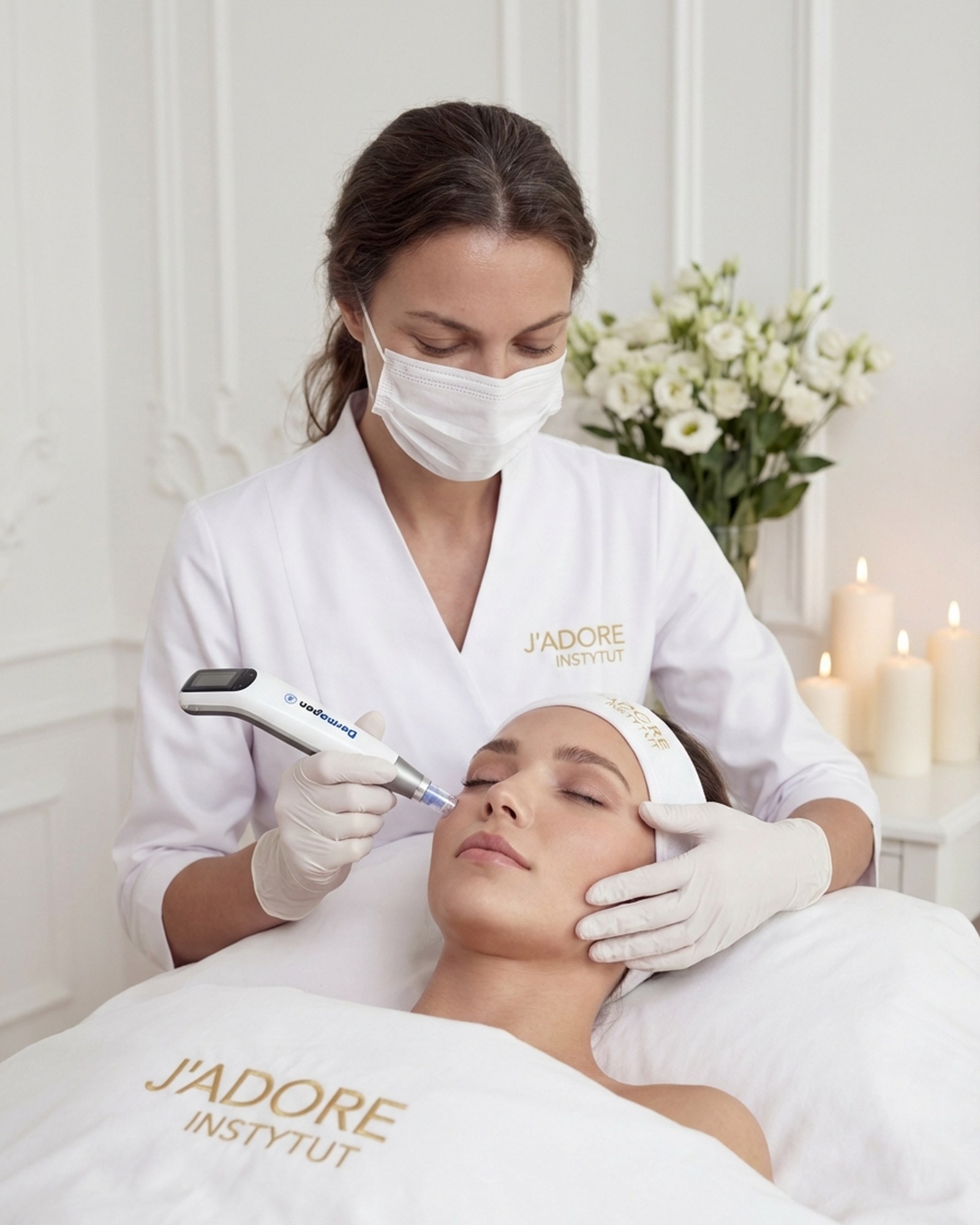
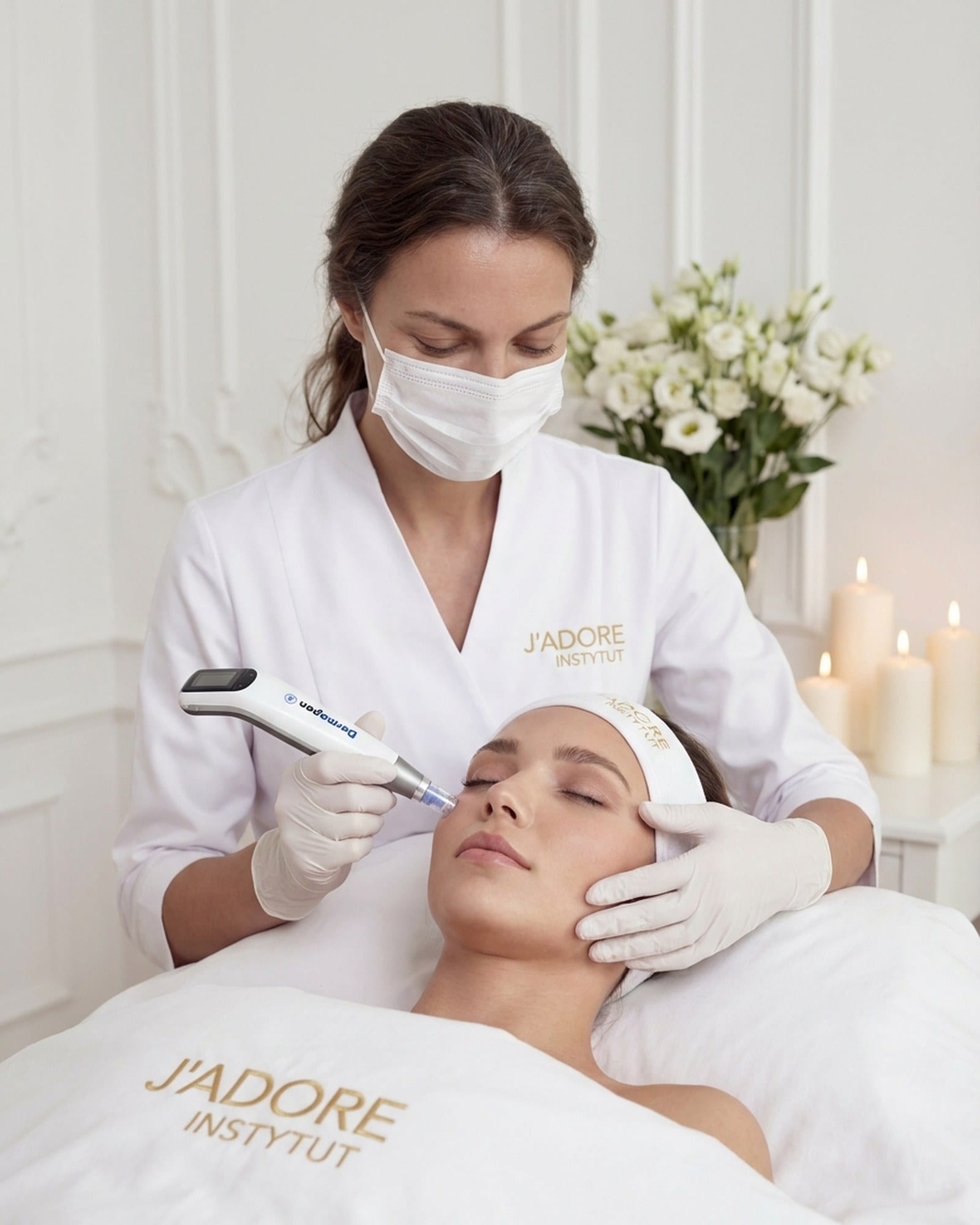
Needle / microneedling mesotherapy
A mandelic acid peel can be used as a preparatory step before mesotherapy. Cleansed and exfoliated skin absorbs active ingredients delivered deeper into the tissues more effectively.
Microdermabrasion
Combining mechanical exfoliation (microdermabrasion) with chemical exfoliation (acid) creates a synergistic effect. It is often performed as a combined treatment under the supervision of a cosmetologist. Not on the same day unless advised by a specialist.
Laser Therapy
A series of mandelic acid peels can prepare the skin for laser treatments — helping to create an even skin tone and improve skin condition before a more intensive procedure.
Hydrating treatments (hyaluronic acid, hydrating mask)
After a peel, the skin is ready for deeper hydration. For many people, combining exfoliation with intensive hydration delivers noticeably better results than either treatment alone.
At-home mandelic acid products — what to know
Mandelic acid is also found in home-care products, including toners, serums and masks. Concentrations in over-the-counter cosmetics are lower than in salon formulations. Their pH is also often higher, which reduces their activity. This does not mean they are pointless. Regular, gradual use can maintain treatment results and slowly improve skin condition. However, there are a few rules worth following.
- Start with low concentrations and observe your skin for at least a week before increasing frequency or intensity.
- Do not combine several acids at home without consultation — the synergy between active ingredients can be unexpectedly intense.
- Evening use is safer — it reduces the risk of sun-related reactions.
- Always use SPF in the morning — without exception, regardless of the season or weather.
- If you have active acne, rosacea or another active inflammatory condition, consult a specialist before buying a product. Mandelic acid is gentle, but it is not unconditionally safe for every skin condition.