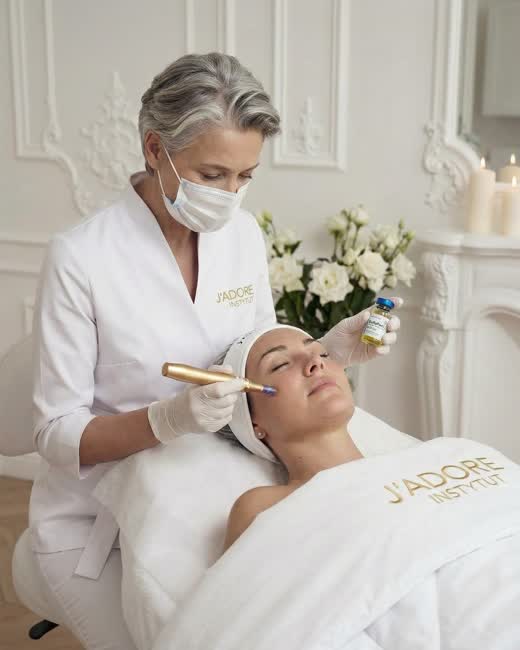
Enzymes vs acids — two mechanisms, one goal
The key difference is not in strength, but in how each peel reaches its goal. Enzymes work biologically, while acids work chemically. The final result — exfoliation and regeneration — may be similar, but the route is entirely different.
Enzyme peel
breaks down keratin biologically
- Enzymes (papain from papaya and bromelain from pineapple) selectively break down dead cells
- Neutral or slightly acidic pH — the skin barrier functions normally
- Precise, gentle exfoliation — does not irritate living cells
- Low downtime: the skin may be slightly pink, but redness fades quickly
- Suitable as a regular maintenance treatment or to prepare the skin for stronger procedures
Acid peel
chemically loosens the bonds between cells
- AHA (glycolic, lactic and mandelic acids) exfoliate the epidermis superficially and at a medium depth
- BHA (salicylic acid) works lipolytically — it penetrates pores and is recommended for oily and acne-prone skin
- A more intensive exfoliating and smoothing effect
- May cause temporary pinkness, a feeling of warmth or tingling
- SPF is essential after the treatment — the skin is more sensitive to sunlight
One important observation: the intensity of acid peels varies greatly depending on the type of acid, its concentration and the product’s pH. Mild mandelic acid at a low concentration is an entirely different experience from high-concentration glycolic acid — although both belong to the AHA family. Therefore, “acid-based” is not one level of intensity, but a whole spectrum.
Who are enzyme and acid peels for? A simple test
Before you decide — or before you ask in the salon — answer a few questions about your skin. This is not a diagnosis. However, it is a good starting point for a conversation with a specialist:
- Your skin is sensitive and reacts easily with redness or burning → direction: enzyme peel. Its biological mechanism at a neutral pH is clearly gentler. You can also start with it as an introduction to regular peels.
- You have vascular skin, rosacea or suspect a contact allergy → enzyme peel or consultation — acids may increase reactivity, so it is best to discuss this with a specialist.
- Oily skin, enlarged pores, a tendency towards blackheads and breakouts → direction: acid peel (BHA — salicylic acid). Salicylic acid penetrates pores and regulates sebum production — this is what sets it apart.
- Sun-induced hyperpigmentation, post-acne marks, uneven skin tone → direction: AHA acid peel (glycolic, lactic or mandelic). They work more deeply and even out skin tone more effectively than enzymes.
- Normal skin, you want regular freshness and radiance → both work. Choose an enzyme peel as a maintenance ritual, and an acid peel when you want a more visible result or more intensive exfoliation.
- Mature skin with superficial wrinkles and a dull complexion → an AHA acid peel after consultation, with an enzyme peel as a complement between sessions.
When enzyme and acid peels work together
The two mechanisms do not have to exclude each other. Increasingly, salons use peels that combine them. Enzyme-acid formulas, such as a hibiscus-based peel, draw on both approaches. Enzymes prepare the keratin, while acids deepen the exfoliating effect. The result is an effective treatment, but not necessarily one that is more aggressive than a stronger pure acid peel.
Enzyme peel as preparation + acid peel as the main effect
enzymes cleanse and soften keratin, allowing acids to work more effectively afterwards. Recommended for skin that needs more intensive exfoliation but does not tolerate an overly harsh start.
Enzyme peel between acid peel sessions
regular enzyme treatments maintain the exfoliating effect and do not overload the skin barrier between stronger acid peel sessions.
Enzyme-acid peel (hybrid) as one experience
ready-made formulas combining both mechanisms, designed to maximise results with controlled irritation. A good choice for most skin types seeking noticeable regeneration.
Exfoliating acid peel + vitamin peel (e.g. with vitamin C or ferulic acid) in a treatment protocol
a sequence targeting both exfoliation and antioxidant action, often used for hyperpigmentation and loss of radiance.
The logic behind combining treatments is always the same: one step provides exfoliation, the other regeneration or a targeted effect. Two strongly acidic products are never combined at once without a clear clinical reason — this does not enhance the result, it only stresses the skin. A specialist decides on the order and intervals, based on your skin type and the current condition of your skin barrier.
What specific acids do — a quick guide
Not every acid works in the same way. It is worth knowing the difference before you encounter a product name in the salon. The most common are:
- Glycolic acid (AHA) — it has the smallest molecules among AHAs, so it penetrates most deeply. Very effective for hyperpigmentation and fine wrinkles, but the skin needs to become accustomed to it gradually.
- Lactic acid (AHA) — gentler than glycolic acid, with hydrating properties as well. It supports NMF, the skin’s natural moisturising factor. A good choice for dry skin that needs exfoliation.
- Mandelic acid (AHA) — its large molecules penetrate slowly and gently. It is often the first recommendation for sensitive skin trying acid peels for the first time. It also regulates sebum production.
- Salicylic acid (BHA) — dissolves in oils, penetrates pores and regulates sebum production. A classic choice for acne-prone and oily skin. It also has anti-inflammatory properties.
- Azelaic acid — combines exfoliating, anti-inflammatory and brightening properties. Recommended for rosacea, melasma-related hyperpigmentation and reactive skin with uneven skin tone.
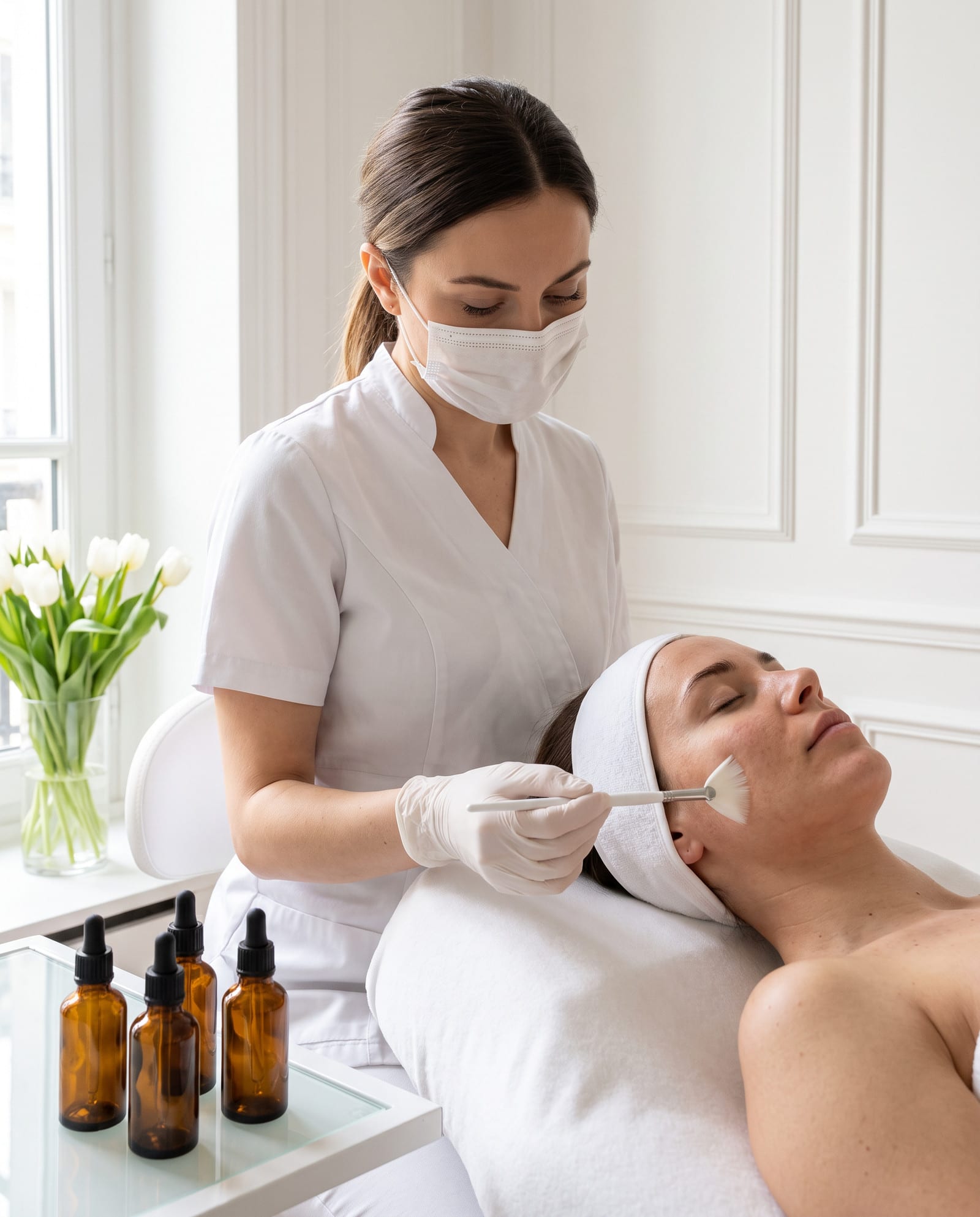
What to look out for after the treatment
A peel is not a cosmetic product left in a drawer — results also depend on what you do after leaving the salon. A few rules that make a real difference:
Peeling skin after a deeper peel treatment is a normal sign of regeneration, not a mistake. Your skin sheds its compact layer of dead cells — and after this phase, the complexion may look noticeably brighter and more even. Do not speed this up with mechanical exfoliation — let it finish naturally.
What happens in the salon — what to expect
Both enzyme and acid peels are salon treatments. Although home versions are available, professional products use noticeably higher concentrations. This means different results and a more important safety protocol.
- The treatment begins with a consultation and skin assessment. Your specialist assesses the barrier and asks about active skin changes, allergies, medications and previous treatments.
- The choice of product — enzyme or acid type, concentration and pH — depends on your current skin condition, not only your preferences. On the day, your skin may prove more reactive than usual — and the plan will be adjusted.
- Application time matters. The product works for a specified time, then is neutralised or removed. “I’ll leave it on longer” is not a way to enhance results. It increases the risk of irritation.
- After the treatment, your specialist will discuss skincare for the following days and possible reactions to expect — such as mild peeling after an acid peel, which is a normal part of the process.
For most people, a series of treatments delivers more noticeable results than a single treatment. Skin responds to a regular rhythm of exfoliation and regeneration. The intervals between sessions matter. Too short, and skin has no time to fully rebuild. Too long, and the progress is interrupted. Your specialist selects the right rhythm for your skin, not for the calendar.