The Hamilton-Norwood scale — assessing the degree of hair loss
The severity of male pattern baldness is assessed using the Hamilton-Norwood scale. The choice of method depends on the stage of hair loss.
- Type I–II — receding hairline at the temples: mesotherapy and home-care support
- Type III — noticeable receding hairline, thinning at the crown: mesotherapy and PRP
- Type IV–V — receding hairline combined with crown thinning: PRP and Regenera Activa
- Type VI–VII — extensive hair loss (only a narrow band remaining at the sides): Regenera Activa; in advanced cases, transplantation with a dermatologist
Methods available at J'ADORE INSTYTUT
Depending on the degree of hair loss and your expected result, we offer several paths — from regular series to single treatments with long-lasting effects.
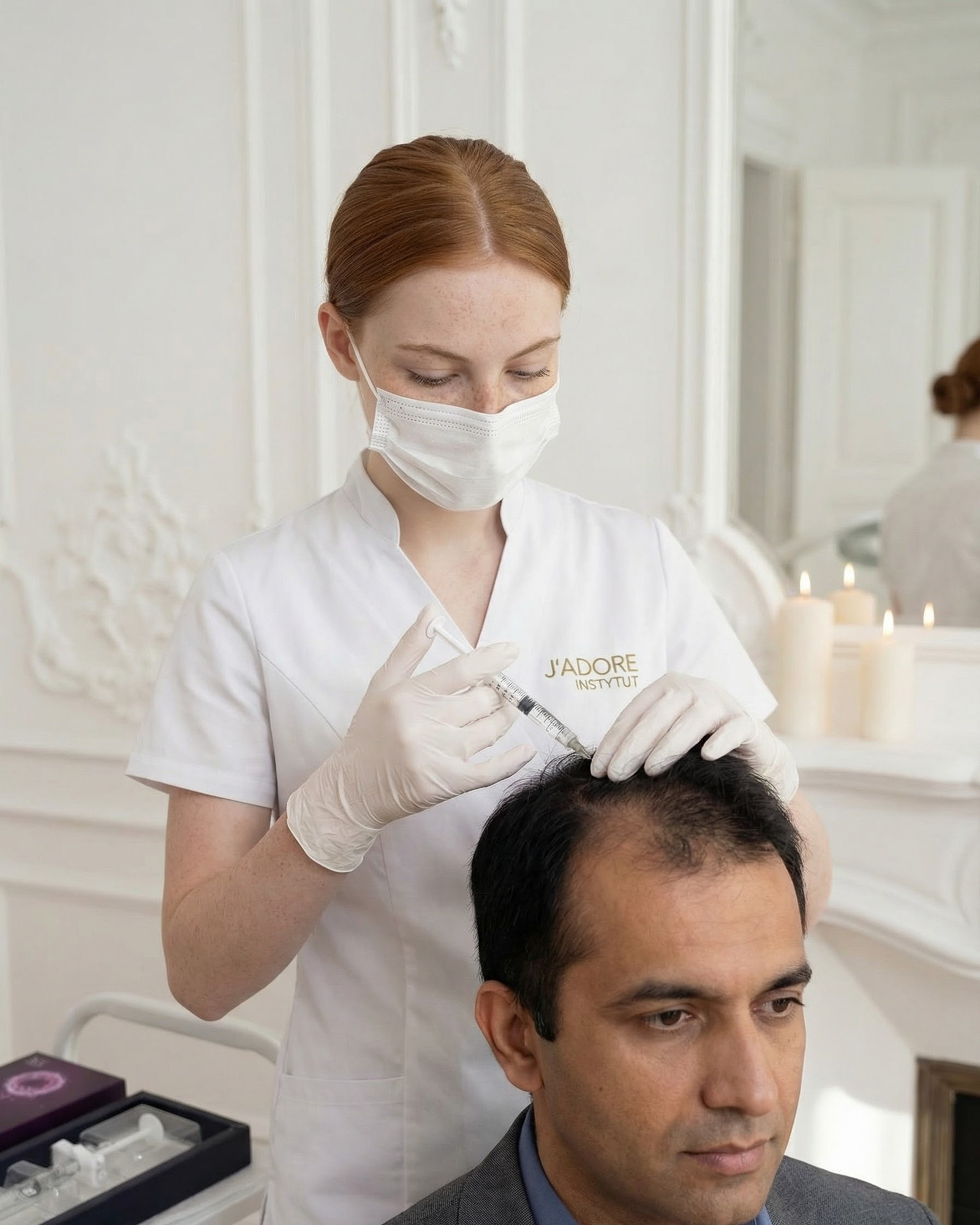
Scalp mesotherapy — stimulating cocktails
Mesotherapy is a good choice for early-stage hair loss (type I–III) and as prevention. It involves injecting cocktails containing biotin, B vitamins, growth-stimulating peptides (GHK-Cu, KGF) and hyaluronic acid — delivered directly into the scalp.
The treatment can stimulate dormant follicles, extend the anagen phase and, for many men, effectively reduce hair loss. A series usually consists of several sessions carried out a few weeks apart.
PRP — platelet-rich plasma
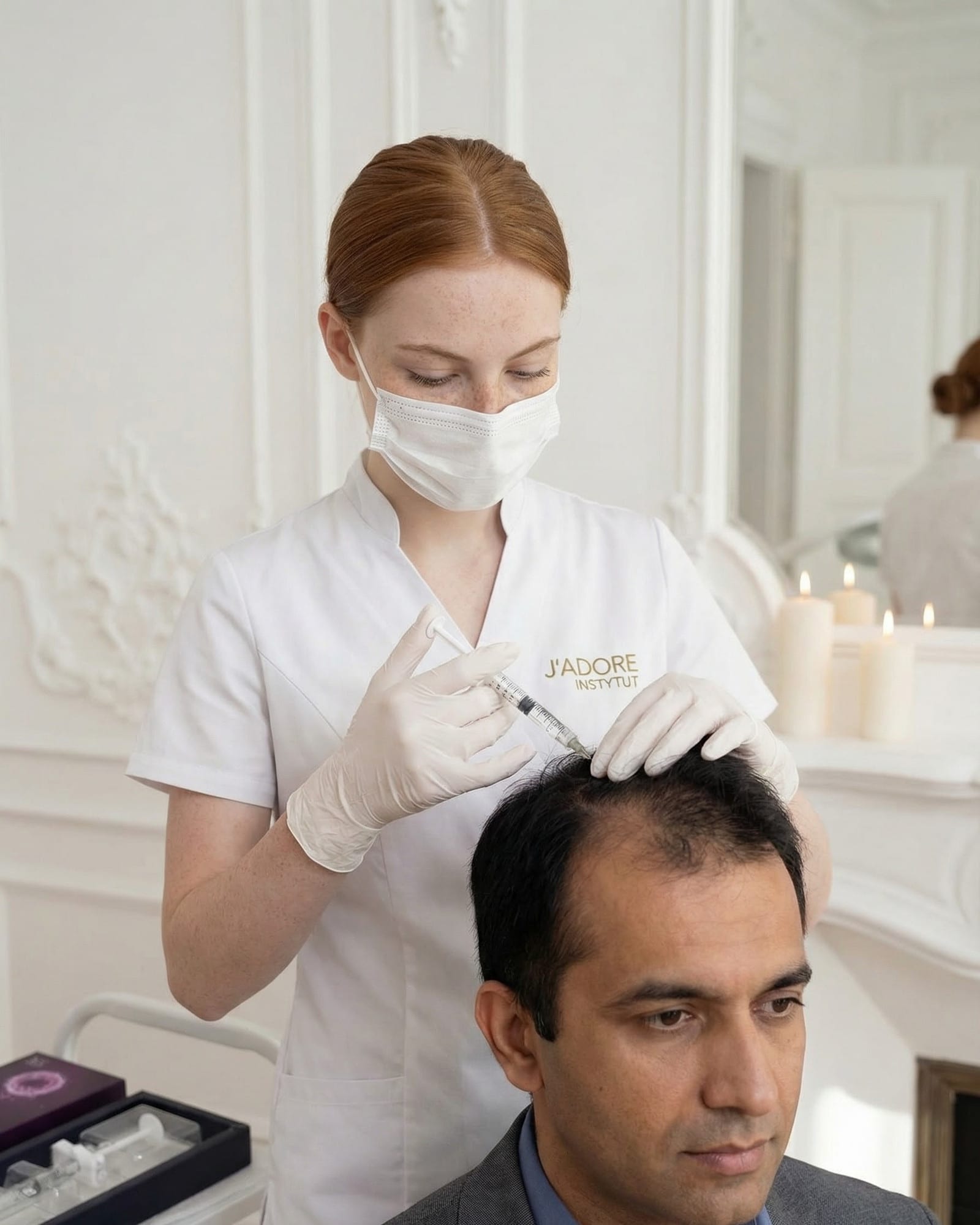
PRP suits men with hair loss at stages II–V, when mesotherapy doesn't deliver sufficient results or when a stronger effect is needed. It involves centrifuging your own blood and injecting the platelet-rich plasma into the scalp.
Growth factors present in the plasma (PDGF, VEGF, EGF) activate stem cells within the hair follicles. As a biological material from your own body, PRP often works more powerfully than the cocktails used in mesotherapy.
Regenera Activa — single-session biostimulation
Regenera Activa suits men with hair loss at type III–V who want a long-lasting solution or haven't responded to PRP. Mechanical disintegration of a mini skin biopsy (taken from behind the ear) yields progenitor cells and growth factors, which are then injected into the affected area.
This is a single-session treatment — for many patients, the result lasts a year or longer, with no need to repeat the series.
Scalp microneedling
We use microneedling (Dermapen) alongside PRP or mesotherapy. Micro-channels improve absorption of active substances and stimulate collagen production around the follicles. The treatment combines well with the other methods.
What's worth using alongside these treatments?
Everyday scalp care
- A strengthening shampoo with caffeine or ketoconazole (1–2%) — may support follicle condition
- Regular scalp massage — improves microcirculation and may help oxygenate the follicles
- Avoid very hot water when washing your hair
- A diet rich in protein, zinc, iron and biotin — hair responds to nutritional deficiencies
When is a hair transplant the right option?
For very advanced hair loss (type VI–VII), when few active follicles remain, transplantation (FUE/FUT) performed by a dermatologist or surgeon can be the only solution that restores hair.