What shaving does to men's skin
Shaving mechanically removes the epidermis along with facial hair — every pass of the blade causes tiny cuts at cellular level. Skin regenerates from this quickly, but not indefinitely without support. Over time, the lipid barrier thins, hydration levels drop, and skin vessels become more reactive. That's where the burning after shaving comes from, the redness, the "tight" feeling, or — for some men — the sense that no cream helps at all.
Add to that skin thickness and sebaceous gland activity — men's skin is thicker and oilier than women's, which means standard cosmetics often don't penetrate deeply enough. This is exactly what sets non-invasive mesotherapy apart from ordinary moisturising: it bypasses the skin barrier, rather than trying to push through it.
How non-invasive mesotherapy works
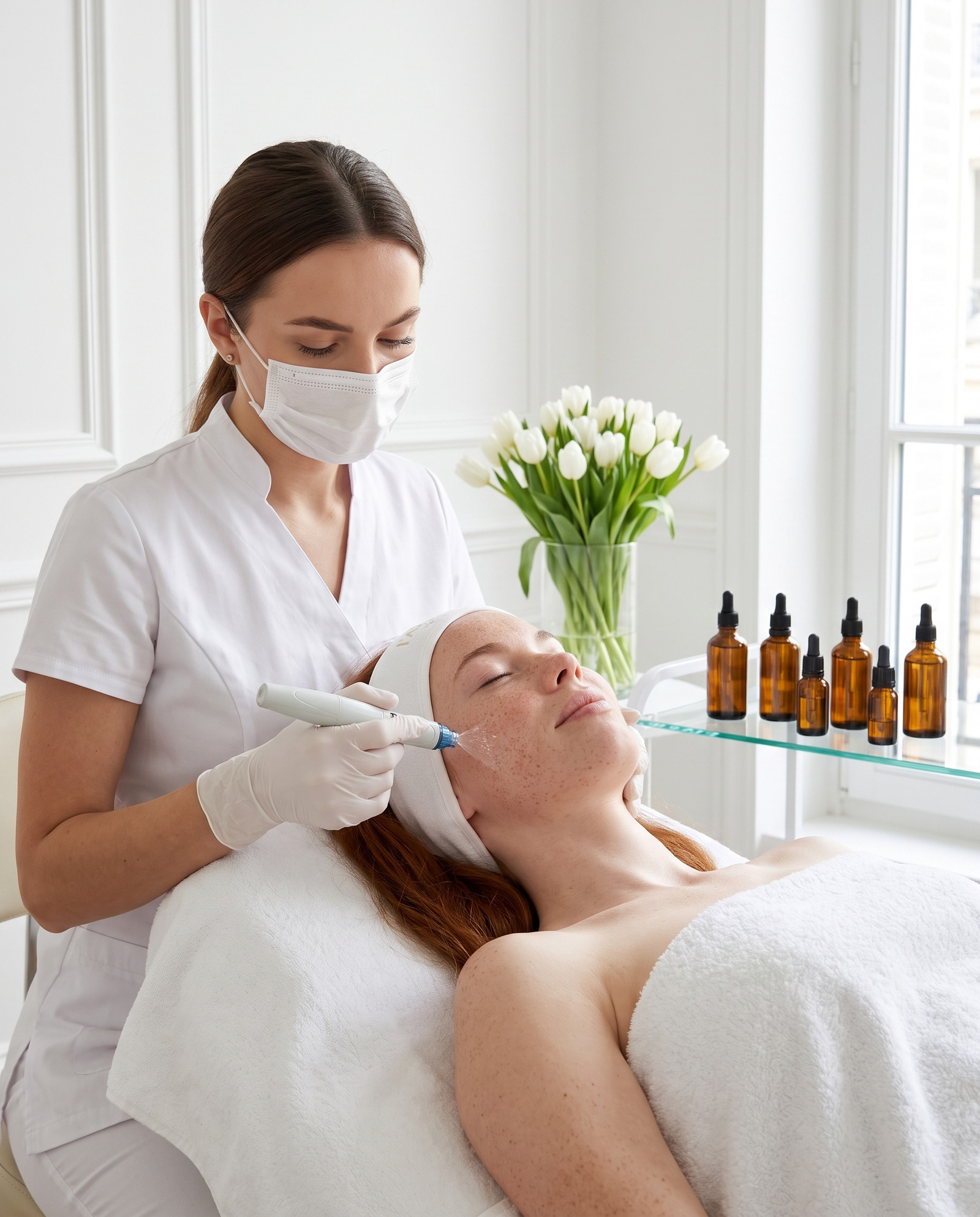
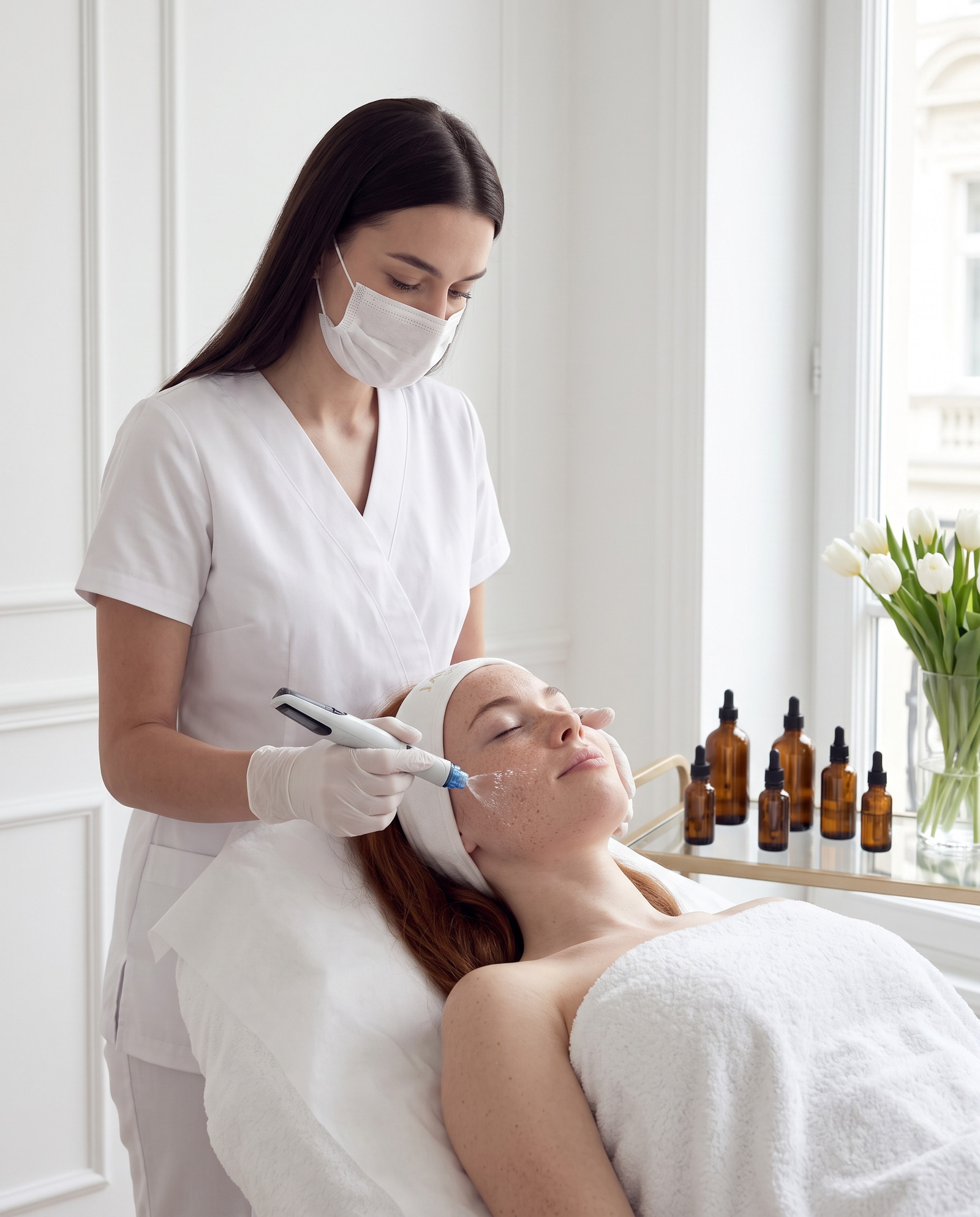
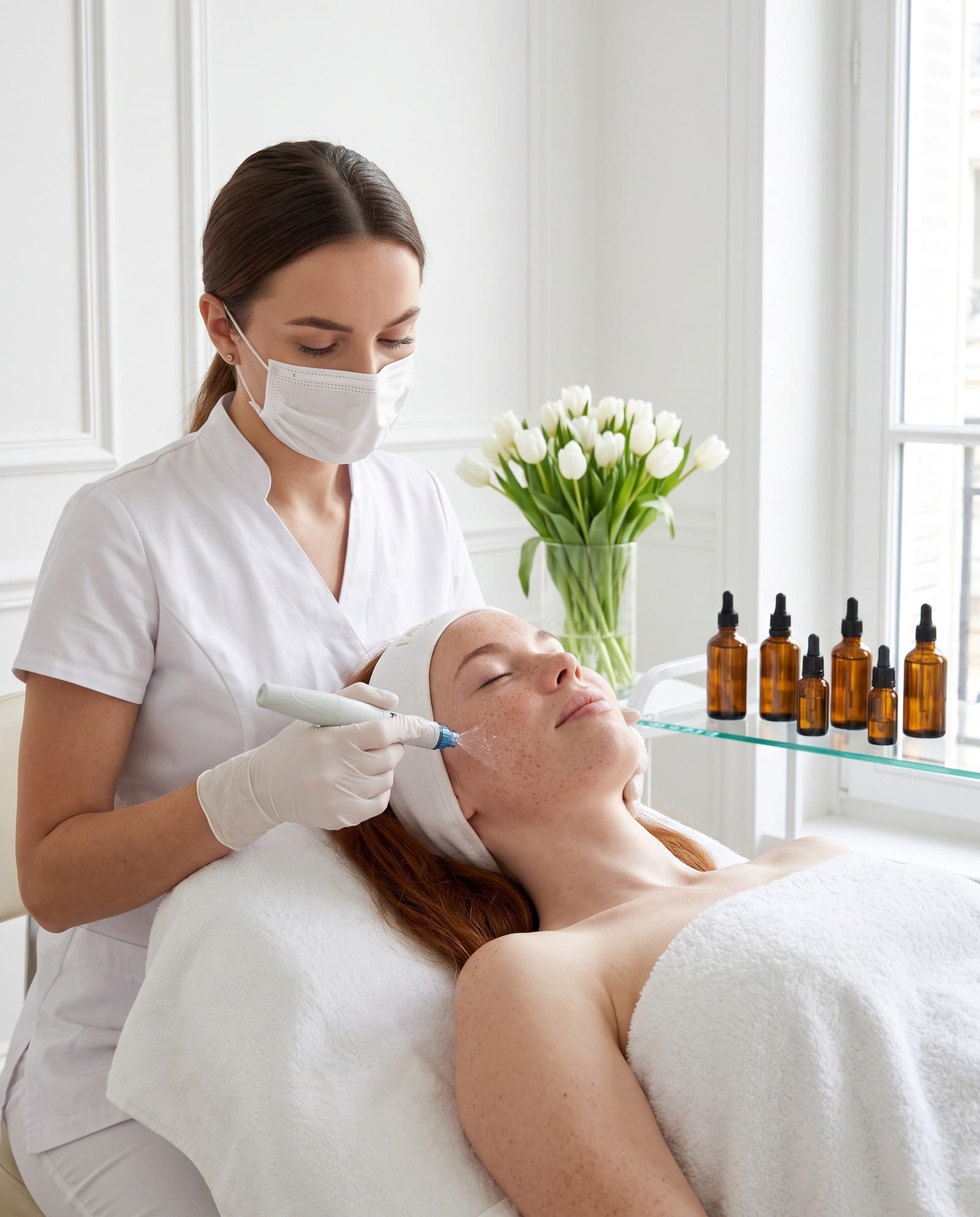
Classic mesotherapy is a series of injections delivering active ingredients directly into the dermis. The non-invasive version reaches the same goal differently: it uses ultrasound waves (sonophoresis) or electric current (electroporation) to temporarily increase epidermal permeability. In this window, active substances — hyaluronic acid, peptides, vitamins, regenerating ingredients — penetrate several times deeper than with standard application.
- 01
Skin cleansing
Removal of sebum, cosmetic residue and dead skin cells — skin needs to be clean for ingredient transport to work effectively.
- 02
Active cocktail application
A formula matched to your concern is applied to the skin: hydration, barrier repair, reducing irritation or evening out skin tone.
- 03
Non-invasive transport
The device head carries the ingredients deep into the skin — you feel the effect during the session as a light "pulsing" or warmth.
- 04
Sealing mask or SPF
Skin is more receptive after the treatment — the final step locks in the effect and protects against sun exposure.
The whole treatment is pain-free and needs no anaesthesia. Afterwards, skin may be slightly flushed for a few minutes — similar to washing your face with warm water. There's no healing time, no scabbing, no visible marks. You leave the salon with the same plan for the day as before.
Specific concerns non-invasive mesotherapy can address
This isn't a generic "pampering treatment". The results men report after a few sessions are consistent and fairly specific:
- Post-shave irritation — reduced redness and burning; skin becomes less reactive with each subsequent shave.
- Dryness and tightness — hydration is restored in layers creams can't reach; the effect lasts longer than with standard skincare.
- Grey, fatigued skin tone — oxygenation and improved microcirculation often restore a natural tone with no visible intervention.
- Ingrown hairs and inflammation — with the right formula, mesotherapy can reduce skin's susceptibility to secondary infection along the shaving line.
- First signs of ageing — softer fine lines and overall improved skin firmness with regular sessions.
Non-invasive mesotherapy and shaving — timing the treatment
This is a common question: should you book the treatment before or after shaving? It depends on your goal. If you want to soothe already irritated skin — wait at least 24 hours after shaving, so micro-injuries have time to close. If you want to prepare skin for a demanding period (fieldwork, travel, important meetings) — booking the treatment 2–3 days ahead works best.
Shaving the day before the treatment
when this is the right choice
- skin has time to close micro-injuries
- facial hair doesn't interfere with product application
- full contact between the device head and skin
A few days before an important day
when this is exactly what you want
- skin at its best for the event
- visible improvement in tone and hydration
- time for any post-treatment redness to fade
How many sessions, and what comes next
One session gives a noticeable result, but repairing the skin barrier is a process, not a one-off action. For concerns built up over years of intensive shaving, we typically recommend several sessions at weekly intervals, followed by maintenance sessions every few weeks. Your cosmetologist assesses this individually after the first visit.
After the treatment, skin remains more permeable for a few hours — this is a window in which home skincare absorbs deeper than usual. It's worth making the most of it: a moisturising cream or serum applied that evening will absorb more efficiently than normal. On the other hand: avoid shaving for at least 24 hours, and skip saunas and intense exercise on the day of the treatment — skin needs time to settle.
Who this isn't for
Non-invasive mesotherapy is one of the safer beauty treatments, but there are situations where you should wait or choose a different method:
- Active inflammation or skin infections — the treatment could spread or worsen them; treat these first.
- Fresh sunburn or frostbite — skin is already damaged and needs recovery without intervention.
- Allergy to cocktail ingredients — ask about the formula before the treatment, especially if you react to cosmetics.
- Skin currently undergoing retinoid or strong acid treatment — increased sensitivity can cause unpredictable reactions.