The problem home care only partly solves
Most men wash their face morning and evening and consider that job done. The issue is that regular washing only removes surface debris — sebum, dead skin cells and environmental pollutants build up inside the pores, where no cleanser can reach. The result is comedones (especially on the nose and chin), visibly enlarged pores, and that characteristic oily surface that returns just hours after washing.
Then there's the specific issue of post-shave skin: every pass of the razor leaves micro-damage, and clogged pores make it harder for that skin to recover. This leads to irritation, small bumps around ingrown hairs, and an overall "worn out" look — even in men who shave carefully and use decent aftershave products.
How hydrogen facial works — step by step
Hydrogen facial combines several stages in one session. No complicated jargon — here's what actually matters at each step:
- 01
Cleansing and skin preparation
Surface debris and excess sebum are removed. This prepares the skin so the following stages work on a clean surface, not a layer of oil.
- 02
Enzymatic or acid peel
Gentle exfoliation of dead skin cells, with a soft loosening of pore "plugs". No mechanical friction — no irritation, no micro-damage.
- 03
Pore cleansing with a specialist head
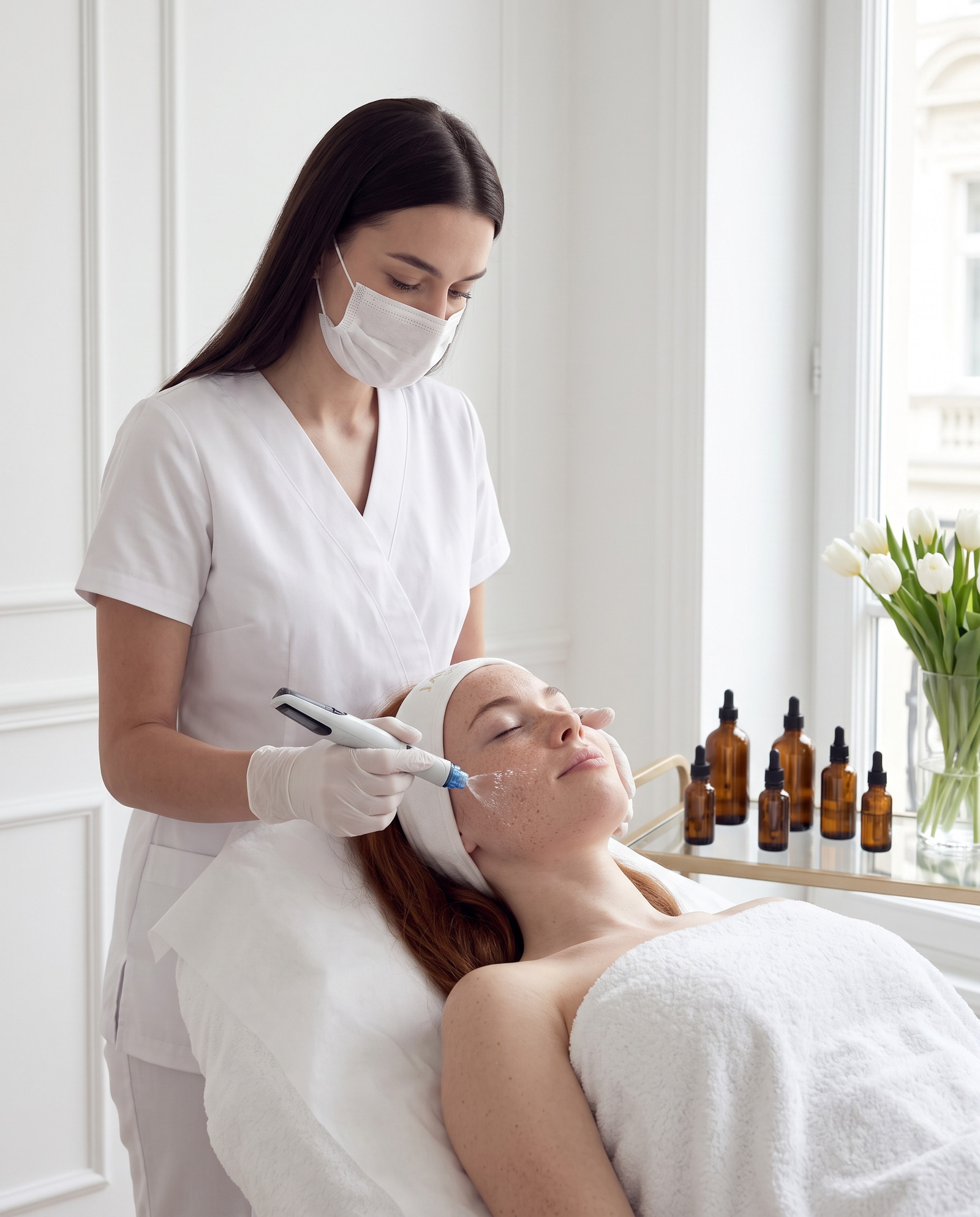
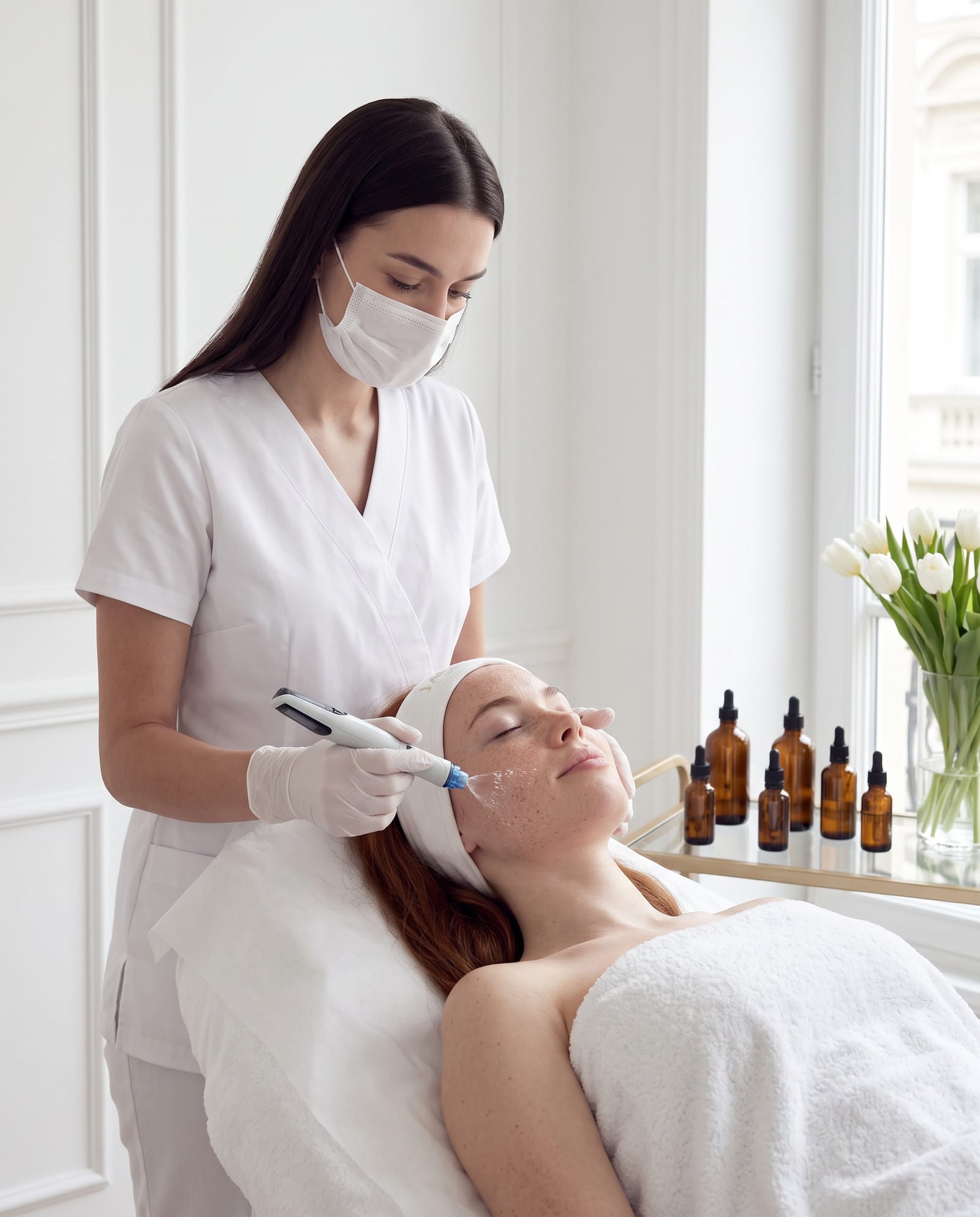
Using gentle suction and a flow of active ingredients, the device draws debris out of the pores — no squeezing, no manual extraction. This is the step that makes the biggest difference to how fresh skin looks after the treatment.
- 04
Hydrogen and active ingredient infusion
Hydrogen molecules penetrate deep into the skin, where they neutralise free radicals and calm micro-inflammation. Skin can feel calmer and less reactive after just one session.
- 05
Hydration and barrier repair
The final stage — rebuilding the protective layer, closing the pores, evening out the surface. Skin isn't "irritated after treatment" — it's ready for everyday life straight away.
A cosmetologist performs the whole session. It needs no anaesthesia, has no "pain zone" and no recovery period. You leave with skin that looks and feels noticeably fresher, without the tell-tale redness that would give away where you'd just been.
Manual extraction vs hydrogen facial — which works better
Manual extraction (squeezing out comedones by hand) is still used in salons — and for certain cases it makes sense. But for men with thicker, oilier skin, it's often either not enough or too aggressive:
Manual extraction
classic, used for decades
- effective for hard, deeply embedded comedones
- tailored to specific spots — precise targeting
- the cosmetologist assesses and responds in real time
Hydrogen facial
modern, comprehensive, zero downtime
- clears debris from pores without mechanical squeezing
- calms inflammation and hydrates at the same time
- zero redness afterwards — you can go straight back to people
In practice, the best results come from salons that combine both approaches — using hydrogen facial as the base and adding gentle manual work where needed. The result: deep cleansing without aggression and without a week of red skin.
After shaving and before an important meeting — when to book it
Hydrogen facial has no "required healing period" — you can go straight to a meeting afterwards. That's one reason men choose it over more aggressive treatments: you fit it into a normal week without rearranging your calendar.
A few situations where this treatment makes a particularly big difference:
- Before an important event (conference, photoshoot, wedding, major business meeting) — skin looks noticeably fresher, pores look smaller and the T-zone stops shining. Book 5–7 days ahead for best results.
- Regularly, every 4–6 weeks — if you have combination or oily skin, regularity stops the shine and clogged pores coming back with the same intensity.
- After an intense period (business trips, travel, smog, stress) — environmental pollutants and excess sebum from a neglected stretch get dealt with in one session.
- For ingrown hairs and post-shave irritation — deeply cleansed pores and calmed inflammation reduce the risk of ingrown hairs and improve skin condition under the beard.
What you can combine with hydrogen facial
Hydrogen facial works well on its own — but if you're building a regular skincare routine, it's worth knowing which treatments complement it:
Needle mesotherapy
Performed after the facial, once the skin's barrier of debris is gone — active ingredients absorb more effectively, and the hydrating and texture-improving effect is more noticeable.
Chemical peel (light)
For men with post-shave hyperpigmentation or acne scars — a peel complements hydrogen facial by reaching deeper layers of the epidermis. Your cosmetologist will decide whether to combine both in one session or keep them separate.
Oxygenating or anti-inflammatory mask
A direct continuation of the facial — it closes the pores, hydrates and reinforces the hydrogen effect. Some salons include it automatically as the final step of the treatment.