
Why shaving damages men's skin
Daily shaving is a form of micro-trauma repeated seven days a week. The blade doesn't just remove hair — it strips away the epidermis's protective layer, disrupts the lipid barrier and opens micro-cuts that let bacteria travel deeper into the skin. The result is always the same: irritation, redness, bumps, and for many men — full-blown inflammation. This isn't about poor shaving technique. It's about anatomy and daily wear.
Then there's the ingrown hair mechanism, especially painful for men with thick or curly beard hair. A cut hair curls back under the skin, triggering an inflammatory response indistinguishable from classic acne — except an acid cream won't fix it here. The skin responds with redness, hard bumps and painful pustules, which get re-injured with every subsequent shave.
How LED therapy works — no mysticism
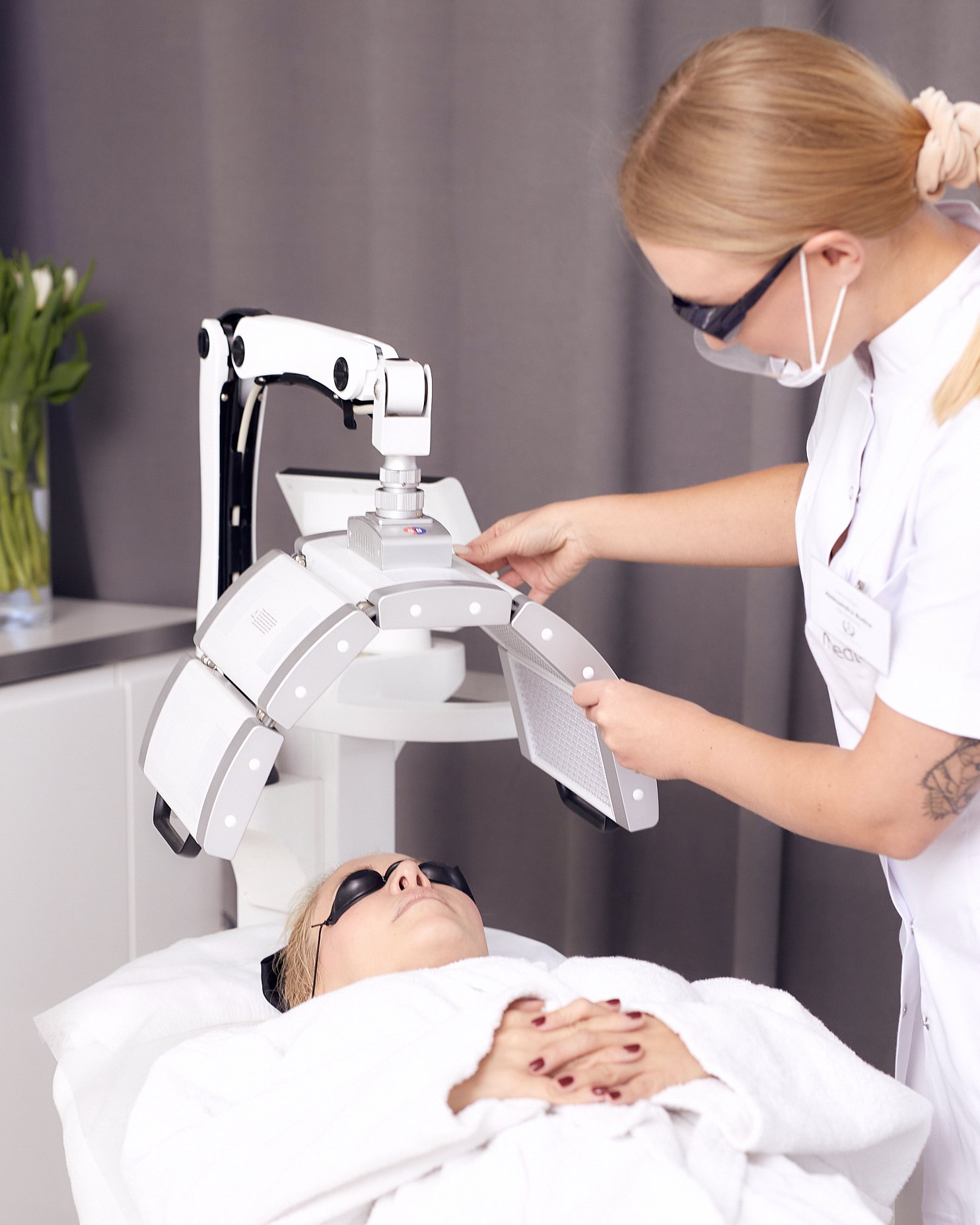
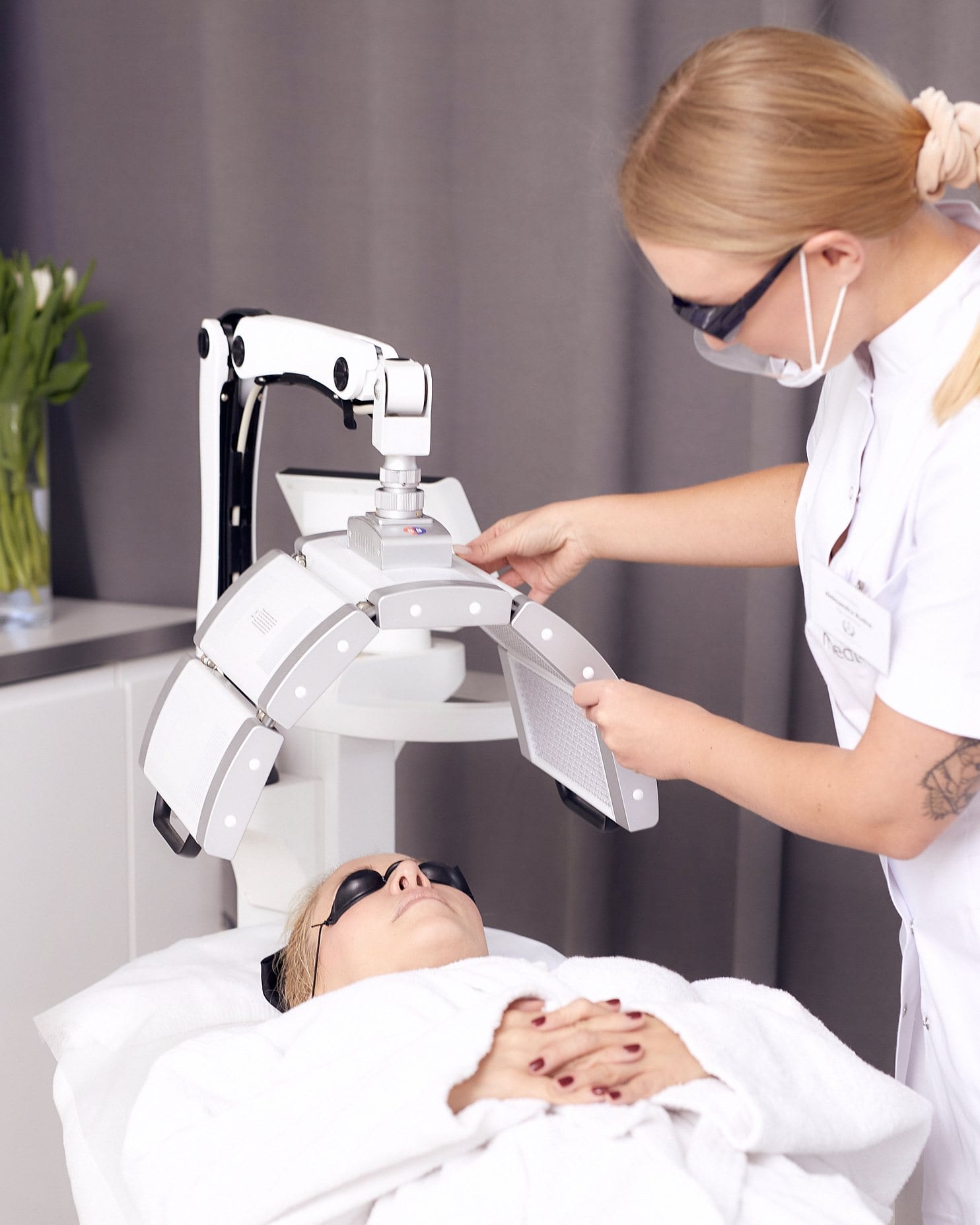
LED therapy exposes the skin to a lamp emitting light within specific wavelength ranges. There's no laser here, no ablation, no needles. Light photons penetrate the tissue and trigger biochemical processes — a physiologically documented phenomenon known as phototherapy or photobiomodulation. It sounds complex, but the practical effect is simple: skin starts to function better.
Red light
regeneration and calming
- supports collagen production in the dermis
- speeds up healing of micro-wounds from shaving
- may reduce the visibility of redness
- calms chronic inflammation
Blue light
fights acne-causing bacteria
- targets Cutibacterium acnes — the main acne-causing bacterium
- limits sebaceous gland activity
- reduces new inflammatory lesions
- may reduce the number of active breakouts
In practice, both ranges are often combined in a single protocol. Blue light attacks bacteria first, then red light calms and regenerates. For men with post-shave issues, this is a logical pairing: you eliminate the source of inflammation while speeding up repair of the skin barrier.
Who benefits most
LED therapy works well for men in several specific scenarios. Not all of them are dramatic, but each is a real, everyday problem.
- Acne between the ages of 20 and 45. Especially when combined with oily skin, stress and an irregular lifestyle. LED can reduce active lesions and help prevent new ones.
- Chronic post-shave irritation. Redness, burning and bumps that don't clear after a few days signal inflammation that needs intervention — not just a better aftershave.
- Ingrown hairs with inflammation. LED calms the inflammatory response around an ingrown hair and speeds up skin regeneration — reducing the risk of discolouration once healed.
- Skin after acute breakouts or infections. Red light can support healing and reduce the risk of post-inflammatory hyperpigmentation (dark marks left by spots).
- Men who want to look better without an "aesthetic treatment". Skin becomes calmer, less red and more even in tone — with no visible sign you've had anything done.
What the treatment involves — step by step
Zero needles, zero laser, zero chemicals. You lie down, a lamp works over your face. It doesn't hurt, doesn't sting, and requires nothing afterwards beyond standard SPF if you're heading out into the sun. It's one of the few treatments you can go straight from into a meeting.
- 01
Consultation and cleansing
A short conversation about your skin's condition and your goal — to select the right protocol parameters. Skin needs to be cleansed, free of products that block light penetration.
- 02
Light exposure
You lie down wearing protective goggles. The lamp works over your face. You won't feel much — maybe gentle warmth from the red light. The session takes just over ten minutes.
- 03
Serum and hydration
After the session, we apply serum and moisturiser to boost the regenerative effect and rebuild the skin barrier.
- 04
Leave with zero downtime
No redness after the treatment, no flaking, no need to stay home. You leave and carry on as normal.
LED therapy results build up over time — one session is a good start, but a series of sessions gives noticeably better results than a single visit. We usually recommend the first sessions weekly, then spacing out maintenance sessions. Your skin and your cosmetologist set the pace together.
LED vs other methods — what to choose when
Men often ask: "wouldn't a good peel do the same thing?" or "isn't this the same as a UV lamp?" No — and the distinction matters.
Acid peels work on the surface — removing dead skin cells, evening out skin tone, unclogging pores. LED works deeper, in living tissue, at the cellular level. This isn't competition — these are two different levels of working with skin. For men with acne and post-shave irritation, the best results often come from combining both: first cleanse the skin (for example, with a gentle enzyme peel), then follow with a series of LED sessions to reduce inflammation and support regeneration.
Activated charcoal cleansing
Effectively unclogs pores and reduces oiliness before a series of LED sessions — skin responds better to light exposure when it's been deeply cleansed.
Microdermabrasion
Mechanical smoothing and removal of dead skin cells. Combined with LED, this can speed up results in evening skin tone and reducing post-inflammatory marks.
Acid peel (AHA/BHA)
For skin with active blackheads and uneven texture — acids cleanse, LED regenerates and calms. Done sequentially (not in the same session), they form a complete protocol.
How often, how many sessions, and what to expect
Keep your expectations realistic — this isn't a treatment that "fixes your face" after one session. LED therapy is a regular tool, like the gym: results are proportional to consistency, not the intensity of a single session.
- After the first 2–3 sessions: many people notice their skin generally calming down — fewer active lesions, less post-shave redness.
- After 4–6 sessions: a clearer reduction in the number of breakouts, improved texture, better tolerance to shaving.
- During the maintenance phase: one session every 2–4 weeks can help maintain results and prevent relapses.
- Spot marks (post-inflammatory hyperpigmentation): red marks may fade more slowly — a few weeks to a few months, depending on your skin.
An important point: LED works best as part of a wider protocol, not as the only change in your routine. Men who also reduce friction, use simple hydration and keep their hands off active lesions get better results than those who come in once a month and go back to the same damaging routine.