Why shaving treats skin this way
Every shave is essentially a mechanical peel of the entire face — the razor doesn't just remove hair, it takes the outer layer of the epidermis with it. In healthy skin, the epidermal barrier rebuilds efficiently, and within a few hours it's back to normal. The problem starts when this barrier is chronically weakened, or when the blood vessels just below the surface are naturally more reactive. Then shaving stops being a neutral ritual. Every shave becomes a micro-injury, and the skin never fully returns to baseline.
On average, men shave several times a week for decades. The cumulative mechanical strain on the cheeks, neck and upper lip is significant. Add aggressive products — alcohol-based aftershaves, harsh antibacterial gels — plus hot water and no moisturising afterwards, and the vascular compensation mechanism has to work harder to keep tissue perfusion going. You see the result in the mirror: constant, diffuse redness that, over time, doesn't fully fade even after a longer break from shaving.
Temporary versus persistent redness — how to tell them apart
This distinction matters, because treatment and prevention differ for each. Temporary irritation after shaving is a reactive inflammatory response — it settles within an hour and usually leaves no trace. Persistent redness is something else entirely.
Temporary irritation
what happens and when it settles
- appears immediately after shaving
- fades within an hour without any intervention
- no burning sensation at rest
- no visible thread veins
Persistent redness / broken capillaries
signs you shouldn't ignore
- redness lasts for hours or is constant
- skin burns or stings for no clear reason
- visible red or purple thread veins on the cheeks/nose
- worsens after alcohol, hot food or exercise
Broken capillaries — what they are and where they come from
What's commonly called "broken capillaries" are telangiectasias — permanently dilated, fine blood vessels in the upper layers of the skin. They appear as red, pink or purple threads, networks or dots — most often on the cheeks, sides of the nose and chin. They don't hurt or itch, but they permanently make skin tone uneven.
- Genetics — reactive vessels are often inherited from your father or grandfather
- Chronic irritation — years of daily shaving without letting the epidermal barrier recover
- Temperature exposure — sudden shifts: cold outdoors → hot shower, sauna
- Alcohol — repeated vessel dilation leads to permanent widening
- Long-term corticosteroid use — for instance, hydrocortisone creams used "for irritation" — thin the skin and weaken vessel walls
- Rosacea — broken capillaries are one of its earliest symptoms
Important to know: broken capillaries don't fade on their own. You can stop new ones forming by changing your routine, but the ones already visible need laser or lipolaser closure. A vitamin C cream will cover them cosmetically for a few hours, but it won't get rid of them.
What actually works — from home routine to the salon
Before the salon comes into play, there are a few changes to your daily routine that can meaningfully limit new damage and reduce skin reactivity. This is the foundation — without it, treatment results don't last as long.
- 01
Water temperature — the first thing to change
Hot water before shaving opens the pores, but it also rapidly dilates blood vessels. Rinsing with cold water at the end helps a little, but it's better to use lukewarm water throughout. Your face doesn't need to be scalded — it just needs to be soft and ready for shaving.
- 02
An alcohol-free aftershave product
Classic aftershaves containing ethyl alcohol disinfect, but they also aggressively disrupt the lipid barrier. Switch to a product with allantoin, bisabolol or niacinamide — these calm the inflammatory response instead of intensifying it.
- 03
Moisturising right after shaving (not just in the evening)
After shaving, skin loses water faster than usual — the epidermal barrier is mechanically damaged. A light cream with ceramides or hyaluronic acid, applied right after shaving, seals this "leak" and shortens the reactive window.
- 04
Daily SPF protection
UV radiation is one of the main factors worsening telangiectasias and redness. Men tend to avoid SPF at all costs, yet a daily sunscreen is probably the single most effective way to prevent visible broken capillaries — especially if you spend a lot of time outdoors.

In-salon treatments — what and why
We have tools that work on a level creams simply can't reach: closing vessels, rebuilding the barrier, calming reactivity — with measurable, not just cosmetic, results. For men with sensitive skin and visible vascular changes, we usually combine two approaches.
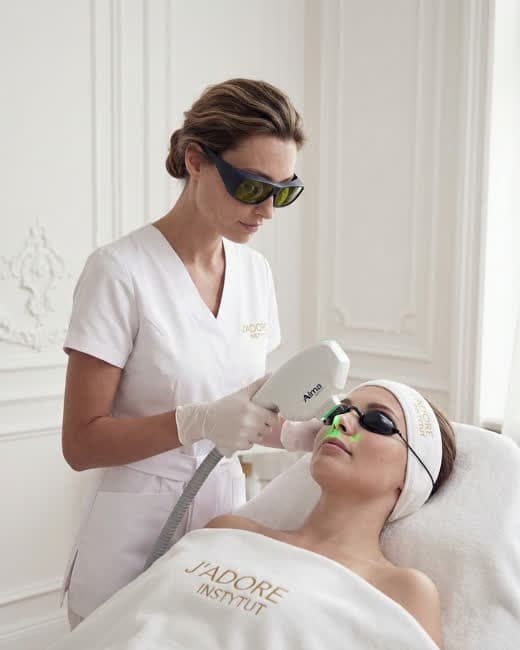
Vascular laser
This targets haemoglobin directly in the dilated vessels — the energy closes the vessel without damaging surrounding tissue. Usually a few sessions in a series. Results after the first session are often clear — broken capillaries fade or disappear. For men: facial skin is thicker, which may call for higher energy settings. That's why a good therapist always adjusts parameters individually.
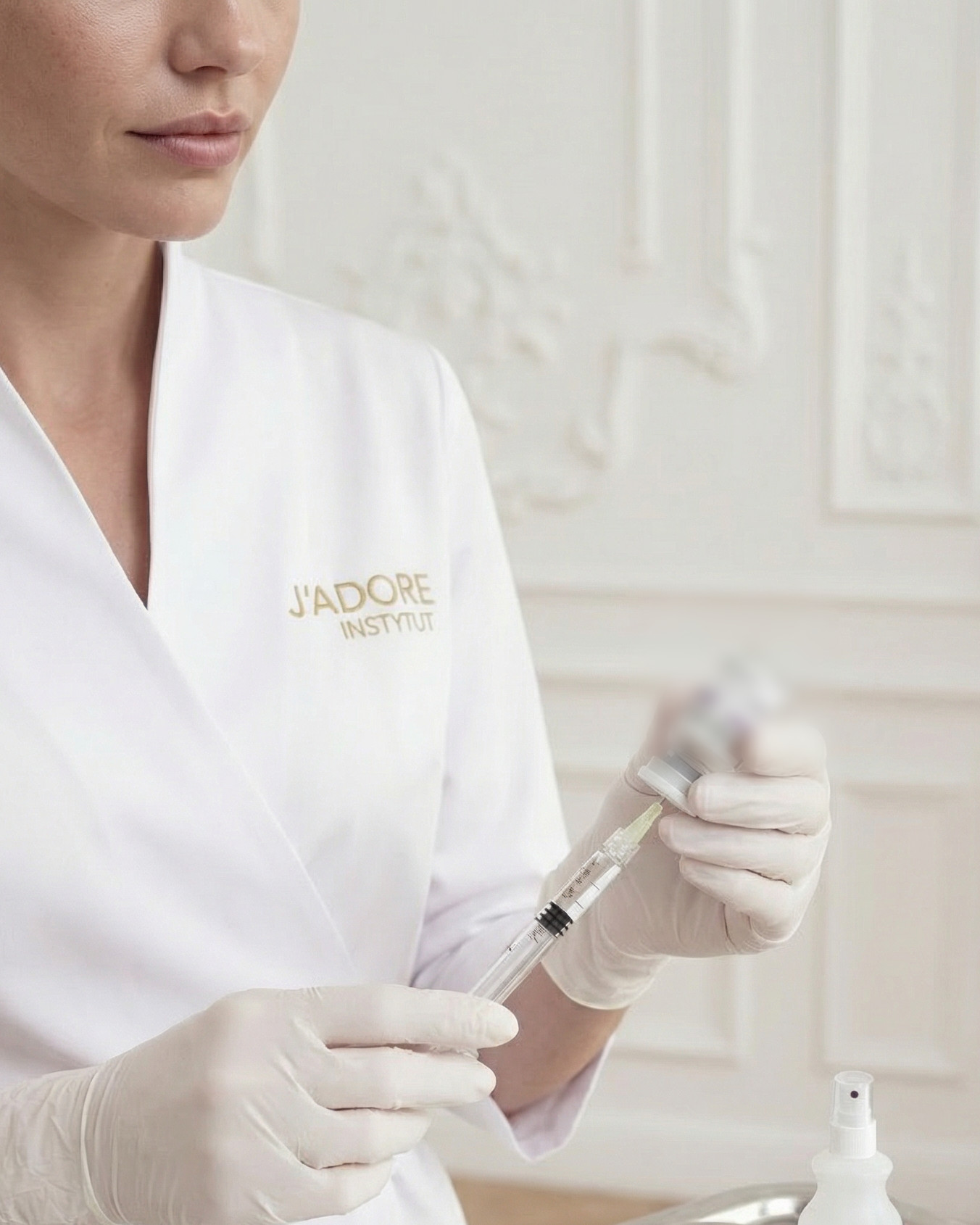
Needle mesotherapy with a vascular cocktail
This delivers vessel-sealing substances and capillary-strengthening compounds (vitamin C, hesperidin, rutoside) directly into the dermis. It won't close existing vessels as effectively as a laser, but it clearly reduces reactivity and helps prevent new damage from forming.
Skin-care cosmetology (series)
Treatments designed for vascular and sensitive skin — they calm chronic inflammation, rebuild the lipid barrier and reduce vascular overreactivity. Often used to prepare skin for laser treatment or to maintain results afterwards. For men with very reactive skin, this is a good starting point before more intensive methods.
Sensitive skin in men — a myth worth debunking
Sensitive skin in men is a biological fact — thicker, but with more reactive vessels, especially in areas of dense hair growth. It's not a weakness, and it's not "a woman's thing". Professional care for vascular skin is now standard for men who want to look good and stop wasting time masking what can actually be treated.
A practical rule: if your skin's redness fades in under an hour after shaving, focus on your products and technique — that might be enough. If you look like you've just stepped out of a sauna every day, and broken capillaries keep becoming more visible, it's time for a consultation — not another drugstore cream.