Why oily skin can feel tight
Skin has two independent hydration systems: the lipid system (oils, the barrier) and the water system (cellular hydration levels). You can have excess sebum — giving that shine and visible pores — while your epidermis lacks water at the same time. This is called dehydration, not dryness. Dry skin is a type — you either have it or you don't. Dehydrated skin is a condition — it can affect oily skin too.
The result? Skin feels tight after washing, looks grey and dull — not from a lack of oil — while the T-zone shines by midday, as the sebaceous glands try to "repair" the damaged barrier. The more you dry it out with mattifying products, the more you fuel this cycle. Sebum increases. The tightness doesn't go away.
What damages the hydrolipidic barrier in men
For men, there's an extra factor: shaving — whether with an electric razor or a blade. Every pass removes not just hair, but also a layer of the epidermis's protective barrier. With daily shaving and no time to recover, the barrier breaks down gradually. On top of that:
- Alcohols in shaving products and toners — they mattify and dry the skin quickly, but within hours the sebaceous glands respond with compensatory production.
- Hot water — opens pores and literally washes lipids out of the barrier. Cold or lukewarm water does the same, but far more slowly.
- Gels containing SLS/SLES — harsh surfactants found in cheaper cleansing gels. They remove sebum very effectively — along with the rest of the protective lipids.
- Skipping moisturiser — "I have oily skin, I don't need a cream" is a belief that guarantees dehydration.
Moisturising oily skin — without the greasy-film effect
The main worry with oily skin: "if I apply a cream, I'll look like I haven't washed." It's a fair concern — but it's about the formula, not moisturising itself. Products designed for oily and combination skin are usually light gels, emulsions or fluids. They absorb within seconds and leave no film on the surface.
What hydrates without shine
ingredients safe for oily skin
- hyaluronic acid (draws water into the cells)
- niacinamide (regulates sebum + hydrates)
- glycerin (lightweight humectant)
- panthenol (repairs the barrier after shaving)
What clogs skin and fuels the problem
ingredients to avoid with oily skin
- heavy mineral oils and petroleum jelly (petrolatums)
- denatured alcohol (alcohol denat.)
- heavily oily balms and night creams
The key moment is applying moisturiser right after washing — while skin is still slightly damp. Humectants (hyaluronic acid, glycerin) draw water from the surrounding air and hold it in the epidermis. Apply them to dry skin in a dry room, and the effect reverses — they pull water out of the skin instead.
Cleansing — where the problem usually starts
Skincare for oily skin usually focuses on creams. That's a mistake. The core problem lies in cleansing. Harsh cleansing gels are the number-one cause of dehydrated oily skin in men — they strip away not just sebum, but also the ceramides and lipids that build the barrier.
- 01
A gentle cleanser (not mattifying)
Look for a product without SLS, without alcohol, at a pH of around 5.5. It cleans away sebum without disturbing the barrier. A simple test: after washing, skin shouldn't feel "tight" or "squeaky".
- 02
Lukewarm or cool water
Hot water strips away lipids. Cold water can irritate. Lukewarm is optimal. This matters most in the evening, when skin is already warm.
- 03
Apply moisturiser immediately
The window is about 60 seconds after washing — that's when humectants have something to bind to. Putting it off "for a moment" undoes the effect.
- 04
Skip alcohol-based toner
If you use a toner "to tighten pores", check the ingredient list. Denatured alcohol near the top means another round of drying in the cycle. Look for toners with niacinamide or azelaic acid instead.
When home skincare isn't enough
A consistent skincare routine can significantly improve your skin — but sometimes the problem runs deeper than the stratum corneum. If, after a month of consistent care:
- your skin still combines tightness with heavy shine,
- closed comedones or inflammatory lesions appear despite no lapses in your routine,
- your skin texture is uneven, with visibly enlarged pores,
- your previously "oily" skin has become sensitive and reactive — redness, stinging.
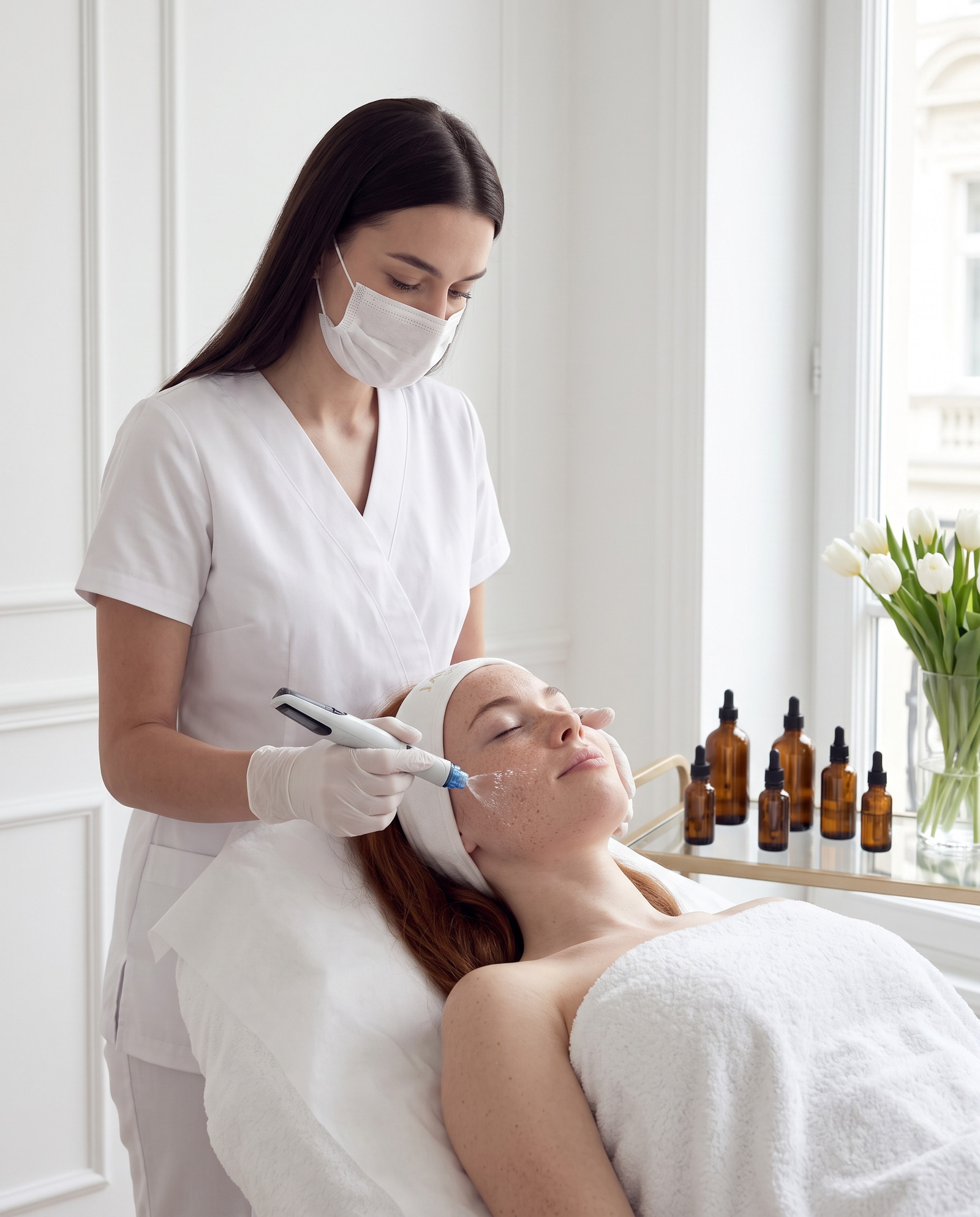
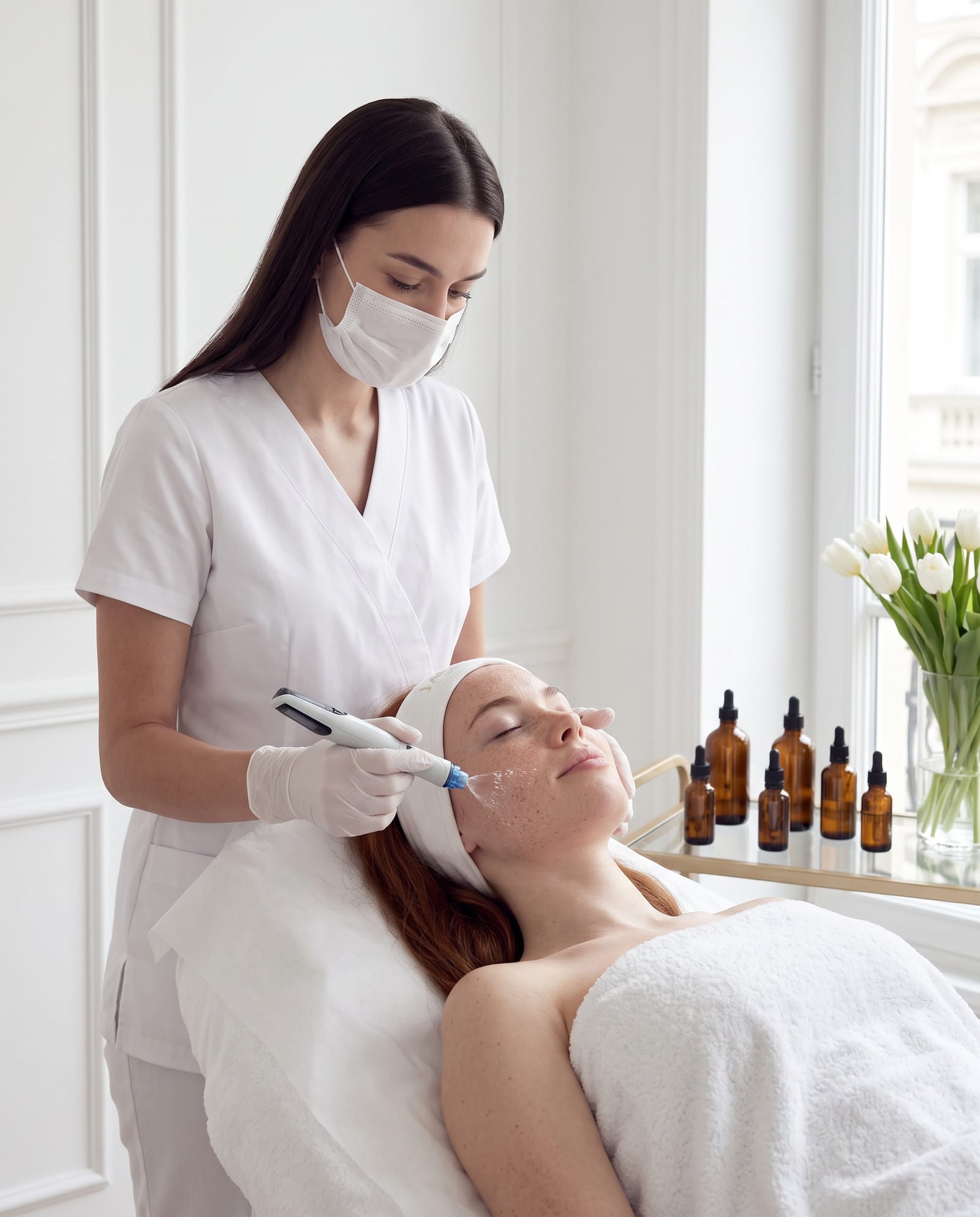
This signals that your hydrolipidic barrier may need professional support. Treatments focused on barrier repair and sebum regulation can reset this cycle relatively quickly — where home care alone only slows the spiral down.
Shaving and moisturising — an underrated connection
Men who shave daily or every other day face one extra stress factor for the barrier — mechanical damage to the epidermis. After shaving, skin often reacts in two ways at once: sebum increases (glands activated by warm water), and the skin becomes prone to irritation (a damaged barrier lets allergens and irritants through).
A post-shave protocol that doesn't damage the barrier: first, use an aftershave balm without denatured alcohol — look for panthenol or allantoin near the top of the ingredient list. Second, if you use an alcohol-based product (traditional aftershave), apply it only to nicks and cuts, not the entire face. Third, follow with a gentle moisturising cream or fluid right after the balm, while skin is still slightly damp.
Caring for oily skin by season — summer vs winter
Oily skin behaves differently depending on the season. In summer: high temperature and humidity activate the sebaceous glands — skin produces more sebum, and SPF filters in creams can feel heavy. A lightweight formula becomes the priority. Mineral SPF (without chemical filters) is often better tolerated by oily skin. In winter: central heating dries the air, which drives dehydration — skin may need more intensive hydration than in summer, even though it looks less oily.
Using one cream all year round is rarely the best approach for oily skin. A light fluid in summer and a slightly richer emulsion in winter — a simple switch that makes a real difference to how your skin feels and looks.