Two methods, one name — where does the confusion come from?
Both treatments share the same goal: delivering nourishing, regenerating substances into the skin — hyaluronic acid, vitamins, peptides, amino acids. The difference lies in how, and how deep, these ingredients reach the tissue.
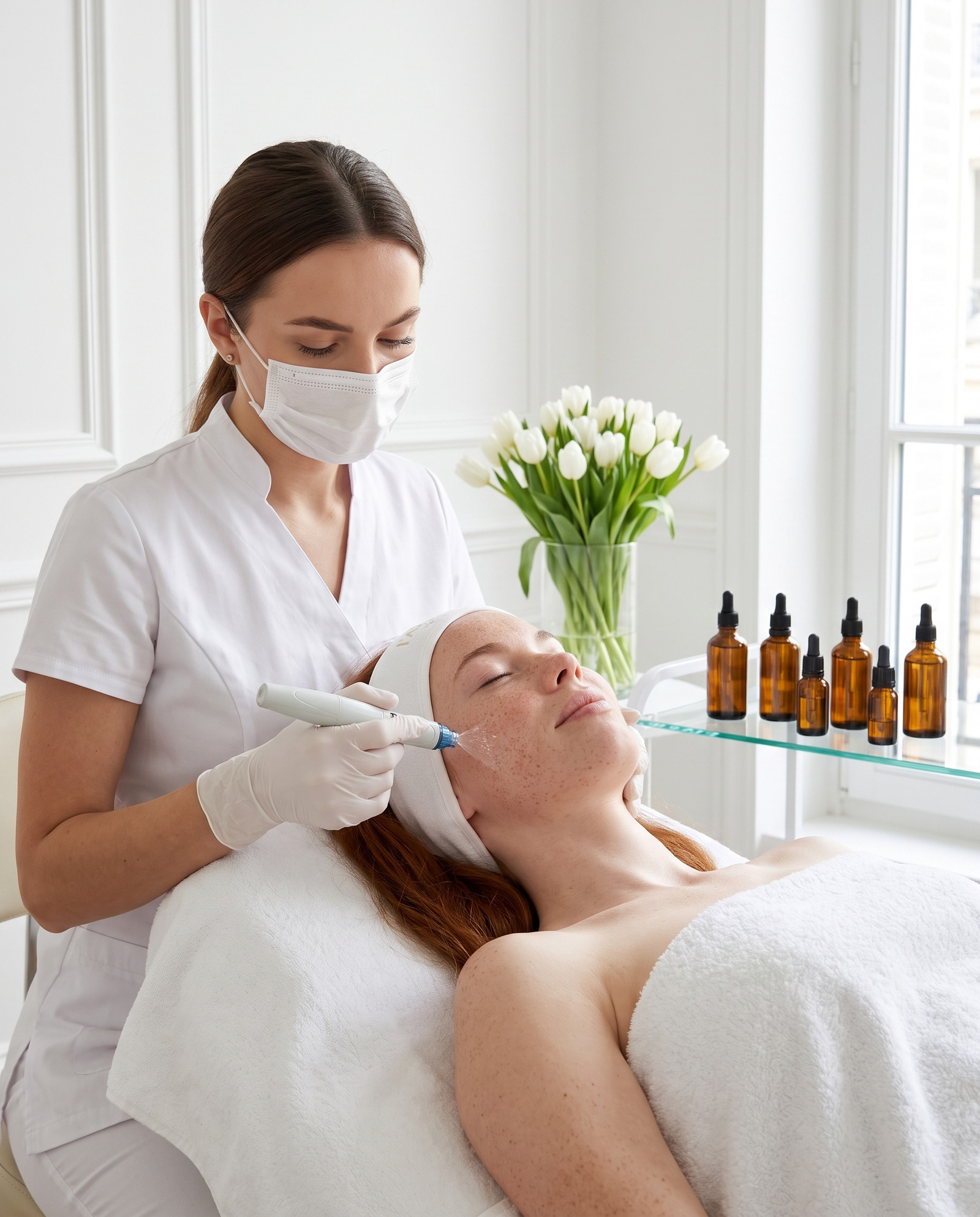
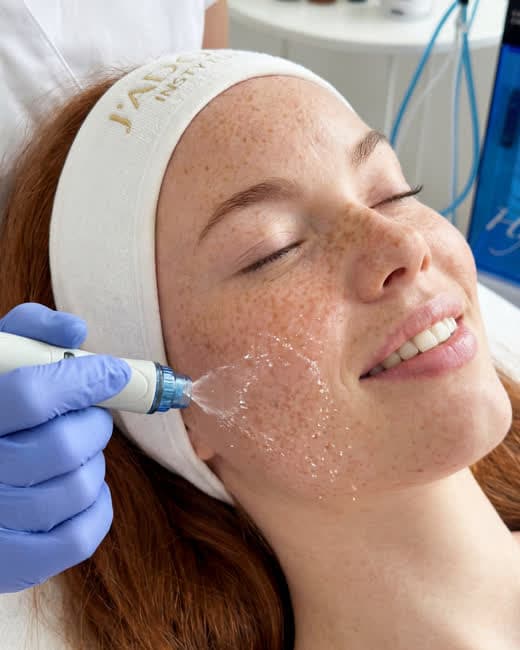
Needle-free mesotherapy
delivery through the skin without puncturing
- electroporation, sonophoresis or iontophoretic currents open temporary channels in the epidermis
- ingredients reach the surface and middle layers of the skin
- comfort similar to a classic skincare treatment
- no downtime, no redness after the treatment
- often used as a regular or complementary course
Needle mesotherapy
direct delivery into the dermis
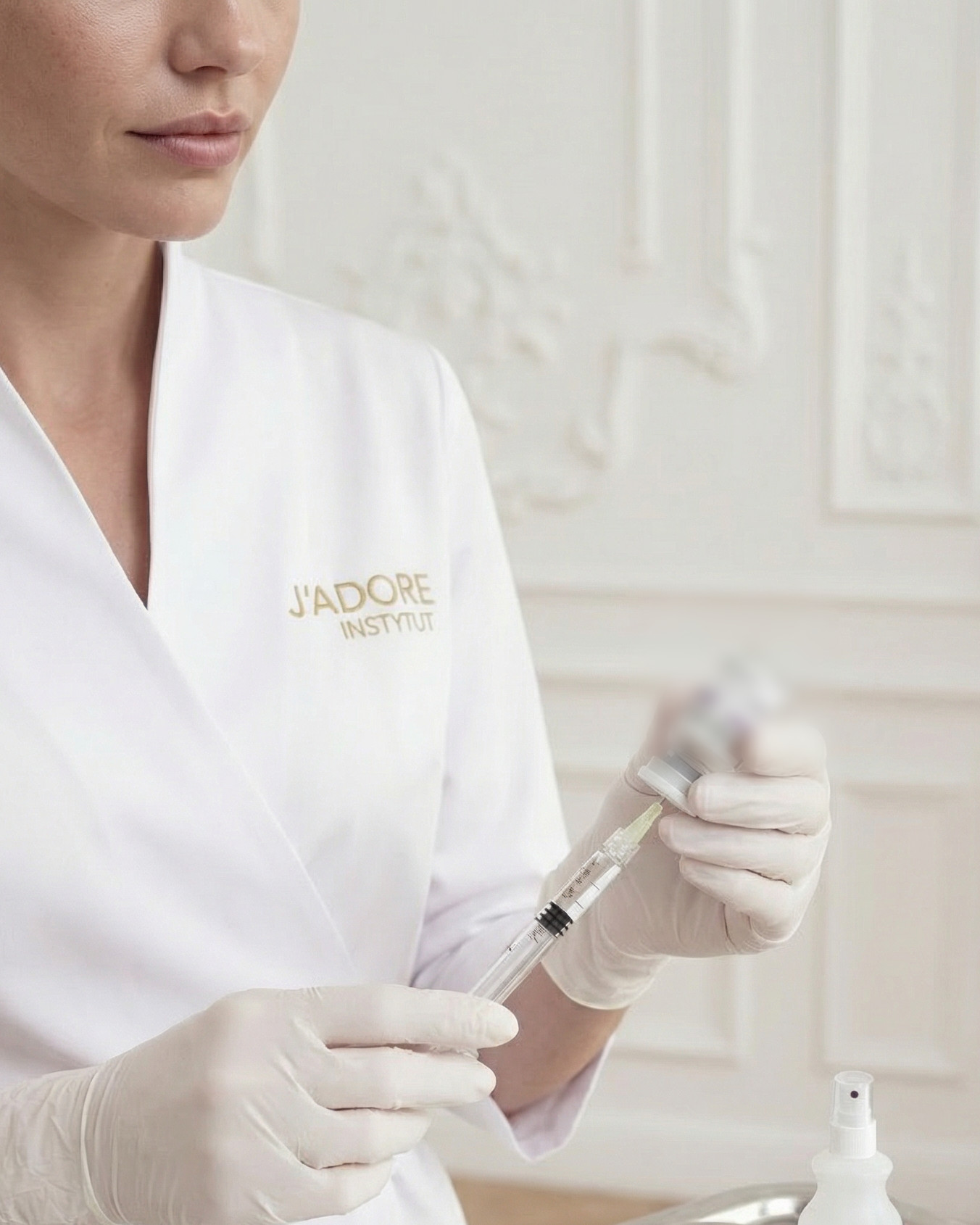
- fine needles or micro-punctures deliver the substance directly into the dermis
- deeper access — ingredients work exactly where collagen fibres form
- a more intense regenerative response from the skin
- temporary redness or micro-swelling may occur after the treatment
- recommended for more significant hydration deficits, loss of density, and scars
When the needle-free version may be enough
Needle-free mesotherapy is sometimes underrated — unfairly so. For many people, a regular series of needle-free sessions can deliver very satisfying results, especially when:
- Skin is generally tired, dehydrated or grey — the issue is a hydration deficit in the surface layers, not a deep loss of density
- You want to maintain results from previous needle sessions — needle-free works well as a maintenance treatment between series
- Skin is sensitive or reactive — no puncturing means fewer stimuli and a lower risk of reaction
- Zero downtime matters to you — you can leave straight after the treatment with no visible marks on your face
- You're just starting with regenerative treatments and want to see how your skin responds to more intensive ingredients
- Your goal is prevention — regularly replenishing hydration and nutrients before clear deficits appear
When to consider the needle version
The deeper the problem, the more the delivery depth matters. Needle mesotherapy can be the answer when needle-free results prove insufficient — or when the indications point to deeper intervention from the start:
- Noticeable loss of density and firmness — skin is lax, features seem to "drop", and the problem isn't surface hydration
- Acne scars and other atrophic scars — regenerating scar tissue requires a stronger stimulus and deeper ingredient delivery
- Stretch marks — like scars, these require work on deeper layers of the skin
- Hair loss or thinning — scalp needle mesotherapy delivers substances directly to the hair follicles
- Advanced dehydration or photoageing — when skin needs a more intensive push to regenerate
- No satisfying response to needle-free treatments after a full series
How to choose — a practical starting point
Instead of asking "which one is better", it's worth asking yourself two questions before your consultation:
- 01
Define the problem
Is your skin tired and dehydrated, but generally in good condition? Or is it noticeably lax, scarred, or thin and lacking firmness? In the first case — start with needle-free. In the second — it's worth discussing needle mesotherapy.
- 02
Check your schedule
Can you allow for 24–48 hours of possible redness after the treatment? If not — needle-free lets you leave straight away. If so — needle mesotherapy opens up more possibilities.
- 03
Assess your skin's history
If you have regular skincare treatments and your skin is well-prepared, you can move straight to needle mesotherapy with good results. If your skin has been neglected or is sensitive — starting with needle-free as a preparatory stage makes sense.
- 04
Consultation with a specialist
They will assess your skin condition, the depth of any deficits, and suggest the right method. The answer "start with needle-free and see" is just as valid as "go straight to needle mesotherapy" — it depends entirely on what the specialist sees.
Is it worth combining both methods?
Yes — and for many people, this approach delivers very good results. The logic behind combining them is simple: needle mesotherapy does the "heavy" regenerative work, while needle-free maintains and reinforces results between sessions.
Needle series + needle-free treatments every 2–3 weeks
A classic strategy: an intensive needle series (usually 4–6 sessions) reinforced with regular needle-free treatments to maintain results.
Needle-free mesotherapy + enzyme peel
The peel prepares the skin's surface, and needle-free delivers ingredients while the epidermis is more permeable. A good combination for regular skincare.
Needle mesotherapy + post-treatment protection and regeneration
Immediately after a needle session, skin needs strong regenerative support — some salons finish a needle session with a needle-free treatment using soothing, hydrating substances.
Scalp needle mesotherapy + oral supplementation
For hair concerns, treatment results can improve when supported from within — a trichology consultation and supplementation are a natural complement.