Why men's skin needs a different approach
Men's skin is around 25% thicker than women's, produces more sebum and — for at least a few decades of life — regenerates more slowly. Daily shaving mechanically irritates the surface and, more often than not, leads to ingrown hairs and micro-injuries that build up into a tough, uneven texture. Add exposure to factors men tend to ignore for longer — wind, UV, fatigue, stimulants — and the result is dull, greyish skin, enlarged pores and a roughness you can feel with your fingers.
Standard "for sensitive skin" exfoliating systems aren't the answer here. Men's skin needs a more mechanical stimulus — and that's exactly what microdermabrasion provides. Not a gentle enzyme peel with a mask, but controlled abrasion that effectively removes what's built up over months. The results are proportionally better than for women, simply because there's more to work with.
What microdermabrasion actually does — no sugar-coating
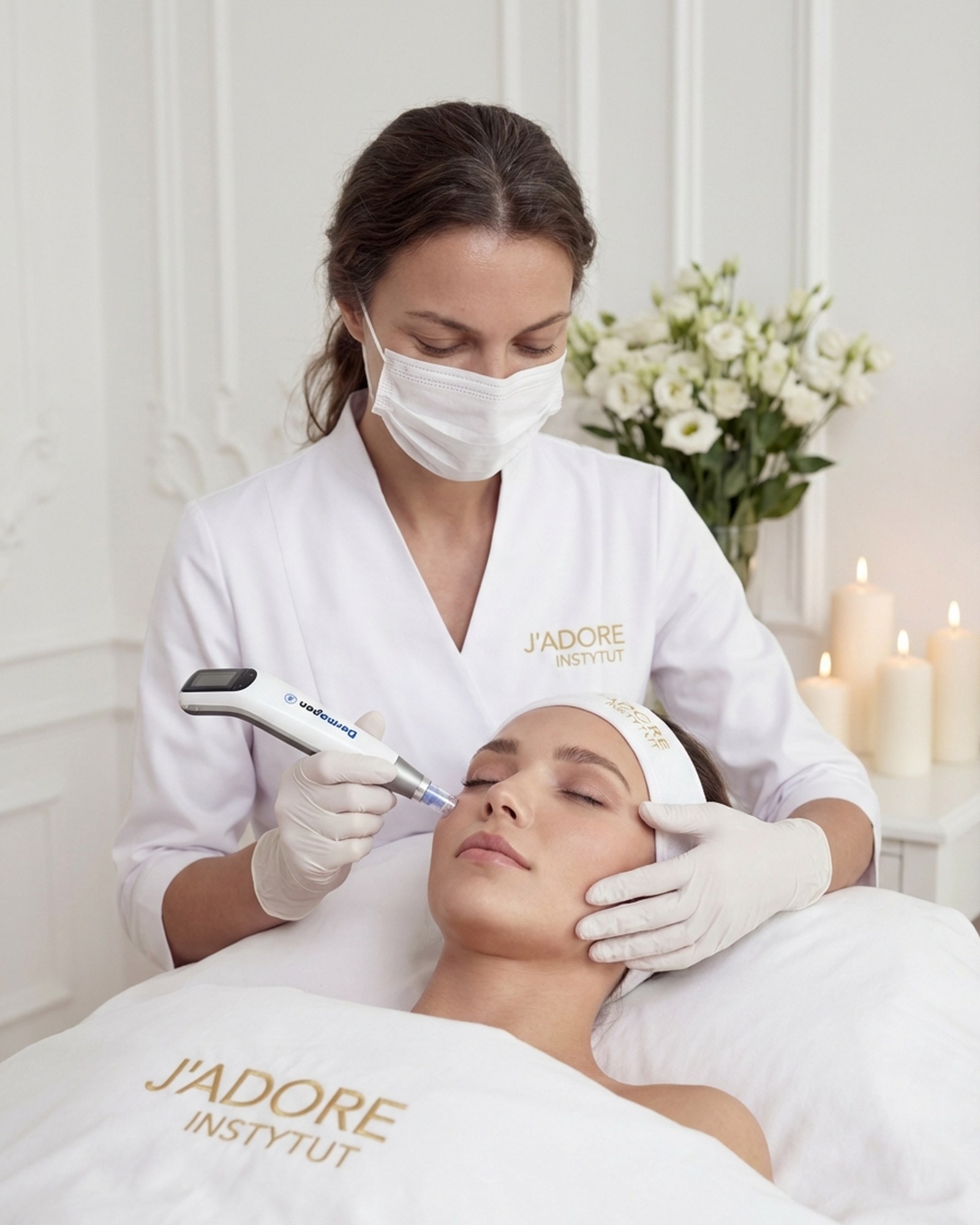
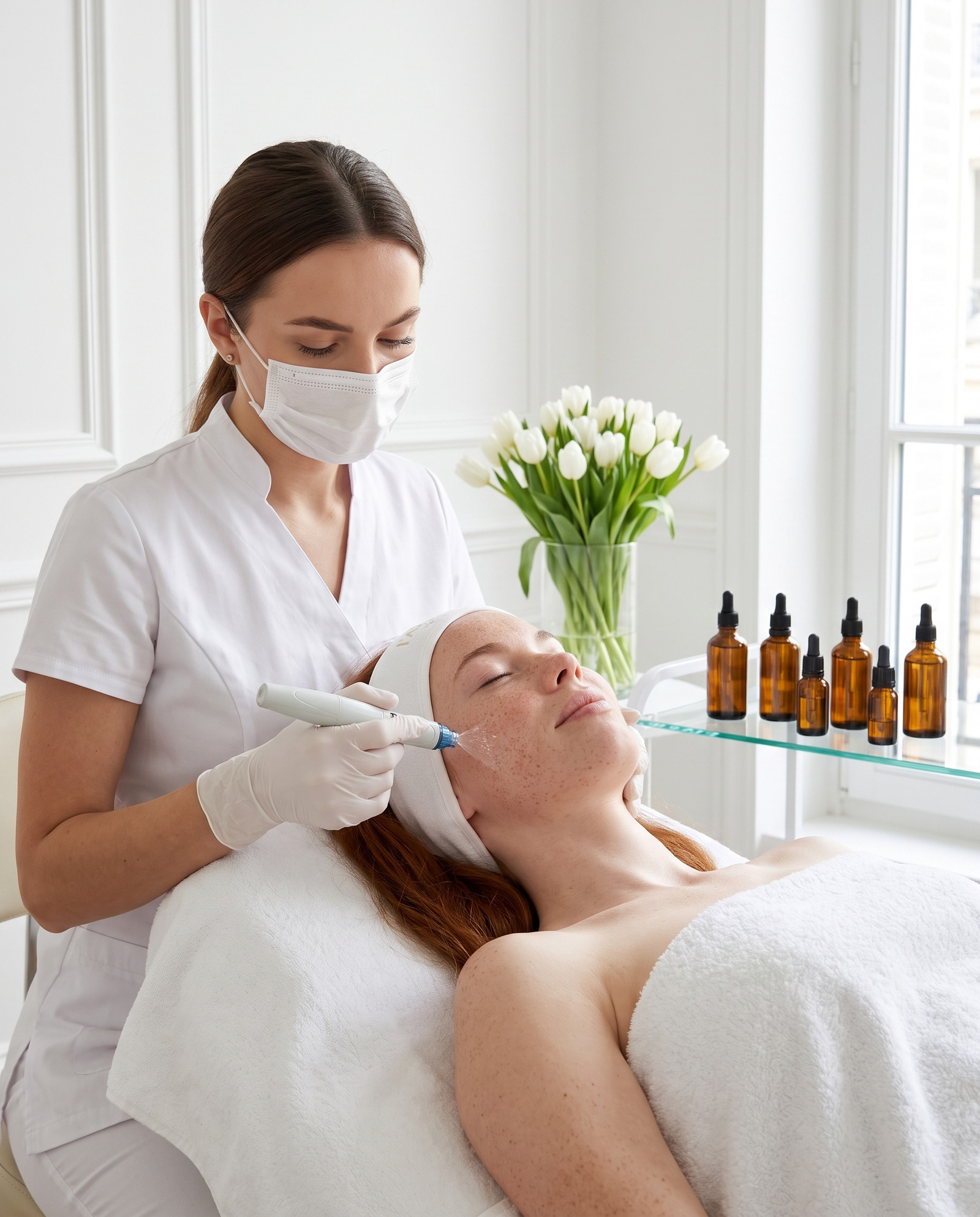
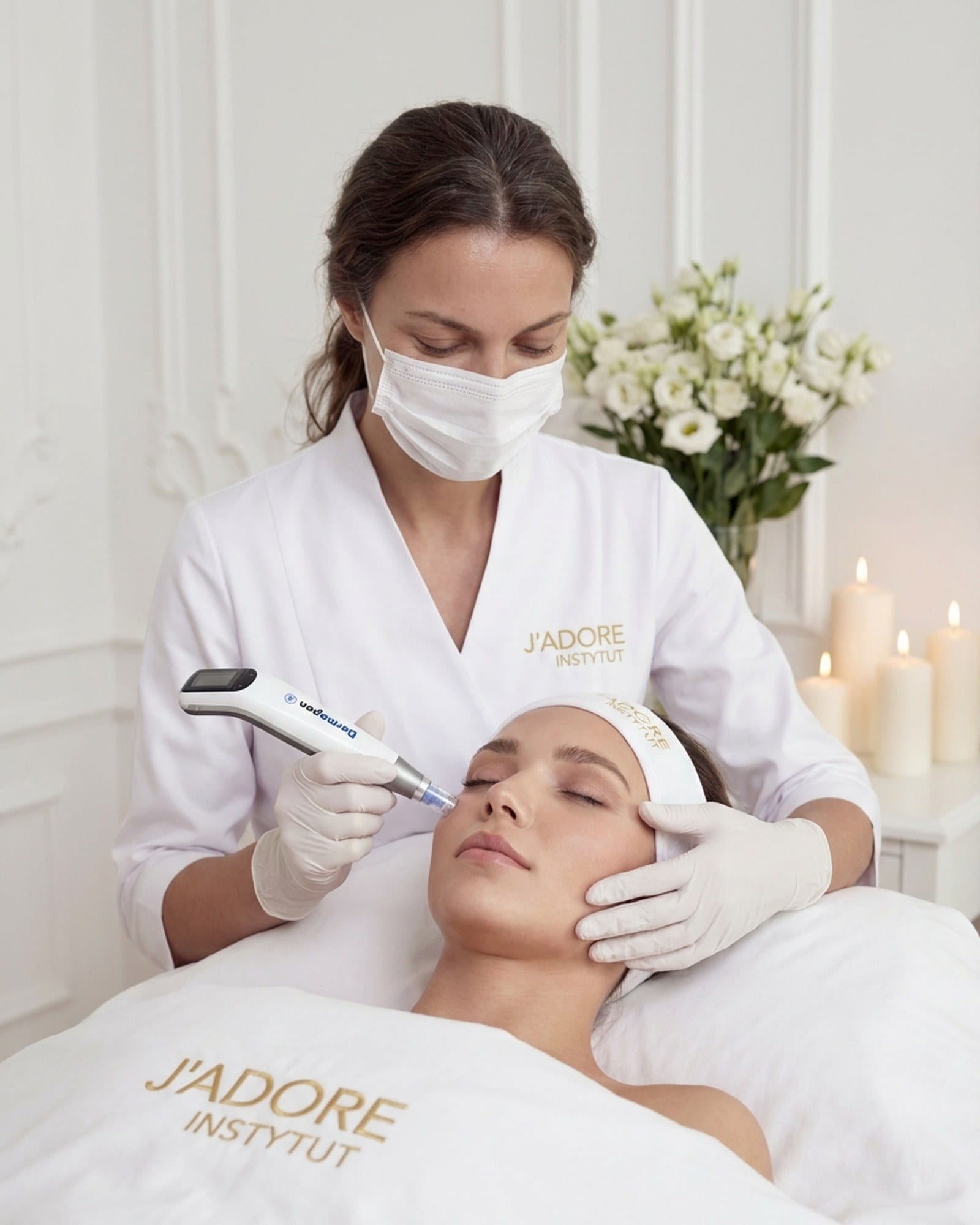
Microdermabrasion mechanically exfoliates the epidermis using a handpiece with precisely controlled abrasive crystals and simultaneous suction of the removed tissue. There are no needles, acids or electrical current involved. Your cosmetologist guides the handpiece over your skin in several passes — the intensity is controlled by settings, not by how much you can tolerate. It doesn't hurt. You'll feel a light pulling and vibration, similar to an electric shave on a gentler setting.
- Exfoliation of dead epidermal cells — mechanically, without the irritation risk typical of acids
- Pore unclogging — suction removes the debris sitting in the openings of sebaceous glands
- Collagen production stimulation — the controlled stimulus triggers repair processes in the dermis
- Improved absorption of active ingredients — after the treatment, skin absorbs serum far better than through unremoved dead epidermis
- Reduction in ingrown hairs — with regular treatments, this significantly reduces the problem on the neck and jawline
Results are visible immediately, as you leave the salon: your skin is noticeably smoother, brighter and fresher-looking — with no sign a treatment took place. The full effect appears a few days later, once your skin completes its natural regeneration cycle.
Who should try this — specific situations
Microdermabrasion isn't for everyone, for one simple reason. Check whether any of these situations sound familiar:
Good candidate
when the treatment works best
- grey or dull skin despite regular washing
- visible, enlarged pores, especially on the nose and chin
- ingrown hairs after shaving — bumps, redness, uneven texture
- uneven skin tone, sun spots or acne marks
- "thick" skin that resists cosmetics — products don't absorb
When to wait
temporary limitations
- active inflammatory acne with pustules and papules
- fresh cuts, wounds or shaving nicks
- active cold sores or other skin infections
- skin heavily irritated by retinoids or acids (pause for a few days)
Zero downtime — what that actually looks like
The question we hear most from men: "Will I look like I've had a burn afterwards?" The answer is no. With standard microdermabrasion, your skin might look slightly pink for a moment after the treatment — and that's it. No peeling, no scabbing, no need to hide indoors. Many clients book during a break between meetings and go straight back to work the same day.
- 01
Makeup removal and cleansing
Your skin is cleansed and degreased — the treatment needs a clean surface, free of cream, aftershave or serum.
- 02
Skin assessment and intensity setting
Your cosmetologist examines your skin and sets the treatment intensity based on epidermal thickness, pore condition and any problem areas.
- 03
Microdermabrasion
Precise passes with the handpiece across the whole face — usually several rounds over problem zones (nose, forehead, chin). It feels like a light pulling sensation, no pain.
- 04
Mask and hydration
After exfoliation, part of your skin's hydrolipidic barrier is temporarily removed — a regenerating mask and light hydration finish the treatment and restore skin comfort.
- 05
Leaving
Your skin looks smooth, slightly pink or completely normal. You can go straight back to work.
Ingrown hairs — an underrated benefit
This is a topic men rarely bring up directly, yet it's one of the most common reasons they come back a second time. Ingrown hairs after shaving are a mechanical problem: red bumps, uneven texture and dark marks after healing form on the neck, jawline and chin. Daily shaving doesn't solve the problem — sometimes it makes it worse.
Regular microdermabrasion keeps the epidermis thin and smooth in shaving zones — hairs meet less resistance as they grow and are less likely to curl back under the skin. For many people, after a few sessions the problem noticeably subsides, and the skin on the neck and chin becomes even instead of trapped in a constant cycle of bumps and micro-injuries. This isn't a guarantee of a full cure — but it's an effective, ongoing reduction.
One session or a series — when and how often
One session gives an immediate effect — smoother, fresher, brighter skin. If you're after a one-off reset before an important event — a conference, a wedding, a photoshoot, or getting back into shape after holiday — one session is enough. Results are visible straight away.
If you're addressing a specific problem, though — ingrown hairs, persistent hyperpigmentation, significantly enlarged pores, thickened texture — a series of sessions at regular intervals gives noticeably better results than a single intense one. Men's skin responds well to consistency: each session works on fresher epidermis, the collagen stimulus builds up, and results last longer.
Ultrasonic cavitation
Pore cleansing with ultrasonic waves before microdermabrasion — removes debris without mechanical friction, preparing the skin for deeper exfoliation.
Needle mesotherapy
Direct delivery of active ingredients (collagen, peptides, vitamin C) deep into the dermis — after microdermabrasion, the epidermis is no longer a barrier, so the effect is stronger.
Chemical peel
AHA/BHA acids act on different epidermal structures than mechanical abrasion — combining the two gives deeper, more comprehensive regeneration. Usually as separate visits, not on the same day.
The concerns keeping men away — and why they don't hold up
You still hear that "beauty salons aren't for men." You know where that comes from: an era when the only treatments on offer were designed for women, delivered by cosmetologists used to women's concerns. More and more salons, including J'ADORE, now have zones and protocols dedicated to men's skin — different pressure settings, different intensity, different aftercare products. You come in to solve a problem, not for a makeover.
- "People will know I've had something done" — after standard microdermabrasion, skin looks normal or better. There's no peeling, no redness lasting beyond a moment, and no visible traces.
- "It hurts" — the handpiece's mechanical pulling causes zero pain. Most clients describe it as a pleasant sensation.
- "My skin is too thick/tough" — that's not a problem, it's an advantage. Thicker skin can handle a more intensive treatment, and the results are proportionally better.
- "One session isn't enough, so what's the point" — one session gives a visible effect. A series gives a lasting one. You can start with one and judge for yourself.
- "This is for women" — men's skin produces more sebum, has a thicker epidermis and is more prone to ingrown hairs. Mechanical exfoliation addresses these problems directly.