Why acne scars don't fade on their own
A scar is a trace left by inflammation. Skin has healed the damage, but not neatly: collagen fibres settled in a chaotic pattern instead of the even alignment found in healthy tissue. The result is a dip, an uneven texture, a shadow that looks like a lunar surface under side lighting. A moisturiser won't touch this — it doesn't reach that deep, and it can't rearrange collagen that has already set.
Dermapen works differently. The needles mechanically disrupt this scar structure, signalling the skin to rebuild. Your body responds to controlled micro-injury the same way it responds to any damage — fibroblasts mobilise and produce fresh collagen. This time, though, because inflammation is minimal and controlled, the fibres align correctly. A scar doesn't disappear overnight, but after several sessions it becomes noticeably less visible: shallower, less shadowed, blended into the surrounding skin.
Enlarged pores — what actually shrinks them
A pore is the opening of a sebaceous gland and hair follicle. It enlarges when the walls of the channel lose elasticity — the skin around it sags, the pore "collapses" and looks bigger. Sebum and dead cells then fill the widened opening, making it even more visible. On the nose and cheeks, this is a classic problem, especially for men with combination or oily skin.
Dermapen addresses the root cause: it rebuilds collagen around the pore opening, which literally tightens the pore from within and restores its elasticity. Combined with an appropriate peel or mesotherapy — selected by your cosmetologist based on your skin — it works on two fronts: repairing structure and regulating sebum production. After a series of sessions, pores narrow measurably, and no longer need camouflaging or special care.
Skin after shaving — micro-injury scarring and irritation
Daily shaving is mechanical stress for the skin. In some men — especially those with tightly curled hair or sensitive skin — this accumulates as hyperpigmentation, redness and micro-scarring, which over time give the skin an uneven texture and a greyish tone. This isn't a matter of hygiene or shaving technique. It's the result of years of micro-injury without proper recovery.
- Post-inflammatory hyperpigmentation (PIH) — darker patches left by ingrown hairs and inflammation. Dermapen combined with vitamin C or a peel effectively lightens them.
- Uneven texture along the jawline and neck — the result of shaving micro-scars. Collagen regeneration evens out the skin's relief.
- Greyness and lack of radiance — skin that looks "dull" even after cleansing. Dermapen's micro-channels increase absorption of active ingredients several times over, and new collagen improves the epidermis's clarity.
What the treatment actually involves — no spin
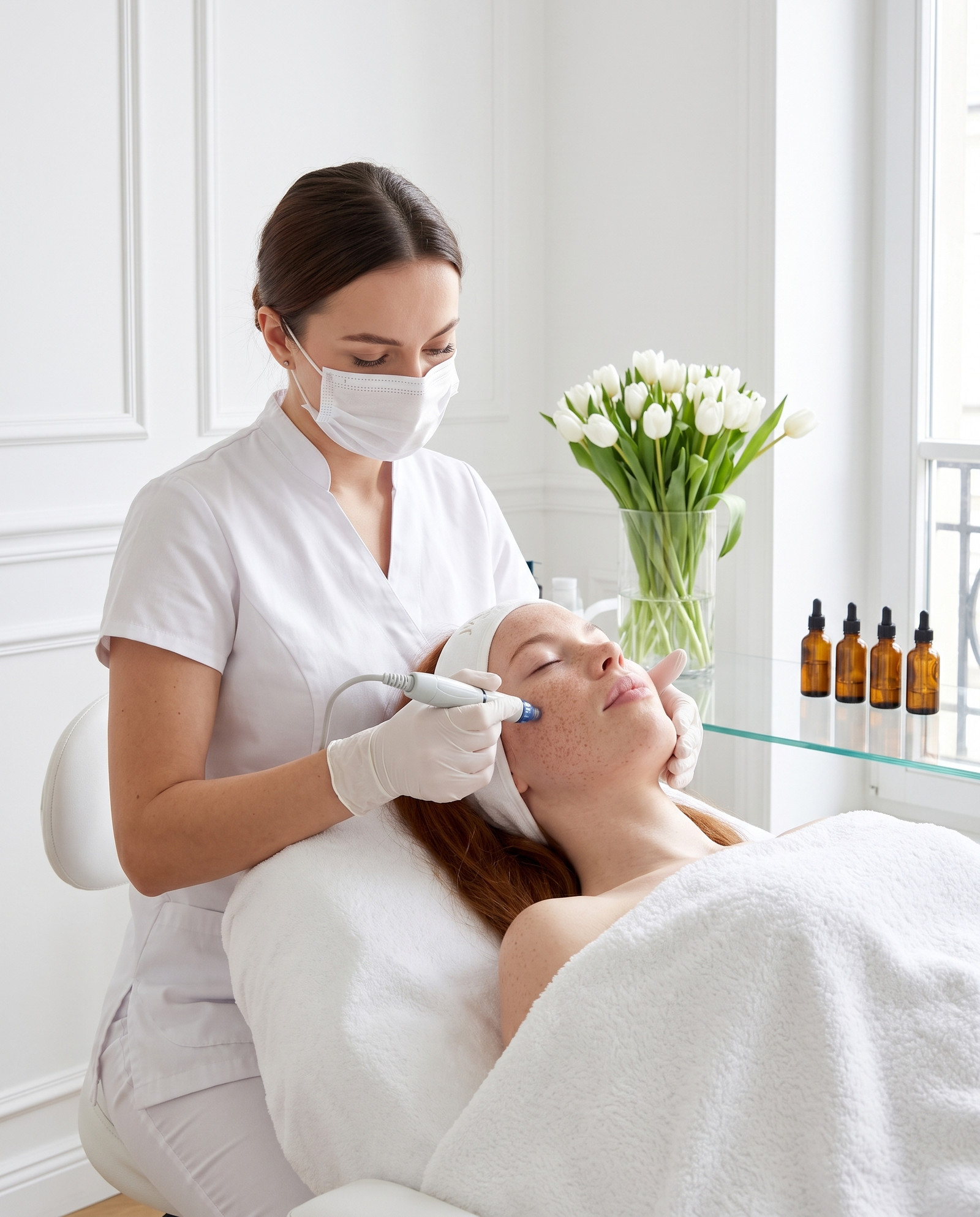
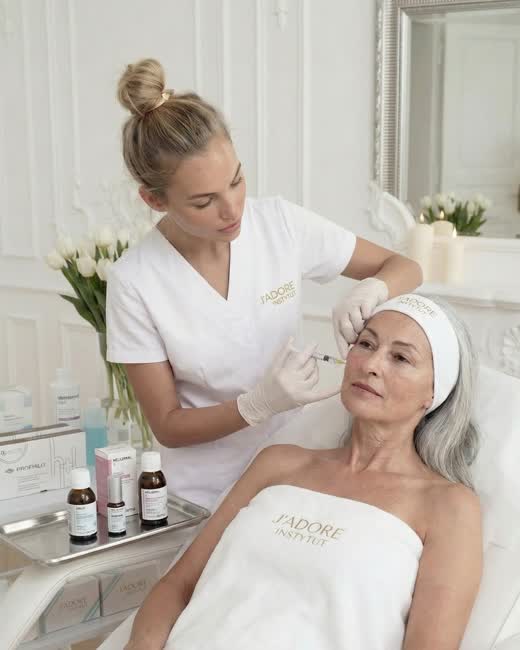
Numbing cream application comes first — it takes several dozen minutes to work. Your cosmetologist then moves the dermapen head across your skin. You'll feel tingling, mild warmth, and in places over bone, a slight discomfort. It isn't painful in any serious sense of the word. Duration depends on the area — the face alone takes just a few minutes.
After the treatment, your skin looks like it's been through an intense workout in the sun: red, slightly swollen. This lasts up to a day, two at most. For a few days, your skin will be drier than usual and may flake slightly. It's not visible from a metre away, but it's worth knowing. For 48 hours, skip the gym, sauna, close shaving and alcohol.
What you can expect
realistically
- gradual improvement after each session in the series
- scars shallower and less visible after 3–5 sessions
- pores narrowed, skin texture evened out
- skin denser and better nourished
What you WON'T get
no compromises
- an overdone, "done" look — this isn't filler
- downtime — you're back to your normal day the following day
- visible change to your features — we work on tissue, not on appearance
- dependency — your skin doesn't "regress" once you stop
Your cosmetologist determines the series after assessing your skin. This is usually 3–5 sessions, spaced several weeks apart, so your skin has time to produce new collagen between sessions. Results build progressively: each session adds to the result of the last. After the series, a maintenance session every few months is enough.
Dermapen vs laser — which to choose
This question comes up regularly. The short answer: both work, but differently and in different situations. Fractional laser is more intensive, works deeper, and can be more effective on deep scars in a single session — but it requires longer healing and isn't suitable for every skin type, especially darker skin tones. Dermapen is safer across all skin phototypes, healing is shorter, and it allows precise serum delivery directly during the treatment.
In practice, cosmetologists and doctors often combine both methods — laser for deeper defects, dermapen for finishing and regeneration between laser sessions. If you don't have time for a longer recovery, or you're just starting out with scar treatment, dermapen is a logical first step. You can always add laser later, once you've assessed how much more result you need.