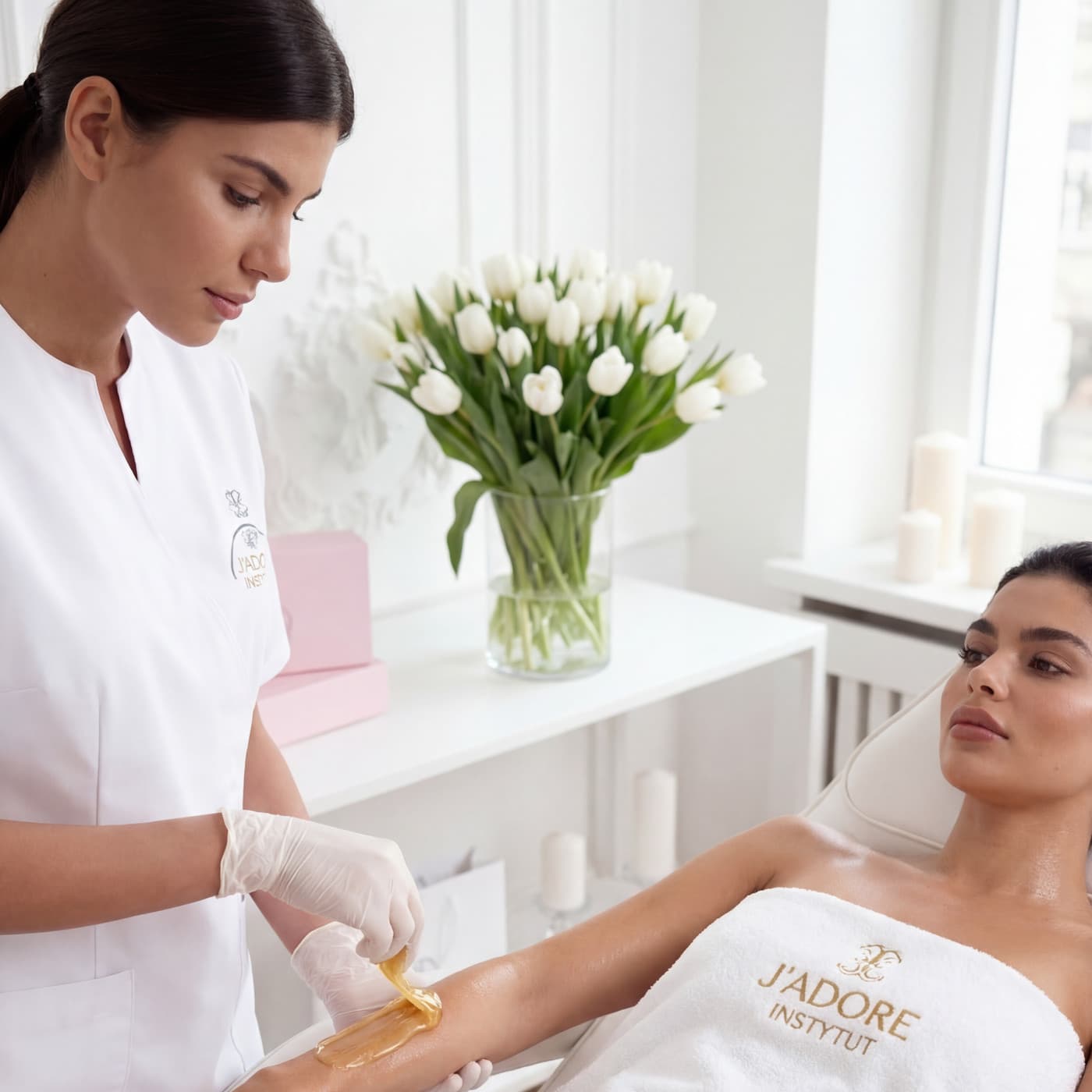
 A treatment room at J'adore
HAIR REMOVAL
Not every skin type tolerates wax well — and shaving facial down can leave you with sharp, stubbly regrowth. Threading is a traditional Eastern technique in which a specially twisted cotton thread catches and removes hairs in sections, right at the root — precise, like tweezers, but working entire rows at once. The key difference: no product ever touches your skin — no wax, no chemicals, no heat.
This means the method doesn't pull at the epidermis or cause irritation. That's why we particularly recommend threading for vascular and sensitive skin, and for anyone using retinol or acids, when skin reacts badly to wax. The result is a perfectly sharp, clean contour — on the upper lip, chin, cheeks, around the brows, or across the full face. We offer this treatment at two salons. Below you'll find everything worth knowing before your visit.
a repeatable treatment — roughly every 2–4 weeks; with regular sessions, hair regrows finer and sparser
How it works
Threading is facial hair removal performed with a single, specially twisted cotton thread. The specialist guides the twisted thread just above the skin. The twist catches hairs and pulls them out at the root, in entire rows. It works a bit like tweezers, except instead of removing hair one strand at a time, the thread lifts several at once. This makes the treatment quick and gives an exceptionally even contour.
The key difference from wax: nothing but the thread touches your skin. There's no wax, resin, paste or heat — so there's no layer that sticks to the epidermis and tears it away when removed. That's exactly why threading works so well on skin that's thin, reactive, or weakened by active skincare such as retinol or acids.

Good to know: threading removes the hair together with its follicle, so regrowth is finer and softer than after shaving. Shaving cuts the hair at skin level and leaves a blunt, stubbly end. With regular threading, facial hair tends to become less noticeable over time.
Ideal for
Women's and men's zones
For women, threading mainly addresses the face: upper lip, chin, cheeks, and a precise brow contour. It's the method of choice for vascular, sensitive skin, and skin treated with retinol or acids — the thread works without wax, without heat, and without any product on the skin, so it's less likely to trigger redness. Ideal if you want a smooth face and a sharp contour without irritation.
What we work with
For men, threading mainly serves to tidy up: removing the unibrow, finishing the brow contour, refining the beard line, and clearing peach fuzz on the cheeks and neck. The thread allows for precise, spot-on work without changing the brows' natural character — the result looks neat and natural, with no trace of being "done".
What we work with
The thread itself and the technique
The term "threading" doesn't involve any products, devices or cosmetics applied to the skin — the only tool is twisted cotton thread. This sets threading apart from wax and sugaring: there's no layer that needs to be peeled off the skin. Below, we explain the advantage of this method and how to care for the results between visits.
How the twist works
The specialist holds the thread with both hands (sometimes with one end held between the teeth), forming a twisted "loop" in the middle. Moving this twist just above the skin catches rows of hairs and pulls them out at the root. The direction and tension of the thread determine precision — that's why threading requires skill, and in good hands it gives an exceptionally even line that tweezers alone can't achieve.
Aftercare between sessions is minimal. After threading, all you need is a soothing cream, free from alcohol and fragrance, or a cool compress, and daily SPF on the treated facial area. There's no need for any special "threading products" — that's one of the method's advantages. If your skin is reactive, skip strong acids and retinol on the day of the treatment.
Safety and hygiene
Threading is technologically simple, but it requires skill — comfort and a clean result depend on your specialist's technique and hygiene practice. Here's what's worth asking about at any salon:
Threading is a technique that needs to be learned — a confident, precise handling of the thread shortens the moment of discomfort and gives an even contour. A specialist's skill genuinely makes a difference here.
We use new, single-use thread for each treatment — once thread has touched the skin, it's never reused. That's a basic hygiene standard you have every right to ask about.
We cleanse the area before the treatment; skin should be dry and free of creams so the thread grips the hair properly, rather than slipping over the epidermis.
A red flag: a "quick" treatment without a consultation · Be wary of any salon that removes facial hair without asking about your skin condition, medications, or active skincare. Threading is gentle, but on skin with active inflammation, fresh sunburn, or open acne lesions, it's better to postpone the treatment. A good specialist will examine your skin first, ask about retinol and acids, and answer without hesitation that the thread is fresh.
Contraindications
Threading is gentle, but in some situations, it's best to postpone the treatment until skin returns to its normal state. Always inform your specialist about medications, skin conditions, and active skincare.
From the specialist's chair
The most commonly overlooked factor is oral retinoids (isotretinoin for acne). Skin becomes thin and sensitive on this medication — even a gentle method like threading requires caution or postponement in this case. If you're taking such medication, mention it before the treatment, and together we'll decide whether and when to proceed.
This isn't a complete list — we'll discuss your medications, skin conditions, and previous reactions individually during consultation.
The visit
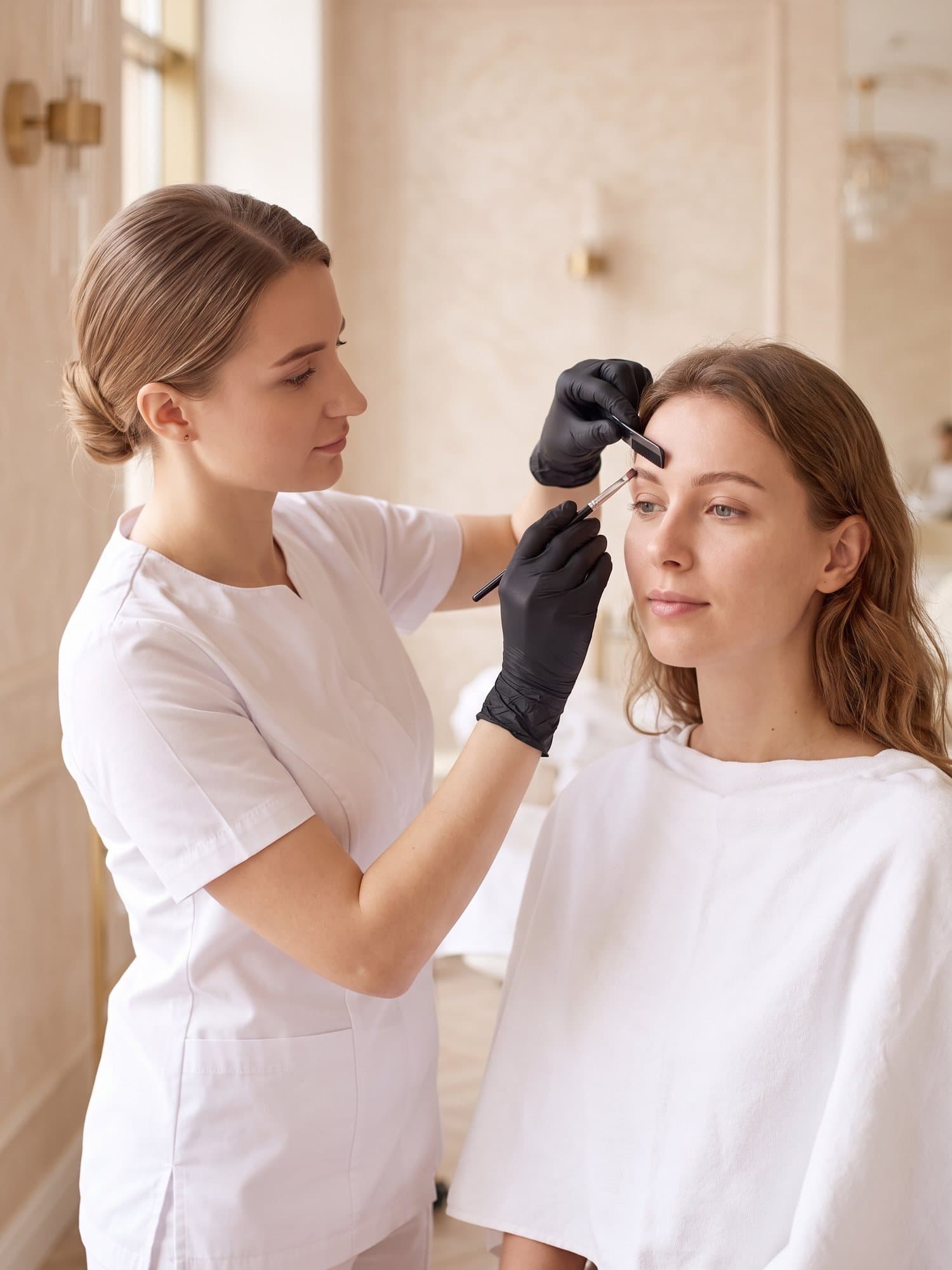
Consultation & skin assessment
the specialist examines the area, asks about sensitivity, vascular skin, retinol and acids, and rules out contraindications. For brows, you'll agree on the contour together.
Skin preparation
gentle cleansing and drying of the area, so the thread grips the hair reliably.
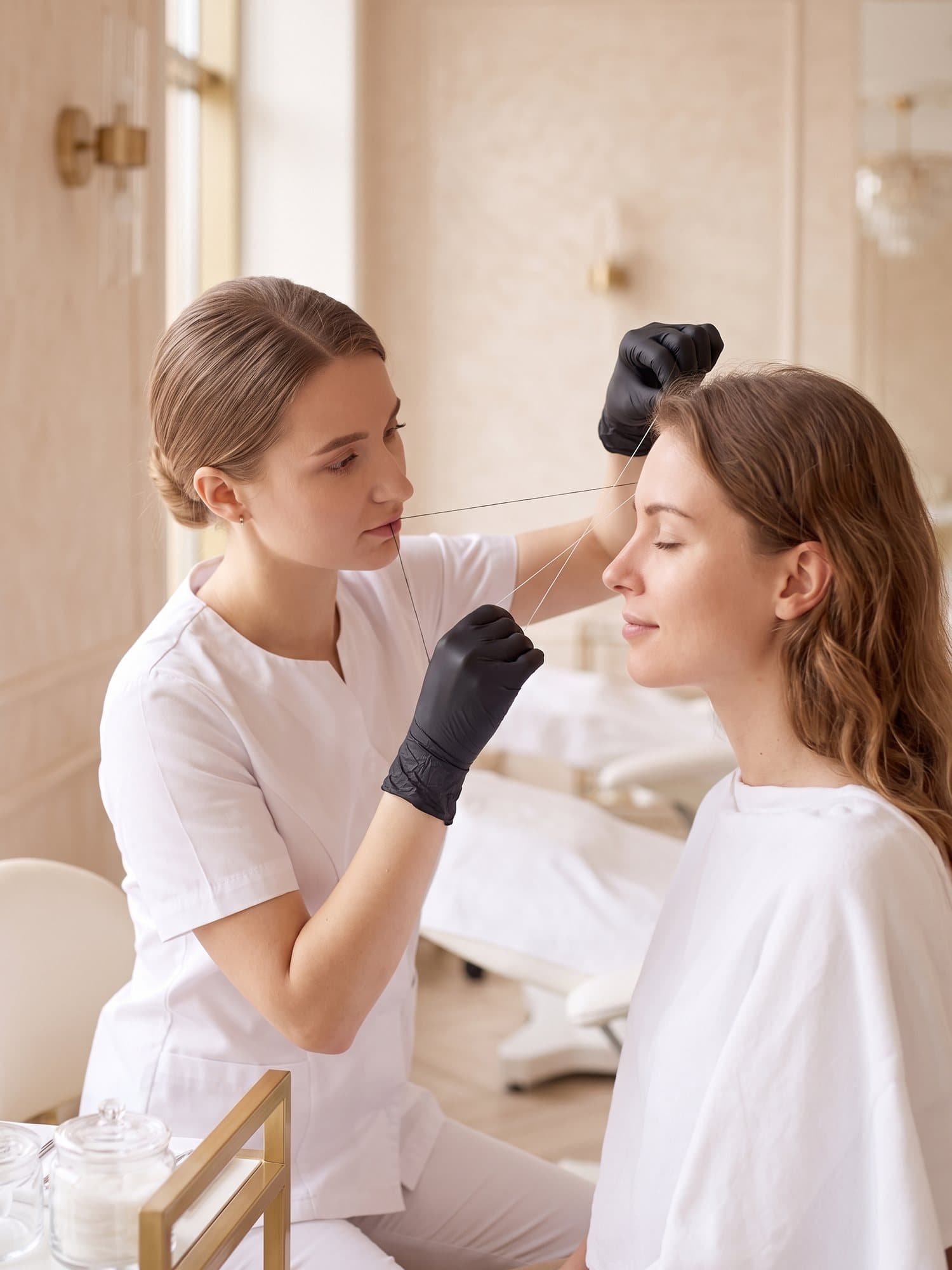
Threading
the specialist guides the twisted thread just above the skin; the twist catches and removes hairs in sections, at the root. Around the brows, the work is precise and spot-on; on peach fuzz, it moves in rows.
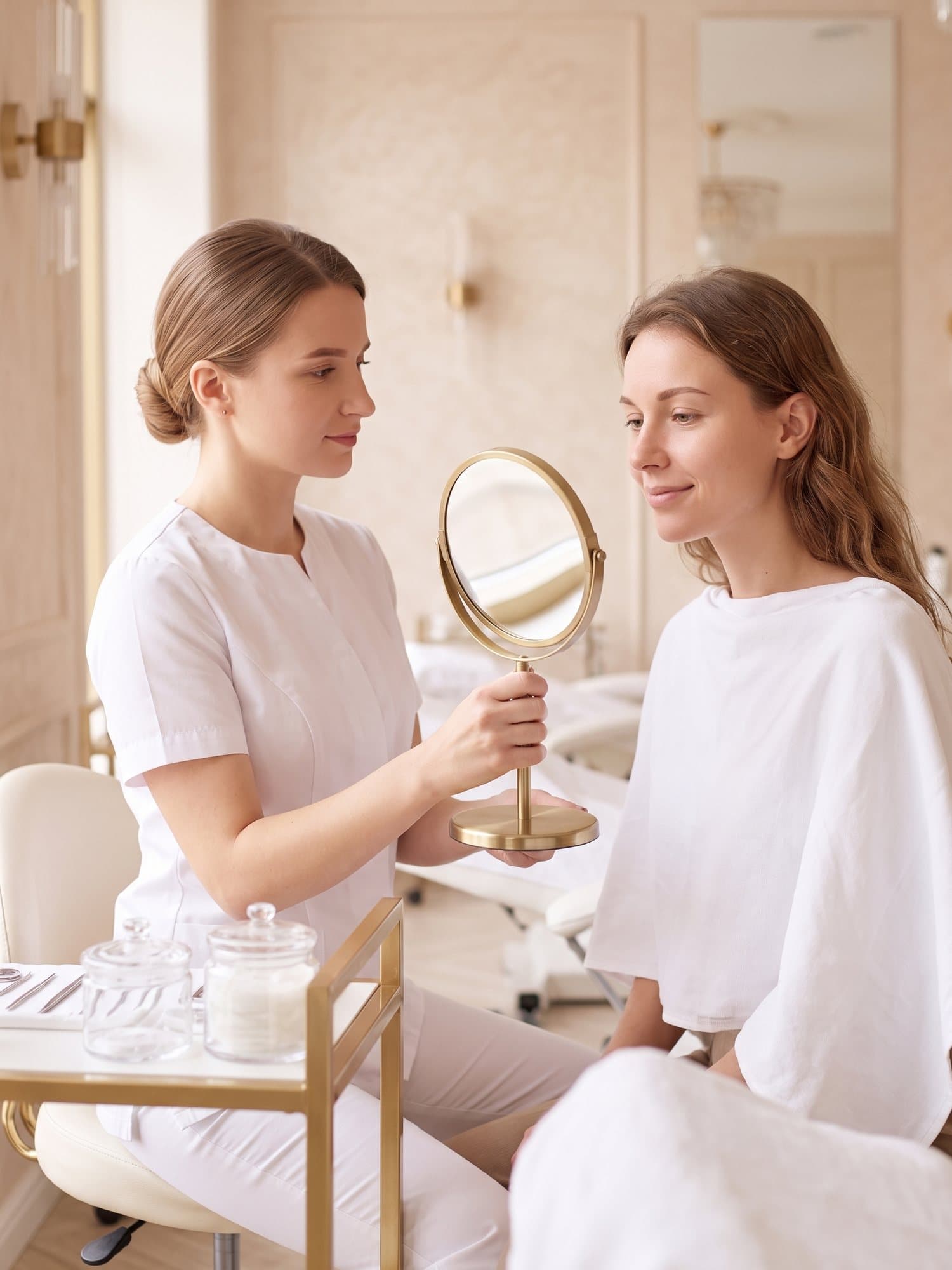
Checking contour and symmetry
checking the result, finishing the line, and touching up any stray hairs if needed.
Finishing touch
a soothing product or cool compress; skin is smooth right away, with no bandages and no downtime.
What to expect
Skin is smooth immediately after the treatment. Some slight, temporary redness in the area is a normal reaction — it usually fades within a few hours. There's no downtime and no visible marks.
The most common question: "I've been shaving my upper lip — can I come in for threading?" Ideally, hair should be a few millimetres long, enough for the thread to catch. Very short, freshly shaved hair is harder to grip. Skip shaving for a few days before your visit, and the treatment will be quicker and much more precise.
Portfolio
A record of the work in our salons — the place where we publish treatment frames and, after photo sessions, results.
A record of results — in preparation. We publish photographs of our clients only with their consent.
The effect is temporary — this is hair removal, not permanent reduction like laser or electrolysis. But with regular visits, hair regrows sparser and finer, and the face stays smooth for longer.
Threading and your lifestyle
Threading is gentle, so the "avoid" list is short — it mainly concerns the first 24 hours, when freshly treated facial skin is a little more sensitive. The rule: for around 24 hours, avoid anything that further heats or irritates the area.
Freshly treated skin is more prone to hyperpigmentation. Avoid strong sun for a day, and use SPF daily — especially after threading larger areas of the face.
High temperature and steam can intensify redness in the treated area. It's best to postpone sauna sessions and long hot baths for a day.
Don't apply retinol or strong acids to the treated area on the same day — let your skin rest. Resume active skincare after about 24 hours.
Right after the treatment, wait a few hours before applying foundation or powder to the treated area — let the skin settle. Eye and lip makeup is fine straight away.
Sweat and friction can irritate freshly treated skin. Plan intense exercise for a few hours after the treatment, or the following day.
Don't shave peach fuzz between sessions — shaving cuts hair at skin level and disrupts the rhythm of regular threading, leaving coarse, stubbly regrowth instead of fine hair. Wait until your next visit.
Threading — facial hair removal with thread
Facial hair removal methods aim for a similar result, but work differently, and they don't always substitute for one another. Here's the honest guide to what suits whom:
precision without chemicals, for sensitive skin
temporary result (doesn't permanently remove hair); requires a skilled specialist; brief pinching during the session
temporary, faster on larger areas
the product touches the skin — wax can be risky after retinol/acids and on vascular skin; sugaring is gentler, but also temporary
spot treatment vs. permanent reduction
tweezers are too slow for peach fuzz and larger areas; laser is a different treatment (a series, and it doesn't work on grey or light hair)
Combine with
Threading fits neatly into a facial care and brow styling routine. The logic is simple:
Put simply: if you have vascular or sensitive skin, or use retinol or acids → threading. Want to treat a larger area quickly, and your skin tolerates wax well → wax or sugaring. Care about a sharp brow contour → threading is exceptionally precise here. Dreaming of stopping hair removal altogether, and have dark hair → that's a conversation about laser.
Price list
Checking free hours…
See also
The result lastssmoothness typically lasts around 2–4 weeks, depending on your hair growth cycleJ’adore Instytut
Please note. Threading is a beauty and grooming treatment (facial hair removal) performed manually with twisted thread alone. It is not a medical treatment and does not replace a dermatological or endocrinological consultation in cases of skin conditions or hormone-related excess hair growth. The information above is provided for general guidance and does not constitute medical advice. Indications, method selection and contraindications are assessed by an experienced specialist during an individual consultation.
Home care
Cosmetics matched to what your skin needs after a treatment — so the clinic effect lasts longer.
 sensitive skinCell Fusion CLow pH CleanserView in the shop(opens in a new tab)
 hydrationSesdermaMANDELAC Moisturizing CreamView in the shop(opens in a new tab)
 sensitive skinVagheggiEmozioni Plus — Anti-Stress Face Mask 75mlView in the shop(opens in a new tab)
 hydrationMedidermaHylanses Md Ha Advance Concentrate SerumView in the shop(opens in a new tab)
 sensitive skinDiego Dalla PalmaCELL-DETOXIUM Micellar Milk 250 mlView in the shop(opens in a new tab)
 hydrationMedik8Hydr8 B5™View in the shop(opens in a new tab)
 sensitive skinMesoesteticMesohyal Post-Procedure Gel CreamView in the shop(opens in a new tab)
 sensitive skinPurles118 Gentle TonerView in the shop(opens in a new tab)