

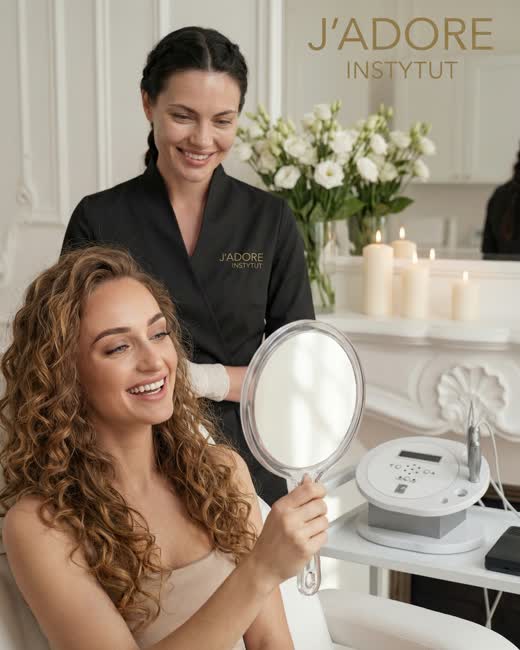
Design and qualification are part of the treatment
The time spent on the interview and drawing is not an add-on before the "actual" work. It is the stage where you can identify a contraindication, old pigment, risk of a herpes reaction, unrealistic expectations or a shape that cannot be safely built with pigment. A salon that reserves real time for this has lower capacity. You are therefore also paying for the ability to stop the procedure before a mistake occurs. A well-executed sketch is viewed at rest and during facial expressions before the first needle insertion. Every design correction at this stage is simpler than correcting pigment after healing.
The valuation may depend on the initial state. First pigmentation, refreshing one's own work, correction after another salon and neutralisation are not the same task. If every situation has one price without seeing the lips, ask how additional stages are settled and what happens when the previous pigment cannot simply be covered.
Material and hygiene influence the cost, even if they do not build the effect in a photo
Behind the scenes, there are pigments of known origin, disposable modules, protective measures, surface protection, batch documentation and waste procedures. The client does not buy a vial of pigment. They buy the certainty that it is possible to determine what was used and that the station was prepared according to the same principle regardless of the day's pace.
- Ask for the name of the pigment and the possibility of seeing the label.
- Establish whether the design and consultation are included in the stated scope.
- Ask how a touch-up is defined, when it is assessed and what it does not cover.
- Check whether aftercare and contact after the treatment are standard.
- Find out how the salon handles old or unwanted pigment.
The greatest saving is avoiding unnecessary correction
The trap of a cheap offer is not that a low price automatically means bad work. It is that the client does not see the missing elements: a design that is too short, a lack of healed photos, unclear touch-up terms or work outside the natural lip border. Repairing colour and shape may require time, lightening or giving up on further pigmentation. This is a cost much broader than the bill from the first visit.
Compare the process instead: who qualifies, who performs, how they document and how they react when the skin heals differently than expected. In PMU, a good purchase is not about finding the longest list of extras. It is about choosing a person who can make a good decision even when the answer is "not now".
Old pigment changes the scope of work and the way of valuation
Lips with previous pigmentation require an assessment of colour, saturation, border and how the old work has behaved in different parts of the vermilion. A light, even trace may allow for a refresh. A dark, cool or overdrawn line beyond the natural contour may require a different plan, and sometimes giving up on adding another layer. It is impossible to fairly value this based on the slogan "touch-up" alone.
Ask if the salon distinguishes between refreshing their own work and correction after another person. In the latter case, the linergist takes over material whose composition and depth they do not know. They may need additional documentation, a colour test or a consultation regarding lightening. Such caution is not an attempt to raise the price; it shows that the person performing does not treat the skin like a blank canvas.
If the previous line goes beyond the natural lip border, the new pigment will not optically reverse the error. Adding colour may fix it in place. A fair valuation should therefore also include the possibility of an answer that a different stage is needed first or that it is safer not to perform further pigmentation.
The cost of a touch-up should not be approached like painting a wall with another layer. Pigment changes in the skin, and its shade depends on the base and previous mixtures. A linergist who asks for old photos, documentation or time for assessment is gathering data needed for a decision. A quick promise to neutralise everything during one visit sounds convenient, but it ignores how the colour behaves after healing.
Finally, ask for one quote described by the full scope. It should separate the first treatment, healing assessment, potential touch-up and situations where a separate procedure is needed. Only then do two offers become comparable. The amount itself without a definition of the scope remains a number that does not say how many decisions and how much responsibility it actually covers.
What people look for in the lip area
The questions people come to the salon with sound similar: "I have one side higher", "After surgery, the lip lost its shape", "The lips have become pale like skin, I am losing the whole line". Rarely does someone say "I want PMU" directly — more often it is the result of a consultation where it turns out to be the tool that solves exactly that problem.
The most common reasons why people decide on lip PMU:
- Contour asymmetry — one side is slightly higher, lower or recessed. Visible especially in photos and during direct eye contact.
- Fading or disappearing contour — lips blend into the skin of the face, there is a lack of structure and definition. The impression that "the face is missing something".
- Discolouration and uneven colour — mainly darker or bluish areas in the corners or along the lip line. Common in people after sun exposure or with a darker complexion.
- Scar or shape distortion after injury or surgery — PMU can optically even out the line and supplement lost pigmentation.
PMU versus makeup — two different things
The most common resistance we hear: "This is for women". This is a misunderstanding resulting from the fact that PMU has been associated for years mainly with expressive, colourful permanent makeup. But lip PMU in a natural version is a different tool and a different goal:
Lip PMU for people
correction, not makeup
- pigment matched to the natural skin and lip shade
- work at the lip border — subtle contour strengthening
- neutralisation of discolouration and colour evening
- effect indistinguishable from natural
- no makeup gloss or expressiveness
Women's permanent makeup
definition and colour
- contrasting colour — often deep pink or red
- distinct contour line as a visual effect in itself
- effect of "painted" lips visible from a distance
- filling the entire lip surface with colour
This is why we use neutral and earthy shades for people, often narrowed down only to line correction — and not full colour filling. The final result should look like your lips on a good day, not like lips from an advertisement.
Colour and shade — how we choose them
This is the point where most men are surprised — because the choice of pigment is not intuitive. The colour of the pigment in the vial is not the colour you will see on the skin after healing. The pigment passes through the epidermis, interacts with the natural undertone of your skin and heals in a shade that can be completely different from the initial one.
Therefore, for lip PMU for people, we take into account:
- Complexion and face skin undertone — cool (pink-blue), neutral or warm (yellowish)?
- Natural lip colour — are they very pale, do they have redness, bluishness?
- Area of discolouration — does the discolouration have a warm or cool shade? We correct with a pigment of the opposite tone to neutralise.
- Goal — strengthening and correction vs. discolouration correction vs. contour reconstruction after injury.
Does it hurt and how long does it last
Two questions that people ask first. Honestly:
Pain — the lip area is sensitive, but we perform the treatment under local anaesthetic. For most people, the sensation is a light tingling or pressure, not pain. The corners of the mouth can be more sensitive. If you have an exceptionally low pain threshold, tell us beforehand so we can account for it.
Results last — PMU is not a permanent tattoo. PMU pigments for lips penetrate less deeply than tattoo ink and naturally fade for many people over a few years. This is an advantage: if it does not become a habit, the effect will fade on its own. You choose when to refresh it — not because you have to. In practice, many men return every few years simply because they like the effect.
PMU of the lips versus other facial treatments
PMU of the lips works well on its own — but the most interesting effects often come from combining it with other corrections in the same zone. This does not have to be done in one day — it is more of a plan for several months:
PMU of the brows
PMU of the lips + PMU of the brows together build definition for the whole face without makeup. Brows frame the eyes, lips structure the lower half — together the face looks more confident and "pulled together".
Botox (brotox)
If wrinkles in the lip area (especially above the upper lip) disrupt the PMU line — Botox in this zone can even out the base before or after the PMU treatment. Discuss the order with your specialist.
Peels and hydro-correction
Before PMU, the skin of the lips should be in good condition — smoothed and moisturised. A series of peels or moisturising treatments a few weeks before PMU can improve pigment absorption and the evenness of the result.
How to prepare your own criteria before the consultation
Before booking, write down in one sentence what is to change and how you will know that the result is sufficient for you. Regarding the topic of "price without amounts", it is easy to adopt advertising language and start evaluating names instead of your own problem. Add three boundaries: what you do not want, how much time you can allocate for regeneration, and what previous experience influences your current decision. Such a note organises the consultation and allows you to see if the specialist's answer addresses your goal.
When deciding on "PMU of the lips in Warsaw: the cost starts from the design, not the pigmentation", write down the answers literally: the name of the preparation or technique, the person performing it, the stage plan, the expected reaction, limitations and the check-up moment. If the salon uses general terms, ask for them to be translated into observable facts. "Natural result" can mean something different for every person; "short regeneration" also requires clarification. A good consultation reduces the number of unknowns, but it does not pretend that biology can be given orders.
When comparing places for the topic of "price without amounts", separate the safety standard from the comfort-building extras. A nice waiting room, a cosmetic sample or an elaborate ritual may improve the experience, but they will not replace qualifications, hygiene, documentation and aftercare. On the other hand, the medical aesthetics of the interior alone is not proof of competence. Ask about the procedure and how the team behaves when the course of events is not textbook.
Re-evaluate the decision after gathering all the data
When deciding on "PMU of the lips in Warsaw: the cost starts from the design, not the pigmentation", you do not have to book a date at the same moment the consultation ends. Check the recommendations, read the consent form and see if the scope of responsibility is clear. If after the conversation you still cannot say what problem the procedure is supposed to solve, what its limitation is and who you contact after the treatment, you need answers before starting, not after the fact.
The most useful conclusion from the topic of "price without amounts" is simple: a good decision remains sensible even without the promise of a quick finale. It takes into account the initial state, the real limits of the method and the possibility of changing the plan. This margin is what distinguishes an informed qualification from fitting a client into a free slot in the calendar.


