What PMU and Medical Micropigmentation have in common — and what separates them from the start
Both techniques are based on the same mechanism: pigment is introduced into the skin using a fine-needle device. It sounds simple, but there is a whole world of details involved. These range from pigment type to the depth and rhythm of needle insertions, as well as how long the result lasts. These details determine why PMU and Medical Micropigmentation are not two names for the same thing, but two separate disciplines with a shared tool.
Put simply: PMU is for enhancement, while Medical Micropigmentation is for reconstruction or camouflage. PMU brows should look beautiful and natural. A scar following mastectomy recreated with Medical Micropigmentation should resemble real tissue. This involves entirely different aesthetic and emotional considerations, as well as a different level of responsibility for the specialist. One conclusion is worth remembering from the start: being an excellent PMU specialist does not automatically mean someone practises Medical Micropigmentation — and vice versa.
PMU — what “permanent make-up” really means
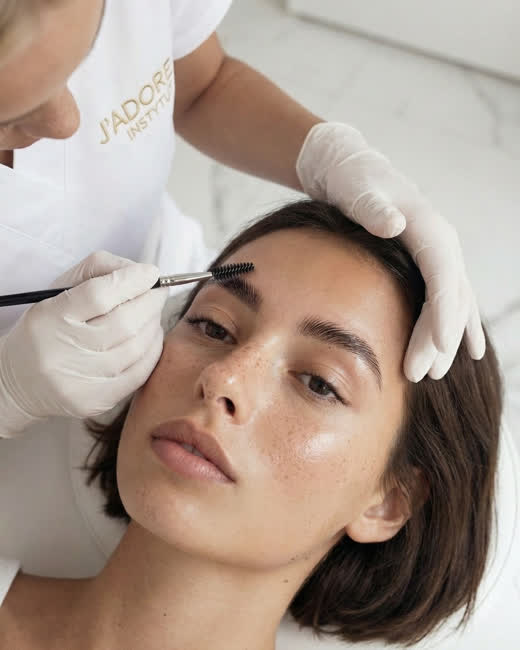
PMU is a broad category covering three main areas: brows, lips and eyeliner. Each includes several techniques. These range from hair-stroke effects, such as microblading or machine methods that imitate hairs, to ombré, colour blends and precise lines. Each technique has its own characteristics, indications and limitations.
- Brows — the most popular area of PMU. You can achieve a natural hair-stroke effect, a soft powdered finish (ombré), or a combination of both. It is often helpful for people with brow loss, vitiligo or gaps following treatments.
- Lips — contouring, asymmetry correction and colour enhancement. This is particularly valued by people whose natural pigmentation is pale or uneven.
- Eyeliner — from very subtle and natural to more defined lines. It can make the eyes appear larger, create the impression of fuller lashes and define the gaze.
What distinguishes good PMU from poor PMU is primarily selecting pigment for your complexion and skin undertone, as well as precision when designing the shape before the treatment. Everyone’s skin takes colour differently. The same pigment may look different on cool and warm undertones. This is why skin analysis, a discussion of your preferred result and shade testing before the final treatment are standard practice, not an extra.
Medical Micropigmentation — different territory, different conversations
Medical Micropigmentation uses the same pigment implantation technique, but its purpose is reconstruction, camouflage or medical correction — not makeup. It is most often discussed in relation to four main applications. Each is a separate specialism.
- 01
Areola reconstruction after mastectomy
One of the best-known and emotionally important applications. Following surgical breast reconstruction, a missing or treatment-altered nipple and areola can be recreated with pigment. The result can be so realistic that, for many people, it is indistinguishable from natural tissue. This is not a “beauty tattoo” — it is part of the process of returning to yourself after cancer treatment.
- 02
Camouflage for scars and skin changes
Scars after burns or surgery, vitiligo and stretch marks — Medical Micropigmentation can introduce pigment matched to the surrounding skin. The result is an optical blending of the area with the rest of the skin surface. This technique requires an excellent eye for colour and an understanding of how scar tissue takes pigment differently from healthy tissue.
- 03
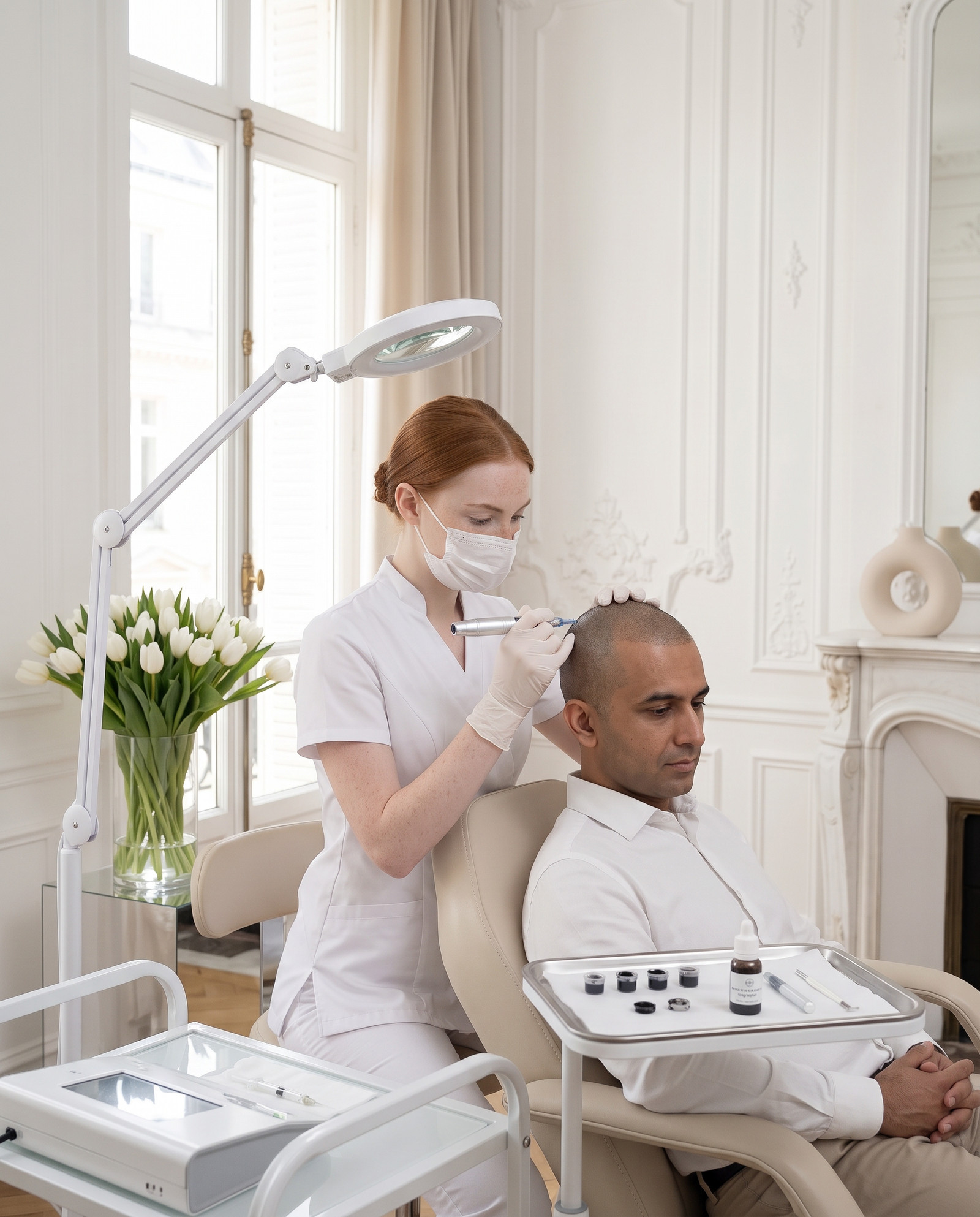
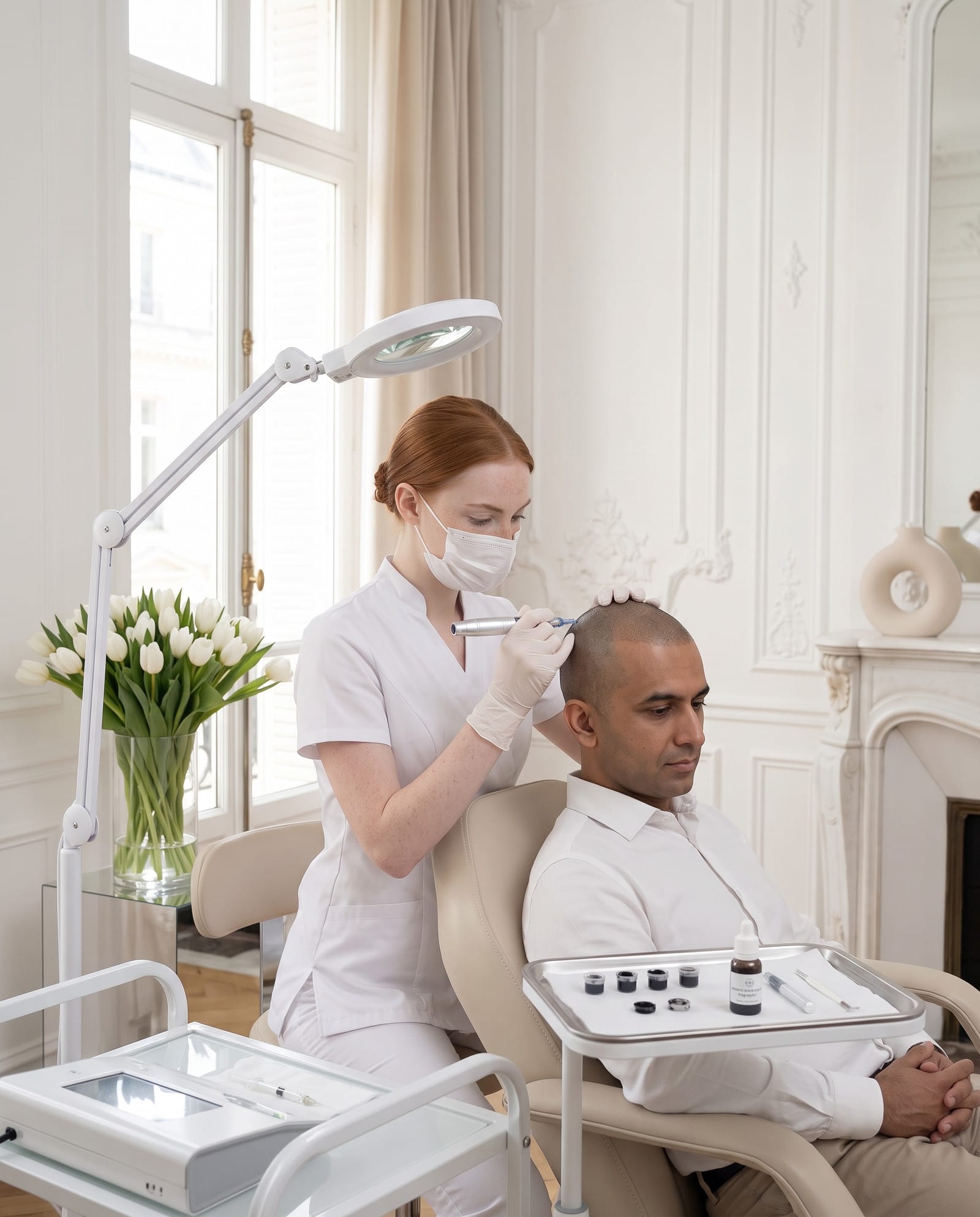
SMP — scalp micropigmentation
Scalp micropigmentation. It creates the illusion of hair density in alopecia or precisely imitates shaved hair follicles in patchy or total hair loss. It is used by both women and men. It is particularly considered when other alopecia treatments do not provide satisfactory results, or as a complement after a hair transplant.
- 04
Correction and camouflage in aesthetic dermatology
Micropigmentation can be used to correct uneven skin colour distribution, support vitiligo treatment or form part of a comprehensive approach after laser or surgical treatments. This application often involves working with a dermatologist or plastic surgeon.
Where the real difference lies — and why it matters
You could say that PMU and Medical Micropigmentation differ in “needle depth”. This would not be entirely wrong technically, but it would be misleading. The most important difference lies not in the equipment, but in the specialist’s knowledge, preparation and the conversation before the treatment.
PMU — permanent make-up
enhancement and everyday convenience
- Brows, lips, eyeliner
- Purpose: aesthetics, naturalness, convenience
- Discussion: shape, colour, preferences
- Pigments selected for your features and complexion
- Results fade naturally over time
Medical Micropigmentation
reconstruction, camouflage, correction
- Scars, areolas, vitiligo, scalp (SMP)
- Purpose: restoration, camouflage, recreation
- Discussion: medical history, treatment, changes
- Pigments selected for the skin and the area being treated
- Requires an understanding of how scar tissue takes pigment
This is why the question “do you offer micropigmentation?” is worth following with a question about the specific application. A PMU specialist who creates excellent brows may have no experience with a burn scar. Conversely, an SMP specialist may not work with lips. Each field has its own learning curve and pitfalls. An honest, specific conversation before the treatment is the only way to avoid choosing someone who does something similar, yet different from what you are looking for.
What determines how long results last — in both cases
Both PMU and Medical Micropigmentation are not permanent in the literal sense — pigment fades over time. The pace of this process depends on many factors. It is worth understanding them before deciding on a treatment.
- Skin type and condition. Oily and combination skin pushes out pigment faster than dry and normal skin. People with active sebum production may notice that colour fades earlier and needs refreshing.
- Sun exposure. UV is one of the main factors that causes pigment to fade. Sun protection on the tattooed area realistically extends how long the result lasts.
- Pigment type and quality. Different pigments have different longevity. Before the treatment, the specialist should explain which pigment they use and what you can expect over the coming months.
- Aftercare. The first few weeks are crucial. Proper hydration, avoiding the sun and mechanical factors affect how much pigment your skin retains.
- For scars — the condition of the scar itself, its maturity and treatment history may mean that the result requires several sessions and is less predictable than on healthy skin.
When to consider medical micropigmentation — clear signs
Medical micropigmentation is sometimes overlooked. Many people do not know this option exists, or think it is “for someone with more serious problems”. Yet it can offer real support in several very different situations. They share one thing: restoring what illness, time or injury has changed.
Signs that it is worth asking about medical micropigmentation rather than PMU:
- You are planning areola reconstruction after a mastectomy or breast cancer surgery.
- You have a scar after a burn, injury or surgery and want to visually blend it with the surrounding skin.
- You are living with vitiligo and looking for camouflage options for stable, inactive patches.
- You have alopecia areata or total alopecia and are interested in SMP as an option for recreating the appearance of hair.
- The density of your hair after a transplant is uneven, and you are looking to supplement it with pigment.
What happens during the consultation before treatment — and why it matters
In both PMU and medical micropigmentation, the consultation before treatment is not a formality but the heart of the whole process. With PMU, the focus is mainly on choosing the shape, colour and technique. You should leave feeling confident that the specialist understands your expectations. With medical micropigmentation, there is also a medical aspect: medical history, medication, the current condition of the area and contact with your treating doctor.
A good specialist — in either field — will not rush their answers. They will show you a portfolio specifically in the area that interests you. They will ask about your skin history and will not promise results they cannot guarantee. This — honesty about limitations — is one of the clearest signs that you are speaking with someone you can trust.