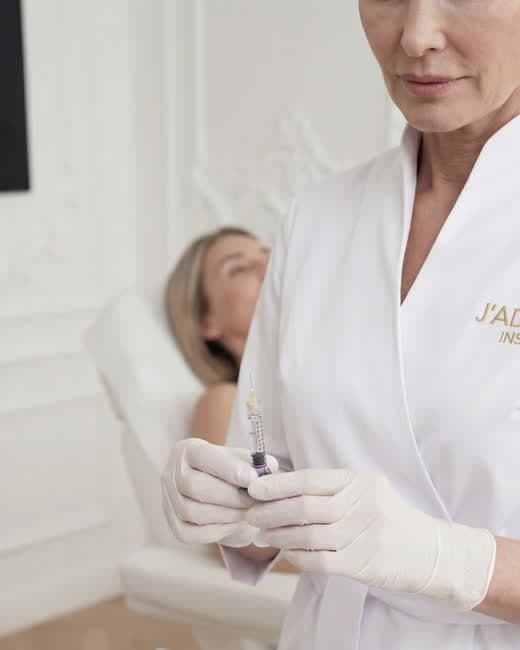
The cost is changed by the preparation, area and goal
Polynucleotides are a category of products with different properties and purposes. A preparation for the thin skin around the eyes does not have to be the choice for extensive improvement of face quality. The amount of product, technique and number of areas also matter. A fair quote should therefore answer the question "what plan for what problem", and not just "how much does an ampoule cost". This difference should be written down before the administration, not added only at the next payment. Then every subsequent decision has the same point of reference.
Medical qualification may end with the choice of a different method. This is not a wasted part of the budget, but protection against a series that does not address the cause. If a shadow under the eye results mainly from anatomy or swelling, another regenerative injection does not have to be the right first step.
Check what exactly the plan includes
- The full name of the preparation and the possibility to see the packaging before administration.
- Qualification by a person with the right to perform the medical procedure.
- A specific area, amount of product and technique resulting from the examination.
- A plan of stages and the criteria for assessing whether to continue the series.
- Documentation of the batch number and aftercare recommendations.
- Contact in case of a worrying reaction and a clear follow-up path.
- Information on which elements are not part of the offer.
Do not save on traceability and the doctor's decision
A lower amount does not determine quality, just as a high one does not confirm it. However, there are elements that cannot be honestly omitted: known product origin, storage in accordance with requirements, examination before the treatment, asepsis and readiness to act in case of a complication. If the salon does not want to provide the name of the preparation or only points to a pre-filled syringe, you do not have the data to compare.
The best budget tool is a written goal and the moment of assessment. Thanks to this, the next visit does not take place because "that's what the package looks like", but because the skin's reaction justifies the next stage. The cost then becomes part of the medical plan, not the price of a single promise.
Follow-up should answer the question of whether the plan still makes sense
A follow-up visit is not solely for taking an "after" photo. The doctor should compare the initial state, tissue reaction, persistence of swelling and whether the change concerns the goal set before the first administration. If the result develops more slowly, the decision does not have to be an automatic increase in the amount of product. Sometimes time, a change in interval or a re-diagnosis of the problem is needed.
Ask before starting how the salon understands a lack of response to the treatment. Does the plan have a set stopping point? Can you change the preparation or method without keeping the package at all costs? Such a conversation protects the budget better than a discount on a series, because it limits the risk of performing subsequent stages without clear justification.
The cost of the entire plan also includes skincare and the time needed for calm observation. Do not buy many new cosmetics at once to "support" the injections. The more variables you introduce, the harder it is to assess the source of improvement or irritation. A simple routine established after consultation gives a clearer picture and does not create additional expenses without a purpose.
A package should not take away the possibility of changing a decision
The price of a series can be more favourable than settling each stage separately, but check the rules before payment. What happens if, after the first visit, the doctor recommends a longer break, a change of preparation or ending the plan? Can an unused stage be used for another procedure, or is the package assigned to one name? Clear conditions allow you to avoid a situation where a medical decision starts to be dictated by an earlier payment.
Do not choose a package just because it lowers the average cost of a visit. First, confirm the diagnosis of the problem, the tolerance of the first stage and the criteria for further assessment. A discount only matters in a plan that is justified. Otherwise, it turns flexibility into an obligation to use treatments, even when the skin or goal has changed along the way.
Also, ask to separate the cost of the preparation from the additional procedure if the offer combines several methods. Combining is not automatically better. Each element should have its own indication, sequence and moment of assessment. Thanks to this, you know whether you are paying for a coherent plan or for an extensive list of names that looks good in the description but does not answer one specific problem.
Where does the myth of a "cheap equivalent" come from
Polynucleotides are a category, not a single preparation. Under the same name, there are products with different purity, different molecular weight, different degree of DNA processing and different sterilisation method — and all these parameters decide whether the body will consider the substance as "something to work with" or trigger an inflammatory reaction. The myth of a cheap equivalent comes from the fact that the active substance sounds the same, and the differences are invisible to the naked eye. However, they are very much felt — and measurable.
What specifically distinguishes an original preparation from a substitute
Three things say more about the quality of a preparation than any advertisement. Certification and country of registration — the original preparation is registered as a medical device or medicinal product in the country where it is used; it has a product documentation number and the manufacturer is responsible for every batch. Batch documentation — a legal distributor provides analytical documentation confirming the purity of the preparation; this is not a formality, it is proof that a given production batch meets the requirements. Cold chain — polynucleotides are biologically active and require storage in a strictly controlled temperature from the moment of production to the moment of administration; a preparation that "lay somewhere" without temperature control may have altered activity or compromised sterility.

Polynucleotides vs other biostimulators — where is the difference
It is worth distinguishing polynucleotides from the broader category of biostimulators, because these names are often used interchangeably — and they are not the same. Biostimulators (such as collagen-stimulating preparations based on poly-L-lactic acid or calcium hydroxyapatite) work by stimulating fibroblasts to produce collagen. Polynucleotides work differently — by activating adenosine A2A receptors, which triggers connective tissue repair processes at the cellular level. This is a more precise mechanism, with different indications and a different profile of effects. Confusing these categories leads to false expectations — and disappointment, which results not from the ineffectiveness of the treatment, but from the choice of an inappropriate tool.
Both women and men use polynucleotides — although for slightly different reasons and in slightly different areas. For women, the most common indication is general facial skin revitalisation, neck and décolletage, eye area and rebuilding after intensive acne treatment. The effect they are looking for is more resilient, "fuller from the inside" skin that does not lose tension. For men, polynucleotides work particularly well as regeneration for tired, grey skin — especially after long seasons of working in stressful conditions — and as support after laser treatments or in areas exposed to sunlight. Thicker skin in men regulates the absorption of the preparation differently, but the mechanism of action is the same.
Before you choose — what to pay attention to
A good decision with polynucleotides starts with a consultation, during which the doctor will not only assess the skin condition and indications, but will openly say what preparation they use and why. This is not an intrusive or impolite question — it is a question about your own safety. A salon that understands this will answer without irritation and without brushing you off.
Second thing: biostimulation effects are not immediate. Polynucleotides initiate processes that develop in the tissue for weeks — the first changes are visible after a few days, but the full effect of a series of treatments can only be assessed a few weeks after the last administration. Expecting a result "the next day" is one of the most common misunderstandings. A good effect is gradual — which is precisely why it is natural.
Where do polynucleotides come from — and why from fish
Let's start with the name, because it explains a lot. Polynucleotides (marked as PDRN or PN) are long chains built from fragments of genetic material — the same "building blocks" from which the DNA of every living cell is built. This is not a chemical substance invented in a laboratory from scratch, but a biological building block that our body recognises as something of its own.
They are obtained from fish material — most often from salmon or trout milt — and then purified into a fully biocompatible, safe form. The choice of fish is not accidental or "natural marketing": the point is that this specific genetic material is similar enough to human material for the skin to accept it without resistance, while being devoid of features that could trigger an unwanted reaction. What counts here is purity and origin — and these largely determine the price and safety of the preparation.
How to prepare your own criteria before the consultation
Before booking, write down in one sentence what is to change, and how you will know that the result is sufficient for you. On the topic of "price without numbers", it is easy to adopt the language of advertising and start evaluating names instead of your own problem. So add three boundaries: what you do not want, how much time you can spend on regeneration and what previous experience influences your current decision. Such a note organises the consultation and allows you to notice whether the specialist's answer concerns your goal.
When deciding on "Polynucleotides in Warsaw: compare the entire plan, not the name of the ampoule", write down the answers literally: the name of the preparation or technique, the person performing it, the plan of stages, the expected reaction, limitations and the moment of follow-up. If the salon uses general terms, ask for them to be translated into observable facts. "Natural result" can mean a different thing for every person; "short regeneration" also requires clarification. A good consultation reduces the number of unknowns, but does not pretend that biology can be given an order.
Comparing places for the topic of "price without numbers", separate the safety standard from the extras that build comfort. A nice waiting room, a cosmetic sample or an extensive ritual can improve the experience, but they will not replace qualification, hygiene, documentation and aftercare. On the other hand, the medical aesthetics of the interior itself is not proof of competence. Ask about the procedure and about how the team behaves when the course is not textbook.
Re-evaluate the decision after gathering all the data
When deciding on "Polynucleotides in Warsaw: compare the entire plan, not the name of the ampoule", you do not have to book an appointment at the same moment the consultation ends. Check the recommendations, read the consent and see if the scope of responsibility is clear. If after the conversation you still cannot say what problem the procedure is supposed to solve, what its limitation is and who you contact after the treatment, you need answers before starting, not after the fact.
The most useful conclusion regarding "price without amounts" is simple: a good decision remains sensible even without the promise of a quick result. It considers the starting point, the real limits of the method, and the possibility of adjusting the plan. This margin is what distinguishes an informed qualification from simply fitting a client into an available slot in the calendar.