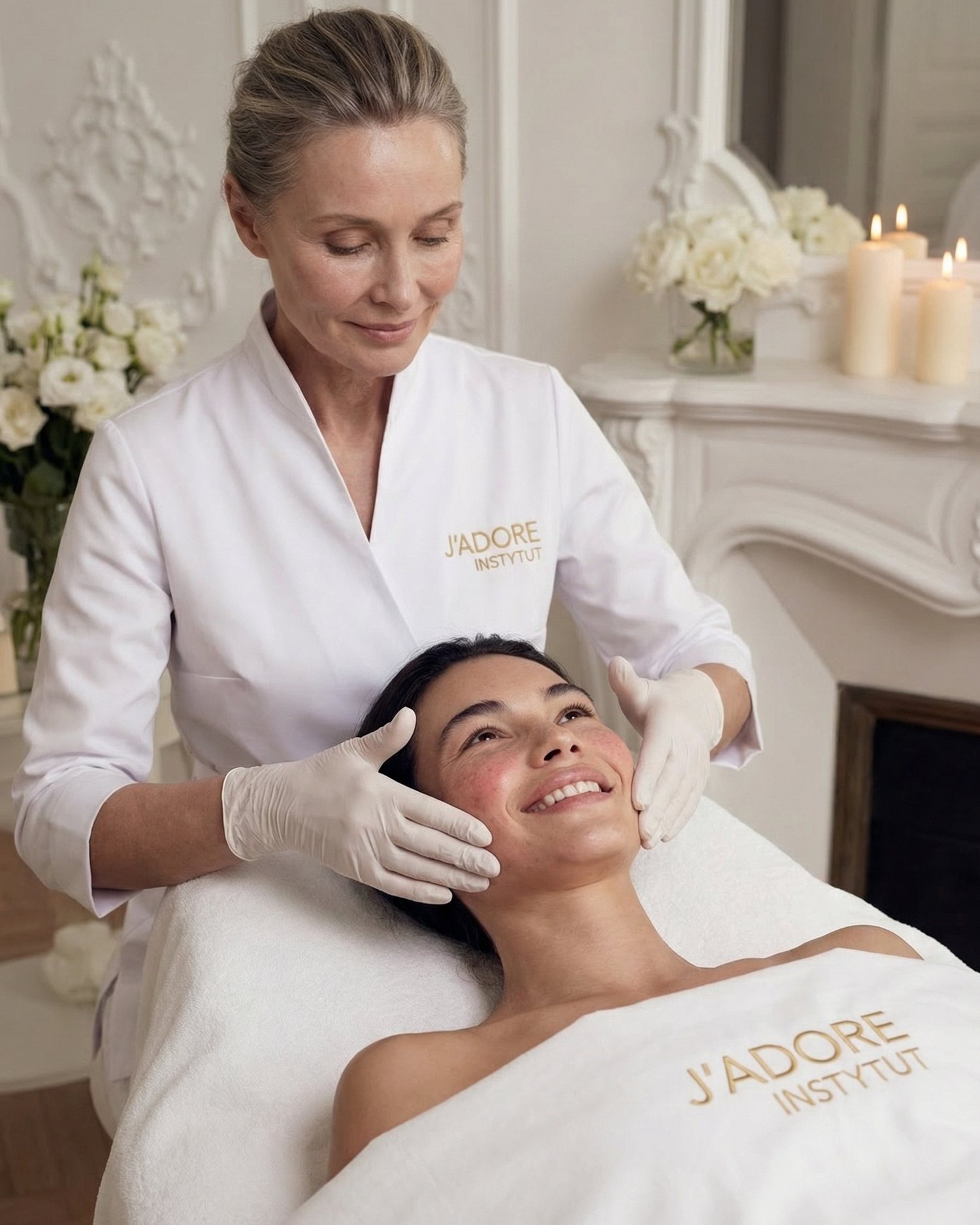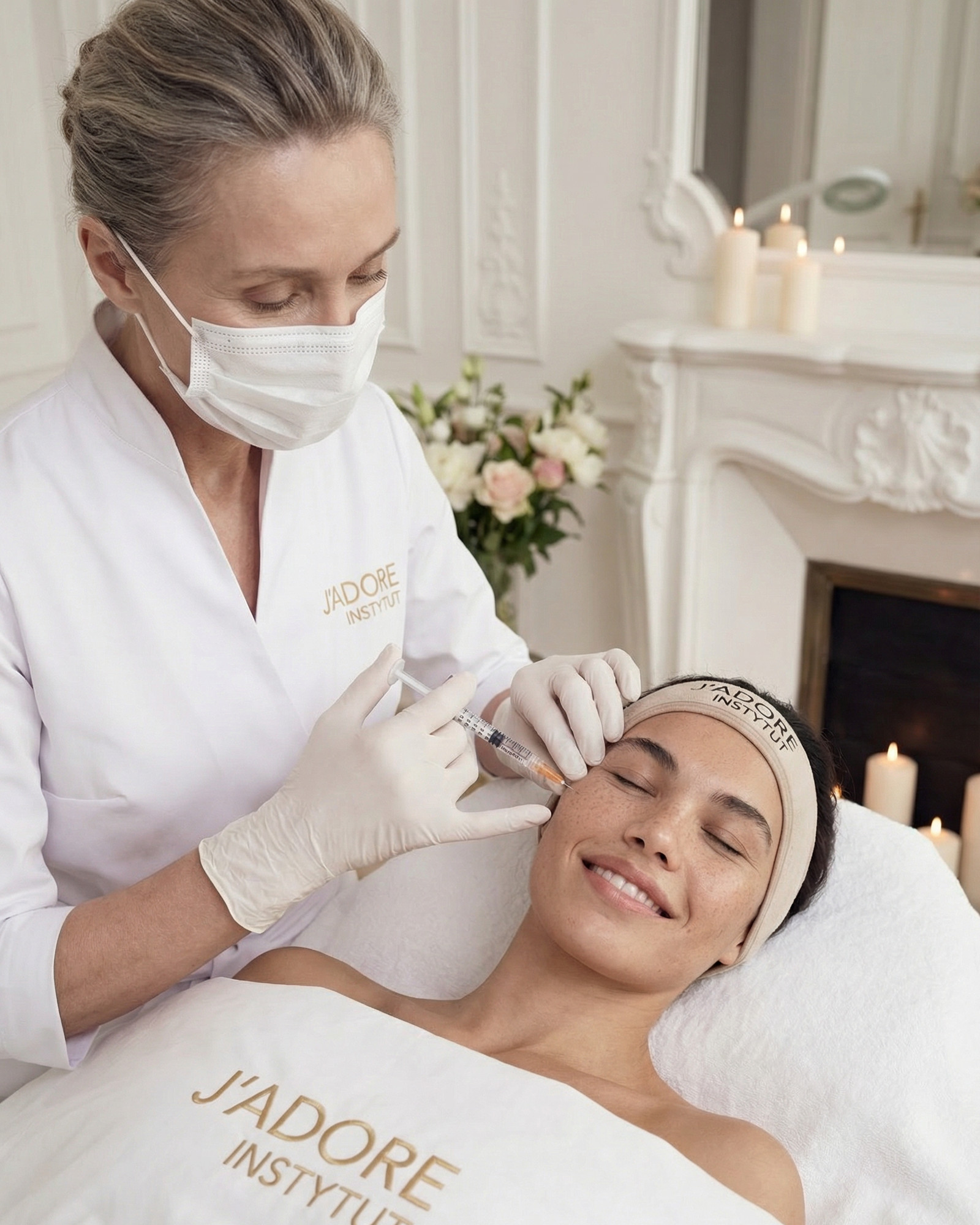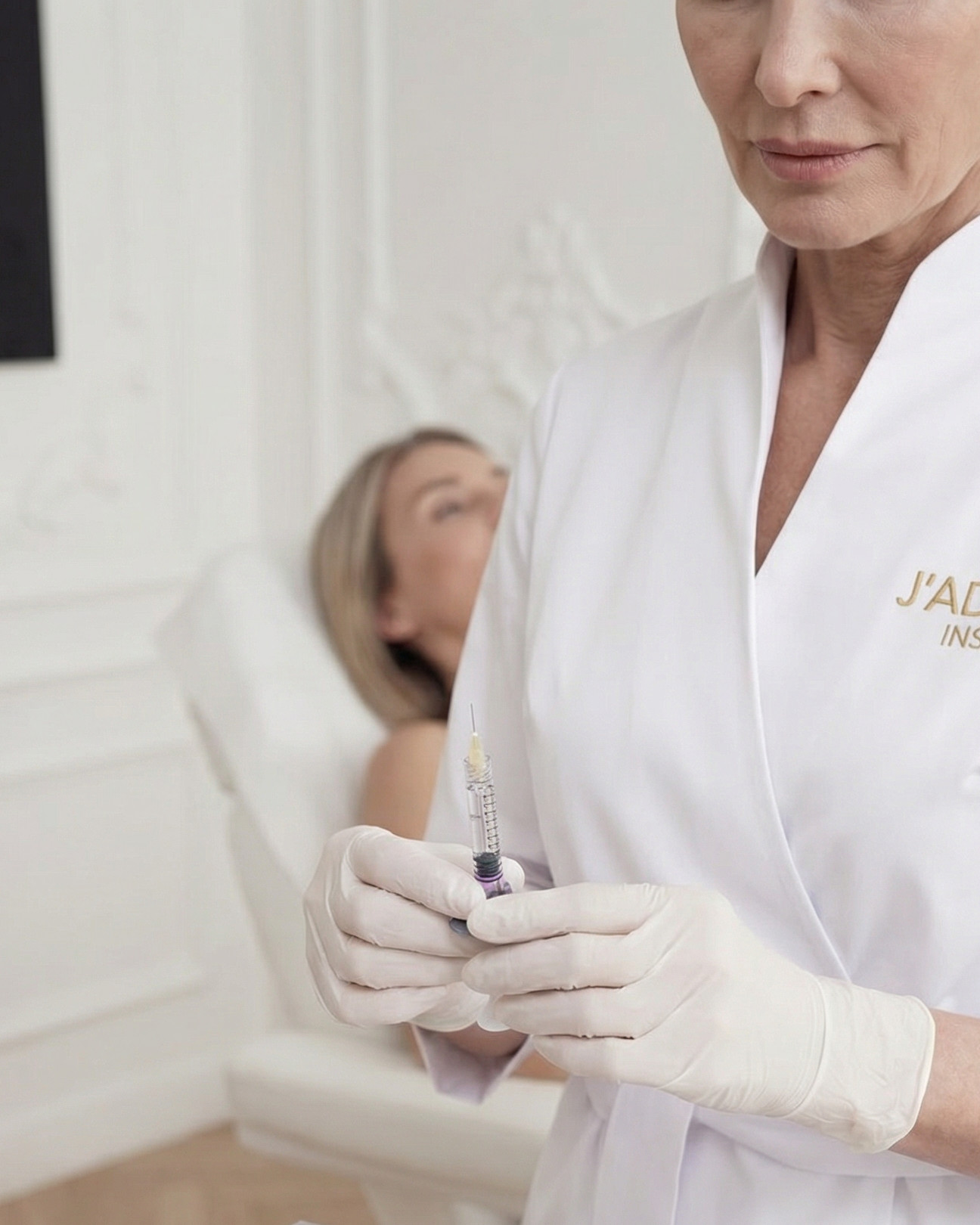
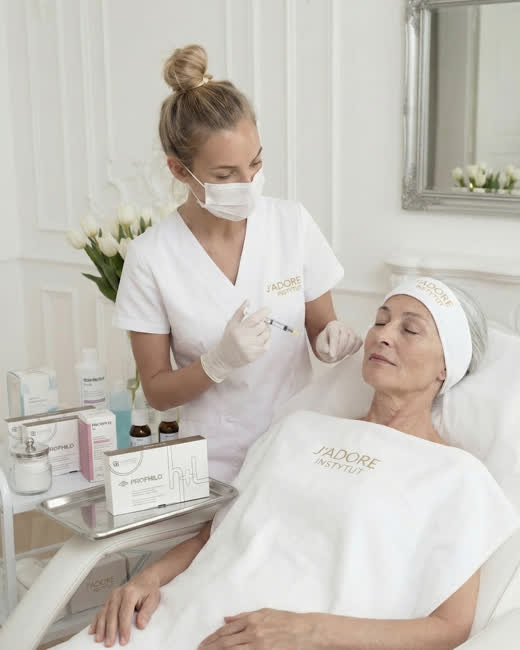
Three treatments — three entirely different mechanisms
All three fall under the broad umbrella of biostimulators or revitalising treatments — and that's exactly where the confusion starts. Their common ground is rebuilding the skin "from within". But the mechanism, the depth of action and the clinical goal differ significantly. In short: mesotherapy delivers nutrients, the skin biostimulator hydrates intensely and lifts through hyaluronic acid, polynucleotides repair and regenerate skin cell DNA. Each works at a different biological level — which is exactly why they complement each other so well.
Mesotherapy
delivers a nourishing cocktail
- vitamins, amino acids, peptides, hyaluronic acid — depending on the formula
- nourishes, hydrates and stimulates the skin to work
- broad range of indications: face, neck, décolletage, scalp
- results appear gradually and need a series of sessions
Skin biostimulator
intensive lifting and hydration
- exceptionally concentrated hyaluronic acid — high and low molecular weight
- spreads beneath the skin, stimulating collagen and elastin
- a "bio-remodelling" effect — firmness, radiance, density
- classically 2 sessions a month apart, with results lasting several months
Polynucleotides
deep cellular regeneration
- DNA fragments sourced from salmon, or a synthetic plant-based version
- stimulate fibroblasts to synthesise collagen and elastin
- repair damage at cellular level — a marked improvement in skin quality
- particularly effective for laxity, scarring, hyperpigmentation and sun-damaged skin
Polynucleotides, meanwhile, belong to the same category as skin biostimulator — biostimulators — but they work in a completely different way. Where skin biostimulator focuses on intensive hydration and the lifting effect of hyaluronic acid, polynucleotides target regeneration at a genetic level. They give fibroblasts "repair instructions" to rebuild the skin from the ground up. The effect is longer-lasting, but it takes time and patience.
How to work out which one applies to you — a mirror test
Three questions to narrow things down — not a diagnosis, just a starting point for your conversation with the doctor:
- Your skin looks "dry and dull", lacking vitality, and loses its glow even after moisturiser → your skin is asking for intensive revitalisation → direction: mesotherapy or skin biostimulator.
- Your skin feels thinner, lax, and has lost its "bounce" over the years — you pinch your cheek and it takes a while to spring back → damaged collagen and elastin → direction: skin biostimulator or polynucleotides.
- You have a history of excessive sun exposure, acne scarring, hyperpigmentation, skin that feels "worn down by chronic stress" → damage at a cellular level → direction: polynucleotides.
- You want to maintain your results or "fine-tune" your skin preventively, you're 30+ and keep up regular care → hydration and nourishment → direction: mesotherapy as a base-level programme.
Worth remembering: this "home test" is only a rough filter. In practice, skin rarely has just one problem. It's more often dry, lax and sun-affected all at once. That's why, after a consultation, a doctor may recommend a combination rather than a single treatment.
When to combine — and why that's often the best answer
One of the biggest misunderstandings in aesthetic medicine is the idea that treatments are mutually exclusive — as if choosing one closes the door on the others. In reality, it's almost never a case of one or the other. It's about the right sequence and a sensible way of combining them. Here are the combinations that come up most often in a well-planned course of treatment:
Mesotherapy + skin biostimulator
mesotherapy nourishes and prepares the skin, skin biostimulator adds an intensive hydrating and lifting effect. Often used in sequence: a course of mesotherapy, then skin biostimulator as the "season finish".
Polynucleotides + mesotherapy
cellular regeneration plus nourishment — a long-term plan for skin with deficits. Polynucleotides repair, mesotherapy feeds.
Skin biostimulator + polynucleotides
a combination for people with noticeable laxity alongside damaged skin quality. The skin biostimulator gives a faster effect, polynucleotides a longer-lasting one.
All three within an annual plan
for mature skin, or skin with a complex history (sun, stress, deficiencies) — spread out over time, with a consultation at each stage.
One more point: none of these treatments is a one-off. Results last for varying periods — from several months to a year or more — depending on individual skin, lifestyle and how consistently the treatment is followed. A good clinic doesn't sell a "one-time miracle". It offers a plan with stages and clear expectations at each one.
Who each treatment particularly suits
If you still feel unsure "which one is yours", that's completely normal. Aesthetic dermatology isn't a menu with a single dish. But a few recurring profiles seen in clinics can help you understand:
- Mesotherapy — for anyone who wants to look after their skin regularly, prevent premature ageing, and improve hydration and radiance. This is often where a treatment plan begins, before more advanced procedures come into play.
- Skin biostimulator — for those who want a visible tightening and hydrating effect in a short time. A good choice for skin that's starting to "lose its bounce" and needs a clear signal to regenerate.
- Polynucleotides — for people with genuine skin damage: excessive sun exposure, scarring, premature ageing, thin skin lacking elasticity. The effect is slower, but deeper and longer-lasting.
It's also worth knowing that polynucleotides are increasingly used preventively by younger people (25–35) — not because they have a problem, but because they want to prevent decline before it starts. It's a shift in thinking from "repairing" to "investing". And it's easy to see why.