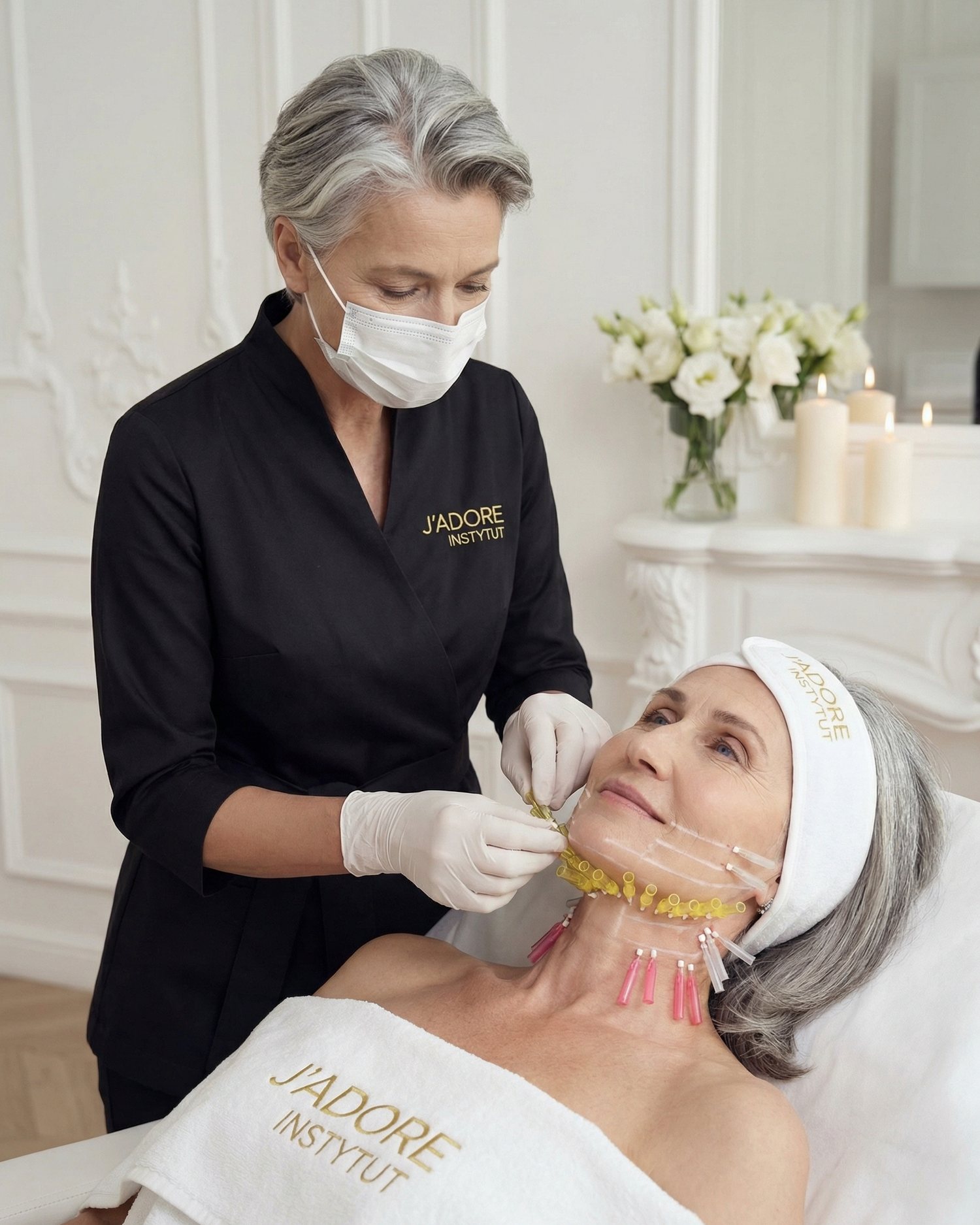
Why the first reflection in the mirror is not yet the result
Immediately after the threads are inserted, three phenomena may overlap. The first is the mechanical displacement or support of the tissue: the doctor works in a planned vector, so the oval or cheek may look different immediately. The second is swelling related to the injections and tissue manipulation. The third is involuntary tension: for the first few days, many people smile more cautiously, do not open their mouths wide, and touch their face less, which also changes its expression.
Therefore, a photo taken after leaving the clinic is not good material for deciding whether another session is needed. It may show a fresh lift, but it will not answer how the tissues will settle after they calm down. Conversely, a photo taken the next day may unnecessarily alarm you with slight asymmetry of the swelling. Comparing individual days is like judging the cut of a dress while the fabric is still pinned.
A simple rule helps: view your face in similar light, without bringing the phone close to one part of the cheek, and without comparing morning with evening. In the first few days, swelling can change throughout the day. A patient who sees a stronger jawline after an hour of working at a computer does not necessarily have a "fading" result; the tissues may simply be more settled or slightly swollen.
An early result can be an important clue, but it is not the final verdict. First, you must allow your face to stop reacting to the treatment itself.
The calendar after threads: what usually happens from the first hours to the following months
The first 24 hours show mainly the tissue reaction. There may be slight redness, swelling, bruising, or an irregularity visible during a specific grimace. For some, the face looks almost normal; for others, it takes a few days to feel comfortable attending a meeting. The difference does not automatically say anything about the quality of the final result; it depends, among other things, on your susceptibility to bruising, skin thickness, the scope of the work, and any medications or supplements taken before the treatment.
In the first week, the tissues begin to get used to the new arrangement. Usually, this is when the feeling of pulling weakens, but minor differences between sides may appear, especially during facial expressions. Do not "massage" them yourself. Your face is not a cushion to be adjusted by hand. If something worries you, the correct reaction is to contact the clinic and describe the symptom, preferably with a photo taken in neutral light.
After a few weeks, it is easier to look at the result without the interference of fresh swelling. This is a good time for a follow-up visit if one has been planned: the doctor compares photos, examines tissue tension, checks the injection sites, and asks not only about what you see straight on, but also what happens when you speak, smile, and turn your head.
The later stage concerns the tissue response around the threads and the remodelling, which does not proceed identically for everyone. Long-term assessment only makes sense when you can separate the stable appearance from temporary changes. It is during this visit that you can talk about maintaining the effect or other procedures, but one should not assume in advance that every person needs a top-up.
What the doctor checks before determining the number of threads and the follow-up date
In practice, it is also important to ask: is the problem tissue sagging, volume loss, excess skin, or perhaps a tense masseter muscle widening the lower face? Threads can support tissues in a chosen direction, but they will not replace volume where it is missing, and they are not a tool for reducing large amounts of excess skin. If we misidentify the cause, the calendar of subsequent treatments will not save the plan.
The doctor also checks the condition of your skin: active inflammation, irritation, a history of cold sores, a tendency to scarring, chronic diseases, blood clotting disorders, and any medications or preparations taken. Information about anticoagulants or a recent dental procedure is not a minor detail to be mentioned at the end. It may change the date of the procedure or how it is planned.
A good sign during a consultation is when questions are asked about a specifically defined goal: a softer nasolabial fold, a clearer contour, or less of a feeling of heaviness in the mid-face. The phrase "I want to look younger" opens the conversation but is not enough to determine the number of threads. The more precise the goal, the more honestly we can say whether it is achievable with this method.
One session or a staged plan: what the decision depends on
Staging does not automatically mean "more is better". Sometimes the doctor deliberately leaves space for the tissues to settle to see, after the healing period, whether the second area still requires work. This applies especially to slim faces with thin skin, where pulling too aggressively could give a strained effect instead of natural support.
Another scenario concerns a person who expects a clear change in the lower part of the face, but the examination shows primarily volume loss in the middle part of the cheek. Adding more threads along the jawline does not have to be the answer. The doctor may suggest postponing the decision, changing the method, or combining actions in a logical order. This is not avoiding treatment, but ensuring that the tool matches the problem.
Another session makes sense when, after the tissues have stabilised, a specific goal remains that can be achieved with threads: a specific part of the oval, asymmetry requiring correction, or the need to maintain the result over time. However, it is a poor idea if it is intended to be a reaction to the impatience of the first few days or an attempt to obtain a surgical effect without surgery.
When the second session is a plan and when it is just sales pressure
An honest plan is evidenced by the possibility of hearing: "we are not adding anything now." Sometimes the result is consistent with the possibilities of the initial anatomy, and further tension will not improve the face. Sometimes it is also better to first take care of skin quality or wait for full stabilisation. Postponing the decision can protect against tissue overload.
A red flag is the promise of an identical schedule for everyone, without examining the face and without explaining what exactly the next stage is supposed to improve. You should also be concerned if every asymmetry in the first week is presented as a reason for immediate correction. Freshly healing tissues are not a good field for hasty decisions.
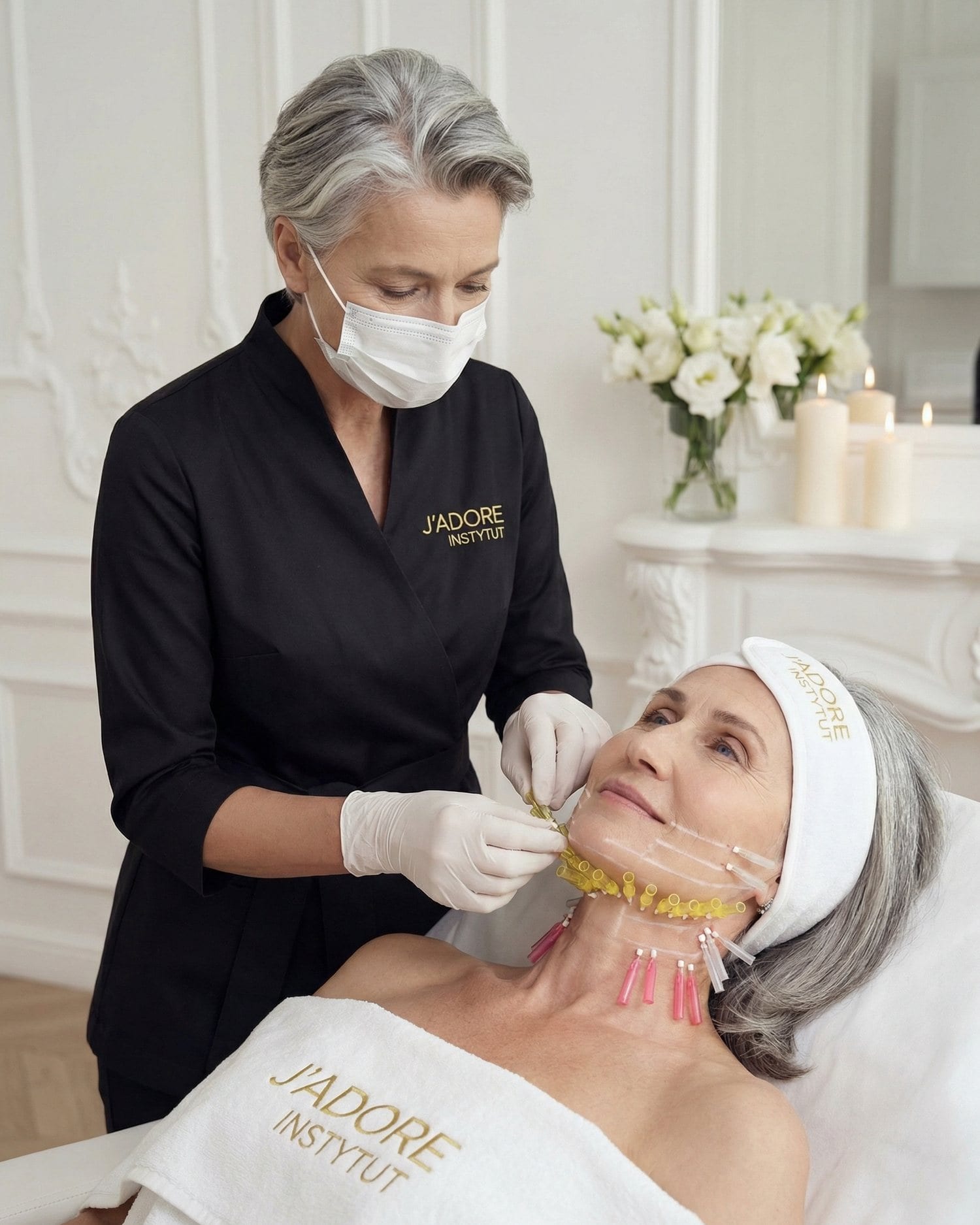
The third day at home: a mistake that can disturb the assessment of healing
- Return to activity. On the third day, swelling often does not disappear completely, but your well-being encourages a return to daily tasks.
- Risky behaviours. Common mistakes include intense training, visiting a sauna, sleeping with your face in the pillow, and checking with your fingers whether the thread is sitting evenly.
- The temptation of massage. The reflex to touch the face is extremely common, as every irregularity felt under the skin provokes unnecessary massaging.
How can you recognise that your body has not handled a return to routine too quickly? Swelling may become larger after exertion, tenderness may intensify, and an area that looked calm in the morning may seem more tense in the evening. This does not automatically mean that a complication has occurred, but it is a signal to stop experiments and contact the person in charge.
Concerning symptoms include increasing pain, clear skin warmth, rapidly spreading redness, discharge, fever, whitening or bruising of a skin fragment, and sudden, intensifying asymmetry. Such symptoms are not assessed through online photo comparisons. They require urgent contact with the clinic or, depending on the severity, medical assistance.
The most practical plan at this moment is not very spectacular: follow the provided recommendations, do not manipulate your face, and write down when the symptom appeared and whether it is increasing. Thanks to this, when talking to the doctor, instead of saying "I think something is wrong," you can provide a specific history.
The first visit and the next procedure are not the same experience
- Fears before the first treatment. Patients focus on pain sensations, the possibility of returning to daily activities, and the visibility of any bruising.
- Preparation for recovery. It is crucial to discuss the course of the first few days and be aware that the appearance of the face may temporarily differ from the final effect.
- Observing the body's reaction. The first procedure provides a source of knowledge about how your skin reacts to injections and how the healing process proceeds.
At the next visit, the conversation should be more analytical. The doctor asks how long the tenderness lasted, whether you had a tendency to swelling, at what point you noticed stabilisation, and whether the result met the goal from the consultation. This data can influence the choice of area, technique, and the timing of the next stage.
After a third visit, a patient often already has their own point of reference and sometimes expects the face to react identically to before. This does not have to be the case. Tissues, skin condition, body weight, sun exposure, stress, and even whether the treatment covers the same area change. Previous experience is a help in planning, not a guarantee of repeating the course.
Well-kept photo documentation is more useful here than memory. Memory often suggests that "it used to be better immediately"; comparing neutral photos allows you to check whether the result has actually changed or only your expectations towards it.
How to plan the assessment of the effect without checking your face daily
Before the treatment, it is good to establish three points with the doctor: when to report urgently, when the regular follow-up takes place, and when it is permissible to talk about a potential next stage. This organises emotions after leaving the clinic. Instead of wondering every morning whether the result is final, you have specific assessment frameworks.
It is helpful to take photos before the procedure in the same shots: straight on, from both profiles, and in three-quarter view, with a relaxed face. Later, you should recreate similar conditions. A photo taken with a phone from below, in harsh bathroom light, or just after exertion will usually highlight what is not visible in normal conversation.
If you are considering lifting threads in Warsaw, treat the consultation as a moment to set this calendar, not just as a qualification for the treatment itself. Ask what result is to be assessed early, what may change during the healing period, and how long the doctor wants to wait before deciding on adding threads.
The best thing to take with you after a consultation is not a promise of a quick transformation, but a written plan: the goal, the area, the follow-up date, and symptoms requiring contact. Threads can provide subtle support to well-chosen tissues. Only a patient assessment shows whether this goal has been achieved and whether the next step is really needed.