
Where PDRN comes from and why salmon
Let us start with a surprising fact that is key to understanding the whole mechanism. Polydeoxyribonucleotides used in medicine and aesthetics are obtained from salmon roe. This is neither coincidence nor cheap exotic marketing. There is entirely rational biology behind this choice.
The deoxynucleotides that make up salmon DNA have an exceptionally high degree of similarity to human DNA. The similarity is high enough for human cells to recognise them as familiar building material and incorporate them into their own structures. This is a fundamental difference from, for example, hyaluronic acid. The skin recognises hyaluronic acid as a useful external guest. It treats PDRN more like a letter in a familiar language.
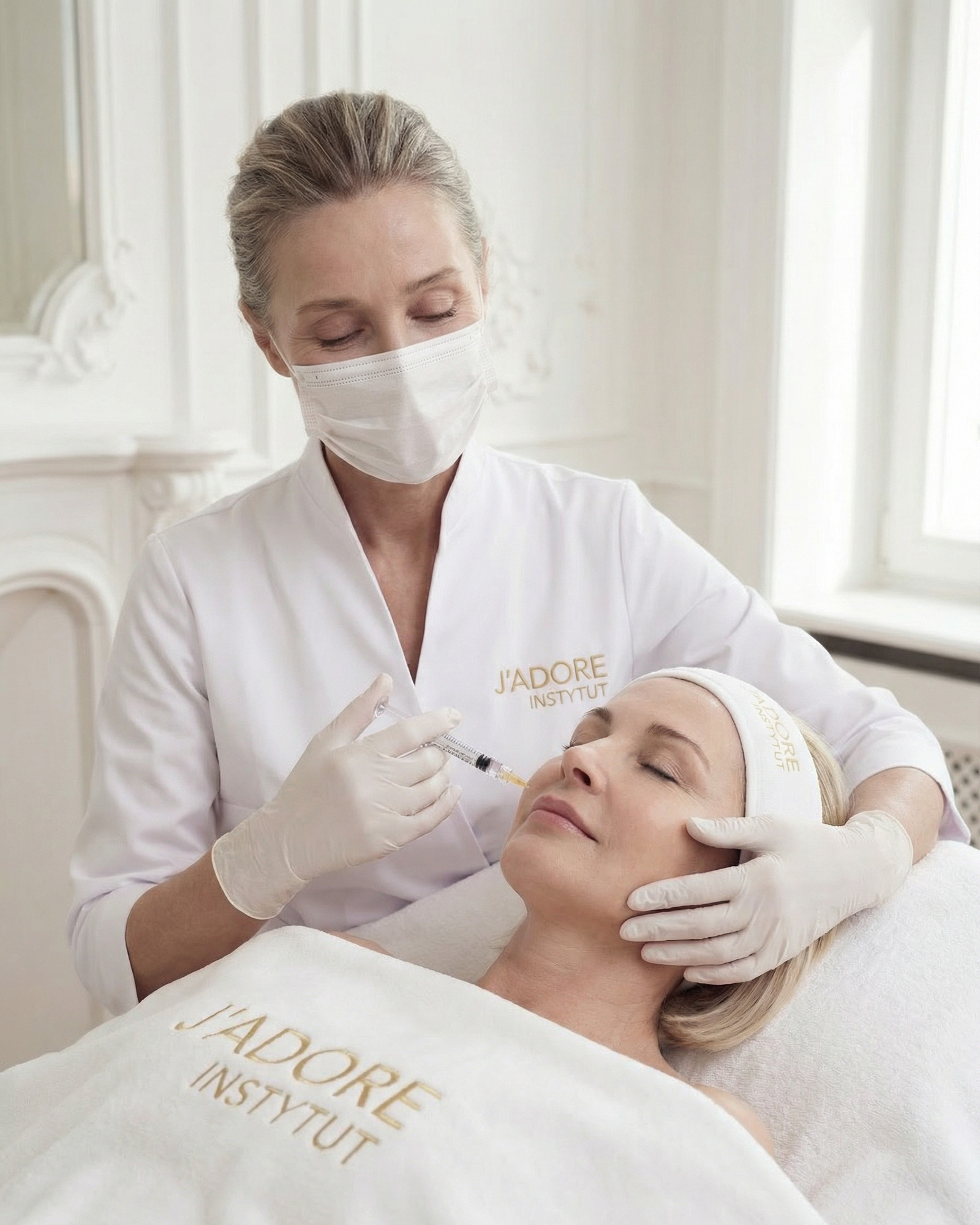
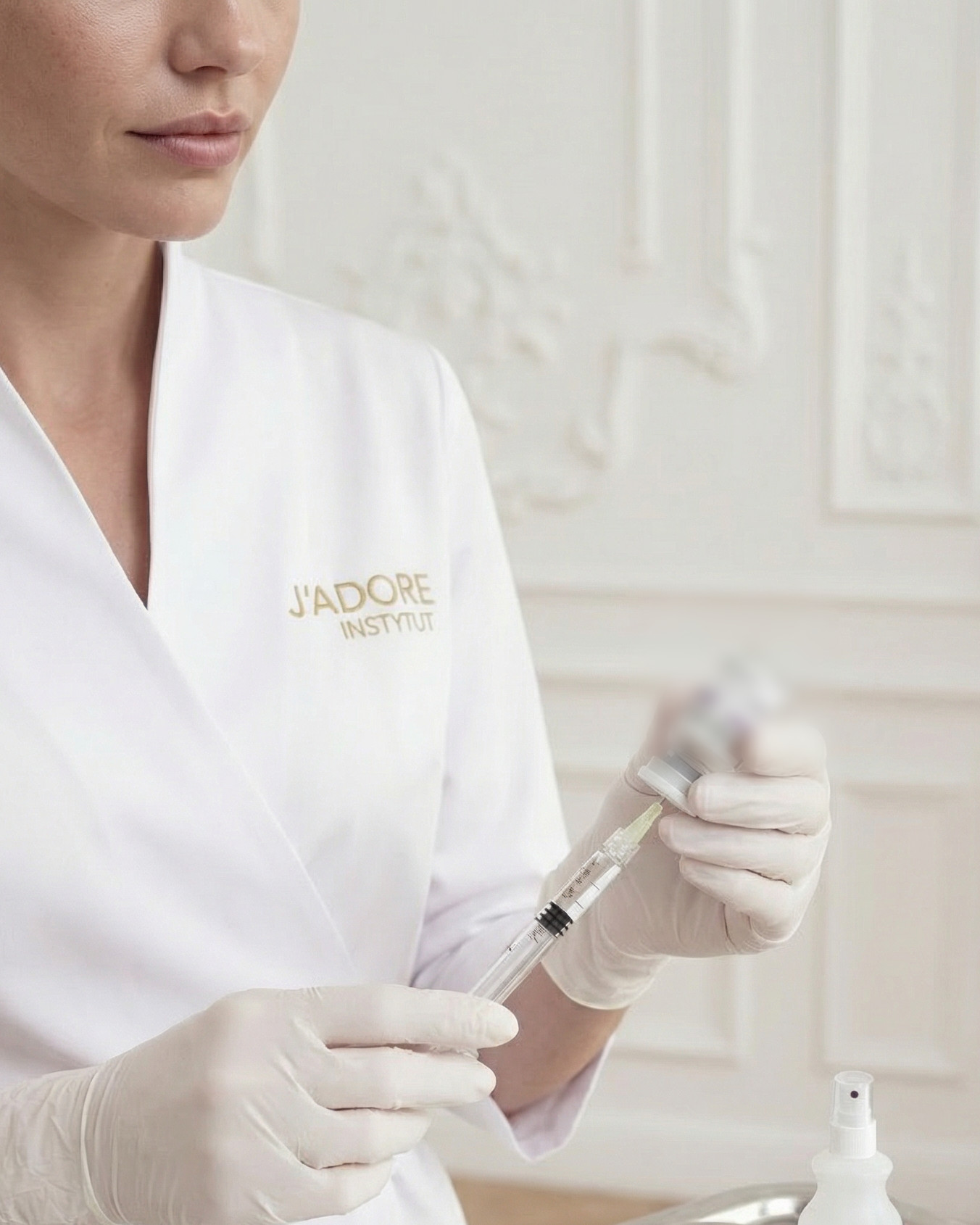
DNA fragments isolated from salmon roe are then purified, concentrated and processed into a product that can be safely introduced into the skin. Nucleofill is based on this technology. It is available in several versions with different densities, suited to different depths and concerns. Regardless of the version, however, the mechanism remains the same.
How PDRN works — a mechanism on two levels
PDRN works in two ways at the same time. Their combination means the result is sometimes described by patients as qualitatively different from what they experienced after other treatments. It is not that the skin suddenly looks different. It begins to function differently.
- Level 1 — A2A RECEPTOR (activation of the repair pathway). PDRN binds to the adenosine A2A receptor on the surface of fibroblasts. These are the cells responsible for collagen, elastin and hyaluronic acid production. Activating this receptor triggers a signalling pathway that the cell reads as an instruction to work intensively. Fibroblasts begin producing more collagen and elastin. Angiogenesis, or the formation of new blood vessels, is activated, and repair processes accelerate. This is not the effect of adding a “moisturiser”. It changes how the cells work.
- Level 2 — DNA BUILDING MATERIAL (salvage pathway). PDRN fragments can be broken down by enzymes into individual nucleotides and directly incorporated into cellular DNA through the salvage pathway. Cells, especially damaged or ageing cells, readily use this prepared building material because synthesising it from scratch requires energy. By giving them ready-made “spare parts”, we significantly lower the threshold at which a cell chooses repair rather than apoptosis, or programmed cell death.
- Together: signal + material. This combination means PDRN does not work like a lever pushing the skin from the outside. It works like a message within the system: you have the building material and the signal — repair yourself. The result is gradual because tissue remodelling is a biological process, not a physical one. But it may last longer because it engages the skin’s own mechanisms rather than external substitutes.
Nucleofill — what specifically makes it different from mesotherapy or a biostimulator
Patients often ask: “Is it mesotherapy? A biostimulator? Something with hyaluronic acid?” This is not a foolish question. The market for regenerative treatments can be crowded, and the names sound similar. It is worth drawing clear boundaries.
Hyaluronic acid (fillers)
replenishes and hydrates
- Works like a sponge — binding water in the tissue
- Adds volume or hydration
- Gradually broken down by hyaluronidase
- Partly mechanical result (filling)
Biostimulators (e.g. Sculptra, Radiesse)
stimulate collagen production
- Work as a scaffold or a signal for collagen production
- Long-lasting result, but gradual
- Main aim: volume and lifting
- Work at the mesodermal level
PDRN / Nucleofill
repair instruction + building material
- Activates A2A receptors on fibroblasts
- Provides DNA fragments as building material
- Stimulates collagen, elastin and hyaluronic acid
- Accelerates angiogenesis and healing
- Improves tissue quality “from within”
In other words: Nucleofill is not a substitute for a filler or biostimulator. It is a third category, aimed not so much at changing the skin’s appearance as improving its biological condition. Skin that functions better looks better — but this is a side effect of efficiency, not a cosmetic change applied from the outside.
Who benefits most from Nucleofill
The question “who is it for?” is particularly specific with Nucleofill. It is less about age and more about the type of concern. PDRN works best where the skin needs not a visual result for tomorrow, but a deep improvement in condition that will translate into appearance over time.
- Tired, dull skin — without radiance, firmness or vitality. This is usually skin whose fibroblasts have “slowed down” because of age, oxidative stress or sun exposure. PDRN gives them a signal to resume their work.
- Skin after ablative treatments (lasers, deep peels) — during the regeneration phase, when we want to support tissue rebuilding and shorten recovery time. This is one of its most common clinical uses.
- Sensitive or reactive skin that does not tolerate more intensive treatments well — PDRN is low-irritating, does not cause strong inflammation and is well tolerated by skin prone to irritation.
- Skin quality correction in men — male skin is thicker and oilier, making it more resistant to many hydrating treatments. PDRN works at a cellular level, where tissue thickness is less significant.
- Prevention in the third and fourth decades of life — before changes become clearly visible, PDRN may serve as regular biological “maintenance” for the skin, supporting fibroblast function.
On the other hand, Nucleofill is not a treatment for everything and will not replace every need. If the priority is specific volume loss in the cheeks, a deep nasolabial fold or lifting of the facial contour, other tools will be needed. PDRN most often works as part of a protocol, not as a standalone solution. This is why discussing what the current priority is with a doctor is essential for selecting the right method.
What happens after the treatment and what to expect
Biological regeneration has its own rhythm. It cannot be accelerated in the same way as the effect of a filler, which works immediately after administration. PDRN activates processes with their own schedule: receptor activation, signalling to fibroblasts, collagen production and tissue remodelling. This does not take a week. It usually takes several weeks for the first visible results, and the full picture becomes clear after a series of treatments.
Immediately after the treatment, you may expect small injection marks and possibly mild redness. This is a normal tissue response to puncture and product injection. These are not allergic reactions or damage. The marks usually resolve completely within one to three days.
The first weeks
activation and signalling
- Activation of A2A receptors on fibroblasts
- Activation of the repair pathway
- Improved hydration, particularly visible with lighter formulations
- Your skin may look more ‘alive’ — but subtly so
After a series of treatments
Tissue remodelling
- Improved skin density and elasticity
- Greater radiance and even skin tone
- Fine lines may become less visible
- Your skin is of ‘better quality’ — it is difficult to describe it otherwise
The number of treatments in a series and the intervals between them are decided by the doctor. They depend on your skin condition, the formulation used and the treatment goal. There is no single protocol ‘for everyone’. This is one of those methods where individualisation is not a slogan. It is a necessity arising from biology.