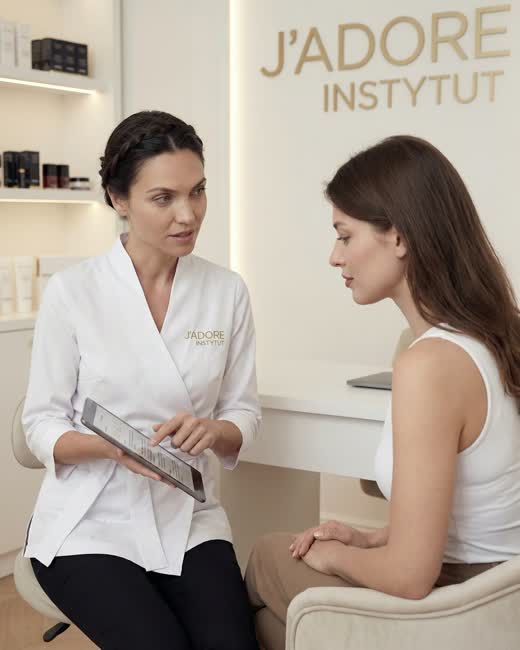
The first few minutes are the most informative
After cleansing and degreasing the skin, application may cause uniform stinging. The specialist observes redness and asks about changes in sensation. The progression is more important than a number on a scale: stable heat is different from sudden pain in one spot.
- Mild to distinct, uniform stinging can be expected.
- Pain near the sides of the nose or a micro-injury can be stronger and requires assessment.
- Burning that intensifies despite the specialist's response is a signal to shorten or end the stage.
- Itching, hives or swelling outside the application area are not a standard "effect of the acid".
What increases discomfort before your visit
Retinoids, home-use acids, mechanical peels, recent facial hair removal, tanning, dryness and scratched lesions weaken the barrier. Concealing them does not speed up the treatment — it deprives the specialist of the ability to make a safe decision. Active cold sores, wounds or severe inflammation are also reasons to reschedule.
Anaesthesia is not a way to cover up poor qualification
In chemical peels, reaction control and communication are key. Automatic anaesthesia could hinder the assessment of sensations; the specialist decides on the protocol. Comfort is improved by calm application, protection of sensitive zones and proper barrier preparation, not by a promise of total numbness.
A pain scale without a description does not help to adjust the response
Two people may call the same stinging a five, yet feel it completely differently. Instead of just giving a number, describe the character: uniform heat, pricking in one spot, itching, throbbing or burning that grows with every moment. Such communication allows the specialist to connect the sensation with the appearance of the skin.
Change over time also matters. Stable heat that does not increase after a moment is different information than pain moving from moderate to sharp. Do not wait until the end of the stage to say that the situation changed several minutes earlier. A reaction is best assessed while it is happening.
Do not compare your number with a friend's account. Their barrier, previous skincare, treatment area and pain threshold may be different. The goal is not to reach the same result on a scale, but to keep the procedure within the limits of a safe, controlled reaction.
The area around the nose, lips and injuries may sting more
The sides of the nose, corners of the mouth and places with micro-cracks often react more distinctly than the cheek. The product reaches a more sensitive surface there, and facial movement makes it difficult to maintain a calm sensation. The specialist can protect selected zones or change the method of work, but they must know where you feel the difference.
A mark after squeezing a spot, a scratch, chafing from a tissue and recent hair removal are small injuries that are easy to overlook. In contact with acid, they can cause localised burning. Examine your skin in good light before the visit and point out every compromised area, even if you usually cover it with foundation.
A stronger reaction in a single spot does not mean the whole face needs a more intense application. On the contrary: a local signal may require skipping that area. Uniformity of the procedure does not consist of ignoring anatomical differences.
A barrier compromised by home skincare changes the entire experience
Retinoid used more often than usual, a combination of several acids, a cleansing brush or a granular peel can leave the skin tight, even without a visible wound. The first signal is often burning after water or a regular cream. This is not the time to test whether a professional peel will "go through".
Do not try to rebuild the barrier with one heavy mask the previous evening. Calm condition requires time and a reduction of irritating stimuli. If the skin still stings during daily care, say so before application. Rescheduling is better than hoping that discomfort can be covered by cooling.
Write down the products used in the last few days, including those applied locally. An anti-acne product near the nose that you do not consider part of your routine can explain a localised reaction. A full list is more useful than a general "I don't use acids".
Cooling can improve comfort, but it does not cancel a contraindication
Airflow, a cool compress or a calm pace of application can soothe the sensation if the protocol allows it. They should not be used to drag out the treatment despite increasing pain. Comfort is support for a correct procedure, not a tool to perform it at any cost.
Breathe regularly and relax your jaw. Tension and anticipation of pain increase focus on every stimulus, though they do not change the state of the skin. Say in advance that you are afraid of burning. The specialist can ask about the reaction more often and warn you before moving to a sensitive zone.
If cooling immediately stops being enough and pain increases, an assessment and a decision to stop are needed, not a stronger airflow. Symptoms are not interpreted solely by whether they can be temporarily suppressed.
What you feel after leaving should gradually calm down
After the procedure, tightness, heat, redness or increased sensitivity may persist. Their progression should correspond to the information provided by the specialist. Note when the symptom appeared and whether it is weakening. A photo taken in neutral light will help compare the change without relying on memory.
Do not immediately add a retinoid, acid, peel or new cosmetic "for regeneration". Simple skincare in accordance with the recommendation allows the skin to return to balance and makes it easier to recognise a potential reaction. Several new products at once blur the cause of burning.
Blisters, increasing pain, extensive swelling, rapidly spreading redness or allergic symptoms are not a stage you must endure for the result. Contact the salon, and in case of a strong or violent reaction, seek medical help.

Menstruation, stress and lack of sleep can change perception, not skin qualification
The threshold for perceiving stimuli can be lower when tired, stressed or on certain days of the cycle. This does not automatically mean the treatment is forbidden, but it may affect comfort. If you know you have such a dependency, choose a date when it is easier for you to calmly communicate your sensations.
Do not mask fatigue with excess caffeine and do not come on an empty stomach. A normal meal, hydration and not being in a rush will not remove chemical stinging, but they will limit additional sources of malaise. If you feel ill, have a fever or an active infection, reschedule your visit.
Subjective comfort does not replace tissue assessment. You may feel little, and the skin may react too strongly; you may also feel distinct stinging with moderate redness. That is why the specialist combines conversation with observation instead of basing the decision only on a pain scale.
The first visit should not be a test of maximum tolerance
A person who has not used peels before does not yet know how they describe heat and stinging. A reasonable start allows you to get to know the reaction without assuming that the more intense it is, the better. Subsequent decisions should result from the healing process and the goal, not from the ambition to increase the stimulus.
If you hear that you must endure it because the product only works when it hurts a lot, ask for an explanation. Effectiveness is not equivalent to suffering. A chemical procedure has parameters and observable reactions; pain is information, not a currency paid for a result.
You have the right to stop. The decision to end the stage is not a wasted visit if it protects the skin. Good communication includes establishing before application how you report increasing sensations and which symptoms require an immediate stop.
The face does not feel the treatment uniformly
Cheeks may react more mildly, while the area around the nose, chin and lips stings more. The difference results from structure, gland activity, minor injuries and skincare. Do not expect one level of sensation across the entire area. Inform the specialist about every point that suddenly differs from the rest.
If the treatment includes the neck, décolletage or hands, each zone requires separate observation. The skin of the décolletage may be more exposed to the sun, and the hands to detergents and micro-injuries. The fact that the face tolerates application calmly does not automatically predict the reaction of another area.
Do not ask for intensity to be equalised by an additional layer in a place that stings less. A lack of strong sensation does not mean the product is not working. The decision about application is made according to the protocol, indication and appearance of the skin, not according to a pain map.
Make-up should not hide the reaction before qualification
Come with information on how the skin looks in the morning without foundation. Heavy make-up can hide peeling, fresh scratches and redness, and intensive make-up removal on-site additionally sensitises the skin. If you need make-up on the way, ask in advance how to prepare your face, but do not plan on masking active irritation.
After a peel, do not automatically assume full coverage for an important meeting. The skin may require simpler care, and rubbing with a sponge or brush increases discomfort. Choose a date so that fresh redness does not force you to take actions contrary to the recommendations.
If heat persists after leaving, do not try to hide it with heavy powder. Observe the reaction in neutral light and apply the recommended protocol. Make-up can change the appearance, but it does not change the process occurring in the barrier.
A conversation plan in the chair reduces the risk of silence
- Before application, establish what sensations are expected.
- Agree on a simple way of reporting changes, for example, a description and a scale.
- Speak up immediately about a point that stings differently than the rest.
- Ask what the specialist observes and why they choose to continue or pause a stage.
- Before you leave, note the warning signs and the contact channel.
Such a plan is particularly helpful if stress makes you downplay your sensations or fear being a nuisance. Reporting pain is not a criticism of our work. It is part of the data needed to conduct the procedure. The specialist cannot assess a stimulus you do not tell them about.
If you have a low pain threshold, say so without apologising. It does not change your right to the treatment, but it allows us to check your reaction more often and take breaks if the protocol permits. The goal remains safety, not comparison with other clients.
Warsaw: comfort begins with a full consultation.
When booking, do not just mention "sensitive skin". Specify your reactions: stinging after water, redness after acids, contact allergies, recurring cold sores, or prolonged irritation. A general label does not show if your barrier is stable today. Also, prepare the dates of your last facial hair removal, tanning, and cosmetic procedures.
You can find the service description on our website PQ Age in Warsaw. J’ADORE operates at Żelazna 59 (Mon–Sat 8–21, Sun 11–19) and Mińska 29A (Mon–Sat 9–21). When booking, report reactive skin, recent peels, and medications; your choice of location does not change the qualification requirement.
The most honest answer is: PQ Age may sting and burn, but the sensation should remain under control. You are not here to prove your resilience. You are here for a planned skin reaction that can be safely monitored and stopped if necessary.
If a previous peel resulted in blisters, prolonged pain, or discolouration, do not treat this as just a story about a low pain threshold. Describe the course of events and show documentation if you have it. The new specialist must assess the risk instead of repeating a protocol just because the treatment name is different.
Choose a time for your visit that is not rushed. The ability to return home calmly, observe your skin's reaction carefully, and avoid heavy make-up is part of your comfort. A treatment squeezed between meetings increases the pressure to ignore discomfort and immediately cover up redness, even though your skin needs simple care.