Why men's skin tone "goes off"
Men's skin is thicker than women's — an anatomical fact that lets it withstand strain for longer. But it also makes it harder to restore once neglect has built up. Daily oxidative stress — free radicals from pollution, UV, cigarette smoke, screens — damages cell structures and slows the natural renewal cycle. The result is that characteristic greyness: dead, oxygen-starved cells build up on the surface, skin loses its radiance, and shadows deepen.
Shaving adds to the problem. Micro-injuries and irritation from razors often create subtle surface unevenness that scatters light. Skin stops looking fresh even when it's healthy. The issue isn't genetics or lifestyle — it's the stratum corneum, which simply needs turnover.
What is Ferulac and how does it work
Ferulac is a professional range of chemical peels built on ferulic acid — a natural antioxidant derived from cereal grain membranes. Unlike standard peels, which only exfoliate, Ferulac works on two levels at once: it removes overburdened cells and actively protects new layers from oxidative damage.
Standard acid peel
exfoliating action alone
- removes dead cells from the surface
- speeds up cell renewal
- evens out skin texture
Ferulac Peel
exfoliation + antioxidant action
- exfoliates overburdened layers
- neutralises free radicals
- stimulates collagen and elastin
- improves microcirculation — a "livelier" skin tone
For men, this second level is what matters most. After a peel, skin is exposed — new, sensitive cells are more vulnerable to damage. Ferulac arms them straight away with antioxidants, so the effect lasts longer instead of fading after a brief post-treatment glow.
Results — what actually changes
Men ask a direct question: "what will actually be different afterwards?" Ferulac has a defined mechanism, but results vary from person to person — many notice a difference after the first session, with full results after a course:
- Skin tone. This is usually the first change people mention: skin "comes back to life". The greyness and sallow tone typical of overburdened skin fades.
- Texture. Unevenness from shaving, pores, minor roughness — these often smooth out, leaving skin softer to the touch.
- Less visible fatigue. Improved microcirculation can give the face a more "awake" look, regardless of the time of day.
- Under-eye shadows. For shadows with a vascular or pigmentation cause, improvement is possible — but this is a secondary effect, not a guaranteed one.
- Post-shave condition. Skin tends to react more calmly to razors and irritates less — an effect observed in many men over a course of peels.
What the treatment involves — no surprises
Men don't like surprises in the treatment room. So here it is, plainly, from start to finish:
- 01
Cleansing and assessment
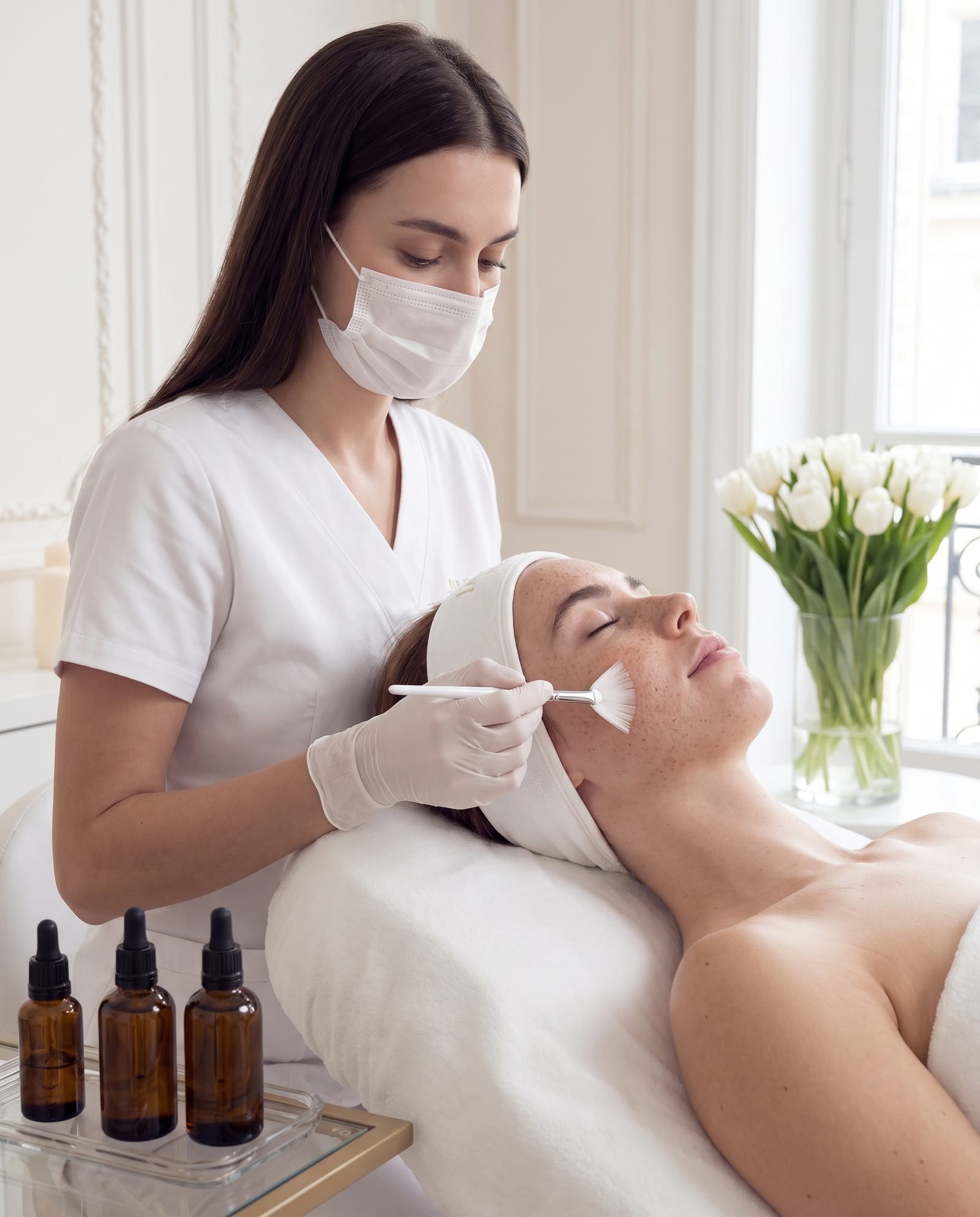
Your skin is cleansed, and the cosmetologist assesses your skin type, condition and any contraindications. Only then is the peel concentration selected.
- 02
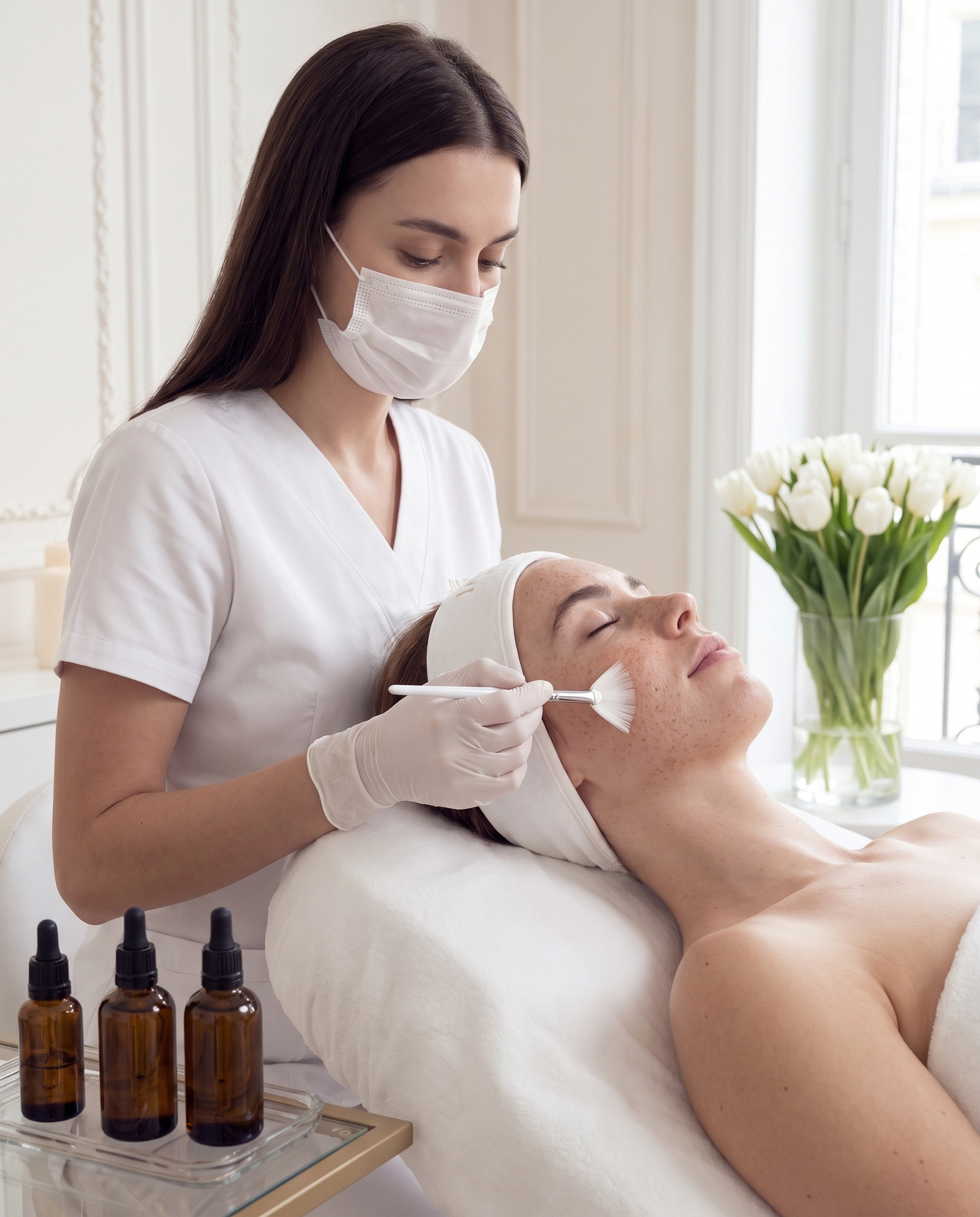
Product application
The peel is applied in layers. You may feel mild tingling or warmth — a normal reaction to the acids. Nothing that requires "toughing out".
- 03
Contact time and neutralisation
The product works for a few minutes, then is neutralised or removed, depending on the protocol. Your skin may look slightly flushed — this is a temporary effect.
- 04
Finishing the treatment
Soothing products and sun protection are applied. This is the final step — and the reason you don't leave the salon "unprotected" in the sun.
The whole treatment is quick. There's no downtime — once you leave the salon, you can get on with your day, just avoiding sun exposure without SPF. Flaking (if it occurs) is usually subtle and unnoticeable to others — this isn't the dramatic, cinematic "peeling" effect.
Ferulac Peel and home care — what can I do myself?
Fair and reasonable question. The market is full of cheap bottled acids and "at-home peels" for a fraction of the treatment price. Why aren't they enough?
OTC acid products
daily care
- low acid concentrations (safe for daily use)
- maintain results between treatments
- available without consultation
Ferulac Peel in the salon
professional intervention
- concentrations not available over the counter
- protocol matched to skin condition (this is where a cosmetologist's assessment matters)
- controlled contact time and neutralisation
- results visible after one session
Both have their place, but different roles. The salon delivers the reset — home care maintains it. Trying to replace a professional treatment by repeatedly applying stronger acids from a pharmacy tends to end in irritation, not results.
Who Ferulac suits — and who should wait
Ferulac isn't right for everyone at every moment. Before booking, it's worth knowing:
- Good indications: greyish, tired skin tone, uneven texture, combination and oily skin with blemishes, skin that's been through a long period of neglected care, men actively looking for better skin condition without invasive methods.
- Proceed with caution: active skin inflammation (acute acne flare-ups), recent sunburn, fresh shaving wounds — we postpone the treatment until healed.
- Season: autumn and winter are better times for a course of peels — in summer, skin is more exposed to sun after the treatment, though it can be performed year-round with appropriate sun protection.
How to combine it with other treatments
Ferulac Peel often forms part of a broader skincare strategy for men. A few combinations that make clinical sense:
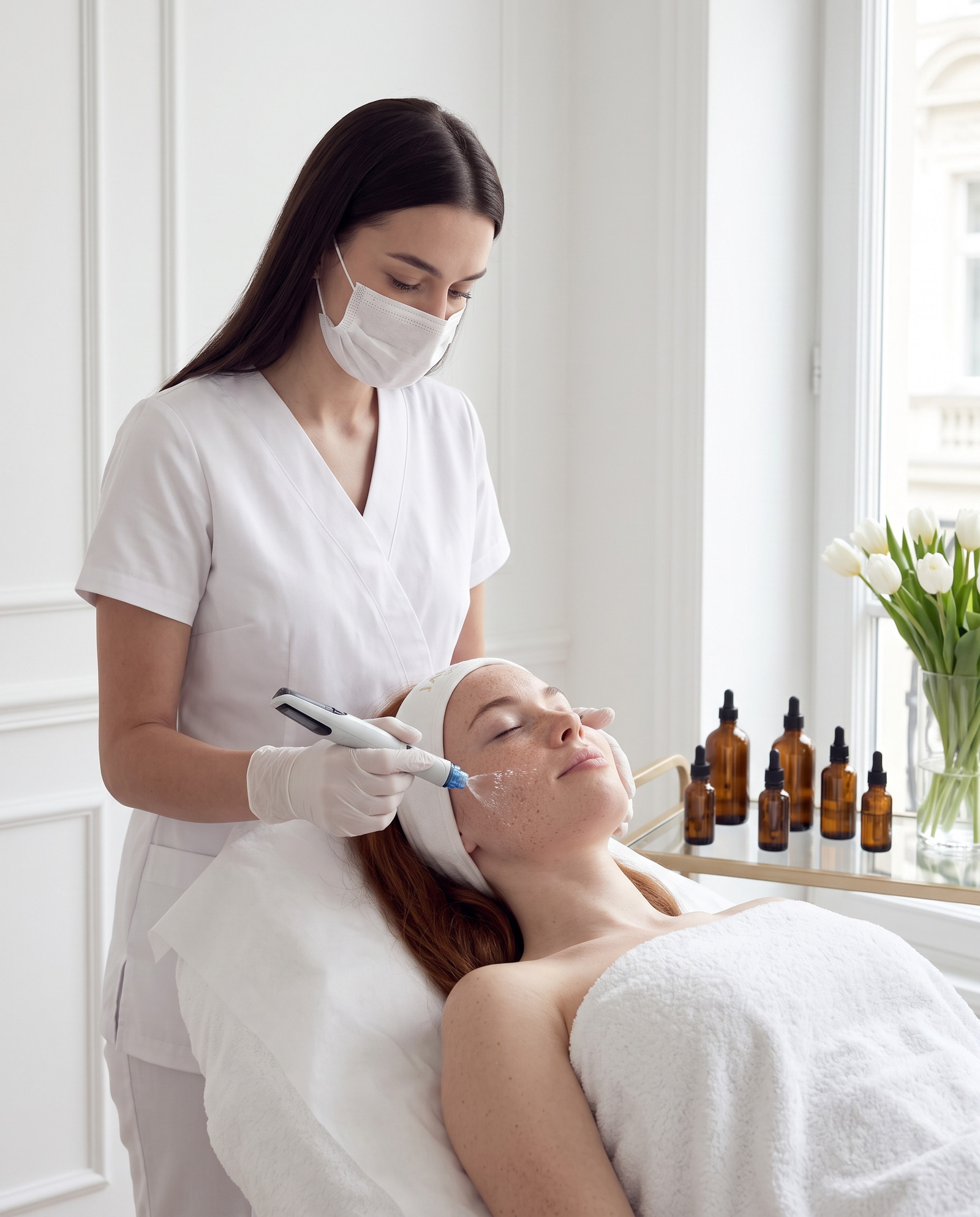
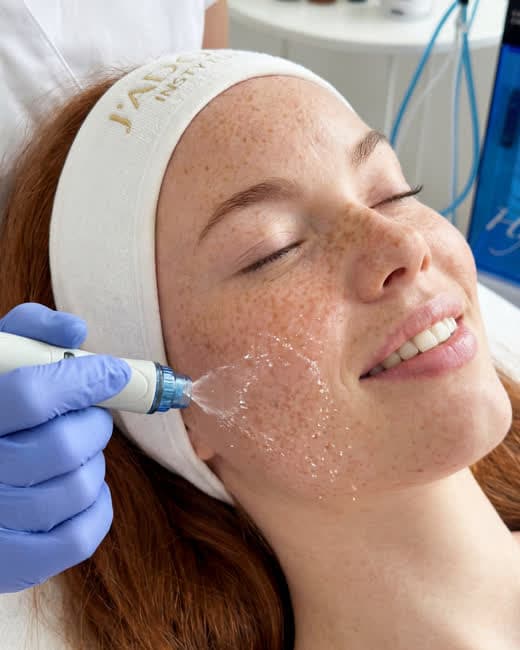
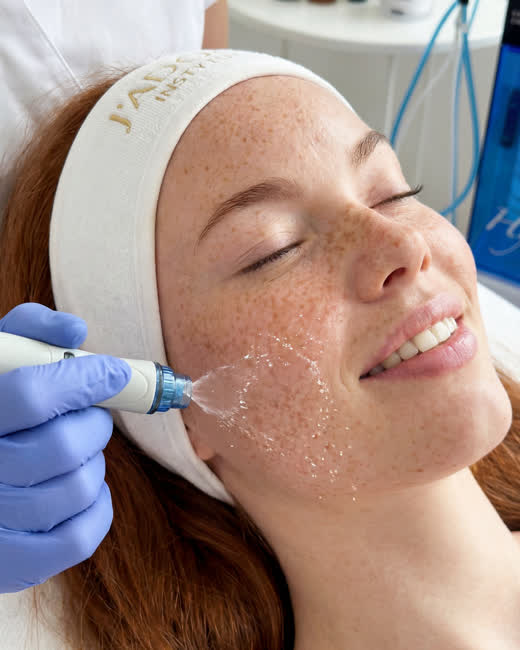
Hydrogen cleansing (Hydrafacial)
A cleansing and hydrating treatment that prepares the skin for a course of peels — it removes impurities, balances the skin's microflora and improves acid absorption in the next stage.
Needle mesotherapy
After a course of peels, renewed skin absorbs the active ingredients from mesotherapy more effectively. Combining the two improves tone and hydration more deeply than either treatment alone.
Pigmentation treatments
If sun spots or post-acne marks accompany the grey tone, Ferulac can be combined with laser and light treatments as part of a tone-evening protocol, with the sequence agreed with your cosmetologist.