What a peel really does to the skin
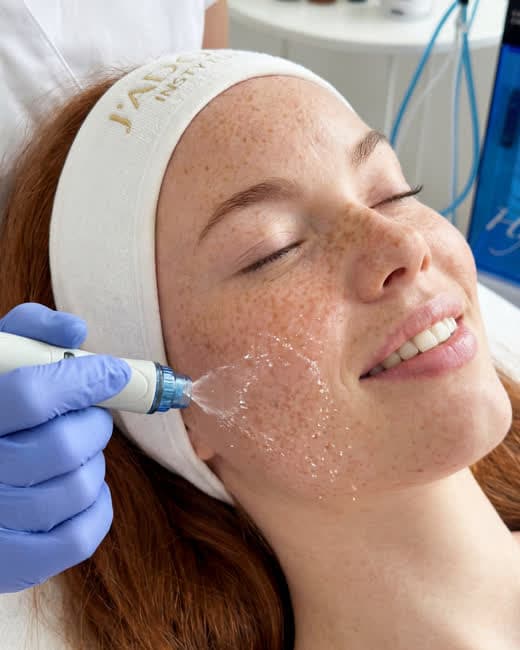
Let us start with the mechanism. It is often imagined as something harsh and radical, but the reality is more subtle. A peel acts on the epidermis in a controlled way or, in deeper variants, on the upper layers of the dermis. It removes dead cells, speeds up surface renewal and encourages faster regeneration. As a result, the skin may become smoother, more even in tone, better moisturised and more radiant.
Deeper-acting peels — especially acid peels — go one step further. They can stimulate fibroblasts, the cells responsible for producing collagen and elastin, to work more actively. This effect is neither immediate nor guaranteed for every skin type. However, after a series of acid treatments, many people do see some improvement in skin density and elasticity. The effect is real — but limited in both depth and duration.
- Epidermis — this is where a peel works best and most reliably: smoothing, even skin tone, radiance and a subtle reduction in the visibility of pores.
- Upper dermis — deeper acids may stimulate collagen, improve texture and make fine lines less visible.
- Deeper dermis and the tissues beneath it — beyond the reach of a peel. No acid or mechanical scrub can reach this area.
What laxity is — and why it is not a surface problem
Laxity is a term appearing earlier and more often in cosmetic consultations. It is not the same as dry skin or wrinkles. Lax skin has lost its “architecture” — the dense network of collagen and elastic fibres that once gave it firmness, elasticity and that characteristic “bounce” after smiling or sleeping on your side.
This process takes place in the dermis — much deeper than the epidermis exfoliated by a peel. Over time, fibroblasts, the cells that produce collagen, work more slowly. Existing fibres break down and the skin becomes less dense. The result: the skin becomes thinner, more translucent and loses its “plumpness” and firmness. Even when the surface is in good condition — smooth and even — laxity remains, because it concerns what cannot be directly seen “on top”.
This is why, when discussing laxity, a peel can be helpful but is rarely the solution. It may improve surface quality, making the skin look better and fresher — but it will not rebuild the lost framework. No exfoliation can do this, even the deepest clinically available peel. This is not a flaw of peels. It is simply a different type of problem that requires a different type of tool.
Peels and laxity — what is realistically possible
To be fair: a peel can genuinely help even lax skin — but in a different way from what is often expected. First, removing the layer of dead cells helps the skin absorb active ingredients more effectively. This applies to both home care and treatments performed afterwards. Second, stimulating fibroblasts with deeper acid peels may slow the rate of further collagen loss in some people. This does not reverse the process, but it can slow it down — and that is worth appreciating.
What a peel can do for laxity
realistic results
- Improved surface texture and smoothness
- Better absorption of active ingredients after the treatment
- Radiance and even skin tone
- Possible subtle collagen stimulation with deeper acids
- A “fresh” and healthy-looking complexion
What a peel cannot do
beyond its reach
- It will not reverse deep collagen and elastin loss
- It will not lift tissue that has descended
- It will not restore firmness “from within”
- It will not replace stimulation of the deep dermal layers
When a biostimulator comes in — and what this really means
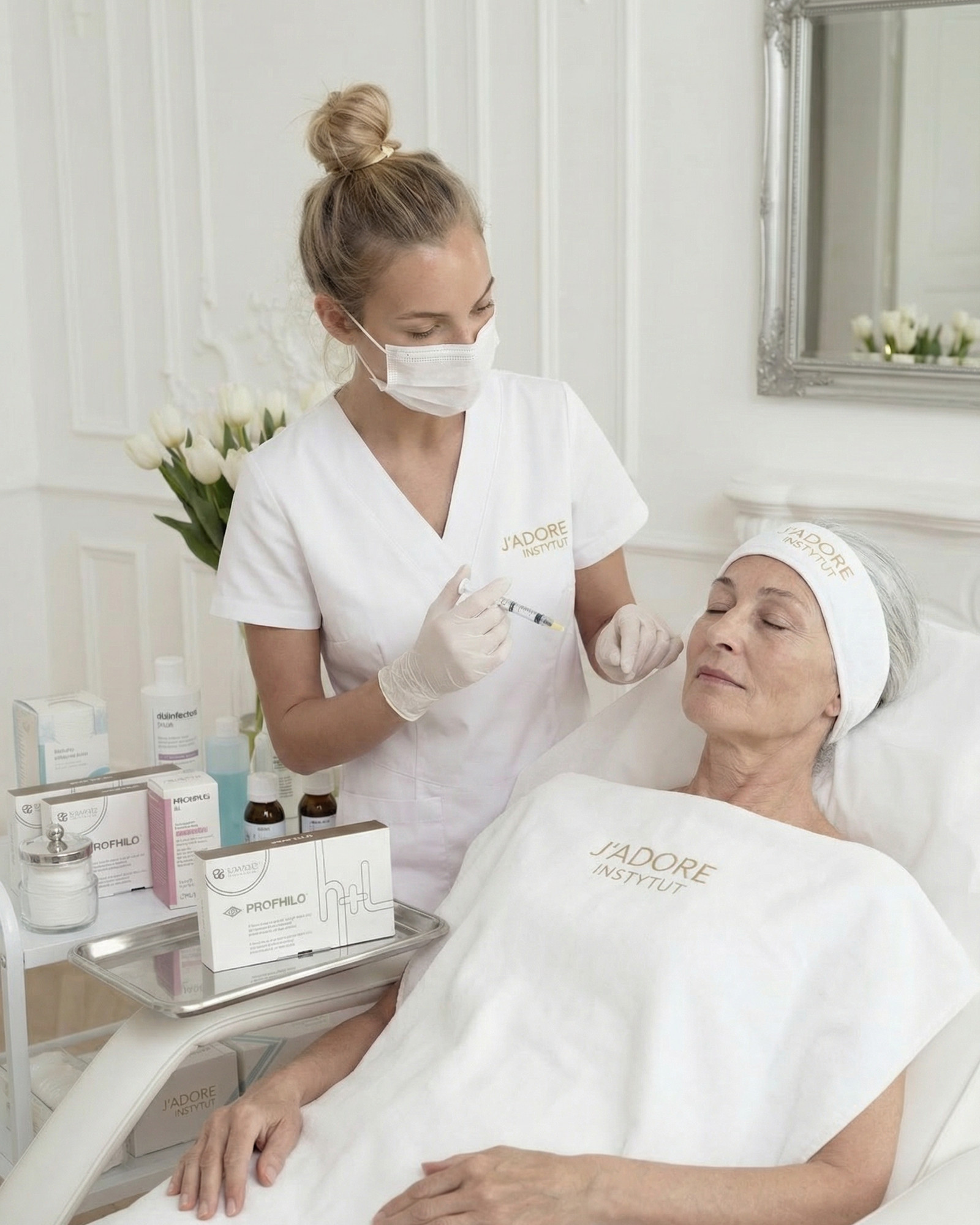
The term “biostimulator” is broad in cosmetology and aesthetic medicine. It includes different methods with one shared goal: stimulating the skin to produce its own collagen and elastin from within, rather than temporarily replacing them. Instead of introducing ready-made filling substances, biostimulators tell the skin: “start building on your own”. It is similar to the difference between a ready-made meal and a cooking lesson.
The skin is capable of this at every age — fibroblasts work throughout life. They slow down and become less responsive, but they still respond to the right signal. Tissue biostimulators, polynucleotides and other products in this category provide that signal. They reach the deep layers of the dermis and trigger a regenerative cascade where the problem is actually taking place.
- 01
A problem beneath the surface
Fibroblasts work more slowly and collagen is produced at a slower rate. The skin becomes thinner and more “loose”.
- 02
A signal to work
A biostimulator reaches the dermis and provides fibroblasts with material or a signal to increase collagen and elastin production.
- 03
Remodelling from within
The skin builds a new framework. Results develop gradually — most often over several weeks after the treatment.
- 04
A visible change
The skin gains density, firmness and elasticity. The result is subtle but “structural” — the skin looks different from how it does after smoothing alone.
This is why biostimulators do not compete with peels — they work at a different level. A peel smooths and refreshes what is on the surface. A biostimulator rebuilds what lies beneath. In practice, these two treatments often reinforce each other. Skin prepared and smoothed by a peel may respond better to the next steps, while skin made denser with a biostimulator shows the benefits of surface improvement more quickly.

How to read your skin’s signals
Before choosing a specific treatment, it is worth asking yourself a few questions. The answers largely determine the right direction. This is not about self-diagnosis, but attentive observation that makes discussion with a specialist easier.
- Is the problem mainly texture and colour? Dullness, visible pores, uneven complexion and minor hyperpigmentation — this is where a peel often brings clear results.
- Is your skin thinner than it used to be? If you feel that you can “see through it” more, or that it is less “plump” — this is a signal from a deeper layer.
- Are you losing firmness and facial definition? Less defined cheeks and a less resilient facial contour — this is not a question for a peel.
- Does your skin return to shape more slowly? After smiling or sleeping on your side — elasticity decreases as the density of its supporting structure declines.
- How long has this been a problem? If laxity is noticeable and has persisted for some time, improving the surface alone is unlikely to be enough.
Peel and stimulator — when to combine them
Most often, the question “peel or stimulator?” presents a false choice. Both treatments can work together. They often deliver better results together than separately. The key is the order and the goal: first identify at which level the problem lies, then create a plan.
Using a peel to prepare for or complement stimulation has a clear rationale. Smoothed and refreshed skin provides a better base for the next steps. Conversely, skin made denser from within through stimulation, with improved density and firmness, often benefits more visibly from the surface improvement provided by a peel. This is about complementing, not excluding, one another.
Acid peel + biostimulator
A peel prepares the surface and stimulates the upper layers. A biostimulator works deeper to improve density and firmness. A combined series — often used for noticeable signs of laxity combined with texture concerns.
Peel + polynucleotides
Polynucleotides support regeneration and the condition of the dermis. A peel improves what is visible on the surface. This combination works well when skin appears tired and also needs texture refreshment.
A deeper peel as monotherapy
Appropriate when texture, hyperpigmentation or fine lines are the main concern — and laxity is minimal. In this case, deeper surface stimulation may be sufficient without involving structural treatments.